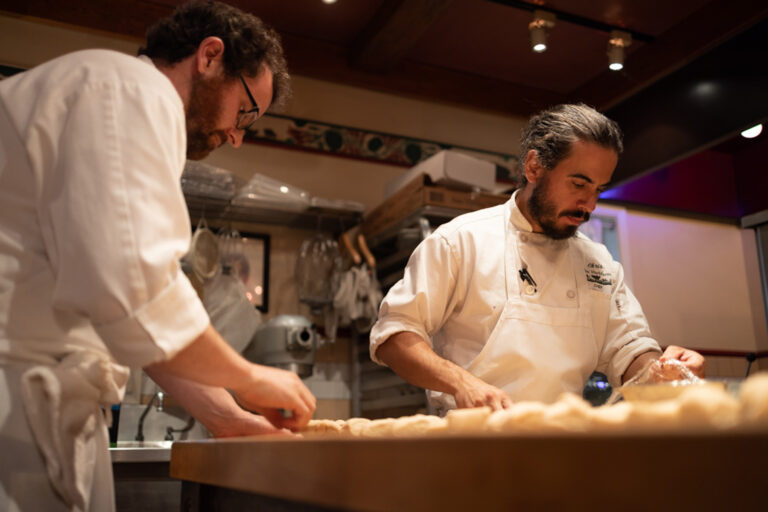
March 18, 2022 – “If you build it and grow it, they will come.” Those inspiring words describe both a magical Iowa cornfield and a small herb farm, located about 30 miles east of Seattle, that began almost 50 years ago. With an extensive wine cellar, a three-acre herb farm, and a limitless supply of conifer trees for their Douglas Fir Sorbet, The Herbfarm Restaurant is an unparalleled fine dining experience. It traces its roots to 1974 when Lola Zimmerman had extra chives from her garden that she decided to sell. From those humble beginnings, today, new owners Executive Chef Chris Weber and Chef Jack Gingrich, Sous Chef and Chaîne member, curate nine-course “rhythms of the season” experiences that are booked months in advance.

“Yes, we are a fine dining restaurant. Our main goal really is just to make people feel comfortable and welcome,” Chef Gingrich said to Chaîne during a Feb. 10, 2022 telephone interview with both chefs.
A sweet dose of happenstance brought Jack to The Herbfarm in 2012. He first heard of it when he was running a Washington D.C. restaurant after graduating with a degree in Hospitality Management from Cornell University in Ithaca, New York.
As he was completing a second degree from the Culinary Institute of America in Napa Valley, he reached out to restaurants up and down the West Coast for internship opportunities. The Herbfarm was on his wish list based on the earlier recommendation from a coworker. Patience and planning turned into an internship there and then a full time position as a Sous Chef after he finished culinary school.
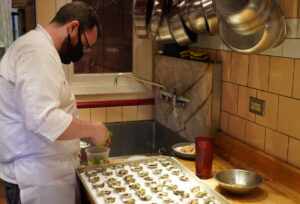
Chef Weber, a graduate of the Johnson and Wales Culinary Institute in Providence, Rhode Island, began working at The Herbfarm in 2007, quickly rising to the top as Executive Chef of the award winning restaurant. Among their many awards, National Geographic Traveler named it the #1 Destination Restaurant in the World. Chris said his prior work experience in special events and his desire to blend a fine dining experience with a plethora of local ingredients made The Herbfarm a perfect fit for him.
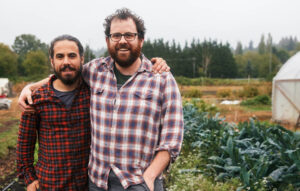
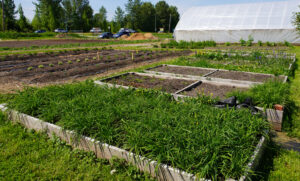
At The Herbfarm, it’s hyperlocal when it comes to incorporating fresh herbs because about 24 different types of herbs are grown on site. With such a broad spectrum of flavor profiles, the chefs have endless possibilities to elevate their menu. “Fresh is best,” they said. Even within one herb, there can be multiple expressions. As an example, Chris and Jack explained that cilantro is a herb that yields three different flavors depending on the part of the plant used so they think of the herb as three different crops. Cilantro leaves, flowers and seeds all find their way into culinary creations at the restaurant. They incorporate cilantro seed (coriander) in savory dishes to lighten those up and also pickle the seed.
For the home chef with a herb garden, Chris offers a pearl of wisdom, “Use more than you think you need.”
With three acres of herbs planted on their five-acre farm, the sky is the limit at The Herbfarm.
“That’s what makes having our own farm fantastic because if we want to use a pound of lemon thyme a day, we can use a pound of lemon thyme a day,” Chris said.
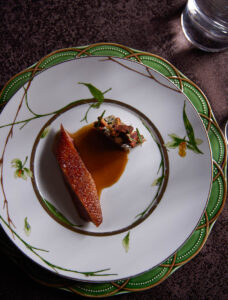
The “rhythms of the season” determine the nine-course thematic dinner, which is carefully planned to take advantage of the best the Pacific Northwest has to offer from land and sea. On a daily basis, Chris and Jack “chase the culinary glories of the Pacific Northwest” as their website so perfectly describes their culinary philosophy.

From mid April into the first week of May, they will be offering guests their “Cascade to Coast” experience to take advantage of the season’s fleeting flavors. And from April 8-10, their “Super Cattle in Seattle” dinner will highlight Kobe beef raised in the Pacific Northwest.
The two chefs are authentically elevating herbs in the food chain hierarchy that has been dominated for years by caviar, truffles and foie gras because of cost and scarcity. But some herbs share the same attributes or can be incorporated in such creative ways that the end result is spectacular.
“We talk a lot about trying to redefine luxury and what does that mean to have luxurious ingredients to work with. Our ability to use a pound of herbs a day is also luxurious,” the chefs said.

A perfect case in point is The Herbfarm’s Douglas Fir Sorbet, a dessert that has been on the menu for years. Typical of how Chris and Jack approach their evolving menu, they revisit the recipe each year to make minor adjustments. Of course, its foundation is ensuring the flavor of the fir needles is optimally extracted. Over the years, Chris said they have learned to first do a hot infusion by steeping the needles for a few minutes, identical to how one would steep tea leaves. That process is followed by a cold infusion. “It’s a great example of using more than you think you need. There’s plenty of Douglas fir around,” the chefs commented with a chuckle.
Guests are surprised when they see it on the menu but after tasting the delicious sorbet with hints of grapefruit, they marvel at the creative use of natural ingredients. Jack said it’s common to hear guests say “Wow! I’m eating a bunch of pine needles!”
Herbfarm History
The little slice of heaven in the Pacific Northwest began in 1974 when Lola Zimmerman had a bumper crop of chives and decided to sell the extra yield. At a farm stand along the road, she posted a small sign that said, “Herb Plants for Sale.” The plants sold so she added extra plants each spring. As her business blossomed, Bill, her husband, built greenhouses for her nascent nursery.
In 1986, Ron Zimmerman, their son, and Carrie Van Dyck, his wife and partner, joined the business and began remodeling part of the farmhouse and garage into a small restaurant. They opened on May 25, 1986 with a six-course luncheon that included an educational component about their herbs. Excellent reviews followed and seats were always full.
In September 1996, The Herbfarm built an addition to the restaurant that housed a spacious new kitchen, an underground wine cellar, and much-needed new dining space.
Tragically, just a few months later a fire ignited by an electric short started. When the volunteer fire department arrived, there wasn’t water in the hydrant. The Herbfarm Restaurant and offices were a total loss.
In the months that followed, instead of hosting guests Ron and Carrie had to manage the complicated process of rebuilding. Months stretched into a year as they waited for permits to start construction at a site 20 miles from the original farm.
In the interim, they ran the restaurant from a large tent they constructed on the farm. Without a kitchen, all of the dishes had to be transported each night to wash. Eventually, they moved to temporary quarters inside the Hedges Cellars winery in Issaquah, Washington, their home for the next two years as they slowly rebuilt. Bill and Lola raised fruit and vegetables for the restaurant. Ron and Carrie transplanted fruit trees, berries, and specimen herbs to the new land.
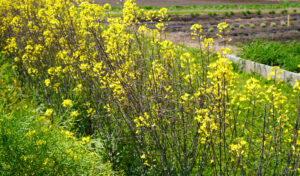
On May 25, 2001, 15 years to the day since the first restaurant opened, they again opened their doors to guests. In a tribute to their business, many of the staff returned. Bill passed away before the opening but saw it almost to completion. Lola passed away in 2004 but the Zimmerman legacy lives on.
Chris and Jack purchased The Herbfarm in March 2021.
More Challenges
Facing the pandemic was another hurdle to overcome. In spring 2020 after most restaurants closed, The Herbfarm was community funded to provide 250-300 meals per day for hospital workers. The Seattle Bailliage stepped up quickly, raising $10,000 in two weeks, the largest donor to the vital effort to sustain local healthcare personnel facing unprecedented times.
The restaurant reopened in late June 2020 only to close again in November. They made it through this second closure by offering guests semi-prepared meals, with instructions, that diners picked up. In late February 2021, they reopened again. In May, the Seattle Bailliage bought out the restaurant for an in person private event, a joyous one for attendees that also continued their support for the venue.
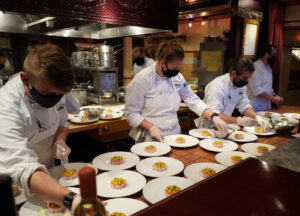
While Omicron caused cancellations in December 2021 and into January, The Herbfarm remained opened for the holidays and ever since.
Always seeing the silver lining in a cloud, the chefs noted that local vintners are making some interesting wines out of adversity, also the mother of invention. Because of smoke taint from recent wildfires, Washington winemakers are blending grape varieties. “We’re seeing a lot of multi-vintage blends of reds and whites. You are working with what you have. What’s wrong with that? There’s nothing wrong with that,” the chefs said.
The Herbfarm offers five to six wine pairings with their nine-course dinner. Chris advises wine drinkers to set aside their expectations. “At the end of the day, do we like the pairing with the food? If the answer is yes, then we feel good about it.” He emphasizes people should study the wine’s acidity as that is a very important factor in pairing often forgotten in favor of concentrating on flavor notes. “You just have to keep trying it until you find what you like. It’s a tough job but someone has to do it!” he added.
Advice for young chefs and students
As two young chefs who have caught the attention of professional experts, what advice do Chris and Jack have for young adults interested in pursuing a culinary arts career? If a student wants to enter the profession to become a celebrity chef and own a restaurant, it will be a difficult path because only a small percentage of chefs attain that level. Rather, students who express a love of cooking, and also learning, have a bright future with that perspective, Chris explained. For those students, he says, “Stay the course. It can be a hard path, particularly in the first few years. Take a good hard look if that is really the path you want to take. If you do, stay the course.”
From a few extra chives to one of the top fine dining experiences in the nation, Chris and Jack are steadfast stewards of The Herbfarm’s legacy. It’s as magical as that famous Iowa cornfield.
Links
The Herbfarm