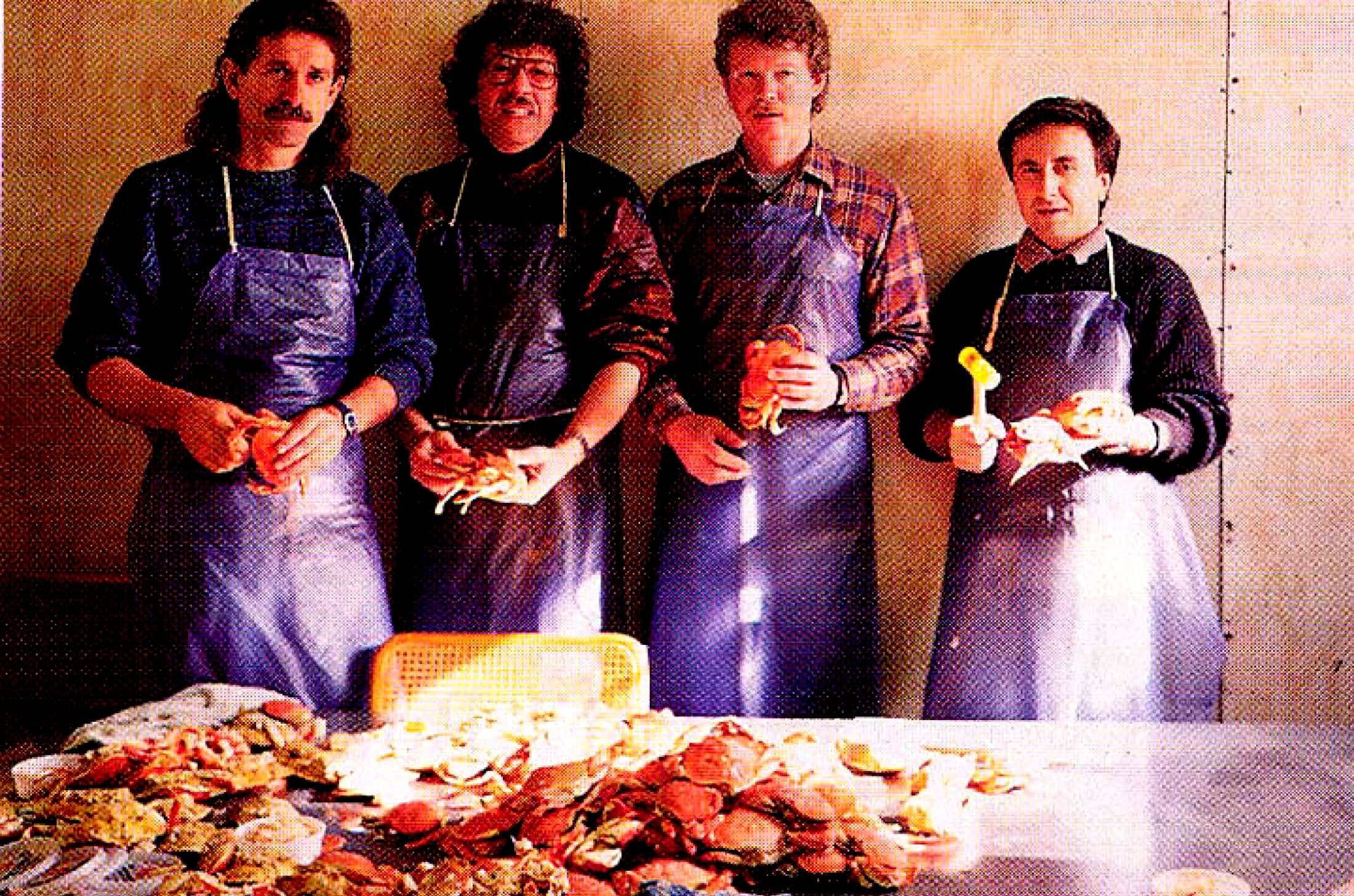
Oct. 31, 2025 – If air temperatures in commercial kitchens climb into the 90s or even into triple digits, chefs and line cooks remain at their stations with total concentration on creating and delivering optimal dining experiences for their guests. That has been the norm for a very long time but there is a change brewing in both commercial and residential kitchens. In 2021, Chef Chris Galarza, CEC, CCA, ECC, WCEC and member of the Pittsburgh Bailliage; John Harrison, FAIA, LEED Fellow and member of the Netherlands Bailliage; and Chef Gerard T. Kenny II, ECC, co-founded EcoChef. The EcoChef trio is establishing the first set of sustainability standards for how to design, build and operate commercial kitchens with a central focus on the human element of the equation. “We’re excited about the opportunity that has an environmental impact but more important, has an impact on the men and women behind the line. That’s the thing that is most rewarding,” John said to Chaîne during an Aug. 28, 2025, telephone interview.
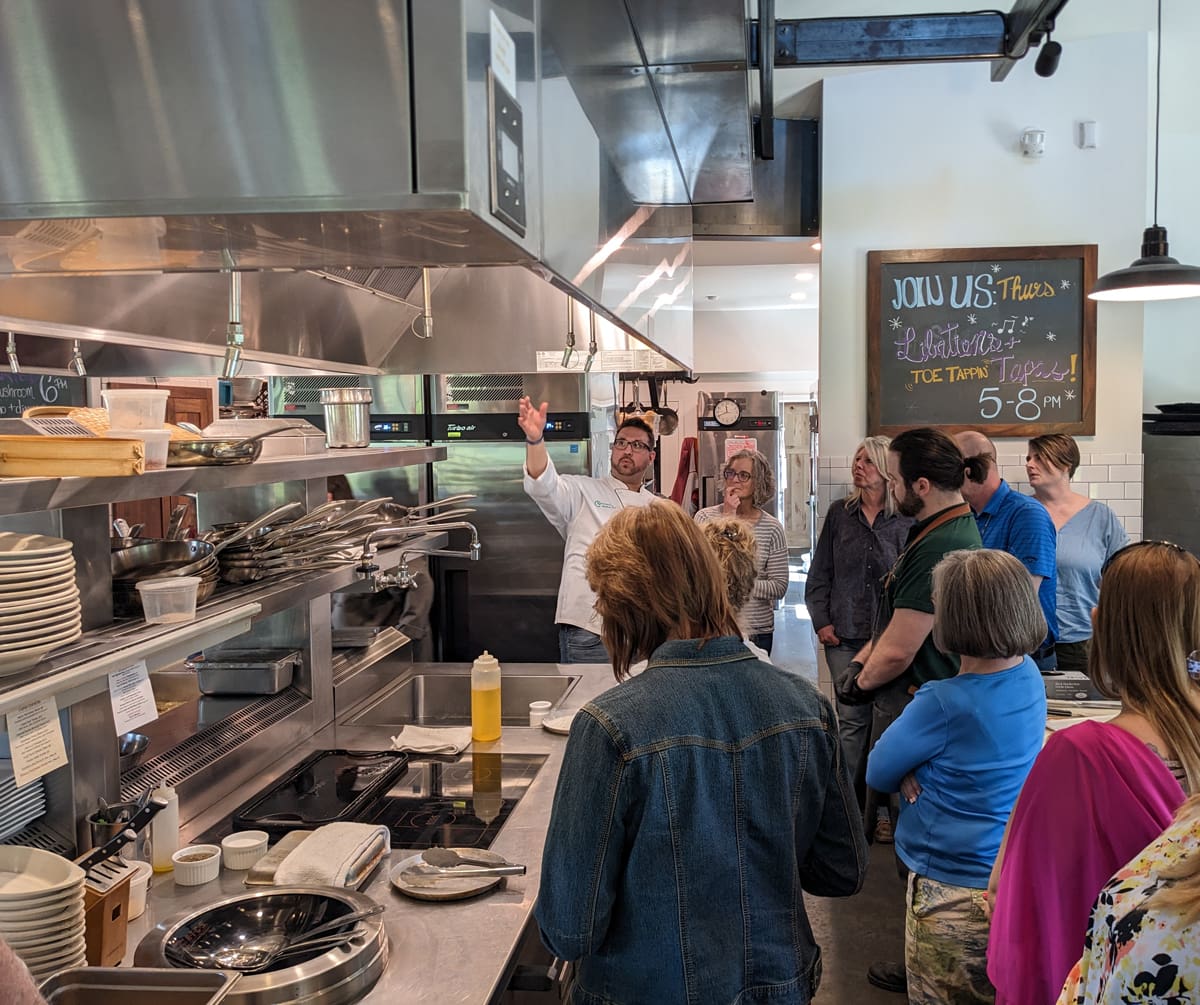
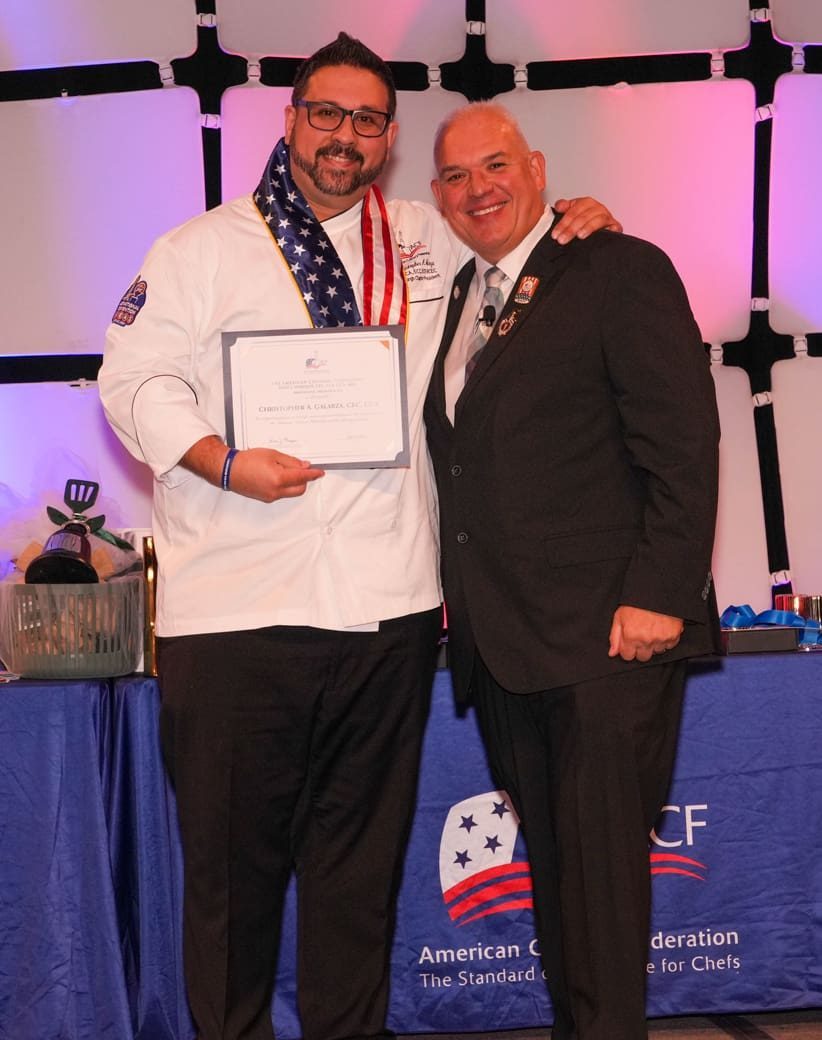
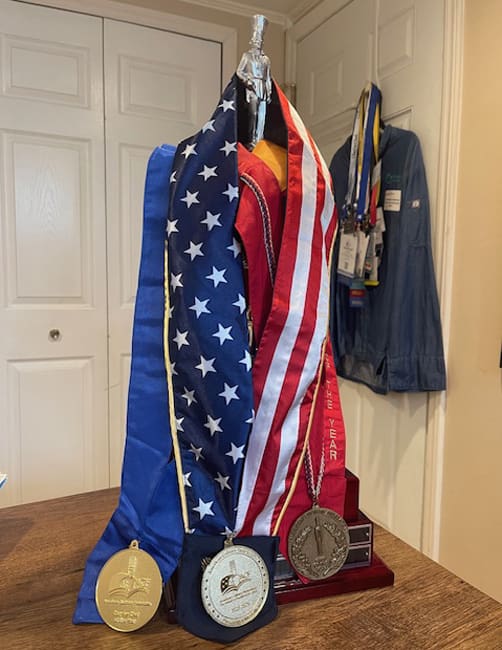
Before 2021, Chef Chris founded, and Chef Gerard, a graduate of the Culinary Institute of America (CIA) and the prestigious Greenbrier Apprenticeship program, became a partner in, Forward Dining Solutions. Chris met Gerard at The Greenbrier where they both worked under certified master chefs and culinary Olympians. Forward Dining Solutions, their consulting company, advises clients on sustainability, electrification, and innovative kitchen design.
In a just a few short years, Chris and Gerard built a client list that includes Google, Microsoft, the state of Pennsylvania, utility companies and many international entities. “We’ve really made our mark out there. It’s really expanded our influence in this arena,” Chris said to Chaîne during a Sept. 12, 2025, telephone interview. Chaîne’s Cuvée magazine featured Chef Chris in an Aug. 20, 2021 Spotlight:
Chef Christopher Galarza is a Catalyst for Culinary Change.
That headline has definitely stood the test of time as Chris continues to be a catalyst for change in the culinary profession. Since 2021, he has been a featured speaker at numerous conferences and meetings across the country and internationally. As their business expanded, Chris and Gerard began to think about creating sustainability standards for the industry.
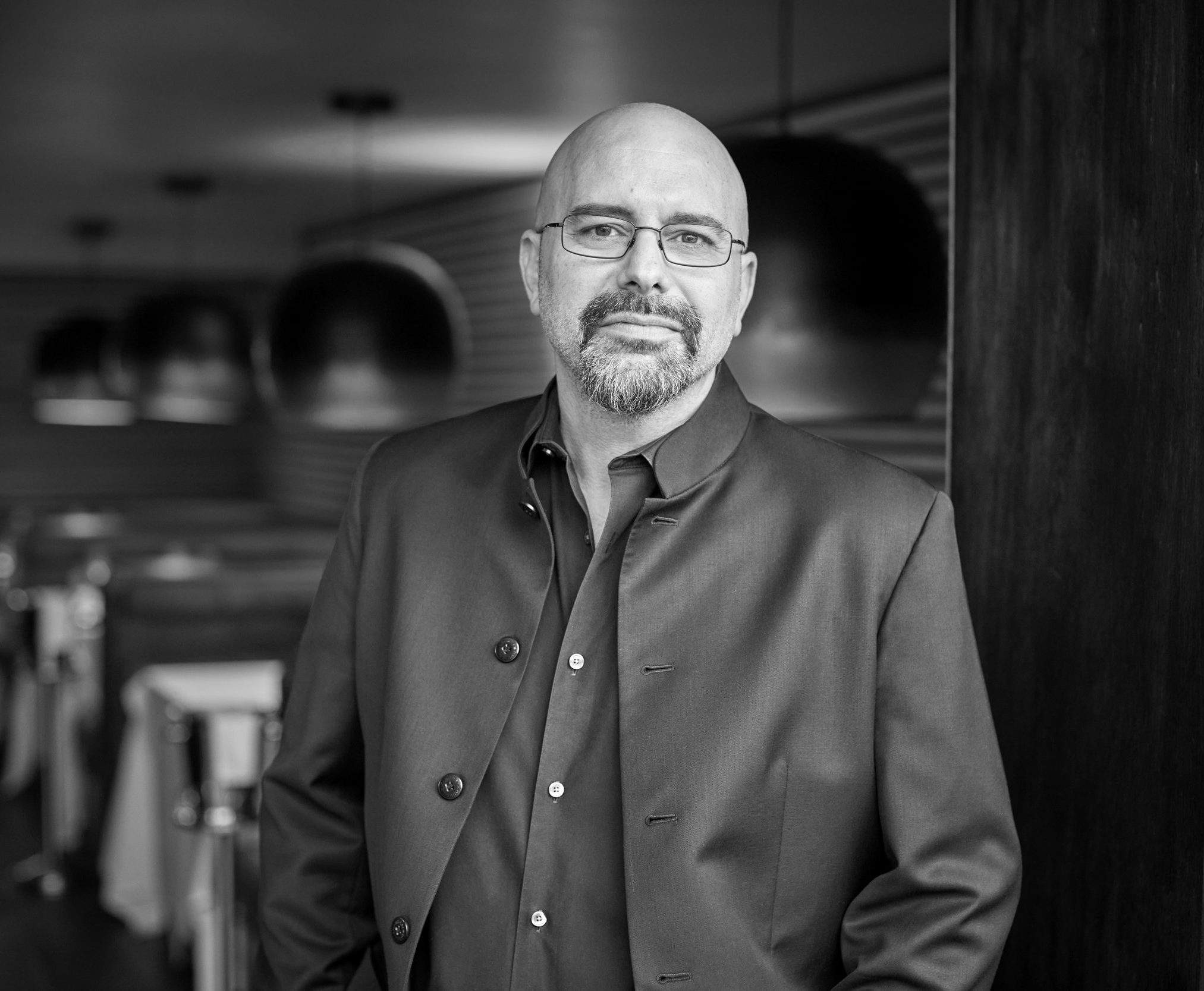
Always looking to the future, Chris first met John at a conference in California in September 2021 where Chris was a featured speaker. They had connected before the conference so arranged to meet after Chris’ presentation. Chris asked John if he thought it was possible to create a certification company as a way to standardize how kitchens are not only designed and built but also operated. John answered: “We should be able to do that – no problem.” John is an architect with expertise in LEED and WELL design having gained vast experience working on projects for REI and then for more than 10 years, he worked for Starbucks designing and implementing their store level sustainability program. “We LEED certified over 1,600 projects in 22 countries all over the world,” John said.

|
|
Chris, John and Gerard, with years of complementary professional experience and shared goals, decided to join forces. EcoChef was born. Chef Chris is based in Pittsburgh, EcoChef’s headquarters; Chef Gerard is in Austin; and John lives in Amsterdam. “We are geographically dispersed but in this day and age, that doesn’t matter so much. The system is designed to be applied anywhere,” John said.
From the outset, the founders sought to create a holistic framework from kitchen design and equipment to operations, including personnel, all under a sustainability umbrella. “I’m a chef. It’s like an onion. There are tons of layers to this,” Chris said.
With the kitchen being the most expensive component of a restaurant, it’s always a surprise to John when he sees a poorly designed space that creates problems from day one. The solution however is quite simple. “A big lesson is to listen to the people who actually use the spaces. You’re probably going to get a better result. I would never think of telling a seasoned chef what my exact opinion is without listening to him or her. That would be absurd. They are the ones who have to go in and use the space,” John said.
EcoChef courses
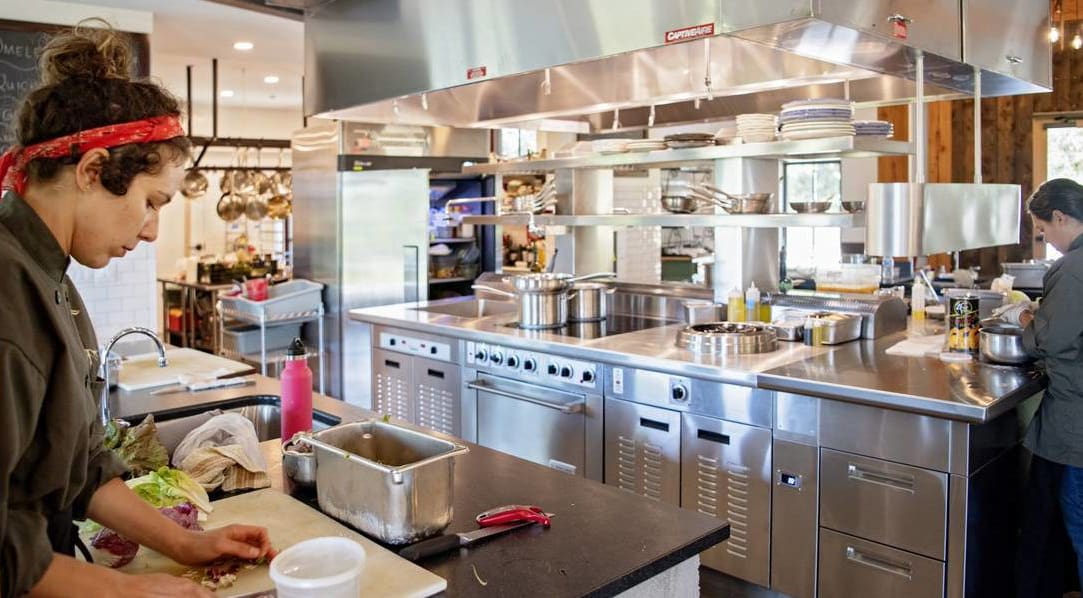
Leveraging the founders’ expertise and real world experience, EcoChef began developing courses and codifying standards to create new culinary accreditations as well as residential and commercial kitchen and equipment certifications. For commercial kitchen certification, EcoChef created bronze, silver, gold and platinum levels.
Currently, there are three EcoChef courses leading to EcoChef accreditation for personnel working in the hospitality industry. Those are:
1. Associate: As an entry level certification, this course was designed to give novice kitchen designers a foundation in sustainable kitchens, an overview of a range of topics from policy to sustainability to efficient and effective operations.

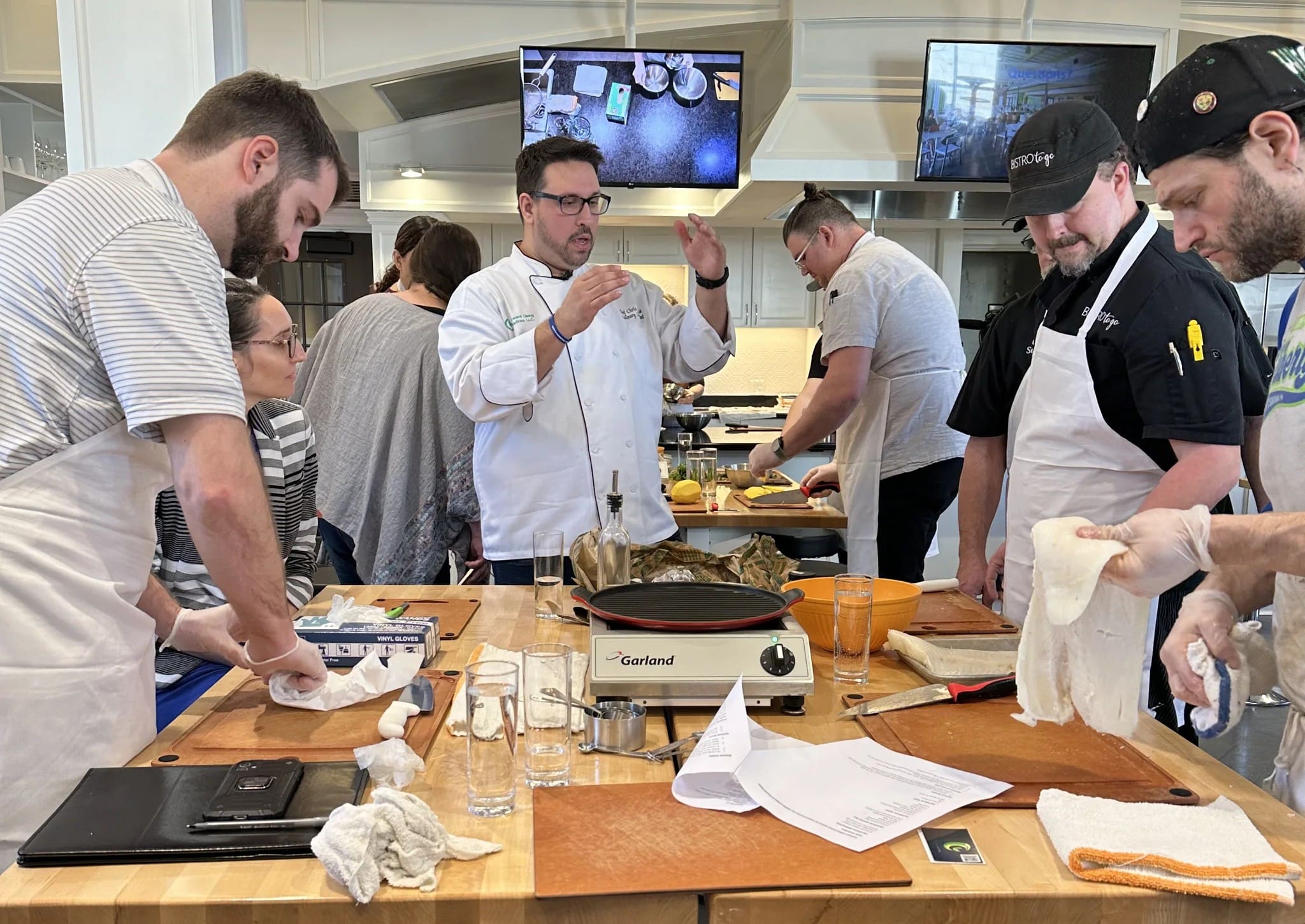
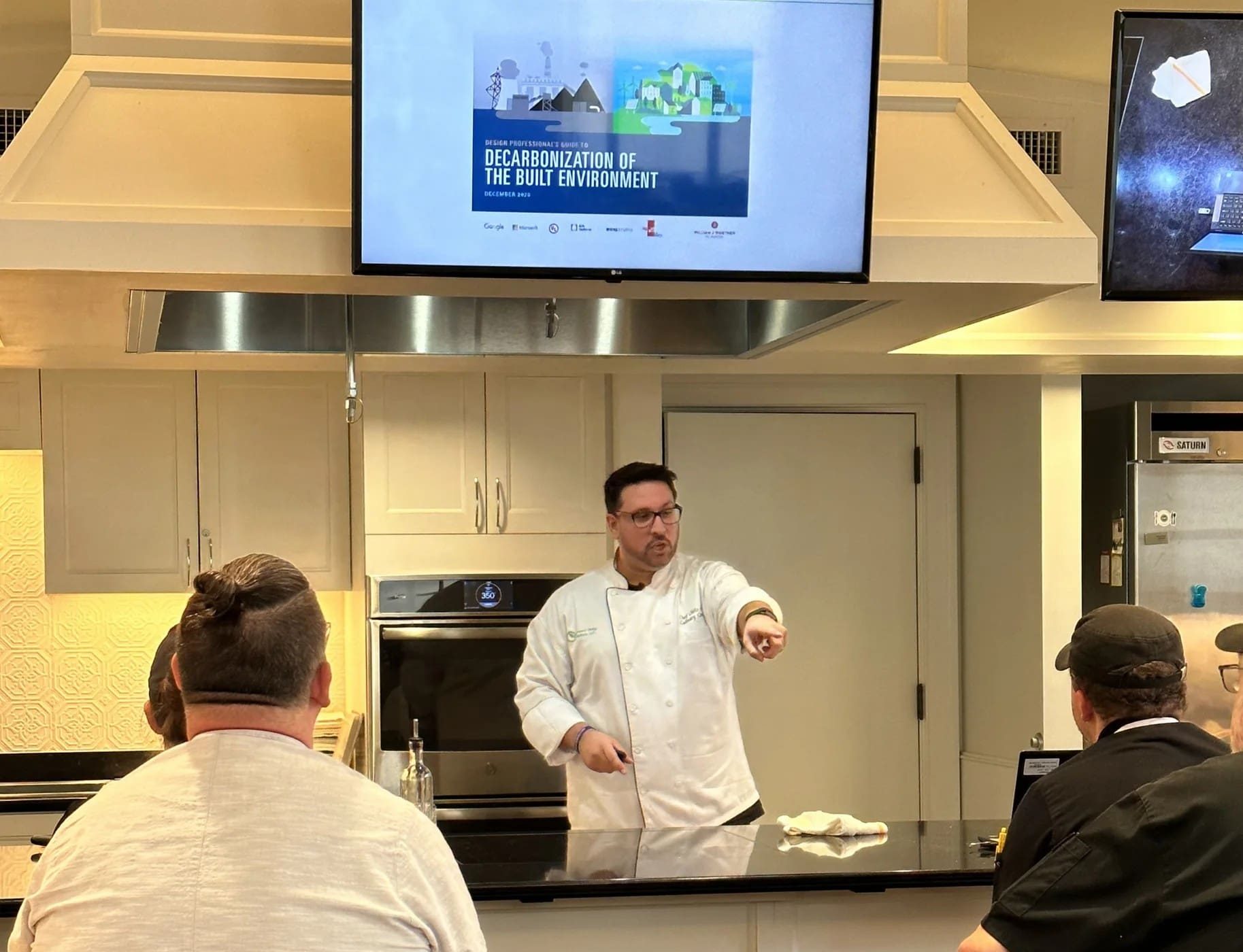
2. Culinarian: Specific to the culinary and hospitality industries, this level of certification indicates a chef has the knowledge to operate a sustainable kitchen in all facets, including but not limited to maximizing savings on waste and selecting equipment to maintain air temperatures in the low 80s or below. This EcoChef Culinarian course leading to certification is currently being offered by the American Culinary Federation (ACF). Chris said it’s the first time in its 100-year history that ACF has partnered with an outside company for a certification. EcoChef is donating a portion of each class fee to the ACF Foundation for educating future chefs. Chris added that he designed this course as a half semester course so culinary schools could offer it to their students.
Since he founded Forward Dining Solutions, Chris has advocated for electric induction ranges to replace natural gas ranges because of a multitude of benefits, including reducing the air temperature in kitchens. Yet he advises young chefs to be trained on all types of equipment. “The beautiful thing about young chefs is they are a sponge. They just love this industry. They want to be part of it. And they want to be as valuable to where they are going to work as possible so they want to experience everything. They want to cook on all pieces of equipment, try all techniques. They want to do it all,” Chris said. “I don’t ever recommend culinary schools go all electric. I recommend they have both gas and electric kitchens so they can give students experience on all pieces of equipment.” With that foundation, Chris said young chefs will not be “caught as a deer in a headlight” when they secure their first job and walk into an all electric kitchen.

3. Practitioner: This level is for people currently designing kitchens, seasoned architects, and engineers. The certification indicates the person has the knowledge to design a kitchen that works for chefs. “I can’t tell you how many times I’ve gone into a space that was new and just walked in and said, ‘Who the hell designed this space? Obviously, they’ve never worked in a kitchen,’” Chris said.
Chris points out that the return on the investment for attaining EcoChef accreditation and/or kitchen certification is the ability for professionals to market their establishments to a broader audience. And John added, “It’s about trying to make the space better for employees. It’s really difficult recruiting and retaining people nowadays. If you have a great place to work, the employees and the employers can both be happy.”
Partnership with The Académie de Gastronomie Brillat-Savarin
EcoChef’s new accreditation framework represents a seismic change in the industry but one that is very important to society as well. “The hospitality industry is one of the most important industries for economic prosperity,” Chris said. “We employ one out of every 10 jobs in the world. We contribute $11 trillion to the global GDP each year. In the United States, it’s 10 percent of GDP, about $2.3 trillion. We are an economic powerhouse.”
Adapting to the many changes and challenges the industry faces today is essential. EcoChef views their role as one of active support to bridge the past to the present and future by creating what they describe as the “world’s first accreditation framework focused around sustainability and hospitality.” They believe their work will help define the next 100 years in the industry.
Through a landmark partnership with Brillat-Savarin, EcoChef seeks to have a global impact. In first quarter 2026, they will be launching their five-tiered framework in the United States and Canada as a pilot program after which it will roll out globally. Within each tier, achieving certification will permit chefs to add initials after their names to further define their skills.
Called the “Ordre Durabilité de l’Hospitalité,” the five tiers are:
Tier 1 – Entry Level: EcoChef Fondamentaux/EcoChef Fundamental
Initials: ECF
This tier is for aspiring professionals seeking foundational skills in sustainable hospitality.
Tier II – Core Certification: EcoChef Culinaire Certifié
Initials: ECC
This tier will be required before pursuing any specialty.
Tier III – Leadership and Management
This tier has position specific standards for senior operational roles, such as Chef Exécutif Durable/Sustainable Executive Chef (SEC) and Chef Patissier Exécutif Durable/Sustainable Executive Pastry Chef (SEPC). In addition, EcoChef is developing a front of house accreditation for those pursuing a maître d’hotel career path. This tier speaks to EcoChef’s holistic approach to the hospitality industry as front of house and pastry chef accreditation have largely been forgotten, Chris explained.
Tier IV – Professional Specialties
EcoChef has developed five courses in each of three specialties: Savory, Pastry and Service. For example, the five courses in the Savory Specialty are: 1) Plant-Based Cuisine (PBC); 2) Zero-Waste Gastronomy (ZWG); 3) Green Kitchen Technologies (GKT); 4) Culinary Health & Nutrition (CHN); and 5) Sustainable Sourcing (SSG). Once certified, chefs will be able to use the initials ECC plus the initials for the individual courses. Candidates for these courses and certification must have a Tier III certification.
Tier V – Mastery Designation
Completing all five courses in a single specialty plus one course in each of the two other specialties or three courses in each of the three specialties qualifies the chef for a Tier V Mastery certification. For example, successfully completing the five courses within the savory specialty certifies the chef as a “Maître Cuisinier Durable/Master EcoChef MEC.”
Similar to EcoChef’s partnership with the ACF, a portion of all course fees will go to Brillat-Savarin to support culinary education.
WELL Partnership
The International WELL Building Institute (IWBI) was founded 10 years ago to “transform health and well being with our people-first approach to buildings, organizations and communities,” according to information on the WELL website. WELL has 10 core concepts: Air, Water, Nourishment, Light, Movement, Thermal comfort, Sound, Materials, Mind and Community.
WELL has carefully reviewed the EcoChef standard and recognized its value in their system. As a part of the WELL-EcoChef partnership, EcoChef points for certification will transfer to WELL certification.
“That’s a huge deal. WELL is one of the most important players in the world. We’re still in the soft launch so we’re positioned to do a lot of great things for the industry and for the workers themselves,” Chris said.
Chef Chris – Author
As a pioneer in the burgeoning field of sustainable hospitality, in 2023, Chris wrote a book to disseminate information from his experiences as a chef and consultant – Understanding the Green Industrial Revolution: An Interdisciplinary Look at the Hospitality Industry.
Jill Kummer, Pittsburgh Bailli, has long been a mentor to and advocate for Chris’ work. “If it wasn’t for Jill, I would not have written my book. She encouraged me often to write it,” Chris said.
There are about one million commercial kitchens in the United States and tens of millions residential kitchens. While their focus has been on commercial kitchens, through Chef Gerard’s efforts in the residential market, EcoChef just certified their first residential kitchen. Chris looks for residential certifications to expand as electric kitchens are popular with homeowners.

“The Green Industrial Revolution I believe is an organic economic system being built from everyday people. People are choosing to spend their money based on their values. They are supporting brands and businesses that share their values. If hospitality professionals can tap into that and show people what they are doing is bettering the planet, bettering our industry during your experience, people will be happy to support that and pay a little bit more for it,” Chris said.
For his work, Chris was named to the 2025 Grist 50 that recognizes people from all walks of life “who are working on fresh, real-world solutions to our planet’s biggest challenges,” according to information on the Grist 50 website. Chris attended an awards ceremony in New York City in September to accept the honor.

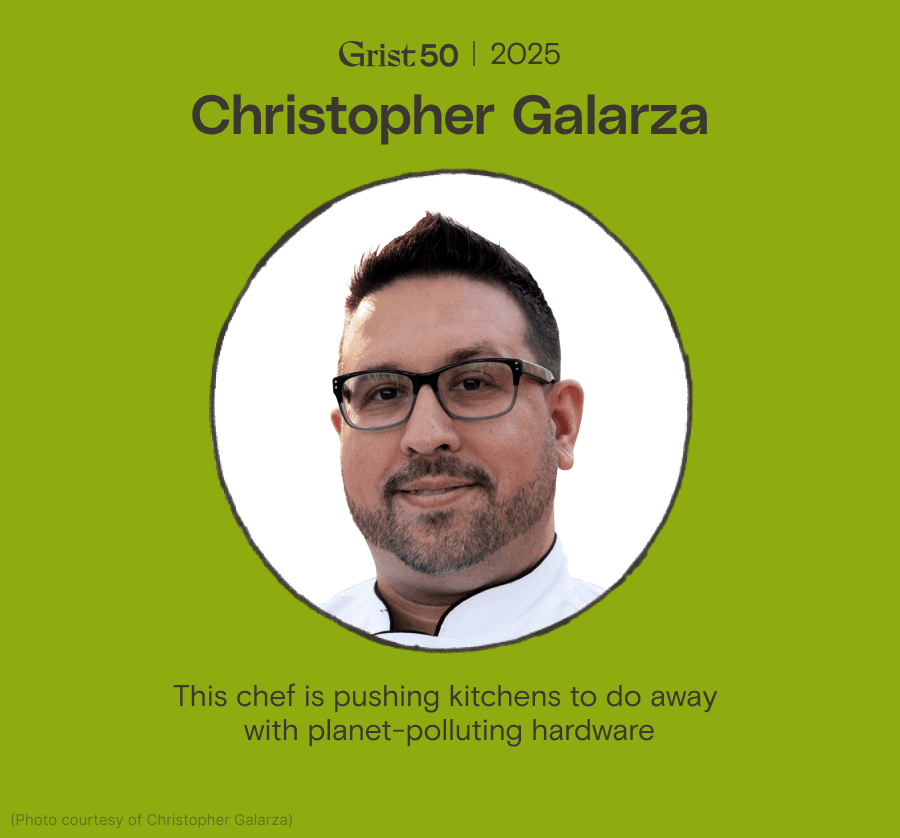
As a recognized catalyst for change in the industry, Chris realizes the significance of the moment. “Let’s be honest. Nothing of this scale in our industry has happened since the time of Escoffier. My hope is to have America be the gold standard for how these kitchens get built internationally,” Chris said.
With EcoChef leading the charge, soon the adage coined by Harry S. Truman in the 1940s – If you can’t stand the heat, get out of the kitchen – will no longer be understood by young chefs just starting their careers. The EcoChef trio will be ecstatic!
“It’s been an incredible journey,” Chris said.
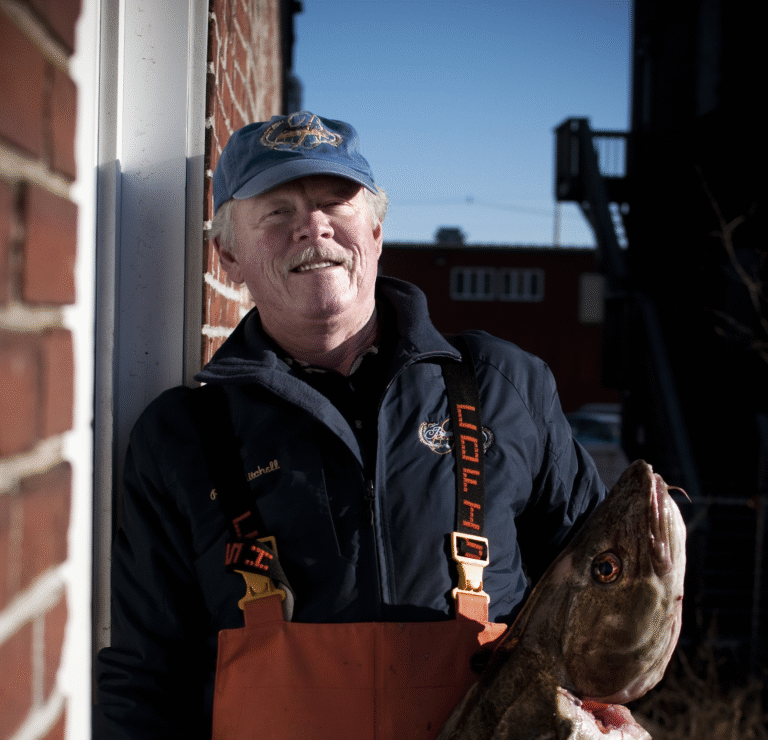
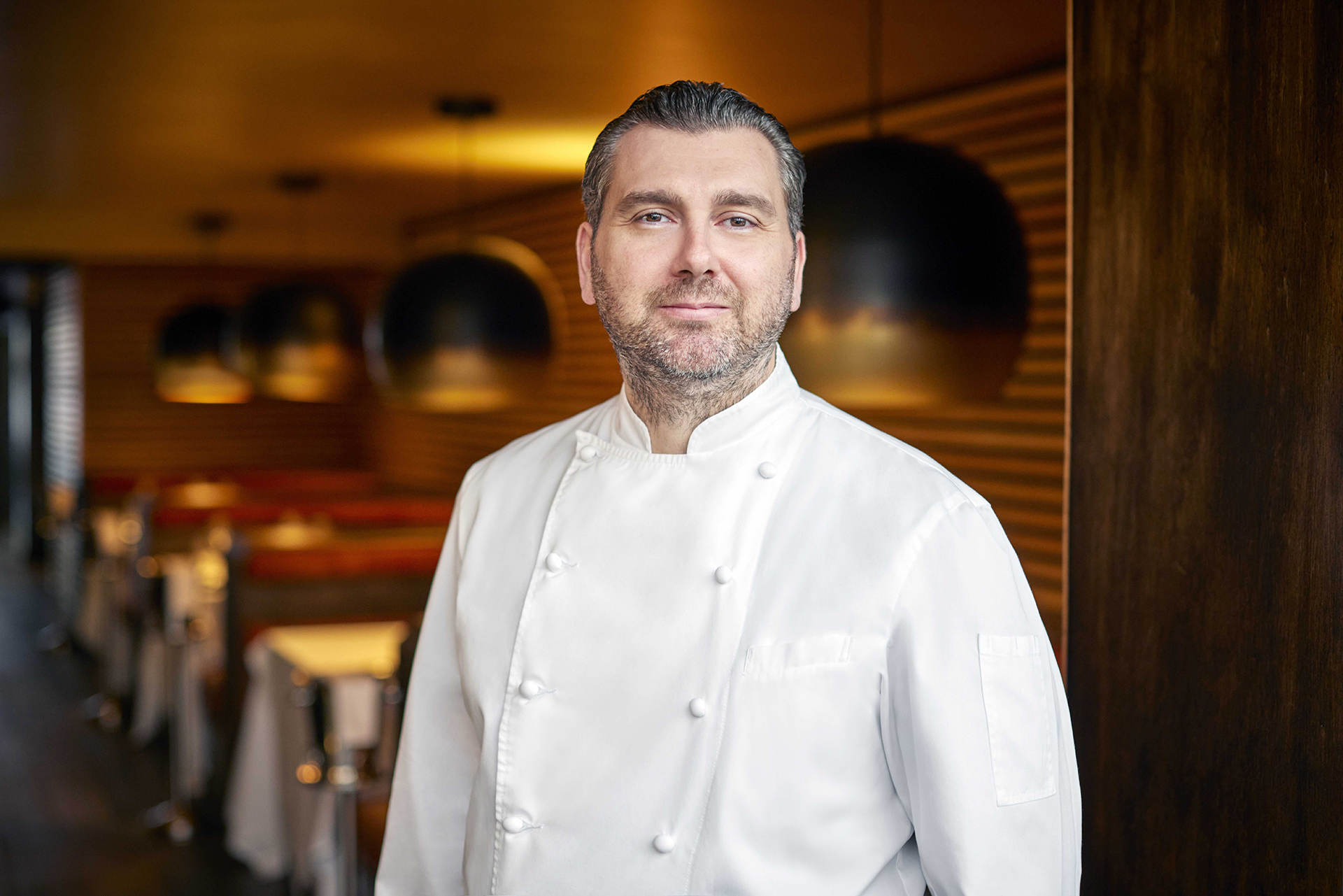
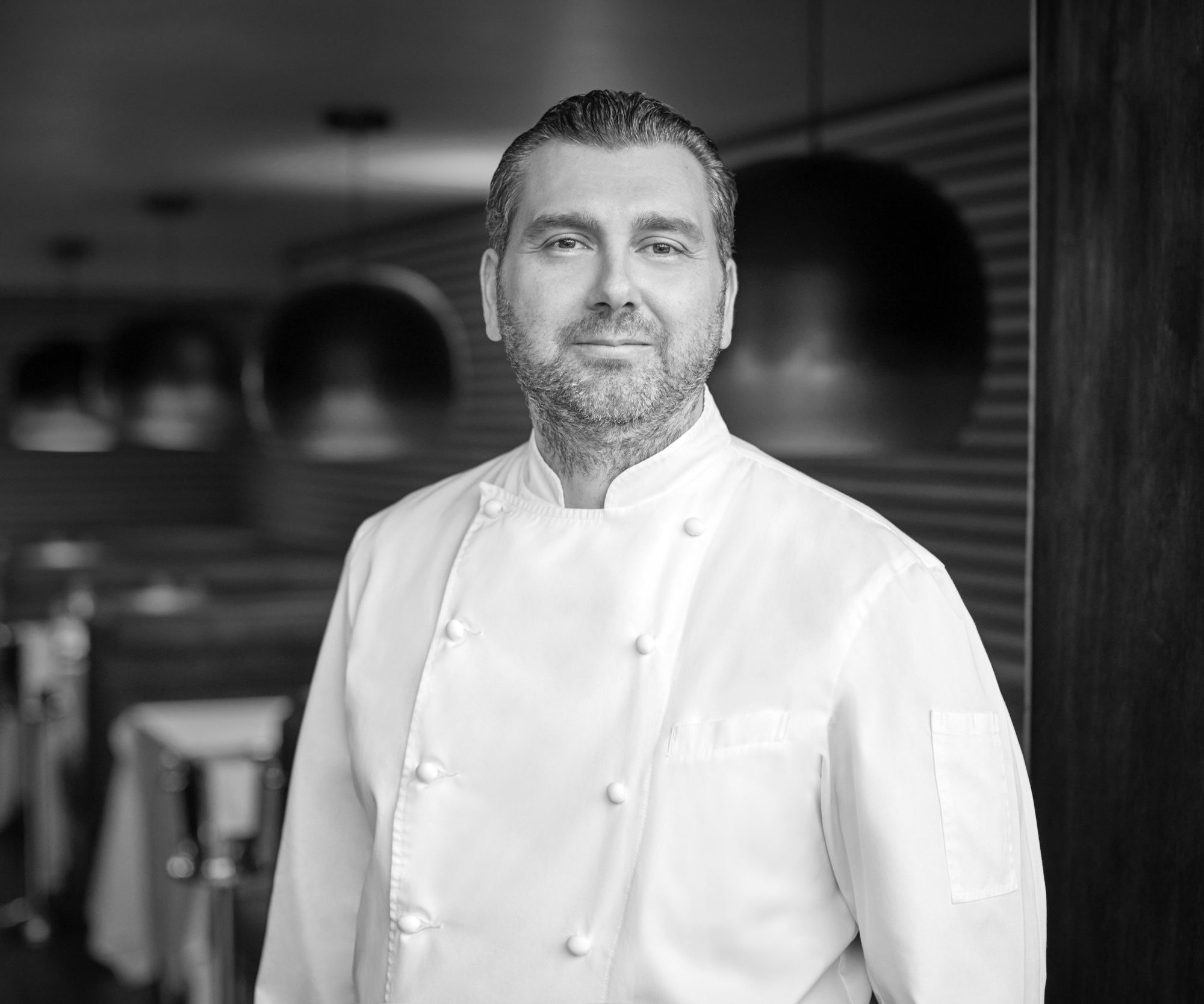
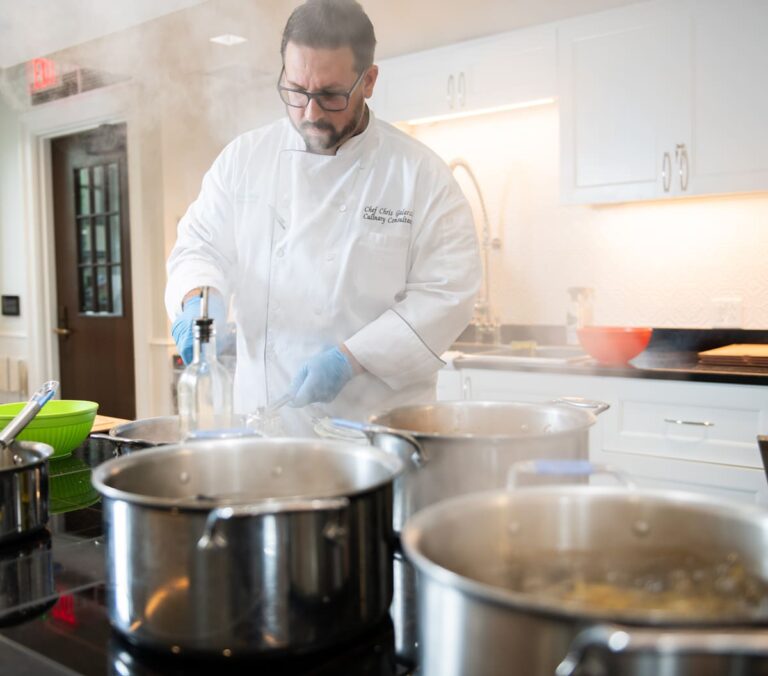
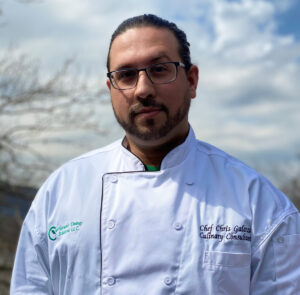
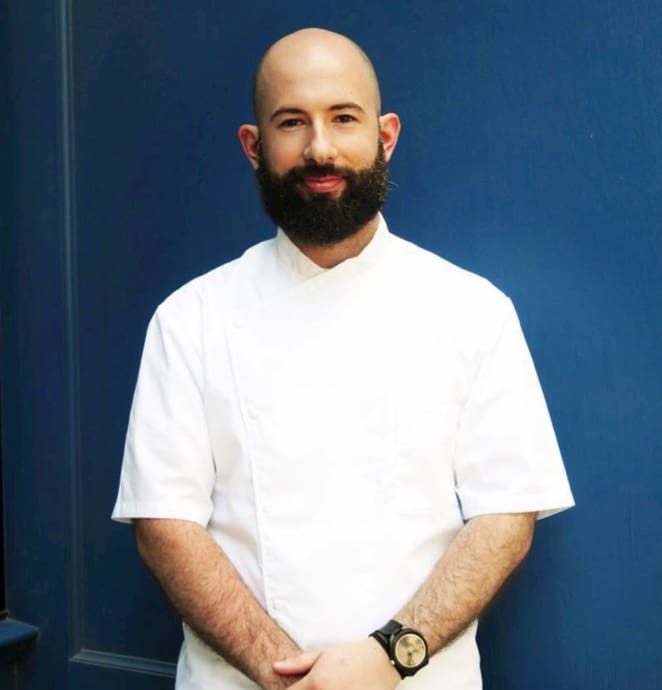
Featured image above: Chef Chris Galarza (Photo: Courtesy of Chef Chris Galarza)
Links
EcoChef
Forward Dining Solutions
Grist 50
WELL
Chef Christopher Galarza’s website
Chef Chris’ book
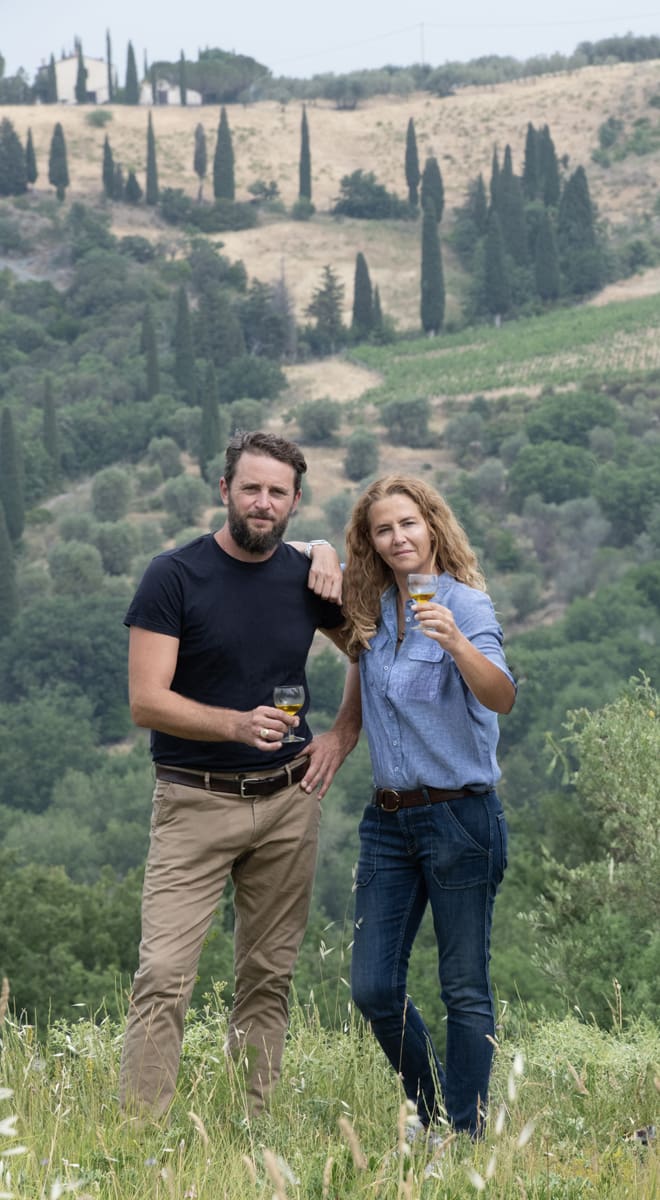









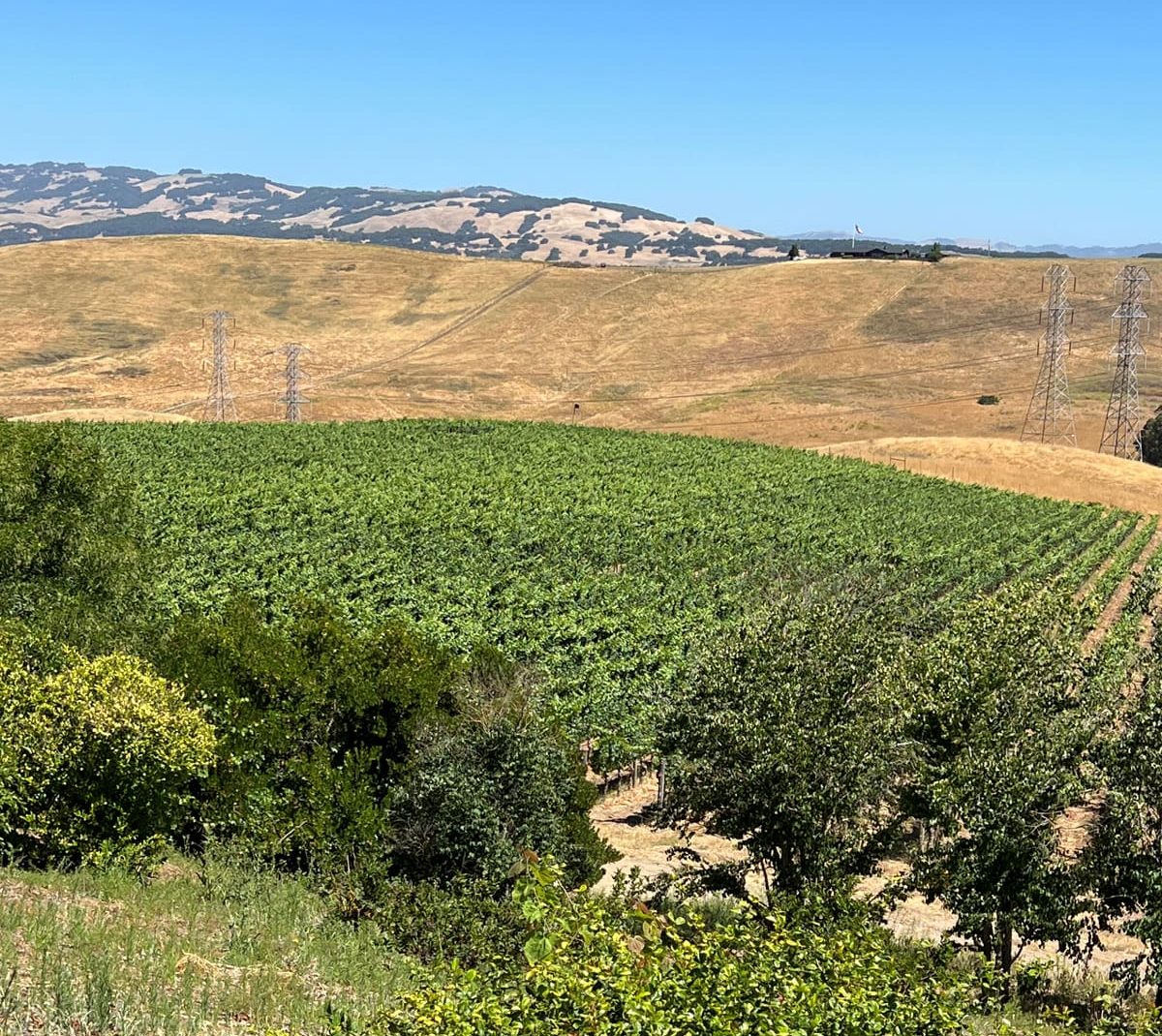
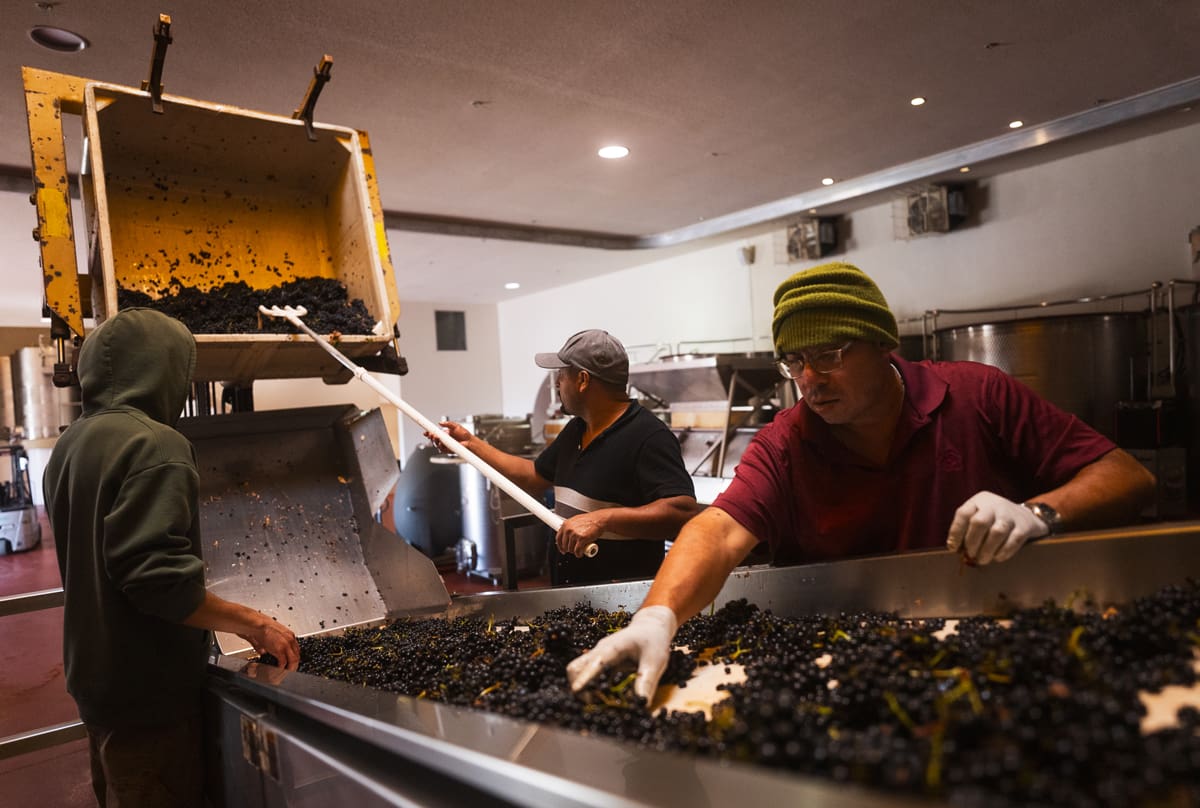
 They will be picking grapes more in the 1990s style of David Bruce wines and will be doing clonal bottling and vineyard designated varietals. “We’re really excited for our Wine Club members and people to experience the varying degrees to which we can make and affect wine up here,” he said.


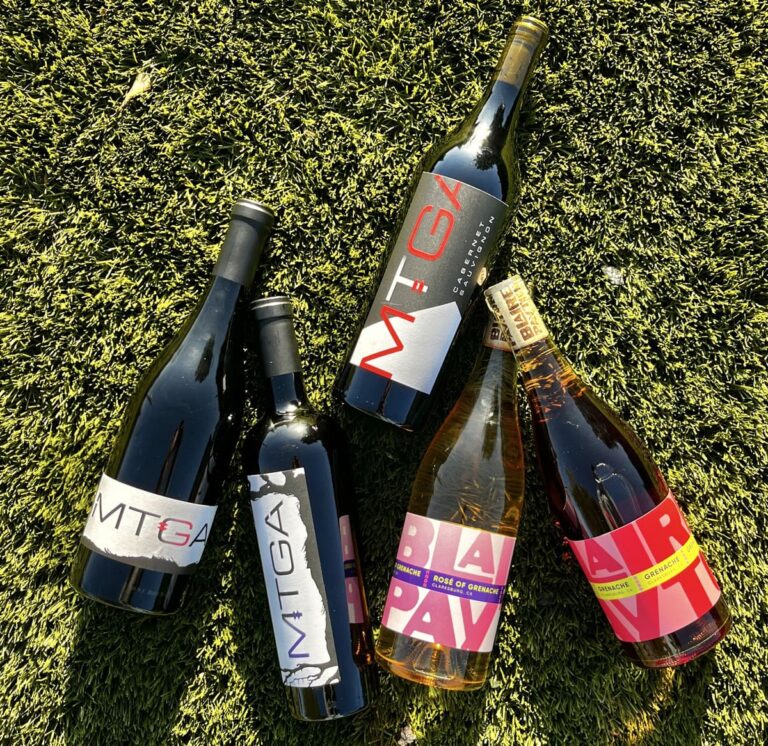


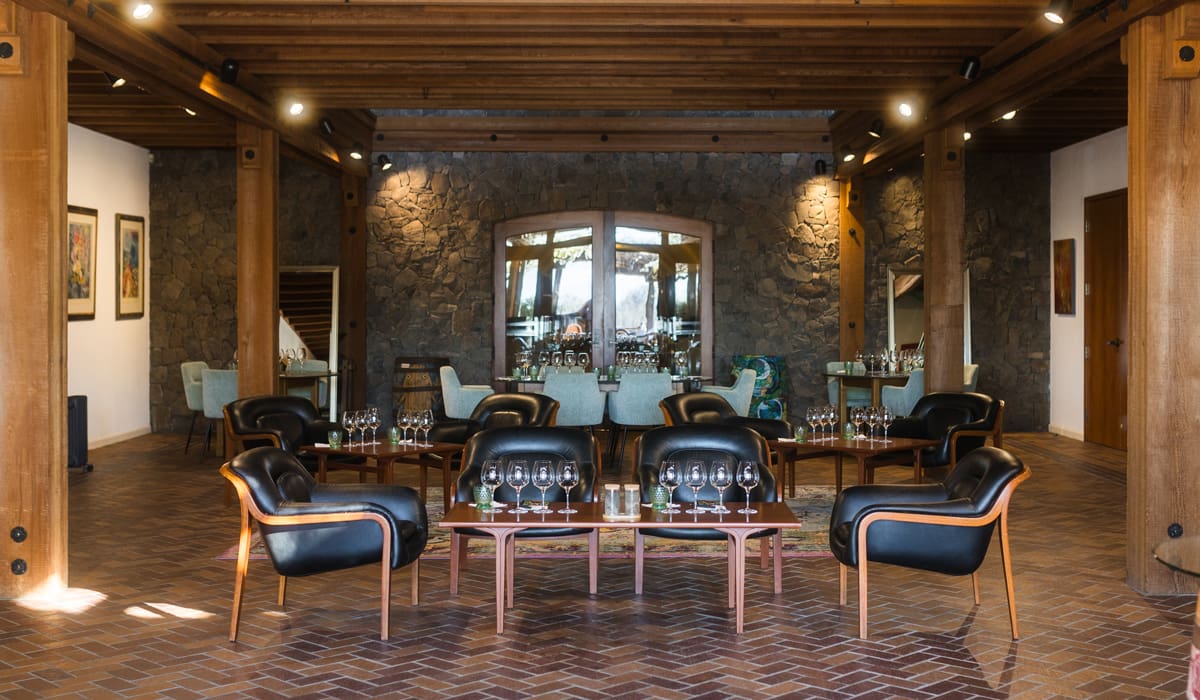
 With production increasing and 15 years of experience, MTGA recently donated wine to Chaîne’s Grand Chapitre, held in Hawaii last May. “It was great to be able to get to that point,” Michael said. Michael first learned of the Chaîne 15 years ago when he was working for Raymond Vineyards and the Boisset Collection. Brittany was recently on a sales trip to New Orleans where she met with a number of Chaîne members who then visited the MTGA tasting room in St. Helena. “This community continues to build upon itself, which is amazing,” Michael said.