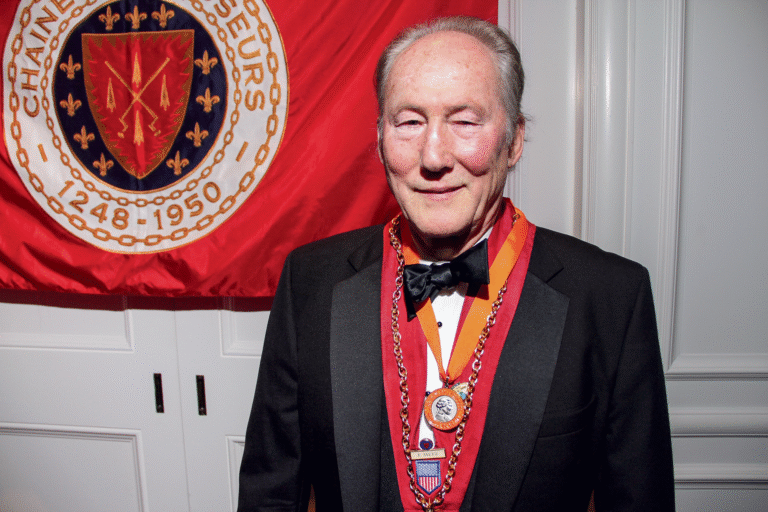

June 6, 2022 – Culinarians seeking certification at any level are following the path forged by Master Chef Ferdinand Metz, President Emeritus of the Culinary Institute of America (CIA) and past President of the American Culinary Federation (ACF), who helped codify American Culinary Federation (ACF) chef certifications more than 45 years ago. As a German immigrant to the U.S. in 1961, Chef Metz was stunned at the low quality he observed in the kitchen when he started working at a New Jersey country club. “While the ingredients were good, what they did with them, for the most part, was terrible. If I had the money at the time, I would have gone back to Germany. That’s how bad it was,” Chef Metz, Chaîne des Rôtisseurs Maitre D’ Honneur, said to Chaîne during an April 25 telephone interview.
At the time, anyone wearing a toque in the kitchen would call themselves a chef. There were neither standards nor certifications in the industry. Ferdinand made the very best of a bad situation by drawing upon two apprenticeships in culinary arts and baking/pastry that he completed in Munich before coming to America. It did not take long for his talent to shine. The country club promoted him to Sous Chef and within two years of his jarring introduction to American cuisine, he was reporting for work at Le Pavillon Restaurant in New York City.
The iconic French restaurant had its origins at the 1939 World’s Fair in Flushing Meadows, New York where visitors were treated to a glimpse of “the world of tomorrow.” Following its spectacular success at the World’s Fair, in 1941, Le Pavillon opened in the heart of Manhattan. In 1962, Chef Metz burnished his world of tomorrow under the tutelage of Chef Grangier at Le Pavillon.
“The cooking there was absolutely impeccable. I went from the very bottom to the very top. It was just a fantastic experience,” Ferdinand said. In 1964, Craig Claiborne, famous New York Times restaurant critic, named Le Pavillon the best French restaurant in the country. With his culinary pedigree solidified, that same year Metz accepted a position as the Banquet Chef at The Plaza Hotel, another New York City iconic landmark.
In what can only be described as a meteoric rise in the culinary profession, in 1965, the H.J. Heinz Company, based in Pittsburgh, hired Ferdinand as their Senior R&D Manager, a position he would hold for 15 years. Known for 57 varieties of ketchup, Ferdinand said early on in his career at Heinz there were more than 2,500 different products under his umbrella, a role he embraced and one that provided a foundation for his tomorrow as President of the Culinary Institute of America (CIA). “It was a very challenging and enriching experience,” he said about his years at Heinz.
While at Heinz, Ferdinand became very involved with the ACF to help advance and define the culinary arts profession through a rigorous certification process at all levels. His own education through apprenticeships in Germany inspired his advocacy for similar programs in the United States. The training is now standard in the industry and has withstood the test of time. In 1975, ACF issued its first certifications and in 1976, ACF advocacy convinced the U.S. Department of Labor to list an “executive chef” job in the professional category instead of the “service” category.
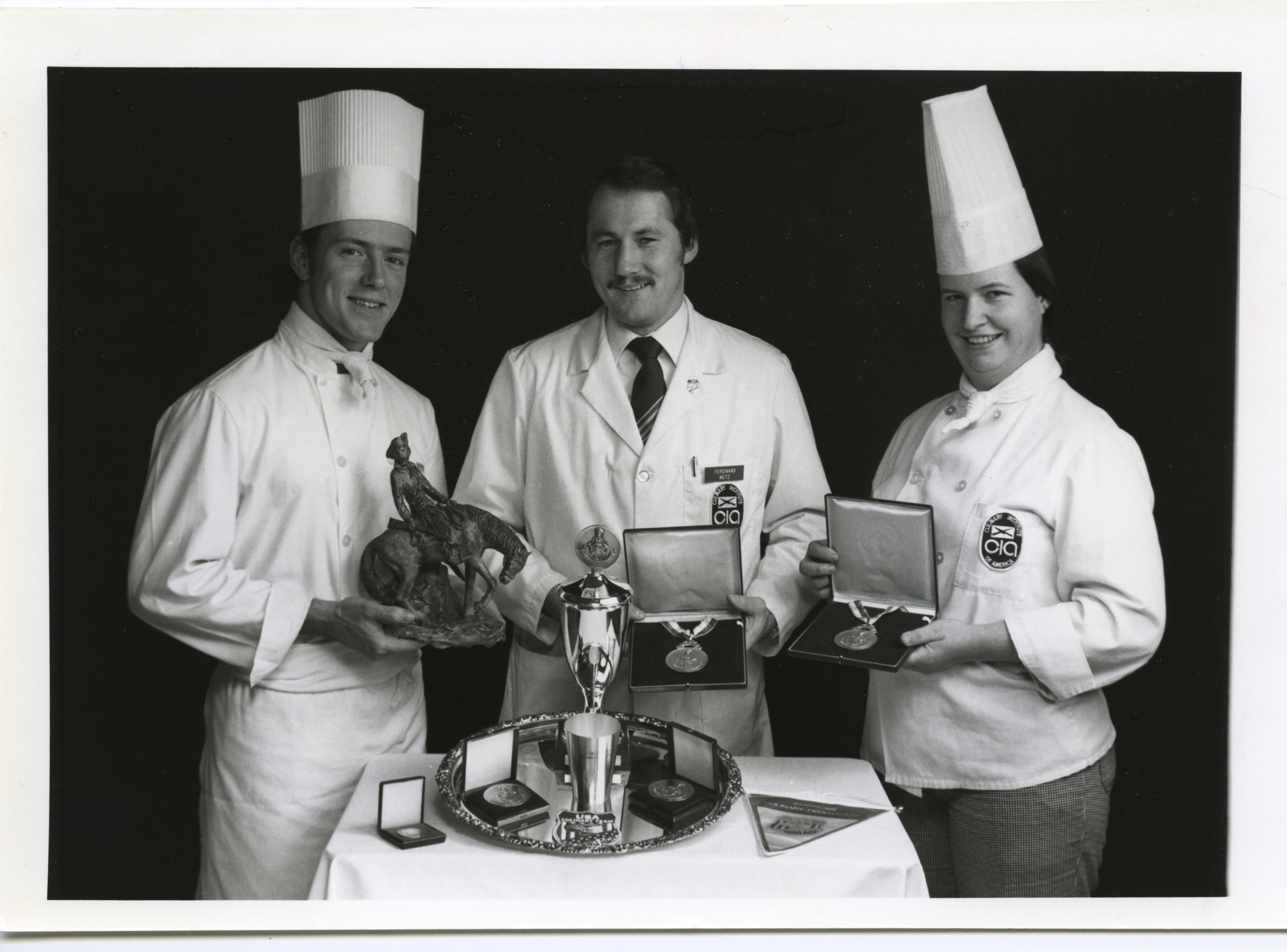

Always with an eye to mentoring young culinarians, in 1976 under his guidance as Captain, an American team reached the top platform for the first time at the International Culinary Olympics. Disrupting all norms, Ferdinand had his team cook nothing but American food, a radical departure from all previous attempts to compete with the world’s best chefs. America has a long history of beloved and traditional regional cuisines, Ferdinand thought, so he decided it was time to showcase American cuisine on the international stage. His bold direction for his team propelled them to third place, finishing in a tie with the French team, a tie they gladly embraced. “It was a star-studded French team managed by Chef Joel Robuchon and we could not have been any happier to tie them for third place. It was better than having third place all to ourselves.”
The sharpened definition of American cuisine evolved organically in the 1970s and 1980s as farm-to-table cuisine became popular. “We did not set out to define American cuisine,” Ferdinand said. “What are the fresh ingredients available to us most of the year? That’s when we began cooking with those ingredients. It was an important revelation for people to look at American cuisine.”
Ferdinand boils American cuisine down to three timeless elements: 1) updated regional cuisines, 2) fresh ingredients, and 3) uncompromising cooking skills.
Integral to elevating American cuisine for the past 45 years with adherence to sound culinary principles and practices, Ferdinand said the profession today has been informed by the past. “The biggest change has been no change. Today we really don’t have to talk about American cuisine much because it’s what we do. Ideally, every restaurant is doing it. We no longer have to defend it.”
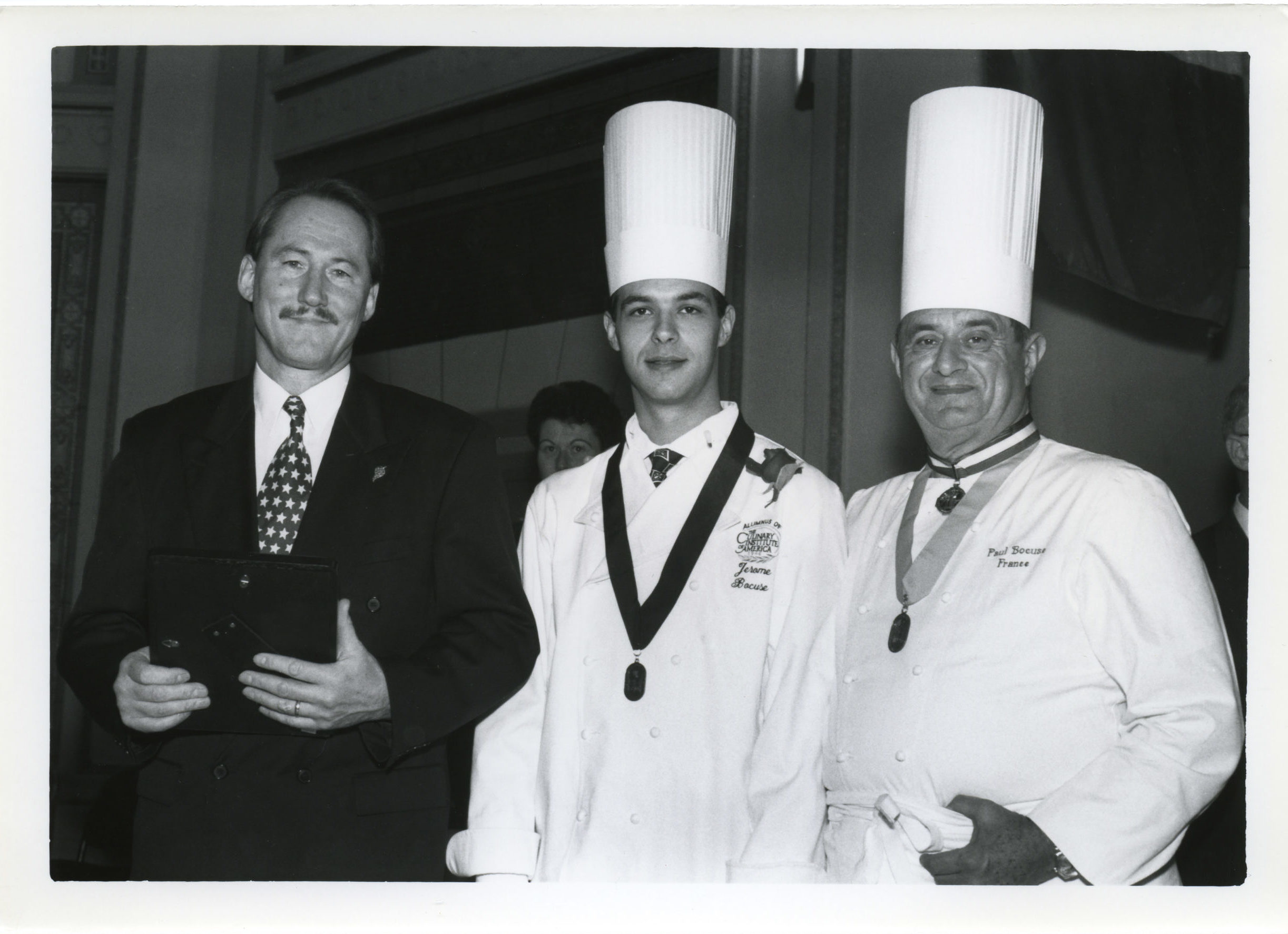
His perennial focus on ingredients, his firm belief in American cuisine, and his Master of Business Administration (MBA) from the University of Pittsburgh made Ferdinand the perfect candidate to lead the CIA in 1980 when Jacob Rosenthal, CIA’s president at the time, personally recruited him. Once at the beautiful Hyde Park, New York campus, Ferdinand again tipped the apple cart and in doing so, ushered in an exciting era for culinary students that remains today.
Ferdinand fondly and proudly recalls his more than 20 years leading the CIA. “It was one of the most exhilarating experiences for us, for me, for the faculty, for the students because up until then, teaching was all about French ways,” he said. With a sophisticated public and great ingredients, what America did not have was skilled culinarians. He revamped the curriculum to teach students the functionality of ingredients widely used in American cuisine and trained them in classic techniques that have withstood the test of time. And what better way to explain his new educational paradigm than by opening five restaurants on campus where guests could experience it first hand, he thought.
He reached out to faculty and students for input into all aspects of a new restaurant for the campus. They flooded him with ideas. In 1982, CIA’s American Bounty Restaurant, a new concept at the time with a sole focus on American cuisine, opened and it’s still going strong 40 years later. “It was a super exciting time,” Ferdinand said. Julia Child was a regular visitor and he invited James Beard to its grand opening. “I got to know him personally.”
“Julia was a very generous person with her time and a very good friend of the CIA. She was very gracious,” he added.
Ferdinand always placed students at the center of any decision at the CIA. He taught classes and played hockey and soccer on student teams to stay authentically connected with them. “You need to get to know the students and what their aspirations are. That’s how you help them,” he said.
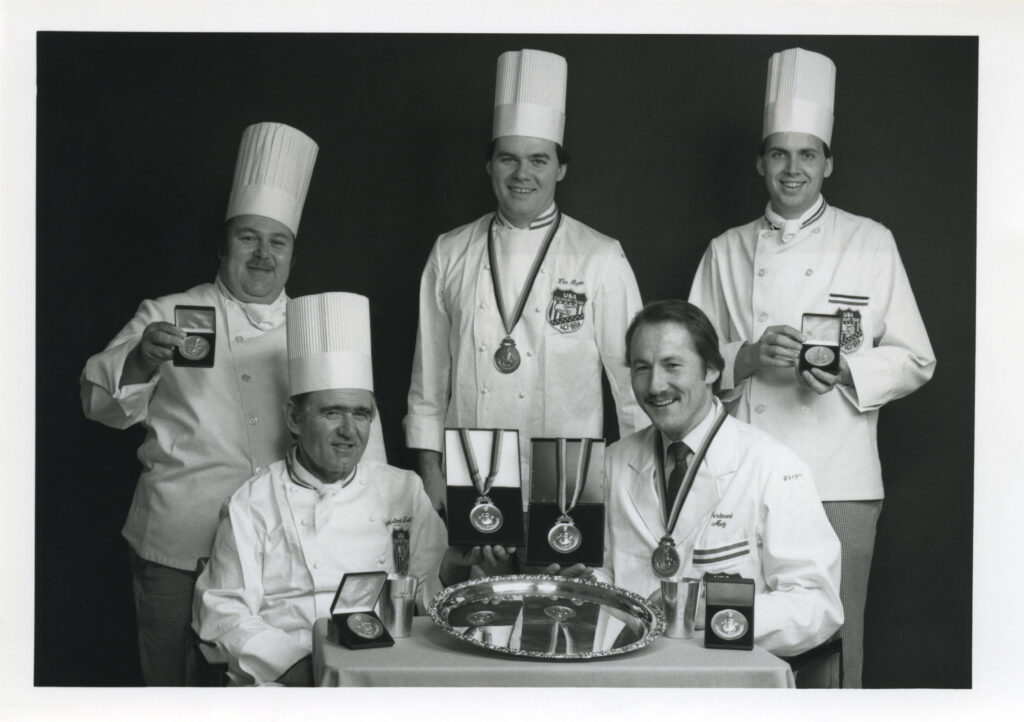
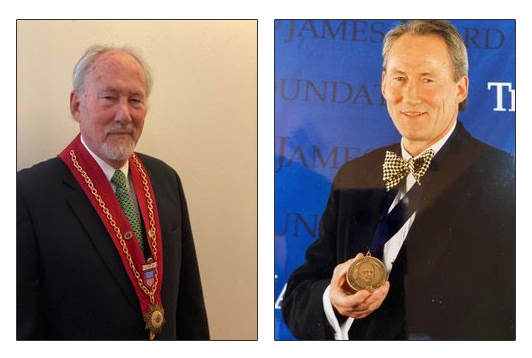
His lifelong commitment to culinary competitions has cemented Chef Metz’s tour de force reputation around the world. As team manager, he won the Culinary World Cup in 1986 and led Team U.S. to three consecutive World Championships at the International Culinary Olympics. He has received more than 20 international and honorary awards, including The Medal of the French Republic, the Lifetime Achievement Award from the James Beard Foundation, and one of only three chefs to receive Chaîne des Rôtisseurs Maitre D’Honneur. Julia Child is one of the other two.
Ferdinand appreciates Chaîne’s commitment to young culinarians through its long term support of culinary competitions. “I applaud the Chaîne for doing this because that really helps maintain the standards of the profession,” he said.
Today he remains busy as the Managing Partner of the Master Chefs’ Institute that certifies food products from major multi-national companies and Metz Culinary Innovations, an educational consulting company based on his 21 years at the CIA.
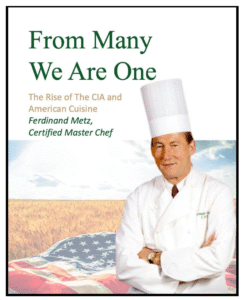
This will be an especially busy summer for him with the publication of his book, From Many We are One: The Rise of The CIA and American Cuisine, scheduled for July. Undoubtedly, Master Chef Ferdinand Metz has been at the vortex of American cuisine as it came into its own at the end of the 20th century and into the 21st century.
It’s a good thing Ferdinand did not have the money to return to Germany in 1961!