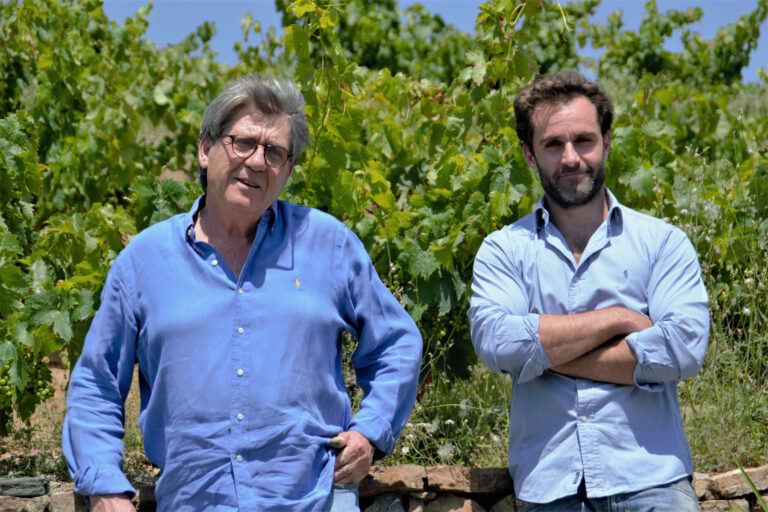
Feb. 3, 2023 – As a teenager, Guillem Pastrana did not readily embrace the work he was tasked with at Clos de l’Obac, an internationally known winery in the Priorat region of northeast Spain that Carles Pastrana and Mariona Jarque, his parents, started in 1979. Wisely guided by his father to find his life’s work on his own, he became a lawyer, first practicing as a litigator and then specializing in real estate law. Soon he was advising winery owners who wanted to invest in Spain. In 2015, it was time to return to his roots in the vineyards. “I didn’t want to be a lawyer. I wanted to be a winemaker. So I came back to my father and asked my parents if I could become a winemaker and start working in the winery,” Guillem said to Chaîne during a Jan. 24 interview via Zoom. “Okay, if you’re crazy enough and you want to work with us, you can do it,” Carles told his son.
Featured Image above: Carles Pastrana, left, and Guillem Pastrana

Returning to his roots meant he would be following not only in the footsteps of his parents but also in those of Carthusian monks who began making wine at Scala Dei, a monastery located in the Catalan region of Priorat, in the 13th century. Carles and Mariona’s reverence for that history became one of their essential textbooks because Carles, a journalist, and Mariona, an artist, had never made wine before. They boldly embarked on a journey defined by a dream to make wine that could compete with the best wines from the region and around the world.
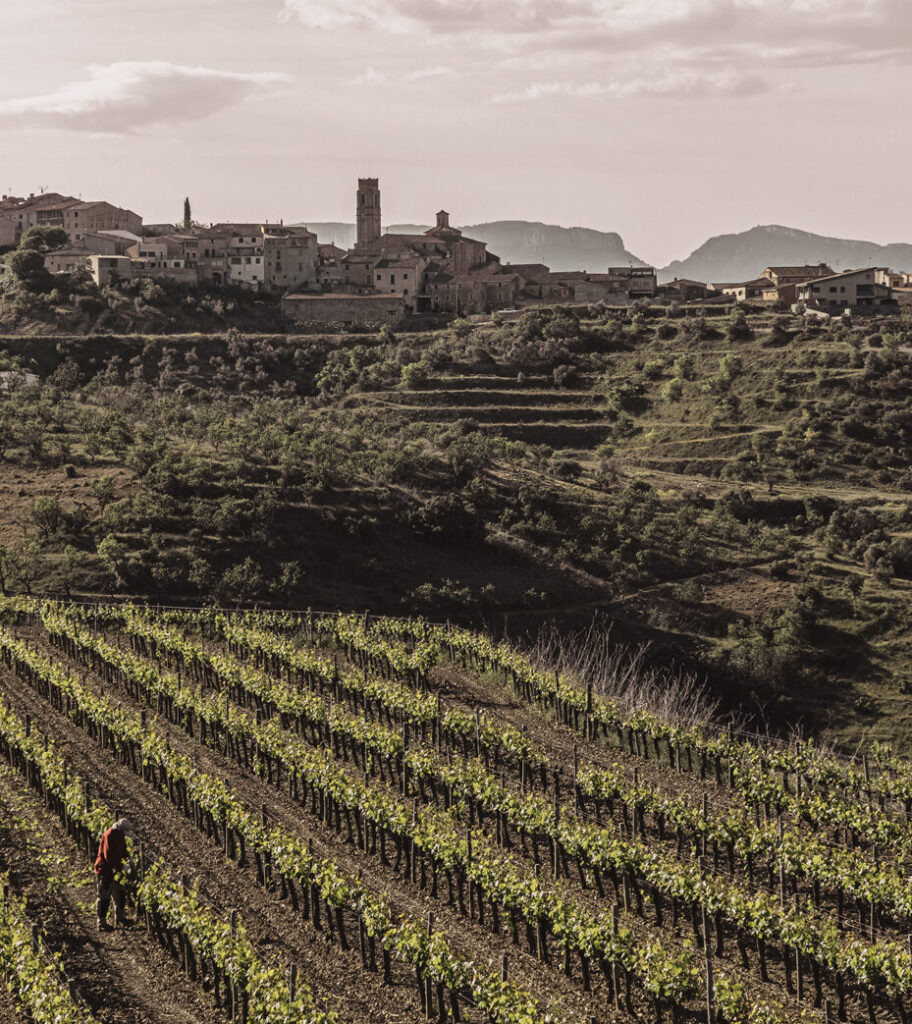
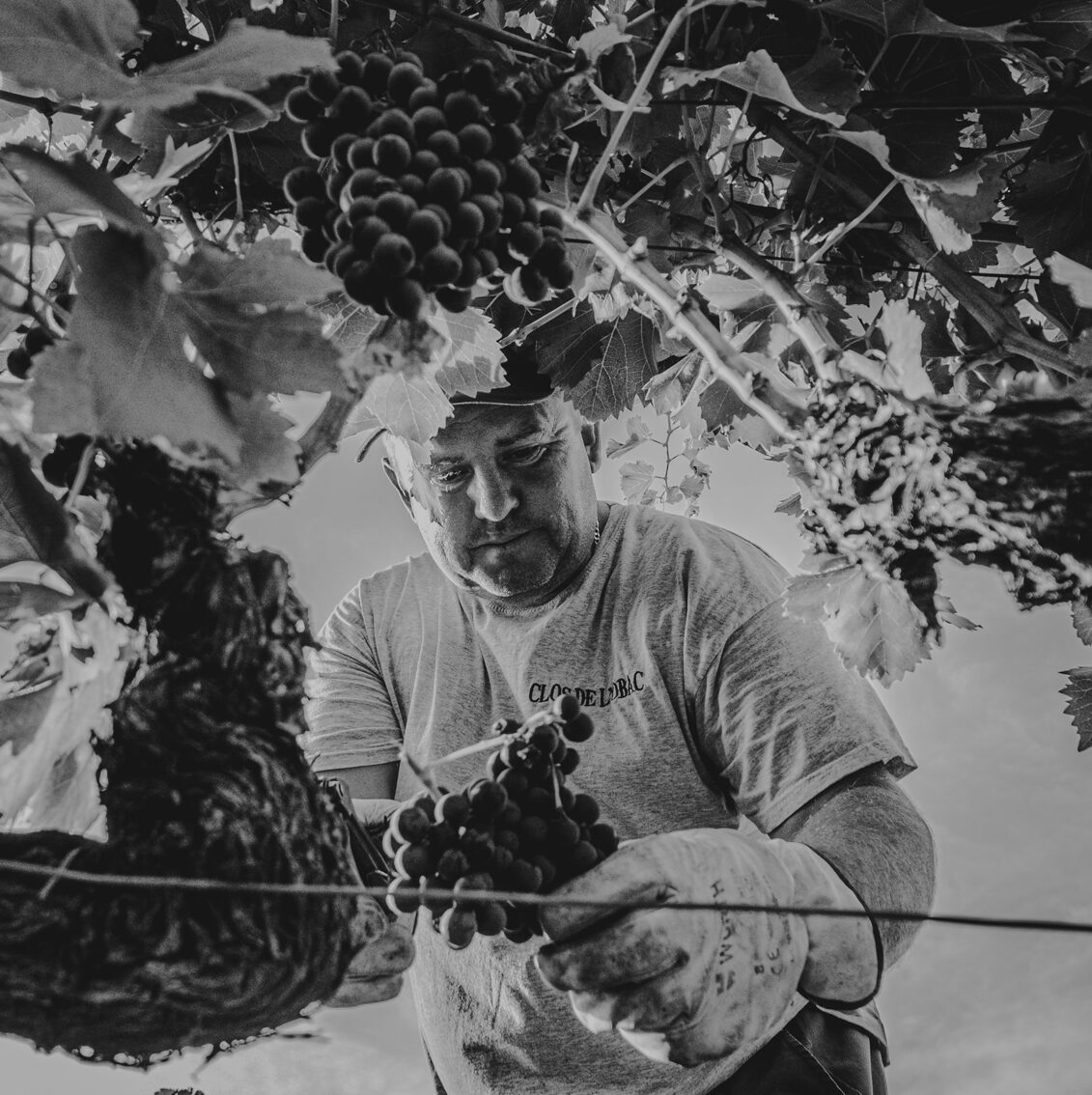
Their canvas was blank but they had a propitious plan for a beautiful painting. First, in 1979 Carles and Mariona began intensely studying the monks’ winemaking process from growing grapes on the rugged hills and slopes in the shadows of the Montsant mountains to the finished product in their cellars. As a natural barrier at an elevation of almost 4,000 feet, the mountains create a favorable microclimate for vines. Combined with rich slate soil and low rainfall, the terroir is ideal for vineyards, a conclusion the monks reached centuries ago that still informs soil science to this day.
Guillem explained that with average annual rainfall between 12 to 27 inches, roots will grow 49 feet (about 15 meters) into the subsoil to find water. With that deep network of roots, vines absorb minerals from the slate rock, imparting the grape vine with unique minerality. “The monks knew it. My parents copied it,” Guillem said. The area has both brownish and bluish slate with noticeable taste differences between the two. Guillem prefers taste nuances acquired from bluish slate.
As they learned about the Priorat terroir and its history, Carles and Mariona also traveled to France to learn winemaking techniques from large Chateaux producing high quality wine. To complete their learning journey, Mariona studied for about three years during this time to become an oenologist.
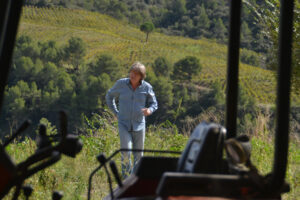
Honoring the monks’ heritage, Carles and Mariona began their viticultural journey by replanting seven hectares of vines on the same slopes and hills. When Guillem was a toddler, the family moved from Tarragona to a small village to be closer to the vineyards and winery. “When I arrived I was four years old. It was a little bit strange in a sense that they brought me in the middle of nowhere. My sister and I asked our parents where we were and what we were doing here,” Guillem said. The siblings went from attending school with hundreds of other children to a school with a total of 20 students.
“It was the first step. We were not farmers but we needed to learn,” he added.
With their dream of making superior fine wines, Carles and Mariona created their own fixed coupage system. For their signature Clos de l’Obac, the blend has been and will always be a mix of 35% Grenache, 35% Cabernet Sauvignon, 10% Syrah, 10% Merlot and 10% Cariñena. The grapes are crushed and mixed to the exact percentages before fermentation.
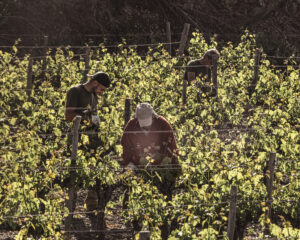
Harvesting their first grapes in 1989, Carles and Mariona released their first wine to the market in 1991. At this time, Priorat farmers were selling their wine in bulk at $0.10 per liter. Other winemakers thought it was “complete madness” when they priced one bottle of their Clos de l’Obac at almost $35. “They knew they had an extraordinary product and they really believed in the project,” Guillem said.
That first year they did not sell one bottle of wine. Ditto for the next year as well. “Imagine after 10 years of hard work. We had this extraordinary wine in the market and we were not able to sell it,” he said.
Their breakthrough came in 1993 when the World Wine Guide named Clos de l’Obac among the top 150 wines in the world. Slowly wine lovers became aware of the label. To keep their dream alive, Carles was still working as a journalist and Mariona as an artist. That was about to dramatically change.
The fax machine, state-of-the-art technology used globally in the closing years of the 20th century, revolutionized international business. The din of the fax machine was music to the ears of small business owners. One moment is seared in Guillem’s memory.
“We were living as hippies in a small flat. I remember receiving an order from Puerto Rico. All of the family was waiting in front of the fax trying to see which order was arriving. They ordered two pallets of wine! All of the family was screaming. We were very happy.”
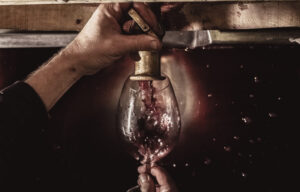
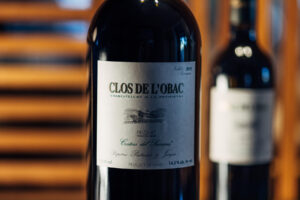
And then in 1994 in a blind tasting in Sweden, Clos de l’Obac was listed among the best 20 wines in Europe. From that moment on, the small winery flourished and today ships wine to 32 countries. With an annual production of 50,000 bottles from grapes they grow on 27 hectares, they are small but that is by design and will remain so. The winery produces four different wines – Clos de l’Obac, Dolc de l’Obac, Kyrie, and Miserere. Most of their vines are from 25 to 40 years old but some are 80 to 100 years old from vineyards they have purchased from village farmers.
Since its inception in 1979 and its first release in 1991, Clos de l’Obac has never wavered in its fixed coupage system and its philosophy of only releasing a vintage when it is ready to drink. “I always say that to make a good wine is something easy for a winemaker but to make a very good wine you have to be a winemaker and have the best tools. But to make an outstanding wine, you have to feel it,” Guillem said. Because of fixed coupage, each vintage exquisitely expresses the unique four seasons of that year.
U.S. Distribution – OBAC West Winery
John-Dominic Cancilla and Ana Cereijo are co-owners of OBAC Imports, the sole importer of Clos de l’Obac wine in the United States, and an integral part of the tight-knit Clos de l’Obac wine family.
John explained during the interview that there are noticeable differences in taste from one vintage to the next because of year-to-year variations in precipitation levels, temperature, and other seasonal factors, such as an early or late arrival of seasonal norms. “It’s the Hand of God in the bottle,” John said Carles often says. Carles has written a book, In God’s Vineyard, to explain how God has graced Clos de l’Obac and how God’s hand is really in every bottle, John added.
Recently inducted into the Delaware Valley Bailliage, John said there have been years the decision was made not to release the vintage, citing 2003 Clos de l’Obac as a case in point. Feeling it was not ready to drink because it was too tight, the vintage was not released until after 2006. John just received an email from a customer who reported its superior taste.
“We’re still getting people who would like to buy the 2003 vintage. There’s just not a lot of it,” John said. Their current release is the 2012 vintage.
Distribution of Clos de l’Obac in the United States is solely through their direct to consumer Wine Club so that wine lovers can have a personal relationship with the winery and the winery can maintain its worldwide footprint. They have no desire to produce wine for the market as they view Clos de l’Obac as a lifestyle and not a business. “It’s more a cultural experience than just a gastronomic experience and that’s our philosophy,” Guillem said. John added that a few of their Club members in the United States are winemakers from a number of states. “I think that’s quite a recommendation,” he added.
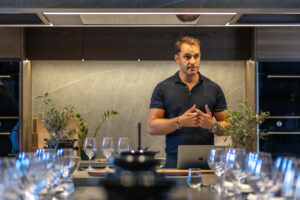
Through a series of events held by the Delaware Valley Bailliage and the Union League in November 2022, Chaîne members and guests were able to meet Guillem, John and Ana, John’s wife, and experience Clos de l’Obac wines. And at the upcoming Southwest Provincial Chapitre and Jeunes Chefs Competition (Feb. 23 to 26) in Galveston, Texas, there will again be that opportunity with Clos de l’Obac tastings, auctions and a seminar.
“My feeling is that Chaîne is an extraordinary association that really supports and promotes all of the people involved with the food and wine world. We are proud to be able to collaborate with the Chaîne,” Guillem said.
For the Pastrana family and their extended wine family, the journey has been an adventure of a lifetime. A team of 15 operate the winery, including five family members. Guillem has taken the reins as CEO but his father is still “the boss.” Reflecting on the adventure, Guillem said there is no doubt his parents accomplished what they set out to create.
“Nobody could expect that a family of hippies could start this revolution in Priorat so I think they succeeded in a sense that now, they are producing a wine they wanted to 40 years ago and are selling it around the world. At that moment, they could not have imagined they would succeed. But now the dream has come true. Wine connoisseurs and wine lovers come from around the world to visit and taste our wine.”
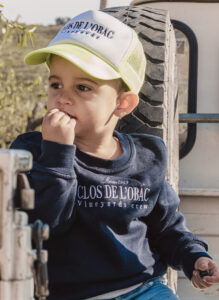
The third generation of the family are toddlers now playing in the wineries. Guillem thinks it would be wonderful if they continued the family legacy as he jokingly said he would like to retire as soon as possible so he can enjoy the wines they are producing.
“It’s important to us but they will choose their future,” he said.
The family legacy has roots as deep as their vines.
Links
Clos de l’Obac
Southwest Provincial Chapitre and Jeunes Chefs Competition