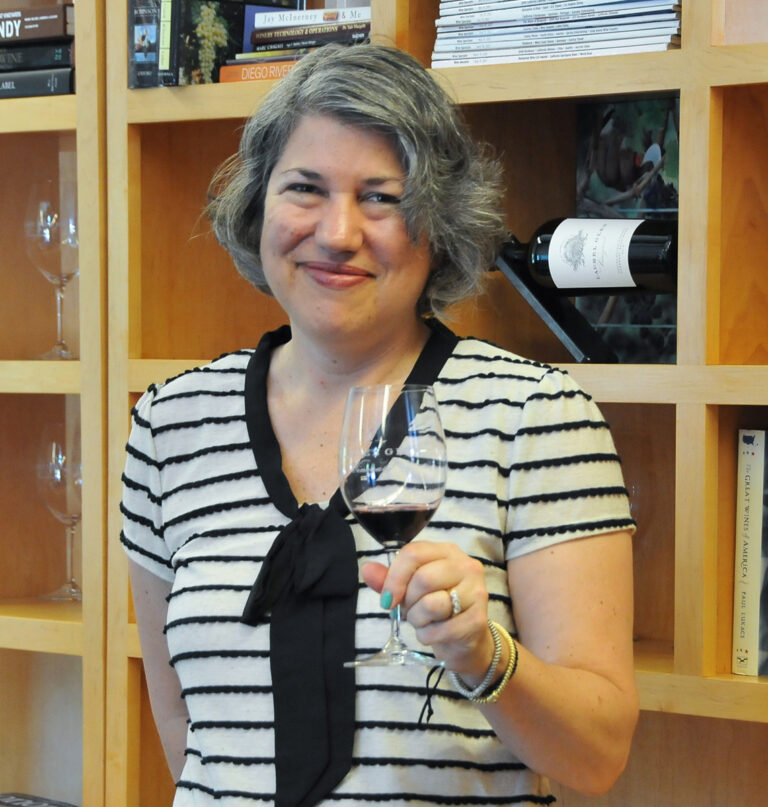
Oct. 25, 2024 – Bettina Sichel, co-owner of Laurel Glen Vineyard, located on the eastern slopes of Sonoma Mountain in Glen Ellen, California, has a family legacy in the wine industry that is as intriguing as her vineyard’s unique Cabernet Sauvignon clone first planted in 1968. Peter Sichel, Bettina’s father who turned 102 in September, was born in Germany, attended middle school in England, fled to France, and moved to New York City before he was 20 years old. World War II set his first career as a spy with the Central Intelligence Agency (CIA) in motion. In 1960, he resigned from the CIA to operate the family’s winery and wine export business, founded in 1857 in Mainz, Germany, which the family reclaimed after the war. Bettina, the eldest of Peter’s three daughters, always knew she would have big shoes to fill with the family known worldwide for their popular Blue Nun wine. “I was earmarked from an early age to take over the family business,” Bettina said to Chaîne during a Sept. 26 telephone interview.
Blue Nun
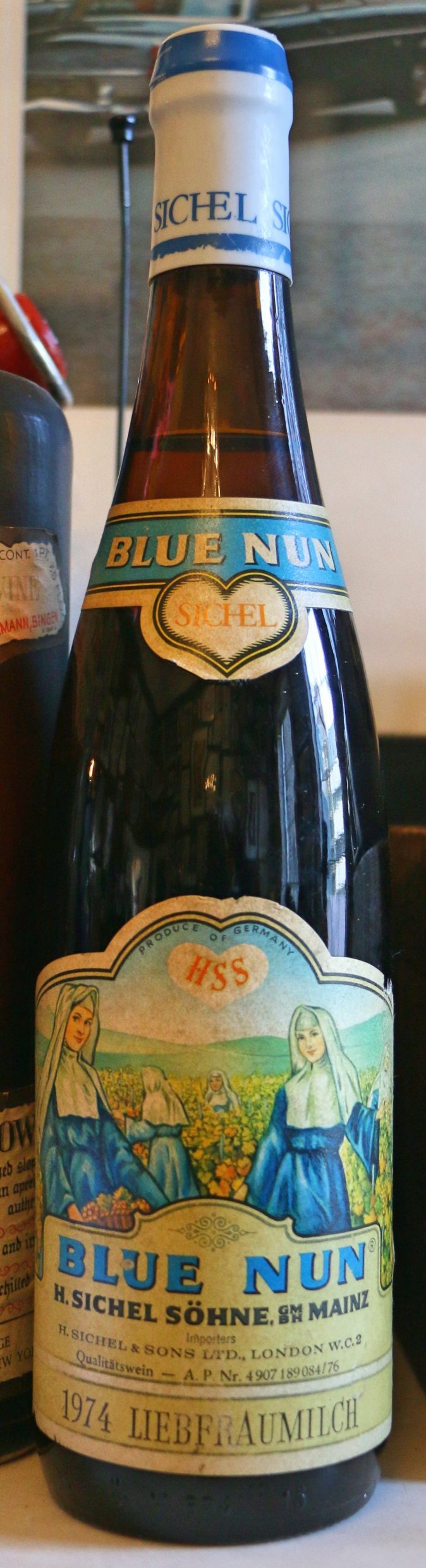
The iconic Blue Nun label depicting blue nuns in a vineyard had its origin in 1929 when the Sichel family released a Liebfraumilch from their 1921 vintage with the newly designed label. Sales immediately skyrocketed. It helped that the 1921 vintage in Germany was a stellar one. By 1932, customers were asking specifically for bottles with the blue nuns on the label so the family decided to reserve their top Liebfraumilch for Blue Nun, adding the words on the label to firmly establish and market the brand.
With robust sales and offices in London, Bordeaux and Mainz, the family’s business future was bright, just over a decade removed from the devastation caused by World War I that resulted in members of the Sichel family fighting on opposite sides. The family, who were Jewish, was looking forward to growing their business. But then in 1933 Hitler rose to power in Germany. Peter was 11 years old. Family leaders channeled the strength of their ancestors to survive.
Sichel Family History
In 1857 in Mainz, Germany, located about 120 miles southwest of Frankfurt, three Sichel brothers and their father moved from Sprendlingen to build three apartment houses near an office building where they founded their wine business. Under the courtyard between their homes and office, they dug deep cellars to store and age wine, establishing the firm foundation, both literally and figuratively, upon which future generations of Sichels, proud German citizens, would thrive and prosper. Born in 1922, Peter Sichel remembers playing in the courtyard amid the maze of barrels and equipment. The business had been so successful, branches of the Sichel family opened additional companies with offices in Bordeaux, London and New York City, a prescient decision for reasons the family could not have known at the time. One by one, the Sichel families in Mainz fled as the German government seized their business. Peter’s family settled in Bordeaux but were again forced to flee their home in 1941 when Germany occupied France. After a harrowing journey out of France, via Spain and Portugal with Peter traveling alone, the family reunited in Lisbon, finally securing their freedom when they arrived in New York City. Peter enlisted in the U.S. Army the week after Pearl Harbor and in early 1943, was recruited for the Office of Strategic Services (OSS), the precursor agency to the Central Intelligence Agency (CIA). He was willing to do anything to defeat Hitler, Peter recalls in his 2016 autobiography, The Secrets of My Life: Vintner, Prisoner, Soldier, Spy.
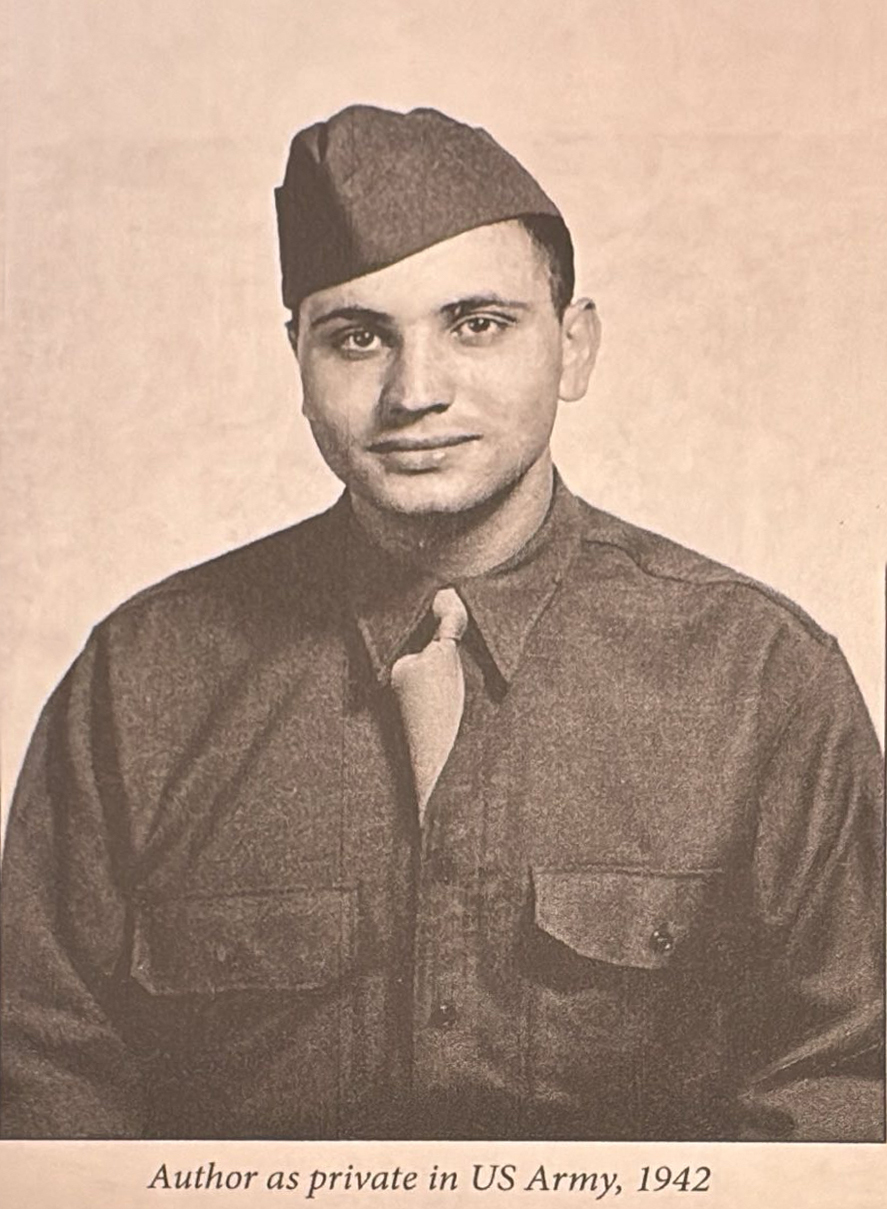
Following OSS training, Peter was assigned to Algiers, arriving in the bustling city on the Mediterranean Sea in North Africa in fall 1943. In August 1944, two months after the D-Day invasion on the beaches of Normandy, France, Peter was assigned to an OSS unit attached to the Seventh Army that landed in southern France to liberate France. Fluent in his native German language, Peter had a key role in recruiting German Prisoners of War (POW) to spy for the Allies. In his book, Peter said German agents he recruited wanted to end the war to stop the killing and further destruction of their beloved country. Many young German soldiers were fiercely opposed to Hitler’s Nazi regime. In total, Peter worked with more than 30 German agents. “Not one turned out to be a bad egg,” Peter stated in his book.(1)
End of World War II and Postwar Germany
In the waning days of the war in 1945, Peter was promoted to Chief of the OSS Seventh Army Detachment. Thousands of Allied soldiers were marching toward Germany from all directions in January and February to liberate Western Europe.
As French and American officers planned their march north, the French military made sure French soldiers were responsible for land west of the Rhône River where the best vineyards were located so they could save the vineyards. Now called the Champagne Campaign, many of France’s best vineyards were indeed spared.(2)

When the U.S. Army Seventh Detachment reached Mainz, Peter was with them with special permission to secure what remained of his family’s property and possessions. The family’s apartment buildings had been bombed to rubble. But because wine was a valuable commodity and currency during the war, a local manager operated the business after the family fled. When Mainz was liberated, the Sichel cellars were intact and held a lot of wine, some likely hid from the Nazis and some likely normal inventory from ongoing business, Bettina explained. Each German soldier serving on the front lines was allocated one liter of wine per day so German wine production continued unabated during the war.(3) And Peter explained in his book that Blue Nun was exported to both England and the United States throughout the war.
Peter’s uncle returned to Germany after the war to reclaim their business, connecting with local vintners and growers to make and export wine again. Bettina marvels at their resilience. “Can you imagine in the midst of all that devastation trying to make wine? 1945 is considered one of the greatest vintages ever,” she said.
Her father was transferred from the U.S. Army/OSS to the CIA after the war. As chief of an undercover OSS unit in late 1945 in Berlin, Peter was tasked with gathering intelligence on the actions of the Soviet Union in East Berlin and East Germany, the area assigned to the Soviets as part of Allied negotiations upon Germany’s surrender. In 1948 the Soviets turned into foes when they blockaded food and fuel deliveries to starve people living in West Berlin and Western Germany. Their goal was to control all of Germany to force the Allies out. But they had no authority in the skies above so the Allies began the Berlin Airlift, delivering food and fuel to airports for distribution to citizens. Peter regularly reported to Washington what he was learning about the Soviets from his clandestine intelligence gathering operation. The blockade ended in 1949. For the next decade, Peter, promoted to head of operations in Eastern Europe, had a front row seat to the Cold War that evolved between the Soviet Union and the United States.
Return to the Family Wine Business
Peter was contemplating his future with the CIA at the end of the 1950s when Peter’s uncle passed away. In 1959, Peter resigned from the CIA to take the reins of the Sichel family wine business, which included growing grapes, making wine, selling wine in Germany and exporting wine around the world. He returned to Mainz, this time as a civilian who was about to become a wine merchant, a wine grower, and wine personality, the title of Part 3 in his book.
A new office building stood on the spot where his ancestors had built their apartment buildings. He spent two months in Mainz to learn every aspect of operations. Thereafter, Bettina said, because her father did not want to live in Germany again, he commuted one week each month from New York City to Germany. As a child, Bettina said the family spent every summer in Europe.
After learning the ropes in Mainz, Peter returned to New York City to study the wine business in his adopted hometown. It turned out to be a rough and tumble environment, one that he felt was not aligned to the family ethos so he guided the company to partner with Schieffelin and Company, a major wine importer, in lieu of direct sales to restaurants. The family had lost their thriving wine business in Germany twice in the first half of the 20th century because of world wars. He was not about to let that happen again in the second half of the century.
Post WWII
After the war, sales expanded worldwide. Marketing Blue Nun with the slogan, “Blue Nun Goes Everywhere,” it had a price point and a taste that enjoyed broad appeal. Its heyday in England was in 1980 when the company sold about 300,000 nine-liter cases. It reached its peak in the United States in 1985 with about 1.3 million cases sold.(4)
“Blue Nun put me through college,” Bettina said.
Bettina Joins the Family Business
True to her and her family’s expectation to one day take over the business, Bettina went to work for her father at H. Sichel Söhne for six years after graduating from college to help him market Blue Nun. However, in the late 1980s and early 1990s, sales in the United States began declining because of increased competition and changing tastes. Peter points out in his book that they never intended Blue Nun to appeal to the high end of the market, a Sunday wine as Peter refers to it. Blue Nun had always been produced as a daily wine.
With his skills at expert analysis and information assessment that only a select few have developed as he had, he came to the conclusion that the downward trajectory of sales would soon lead to a catastrophic financial situation for the company. So in 1995, he sold the business to a large German company.
Her job eliminated, Bettina said she began knocking on doors in Napa Valley, the center of the American wine universe then and now.
Career in Napa Valley
Agustin and Valeria Huneeus founded the Quintessa estate winery in the Rutherford District of Napa Valley in 1990. As they were planning the launch of their first Quintessa release, they hired Bettina to be their director of sales and marketing, a position she held for 10 years. From Quintessa, Bettina went to the Napa Valley Vintners Trade Association. As she was contemplating her next move in the industry, one of her husband’s friends, with whom she regularly discussed wine and the industry, called for a regular chat. As the call ended, he made a joke that they should purchase a winery together. “I thought that was a pretty great idea,” Bettina said. “I took him up on it and here we are!”
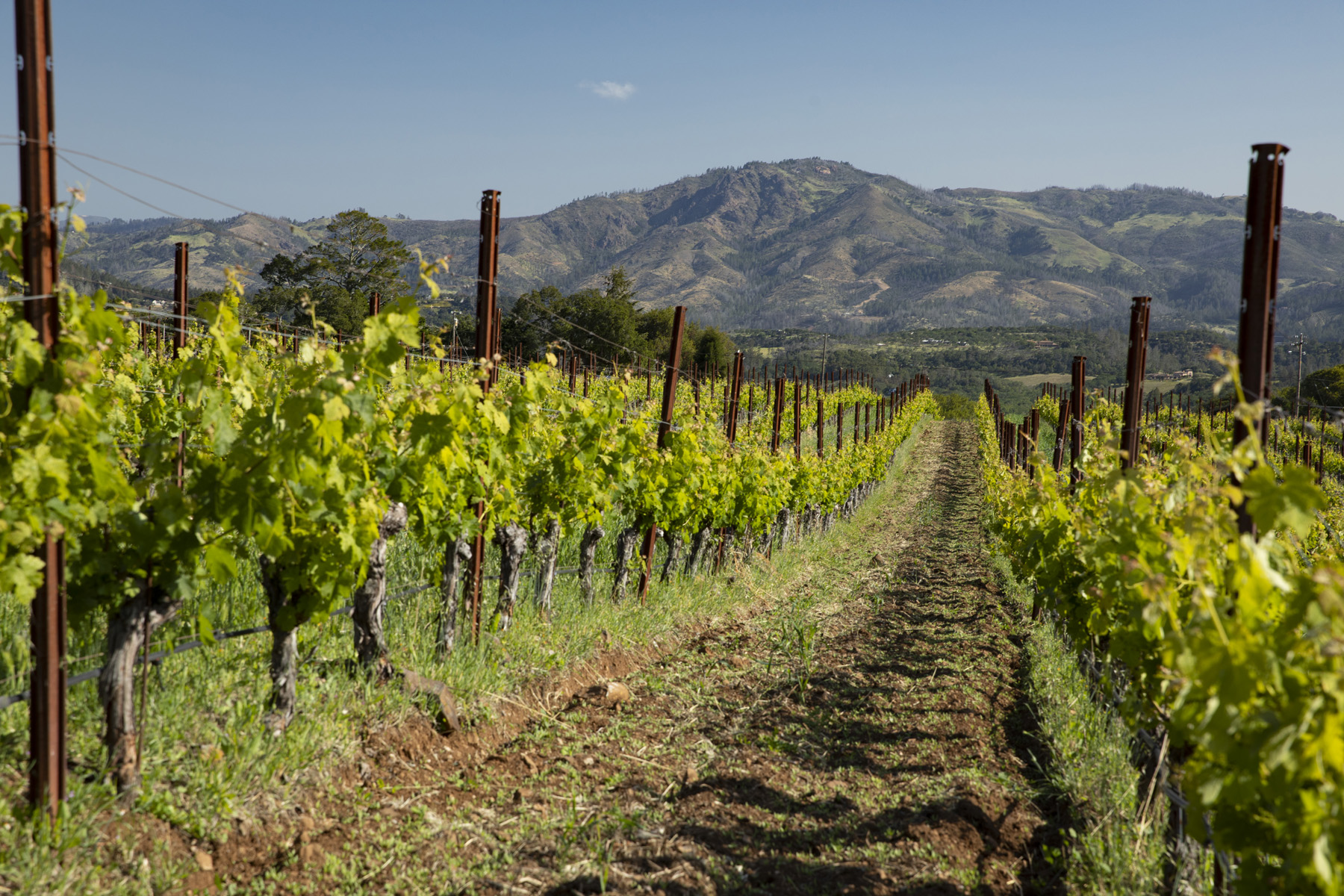
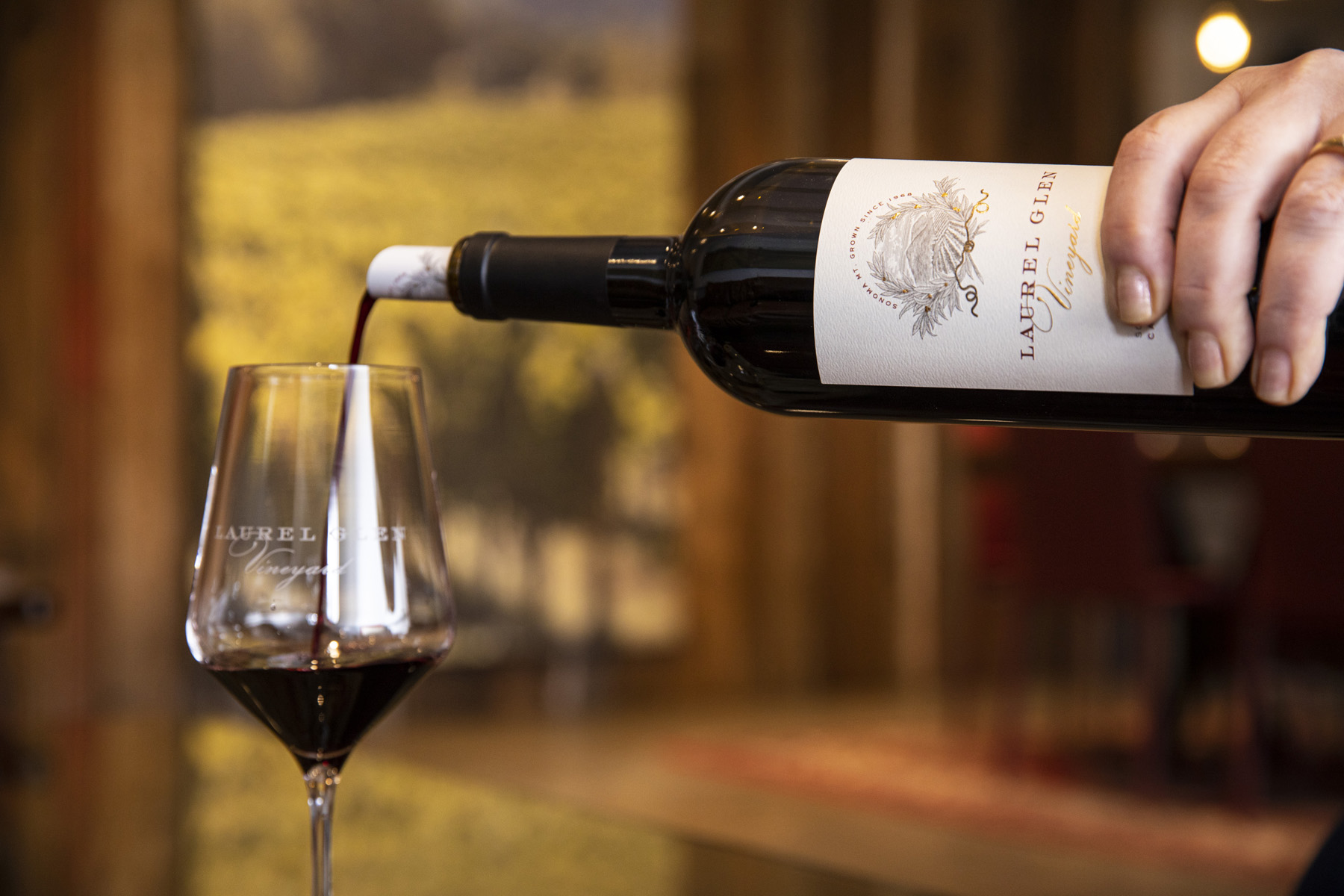
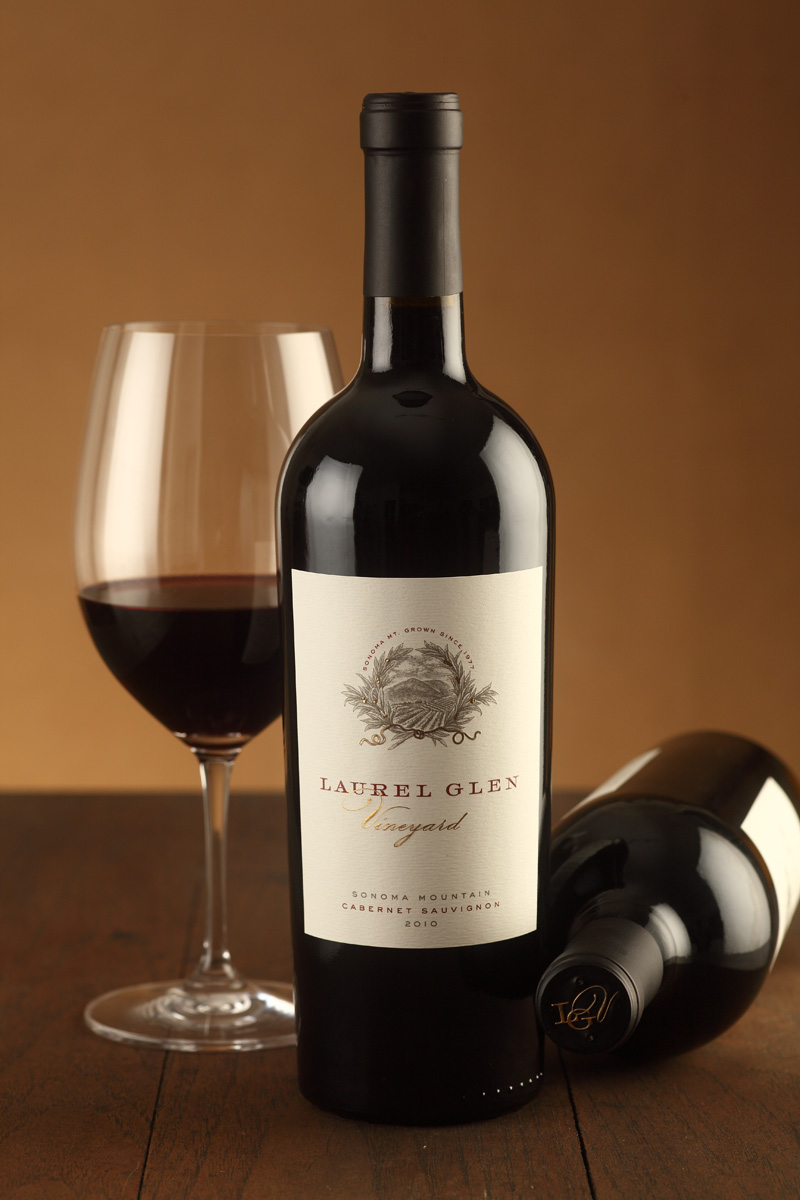
The Laurel Glen Vineyard on the eastern slopes of Sonoma Mountain caught their attention. At an elevation of 1,000 feet, the vineyard is above the fog line and about 1,400 feet below the summit. Morning sun warms the cabernet sauvignon grapes and the mountain shields the fruit from wind and intense afternoon heat to support slower ripening.
During their due diligence process, in June 2010 Bettina asked Phil Coturri, a highly respected organic viticulturist who operates a vineyard management company, to assess the quality of the vineyard for her. Patrick Campbell, Laurel Glen’s founder, owned the vineyard at the time. Bettina describes Patrick as a “thrifty Scotsman” who did not like to buy expensive treatments for his vineyard. Because of his frugal nature, he farmed sustainably. “The soils were in great condition,” she said.
Bettina and her partners were not only buying a healthy vineyard but also a most unusual cabernet sauvignon grape, a clone that Patrick attempted to genetically trace but to no avail. Patrick purchased the vineyard, with three acres of mature cabernet vines, in the late 1970s from someone who worked at the University of California (UC) Davis. He took cuttings to the UC Davis genetics lab to identify the vines but they did not have a record of that exact clone. The lab was at the forefront in the United States identifying grape varietals through DNA testing. UC Davis declared Patrick’s vines a unique clone.
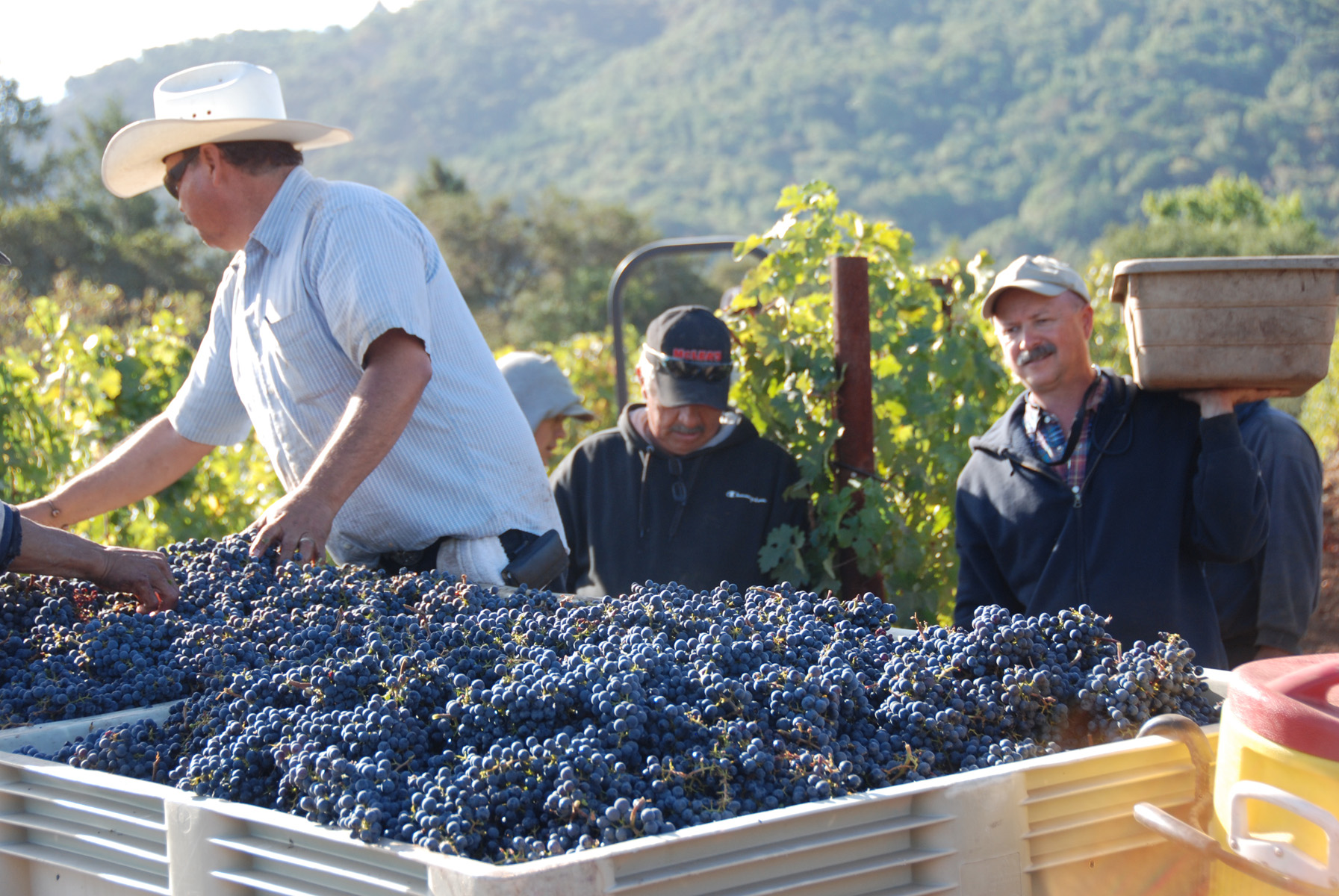
“Where that unique clone came from, I don’t exactly know,” Bettina said. First planted in 1968, it is the only clone of Cabernet ever planted at Laurel Glen Vineyard. Today they annually produce about 2,200 cases of cabernet sauvignon and another 600 cases of sauvignon blanc, riesling, and rosé varietals.
After the sale was completed in March 2011, Bettina outsourced vineyard management to Phil’s company choosing to reshape the vineyard by cane pruning the vines. “The timing could not have been more perfect because 2011 was such a cool, wet year, it was hard to get grapes to ripen,” Bettina said. Because of the cane pruning and the desire to make high quality wine, each vine carried less fruit than in the past. They harvested a little over two tons per acre whereas in 2010, the yield was 3.5 tons per acre.

“We started farming organically from the first day,” Bettina said. About as quickly as any vineyard could, in 2014 the California Certified Organic Farmers (CCOF) certified Laurel Glen as an organic farm. “The paperwork was mind numbing,” she said. Very proud of that achievement, she is still shocked at the low number of California vineyards with that certification, about 4 percent of all acreage farmed for wine grapes in California, according to CCOF statistics.(5) Laurel Glen custom crushes their grapes at a winery in Santa Rosa.
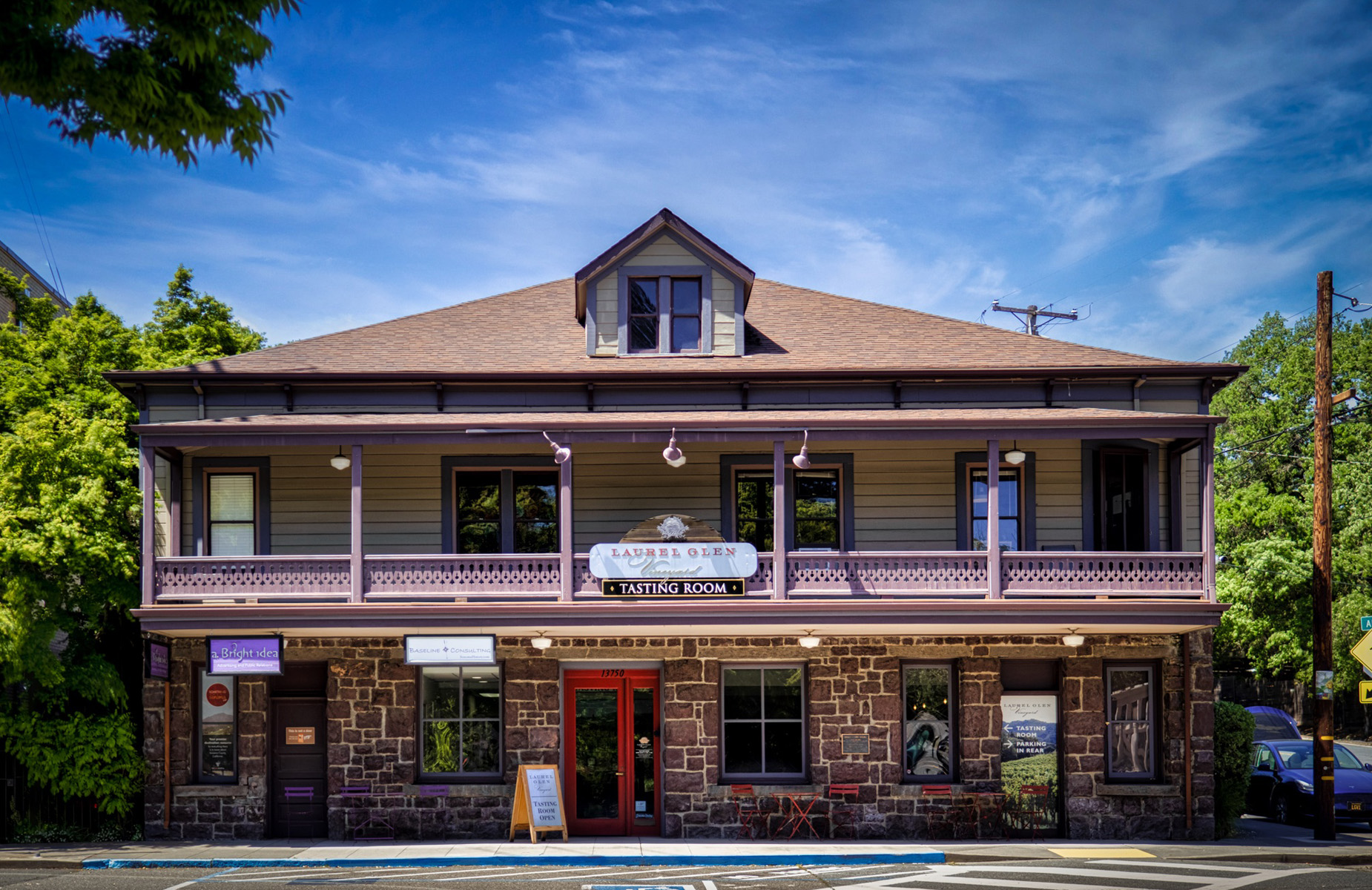
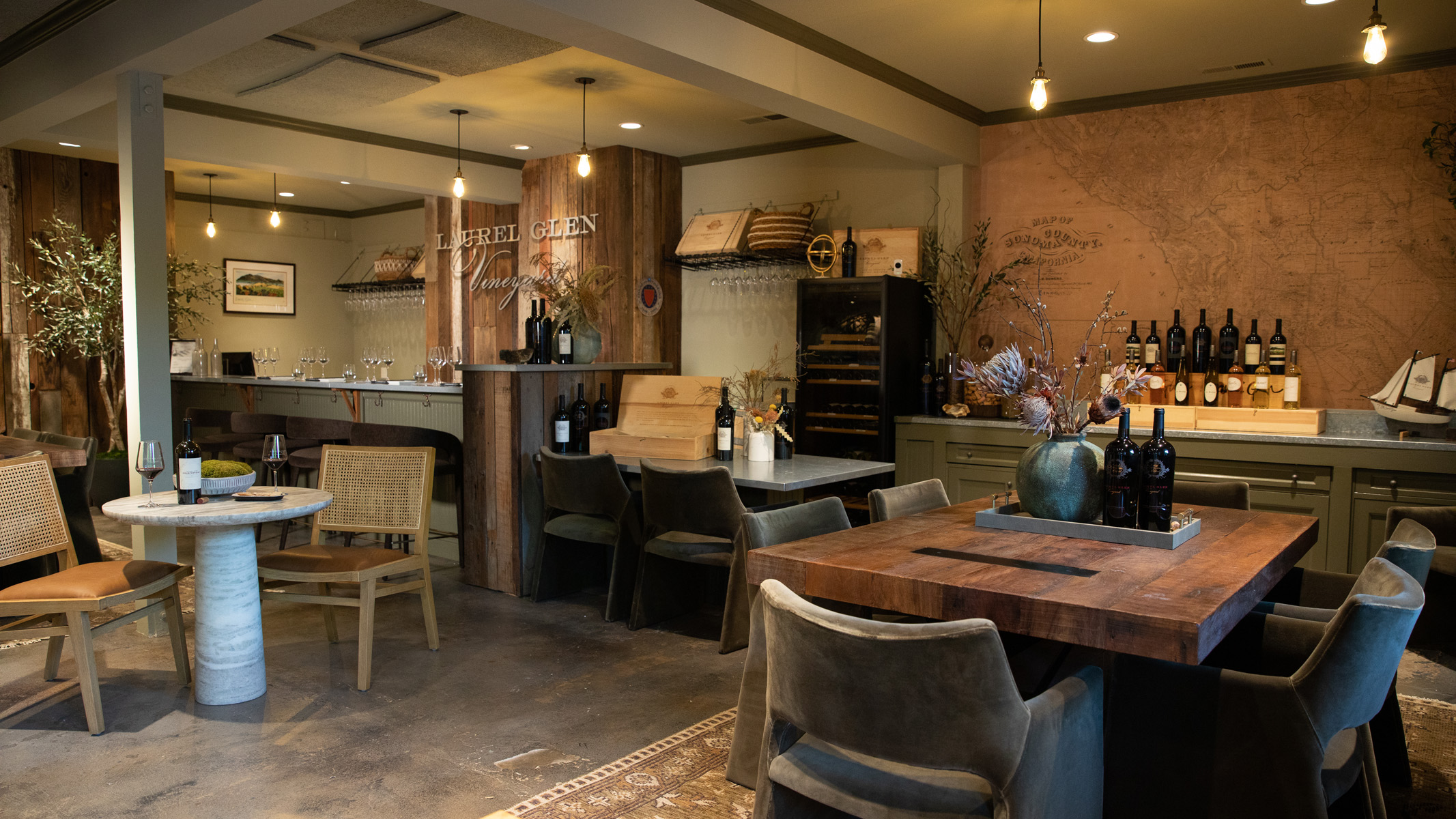
As a small, ultra premium winery, Laurel Glen’s primary sales channel is through their wine club. “Our Tasting Room is the most effective way of gaining new customers,” Bettina said. Similar to the thousands of wineries in California, Laurel Glen faced challenges in 2017 because of wildfires and then in 2020 with both wildfires and the pandemic.
Bettina explained that in fall 2017, wildfires destroyed 1.5 acres of their grapes but it was in October after harvest so they went ahead with production. The only effect was they produced fewer cases of wine.
“2020 was a very different story. We didn’t lose anything physically. However, smoke hung over our vineyard and Sonoma Valley for, I want to say, two months. Because we are a small winery, our reputation is everything and we did not feel comfortable making wine from those grapes. Instead of 2,200 cases of Cabernet Sauvignon, in 2020, we made 350 cases. 2020 had a much more devastating effect on our business than 2017 did.”
There is always a silver lining to every cloud. “Those 350 cases – the wine is delicious. It’s a little lighter bodied than our typical vintage, thus wonderful drinking right now,” she added.
Laurel Glen maintains a significant library to educate their customers who visit their Tasting Room about the high quality of their wine. “We pride ourselves on how well our Estate Cabernet ages. The wine starts to really come into its own in about eight years and then continues to get better from 12 to 15 years. After that, it’s a matter of personal preference,” Bettina said.
With such a rich family legacy in wine, Bettina brings years of experience to Laurel Glen as she has been expertly guided by her father. “He has always been a mentor and resource to me and has helped me enormously in my career in the California wine business,” she said.
Future of the Wine Industry
There is a new challenge that Laurel Glen and all wineries worldwide are facing. People are drinking less wine.
Bettina is passionate about understanding the reality and reversing the trend.
Of great concern is what she describes as an international anti-alcohol movement that is gaining traction after the World Health Organization (WHO) recently stated that no amount of alcohol is healthy. However, the WHO report does acknowledge some health benefits for low levels of alcohol consumption.(6)
As the United States Department of Agriculture (USDA) and the Department of Health and Human Services (HHS) are currently updating the Dietary Guidelines to be released in 2025 for 2025 to 2030, vintners are on the edge of their barrels waiting to learn the final recommendations.
“We are all terrified that they are going to decide as part of that, that no amount of alcohol consumption is healthy, which by the way is not true,” she said. A natural product that has been produced and consumed for thousands of years, she is dismayed about factors that could have an integral role in determining the guidelines.
Bettina refers to the expertise of Dr. Laura Catena, a medical doctor who graduated from the Stanford University Medical School and is a fourth generation vintner from Argentina. Dr. Catena has developed a website (In Defense of Wine) where she has posted a 27-minute evidence-based presentation, a summary of the topic with succinct conclusions viewers can easily understand. And she has a clear recommendation for viewers to consult their personal physician for individual guidance.
As all wine drinkers know, a tremendous benefit of wine is societal, how it brings people together to share a meal, share life’s ups and downs, and deepen bonds of friendship. In an effort to highlight that intangible benefit, Karen MacNeil, author and wine journalist, launched “Come Over October,” an effort to “Toast to togetherness this October,” according to the website.
2021 will be the 40th vintage of Laurel Glen’s flagship Estate Cabernet Sauvignon, a milestone Bettina said they will definitely be celebrating all of next year. “That’s a big milestone for us. We’ve been making cabernet from Sonoma Mountain for a long time and I think we’re only getting better at it.”
Spoken from a Sichel who has successfully filled the big shoes of her amazing father who in turn, filled many pairs of big shoes worn by those three brothers who had a dream in 1857 in Mainz, Germany and made it happen.

Links
Laurel Glen Vineyard
Dr. Laura Catena – In Defense of Wine
Karen MacNeil – Come Over October campaign
Footnotes
1. The Secrets of My Life, Vintner, Prisoner, Soldier, Spy (2016) p. 151
2. Wine & War, The French, The Nazis & the Battle for France’s Greatest Treasure (2002) p. 184
3. Wine & War, p. 34
4. The Secrets of My Life, p. 334
5. CCOF stats: https://organicallynapa.substack.com/p/where-are-californias-organic-vines
6. p. 43 Global status report on alcohol and health and treatment of substance use disorders. Geneva: World Health Organization; 2024. License CC-BY-NC-SA 3.0 IGO. https://iris.who.int/bitstream/handle/10665/377960/9789240096745-eng.pdf?sequence=1
Dear Cuvée:
I have a comment about one item stated in the featured Cuvée article about Bettina Sichel and some legacy history regarding her father, Peter Sichel, and Blue Nun. In the section “Post WWII” , the evolution of successful sales and the light-hearted radio and TV commercials are reviewed. It mentions a promotional phrase, “Blue Nun Goes Everywhere”.
It may be of interest that this was the third iteration of the marketing phrase that was used in the ’80s. The original phrase, used by the very famous, funny (and effective) Jerry Stiller and Anne Meara in their Blue Nun commercials in the early ’70s was, “Blue Nun Goes With Everything”. This was to counter the “wine snobbery” and intimidation that was common at that time regarding what wine goes with what food. A few years later, the phrase was revised to, “The Delicious White Wine That Goes With Any Dish”. Again, this new phrase was intended to reassure consumers that the “old wine rules” no longer need apply.
As an aside, at one point back in the day, I had the privilege of sitting with Peter Sichel in my office. As distributor of Blue Nun at Southern Wine & Spirits (California), and as V.P. Sales – Wine Group, we discussed the market, the brand and future plans. I was impressed by his knowledge of the market and competition, as well as his cordial manner.
Thank you and Bettina for the very informative article.
Donald J. Fritz, Sr.
40+ year Chaine Member
Rancho Santa Fe, CA