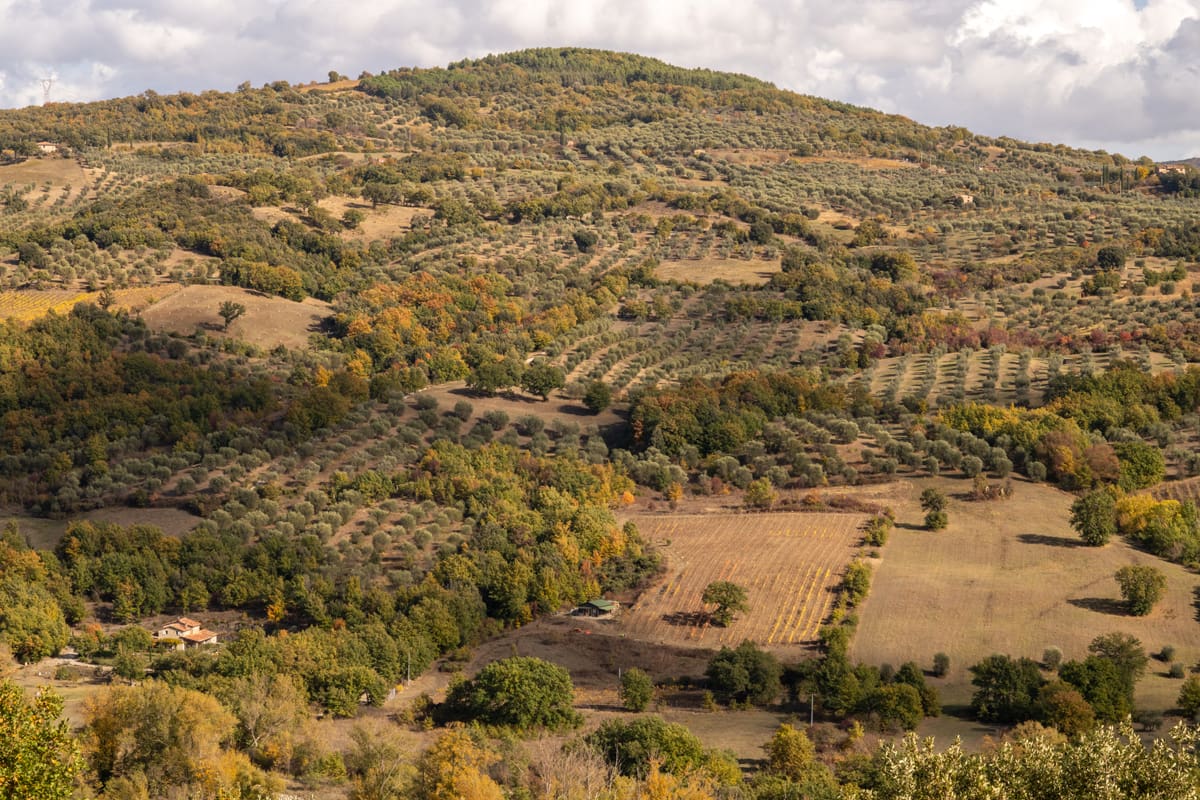
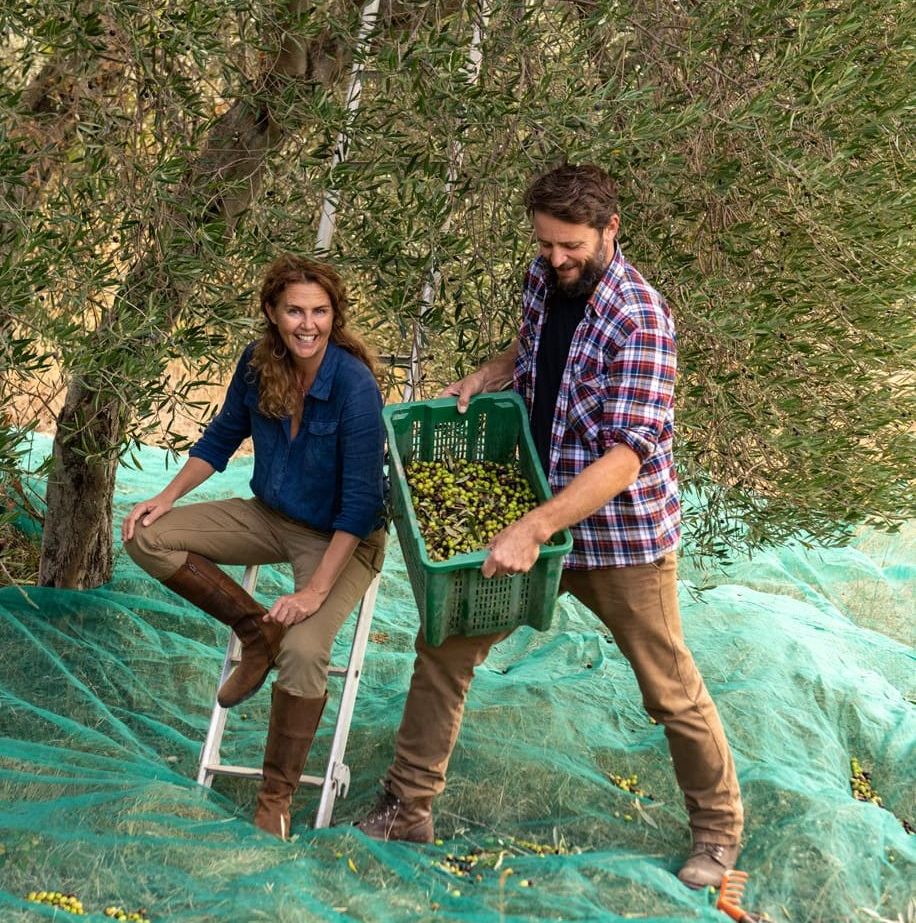
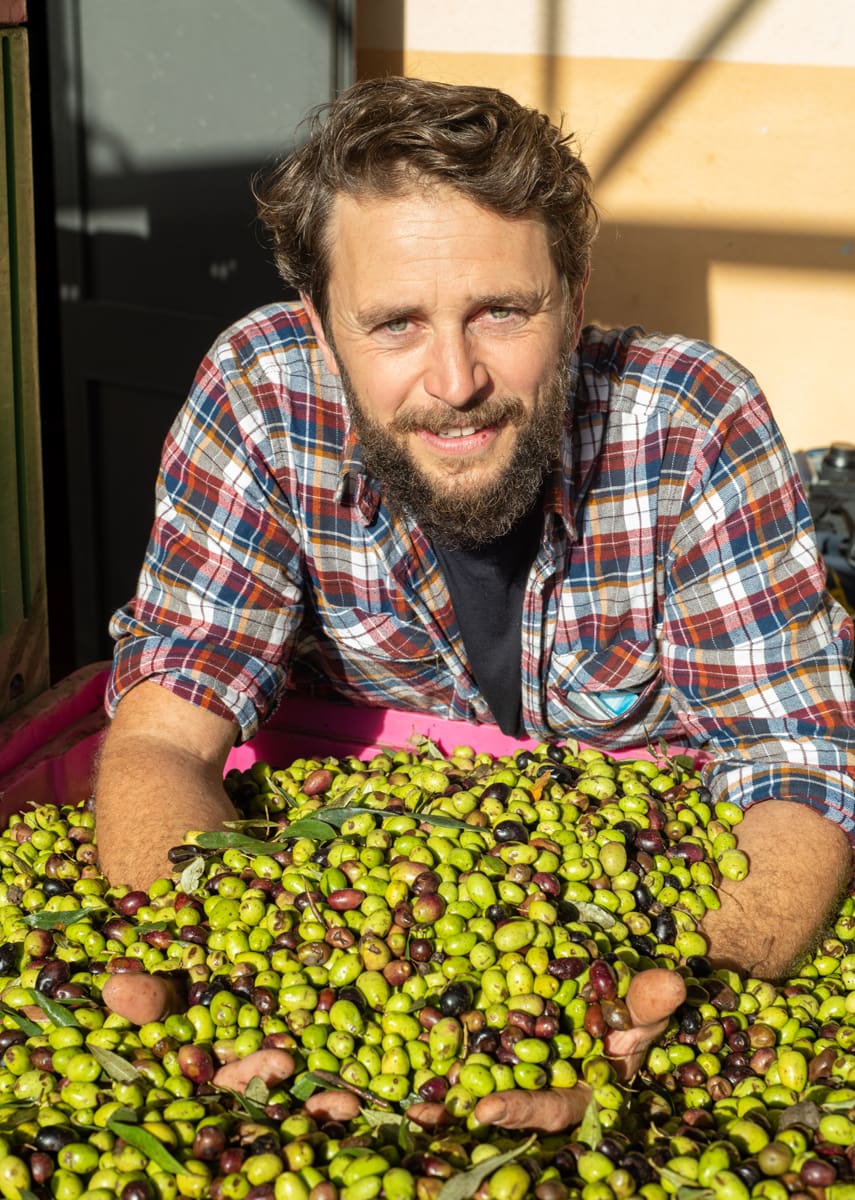
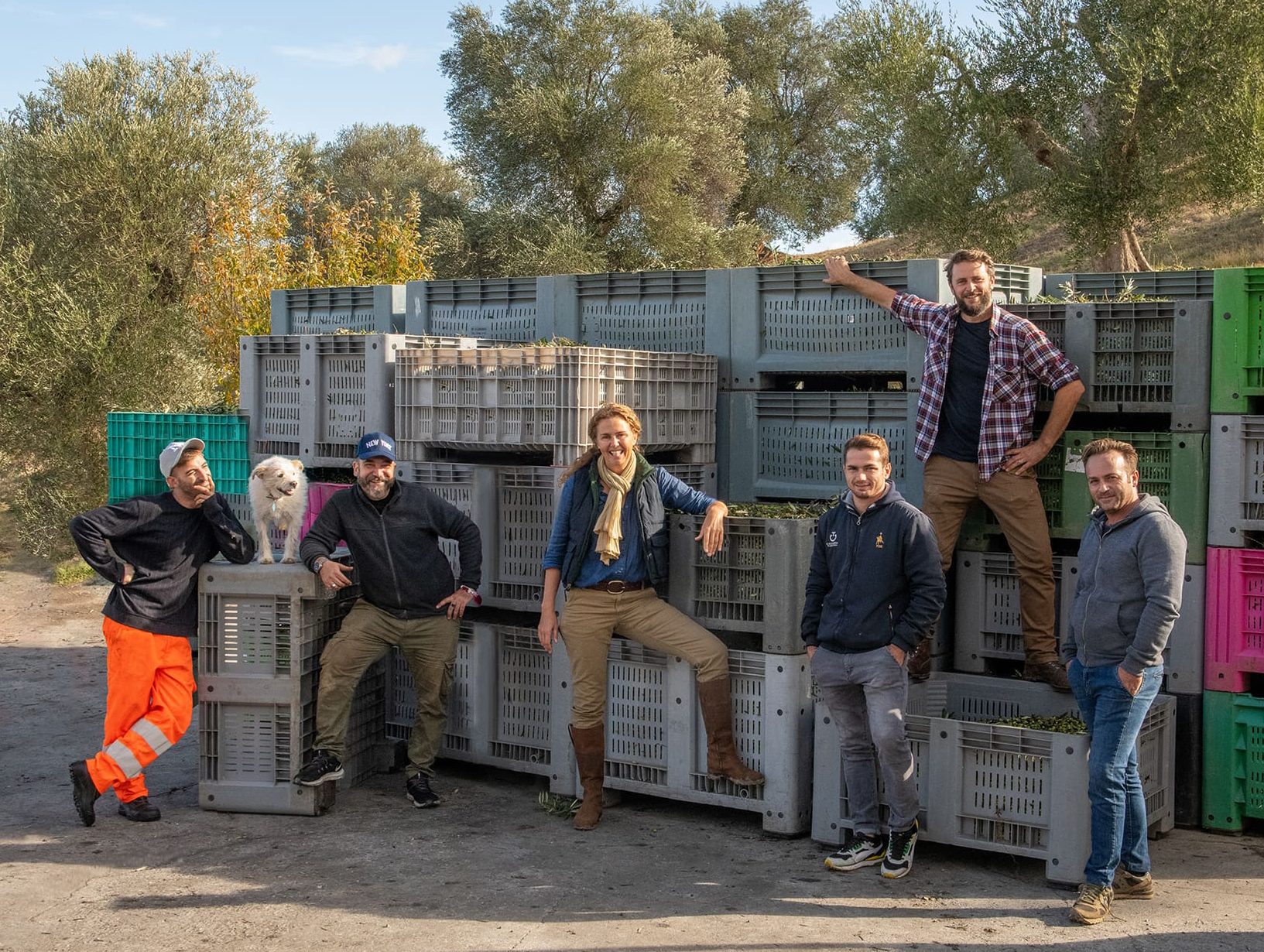
Oct. 17, 2025 – Romain Piro, director of production and quality for Olio Piro in Tuscany, Italy, is drinking a lot of coffee these days. He and his team are currently hand harvesting thousands of olive trees in groves in the region of Seggiano and Monte Amiata in Southern Tuscany. Each year within hours of early harvest, which usually begins in mid October, the fruit is cold pressed to extract the oil, bottled and then packed for shipping to customers around the world. “You work hard during the day, you’re rewarded at night with your product. I was really fascinated with the whole thing, the instantaneous production. It was a great discovery for me and I loved it,” Romain said to Chaîne during a Sept. 22 Zoom interview. In 2019, Marie-Charlotte, Romain’s sister who has lived in the U.S. for a long time, founded Olio Piro LLC, the distribution company for their production company, an Italian entity. As president and CEO of Olio Piro LLC, Marie-Charlotte is currently guiding the company through an exciting growth phase as 2026 promises to be a record breaking year.
Romain Discovers Olive Oil
Born in France, Romain moved to Italy in 2002 when he was 25 years old. “I was working there and had no idea about anything related to olive oil at the time,” Romain said. In 2006, a friend who owned an olive grove showed Romain the process of making olive oil. Totally captivated by the manufacturing process that is thousands of years old, in 2007, Romain purchased an olive grove from his friend’s neighbor. Without initially thinking of turning his olives into a commercial venture, he slowly and steadily learned how to manage his grove and attain his goal to make the purest, tastiest, and healthiest extra-virgin olive oil from the fruits of his labor – and his trees.
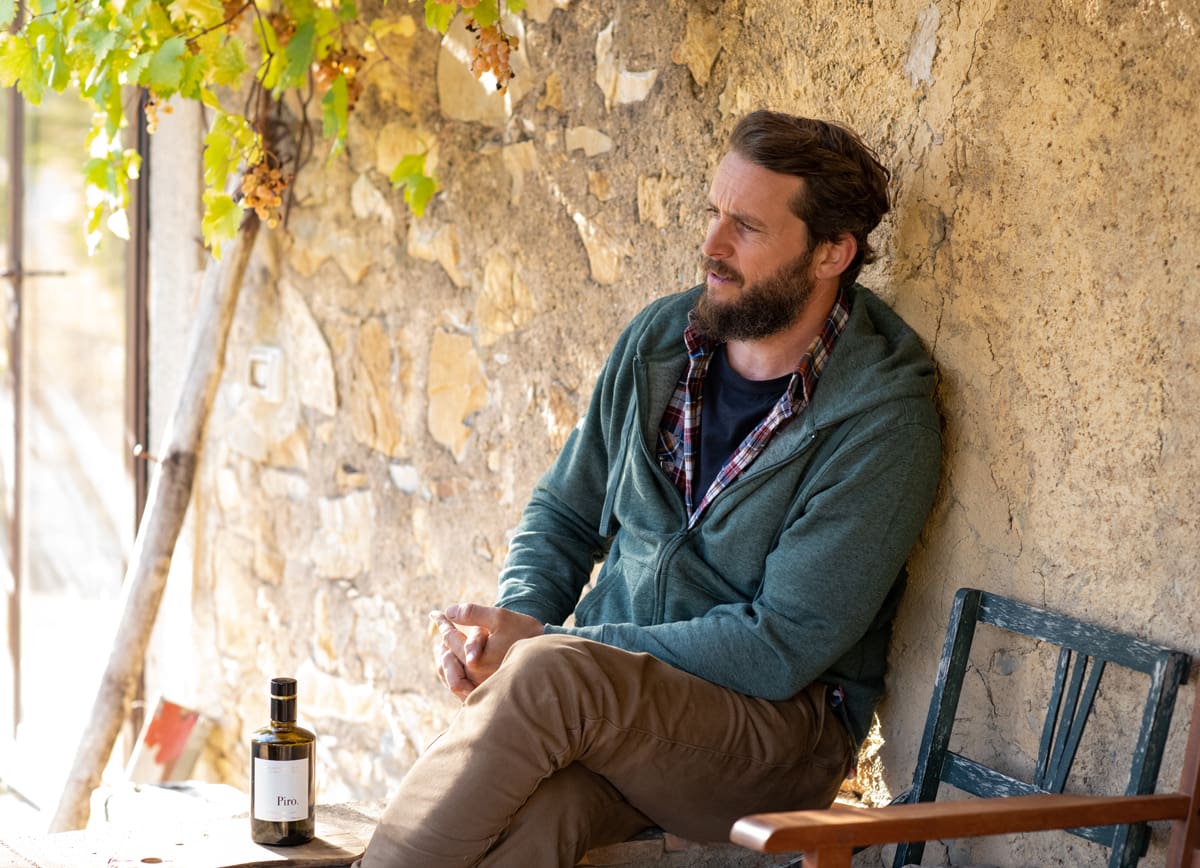
During the interview, Marie-Charlotte said Romain had the advantage of being embraced by the town’s elders as most young men in the area sought to leave the agrarian lifestyle to pursue careers in big cities. The elders welcomed a young man interested in the way they had made their living. Passing on their generations of knowledge about olives and olive oil, Romain listened to every word of advice. “I learned the mill where you take your olives is very important because different technology of the milling process and different millers are going to make different oils. So I started to get really interested in the milling process,” he said. Comparing the process to making wine, the elders told him he had to first start with great olives.
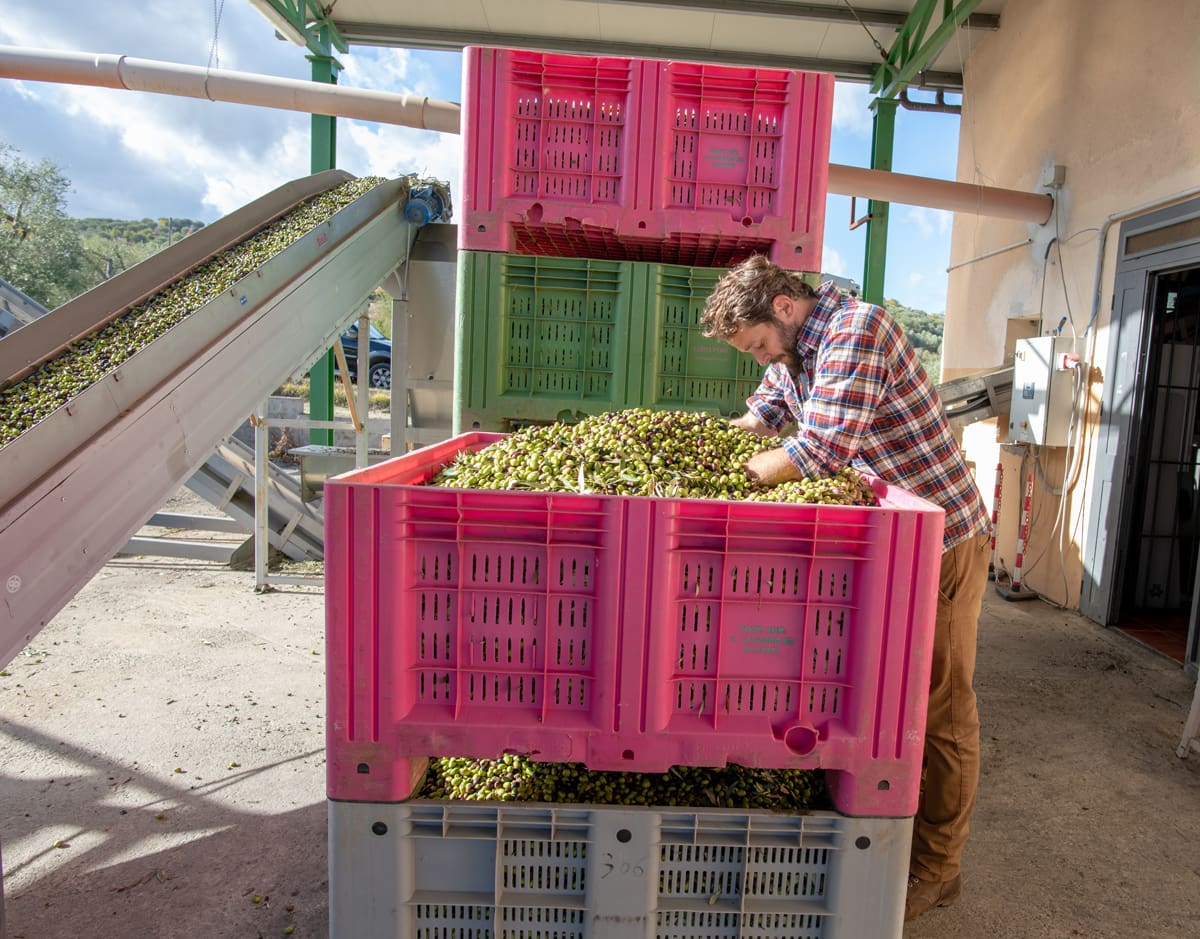
Nurturing his grove and carefully pruning his trees, by 2010 he was ready to make his first batch of olive oil. He brought a few bottles to his friends in France. Similar to the instantaneous process of producing oil, he had instantaneous success. “Everybody wanted this oil so I started to sell my oil at this time,” Romain said. He then began taking his oil to chefs and retail shops in Paris. “I realized people were demanding this kind of quality because I also realized the vast majority of product – 90 to 95 percent – you find in the industry is quite low quality.”
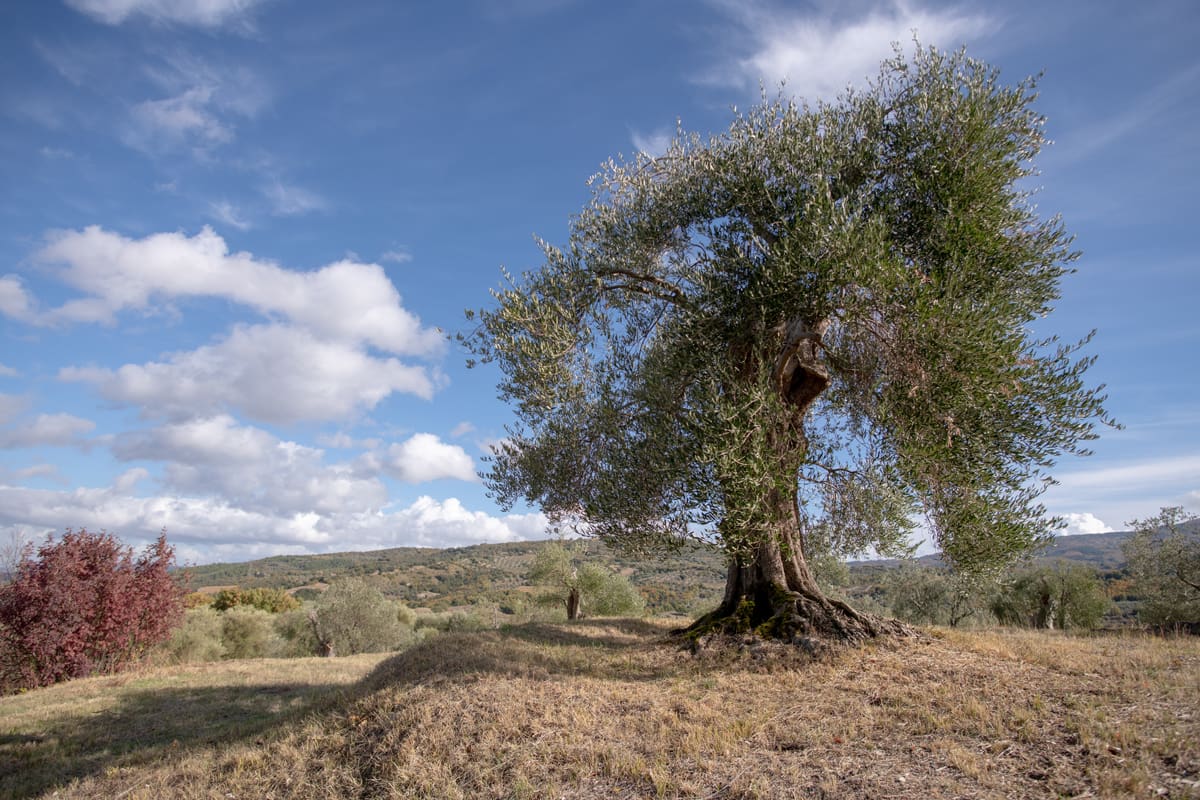
Experiencing high quality olive oil is akin to experiencing fine wine, Romain explained. “If you drink a very basic wine and one day you try a very well done, properly made wine, you’re amazed. It’s the same way with olive oil. If you bring properly made, fresh olive oil to people, they have their minds blown. Oh wow, I thought I knew olive oil before but I didn’t because I never had a tasty experience like this.”
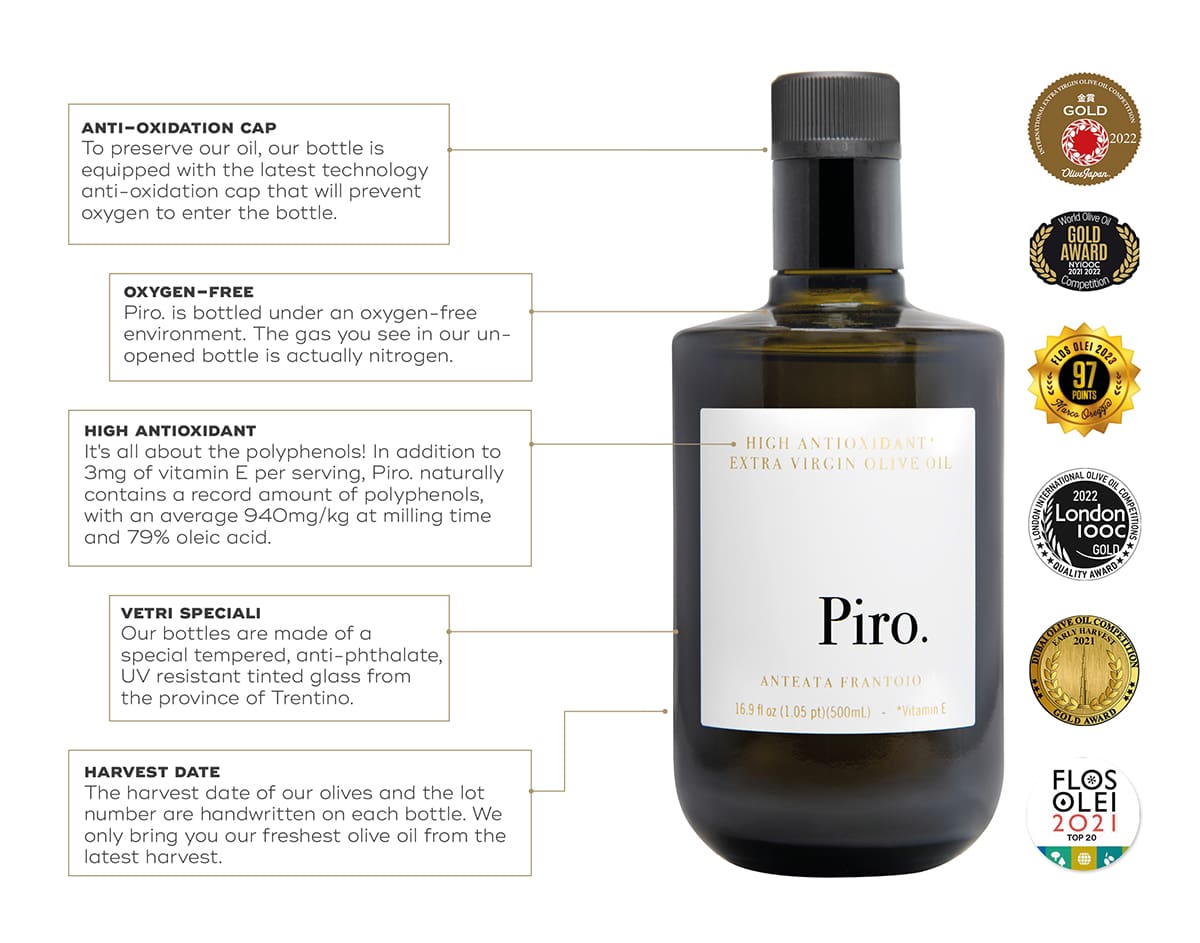
With sales increasing each year in France, he was curious about expanding into the U.S. market. But his sister did not have the time to take on the monumental task of securing distributors for Romain’s olive oil. So year over year, Romain stayed focused on his product, making it better and better. He also redesigned his glass bottle, made in northern Italy, and his label. Romain said glass is the only material that will not give any taste to the oil so even though it is heavy to ship, he would never think of using anything other than glass for bottling. “Glass is definitely the best container. You cannot make a good product if you don’t put it in a good container,” he said.
Marie-Charlotte Piro Joins the Business
By 2019, Romain had almost 10 years of experience in all facets of olive oil production. The town’s elders had taught him well and most important, Romain internalized their knowledge and advice while forging his own innovations. “We arrived at something good. Then she [Marie-Charlotte] decided to jump in. We started to work together in the U.S. market. Our first batch arrived in the U.S. in March 2020,” he said.
The world knows how unfortunate it was to launch a new product on another continent when they did.
“The timing was awful. It’s big and complicated shipping from one continent to another. It was a very big thing and then BOOM, the pandemic at the same time, so this was really bad,” Romain said.
With product sitting in a warehouse and no way to visit customers so they could taste it, they had to quickly pivot to a plan they had to create on the spot. Marie-Charlotte faced the problem head on and rapidly developed an online presence that became her hub for all of her sales and marketing efforts. “It was not really planned to work like this,” Romain said. “It’s been a challenging last six years but here we are now. Like many things, it started from almost nothing and now we are happy exporting and distributing in the United States.”
As the challenges of the pandemic faded over time, with strong sales, Marie-Charlotte welcomed the challenge of expanding their product assortment as well as their distribution channels. Today Piro products are shipped into two ports along the east coast, sent to their warehouse in Greenville, South Carolina, and then distributed from there.
As Piro’s premium extra-virgin olive oil gained a loyal customer base, Marie-Charlotte said she received one request over and over again. Her customers had become so loyal to the product they were using it not only for finishing but also for cooking. At $56 per bottle, could Piro make a less expensive, high quality cooking olive oil, her customers asked. Piro was able to grant their request.
In what could be described as scientific serendipity, Marie-Charlotte learned that of the five cultivars used to produce their finishing oil, two of the cultivars were not heat friendly. And those two cultivars just happened to be the most expensive olives to harvest because of low yields. Without compromising on quality, Piro began producing Cucino olive oil at $39 per bottle from the three remaining cultivars also used in their finishing oil. She had found a solution. “It took off so fast and so well,” Marie-Charlotte said. Now in their third year producing Cucino, they offer a bundle of Piro and Cucino, which Marie-Charlotte said is very popular with their customers.
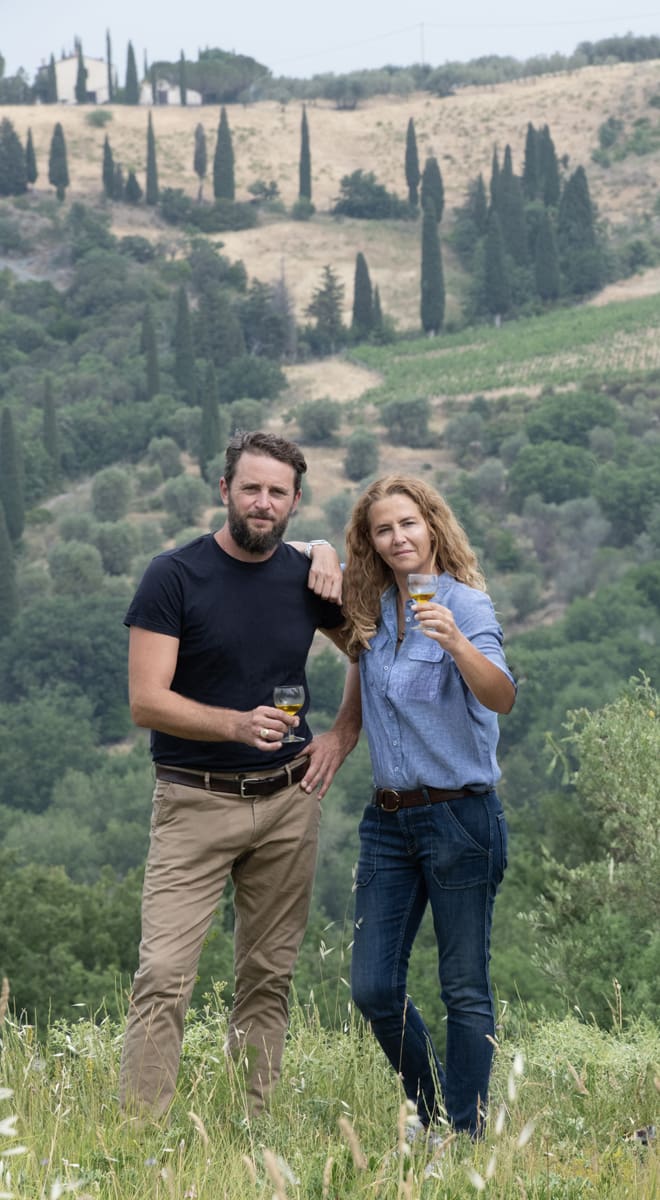
What factor separates exquisite premium olive oil from the other 90 to 95 percent of olive oil produced? Marie-Charlotte said it’s all about the polyphenols in the olives and most important, the ability to protect those polyphenols during the manufacturing process. With antioxidant properties shown to contribute to a healthy diet to prevent certain diseases, in another case of scientific serendipity, polyphenols also contribute taste. “If it’s healthy, it’s also tasty. All those phenols, they have a taste, such as almond as some of our olives have the same phenol that is in almonds,” Marie-Charlotte said. Other tasty phenols in olives also include those found in tomatoes, bananas, artichokes and some peppers.
As the town elders told Romain, you must start with great olives. But that does not guarantee great olive oil. “Even if you have perfect olives, you can still make a crappy olive oil if you don’t know how to make it,” Romain said. “You don’t just press a button and three hours later you have olive oil. You have to be there every minute. You have to control every step and there are many of them.”
Romain explained that from 100 kilograms of olives, for his premium quality product he will produce 10 kilograms of oil, a 10 percent yield. “It’s very easy to make quantity. You have to choose. Either you make quantity or you make quality. It’s very hard to make both together,” Romain explained.
In his early years, Romain would produce about 5,000 bottles per year. He doubled production to 10,000 bottles and in 2024, produced 15,000 bottles. With Marie-Charlotte’s entrepreneurial spirit and drive, in June, the company offered an equity investment opportunity and were able to raise more than $1 million in three months. With that investment, they purchased advanced equipment to increase their 2025 production to 60,000 bottles without affecting their quality. “We were very small. I kind of liked it that way but Charlotte is not a small vision person. She has a very American way of imagining and doing business,” Romain said.
Marie-Charlotte has carefully planned and implemented their growth strategy.
“We have amazing people working with us now so it’s really teamwork. Everyone working with us is as passionate about olive oil as we are. It was a passion project for the production but it’s now a passion product for the distribution of it. And the food industry is a fantastic industry to work in. People are really passionate,” Marie-Charlotte said.
Even at their 2025 projected volume, Marie-Charlotte said they are still small in comparison to their competitors who import from 200,000 to 300,000 bottles each year to the United States.
Bonini Balsamic Vinegar
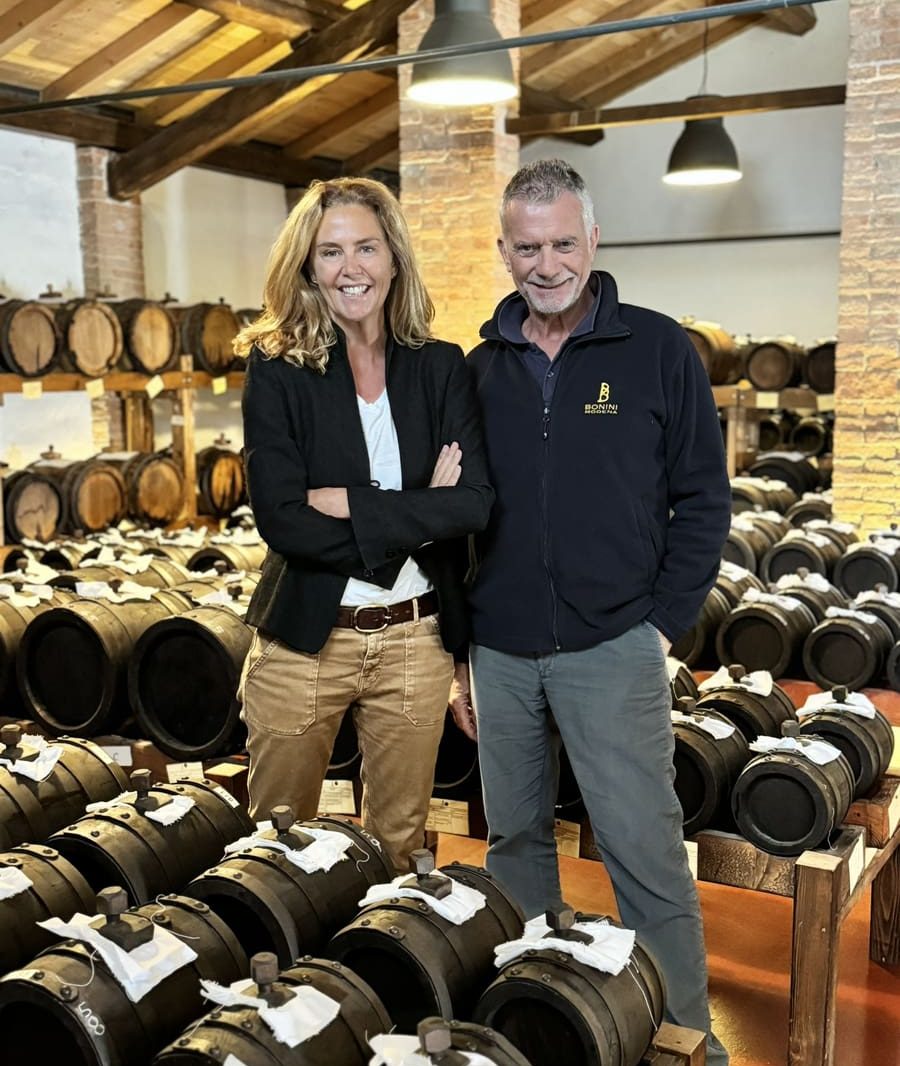
If tripling their olive oil production in one year was not enough to keep Romain and Marie-Charlotte busy, they recently purchased the Bonini Balsamic Vinegar acetaia [vinegar cellar] in Modena, Italy, located about three hours north of Seggiano. As part of the purchase, Bonini and Piro will be merging their global sales effort. Marie-Charlotte said Fabio Bonini reached out to her a few years ago to handle their U.S. distribution and in 2025, the Bonini family decided to sell their acetaia. It’s news hot off the press as Olio Piro just closed on the sale a few days ago. “They had other offers and chose us to take it over. We are very grateful,” Marie-Charlotte said.
Production of olive oil and balsamic vinegar are vastly different. While olive oil production is fast and noisy, balsamic vinegar production is slow and silent. “When you enter the acetaia in Modena, it’s like a church. There’s no sound, no machinery. You really feel like you’re entering a church because the silence there is so special,” Marie-Charlotte said. Grapes grown in the Modena region are processed and then aged in barrels for at least 12 years before the Traditional Balsamic of Modena Bonini can be bottled. Similar to olive oil though, Marie-Charlotte said careful attention to each step in the aging process is the only way to produce an upscale, superior balsamic vinegar.
Jeunes Chefs Rôtisseurs (JCR)
As a Chaîne sponsor, Marie-Charlotte, member of the Miami Bailliage, was in Buffalo in August for the Jeunes Chefs Rôtisseurs (JCR) national competition and National Culinary Weekend. “We really love to train younger people in the love of olive oil. Meeting all of the young chefs in Buffalo was really inspiring,” she said.
“Receiving knowledge from elders was very important to us,” Romain echoed. “At Piro we truly believe that we are not only the keepers of this knowledge but that sharing it is essential to keeping this fantastic tradition alive.”
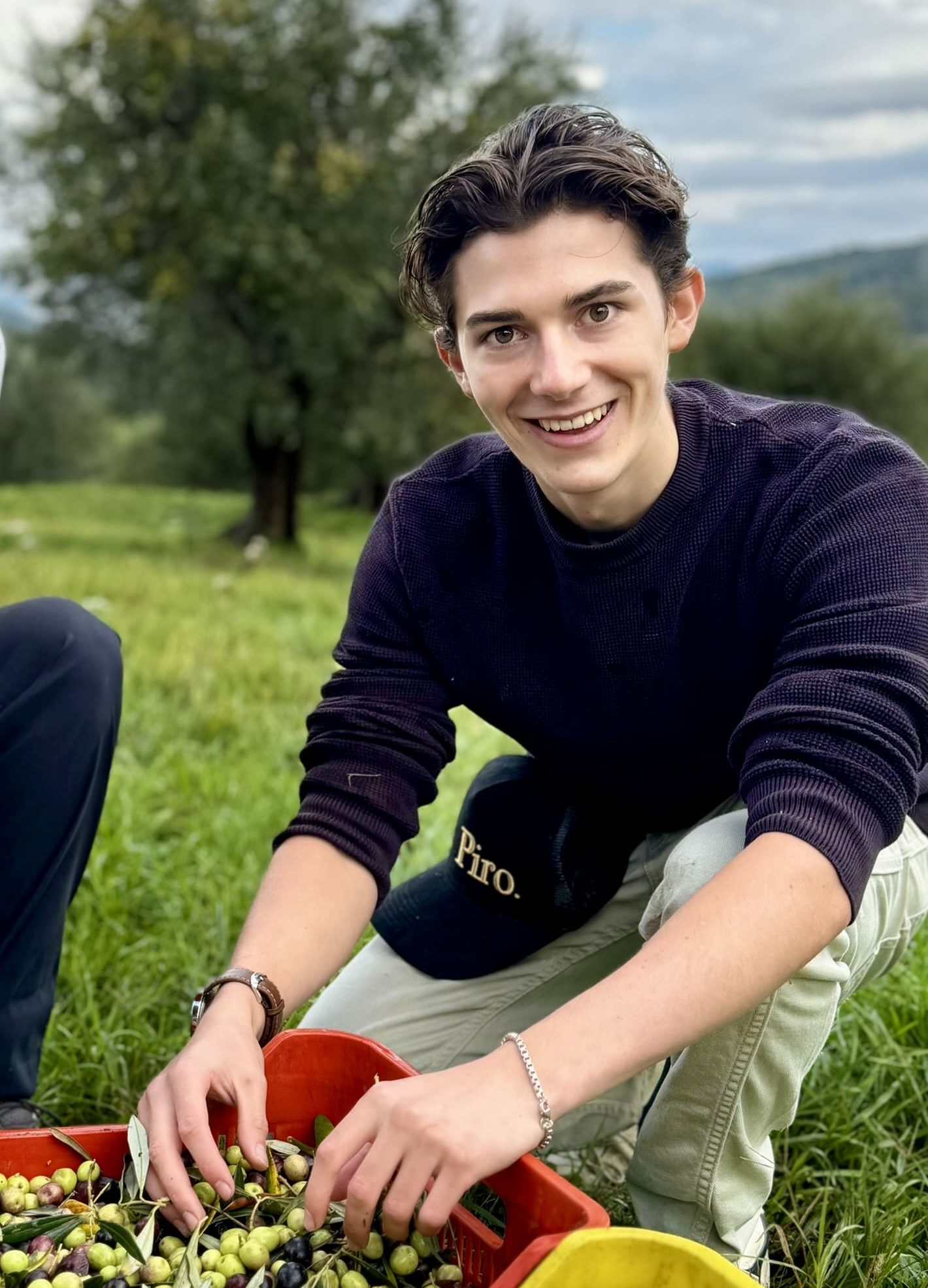
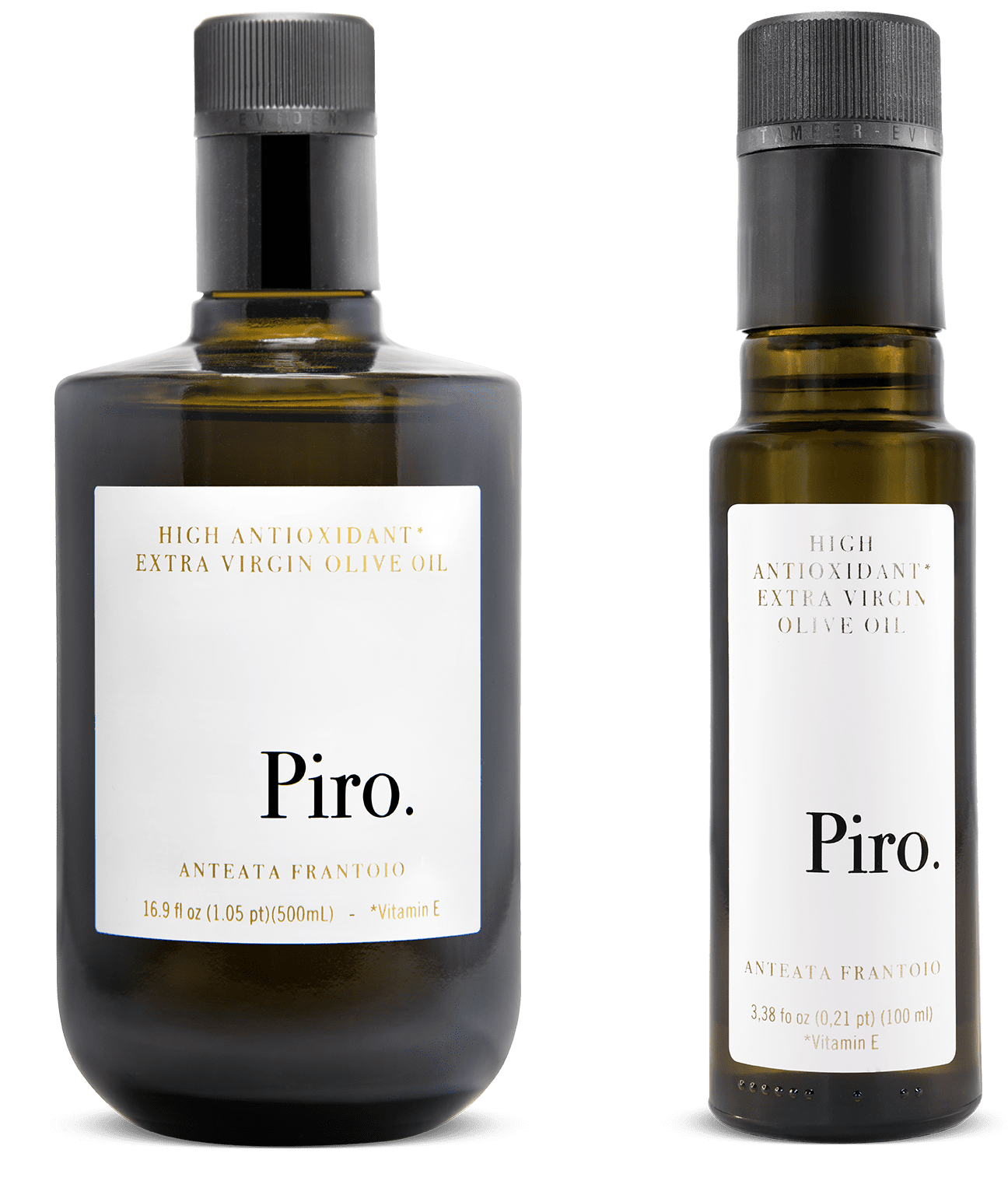
Last year, the Piros welcomed Chef Che Spiotta, winner of MasterChef Junior Season 7 and Piro ambassador, to Tuscany to experience the Olio Piro harvest and observe their olive oil production firsthand. The company also regularly trains young chefs from the prestigious establishments they supply. Marie-Charlotte was recently at Eleven Madison Park presenting to more than 70 young, talented chefs and team members of the renowned New York City three-Michelin star restaurant to which they have proudly provided their olive oil since 2023.
Romain and his family certainly love their olive oil. “I drink my olive oil every day, every meal with my family and my kids. My four-year-old daughter would not eat anything from soup to ice cream without olive oil on it. She wants olive oil on everything. She loves it. She needs it,” Romain said.
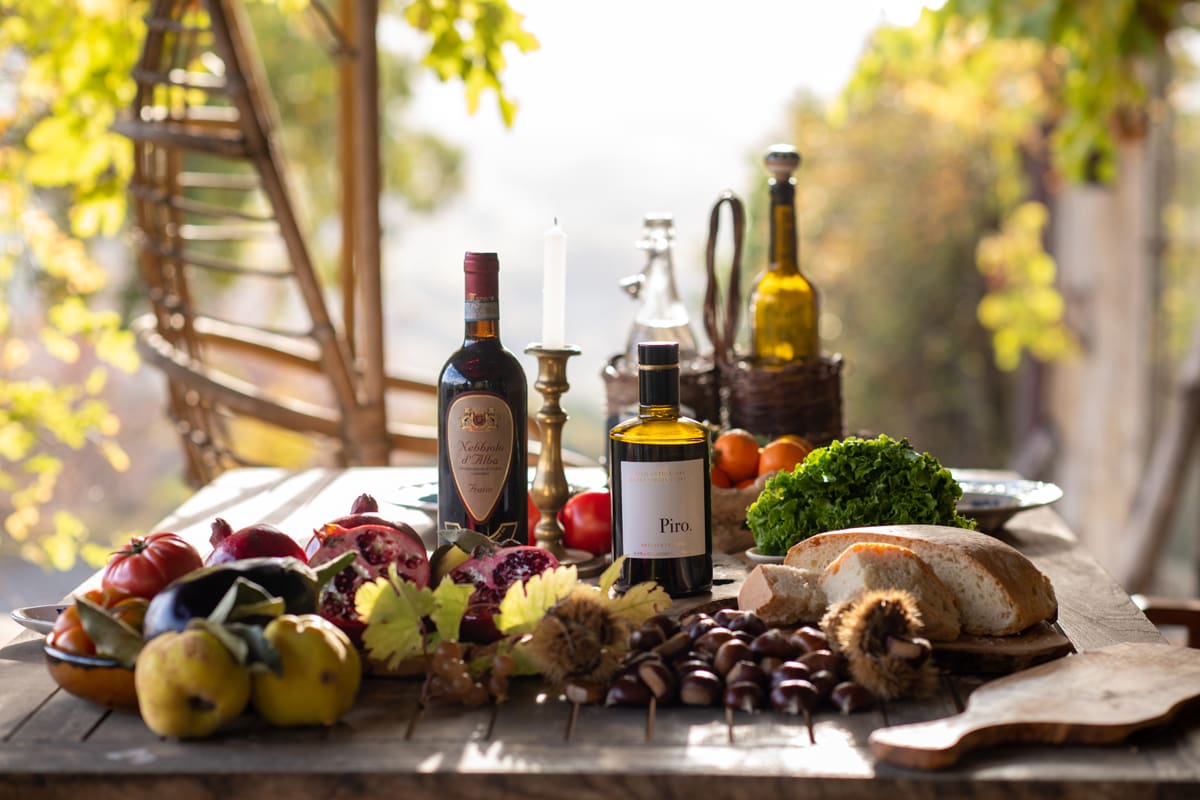
If he had chosen to be a winemaker, he said his kids would not have been able to enjoy his product. “That’s the greatness of olive oil production. It’s a pleasure to produce something that you enjoy every day. When you make such a product, it’s only positive,” he added.
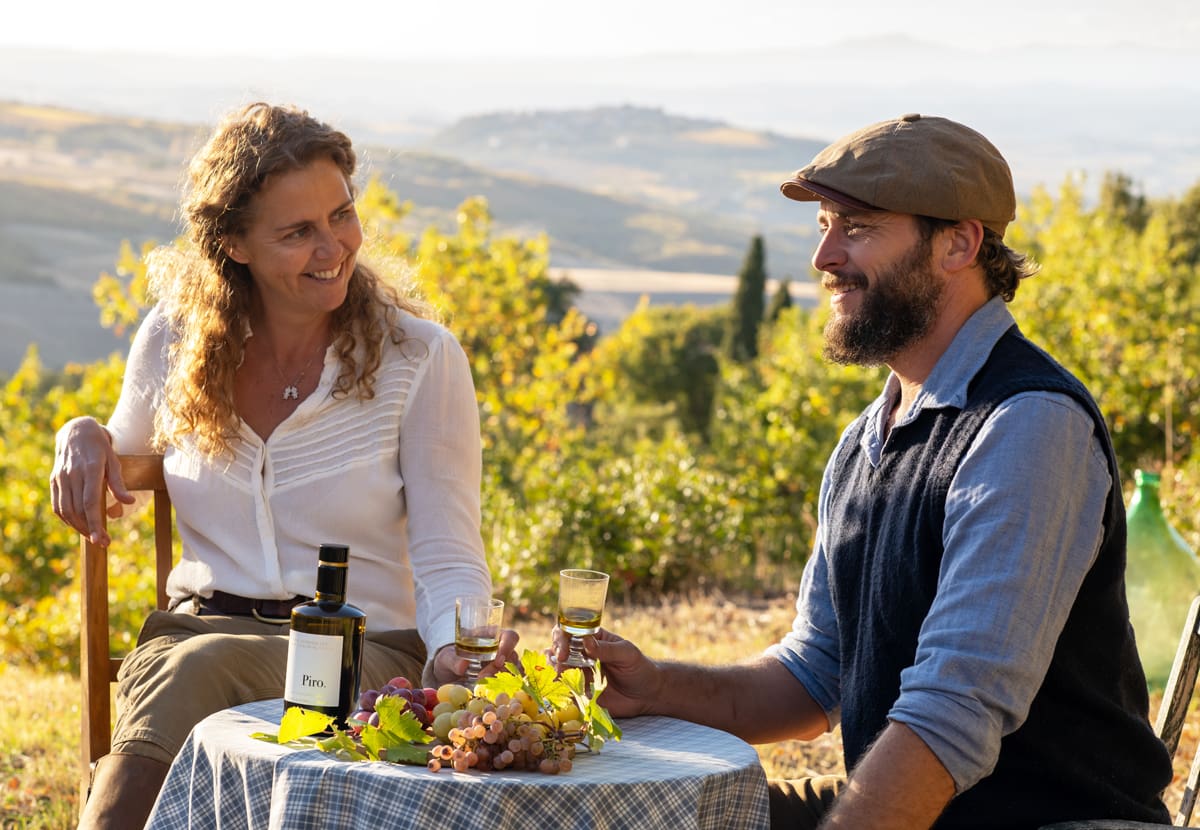
For the next few weeks until harvest is finished in early to mid November, coffee will fuel Romain’s days harvesting his olives and his nights pressing his fruit. It’s a small sacrifice to bring his family and his customers the purest, tastiest, and healthiest extra-virgin olive oil from a region with centuries of tradition rooted in the groves on Monte Amiata. Raise a toast or a drizzle of oil to the elders who shared their knowledge with Romain and one to Romain and Marie-Charlotte for taking the entrepreneurial risk spanning two continents to pass that knowledge – and exquisite olive oil – on to present and future generations.
“I feel that in today’s U.S. market, olive oil is where wine was 20 years ago,” Marie-Charlotte said. “People are beginning to care about quality, provenance, and craftsmanship in extra-virgin olive oil the same way they did with wine in the early 2000s.”
Links
Olio Piro Website
Olio Piro Instagram
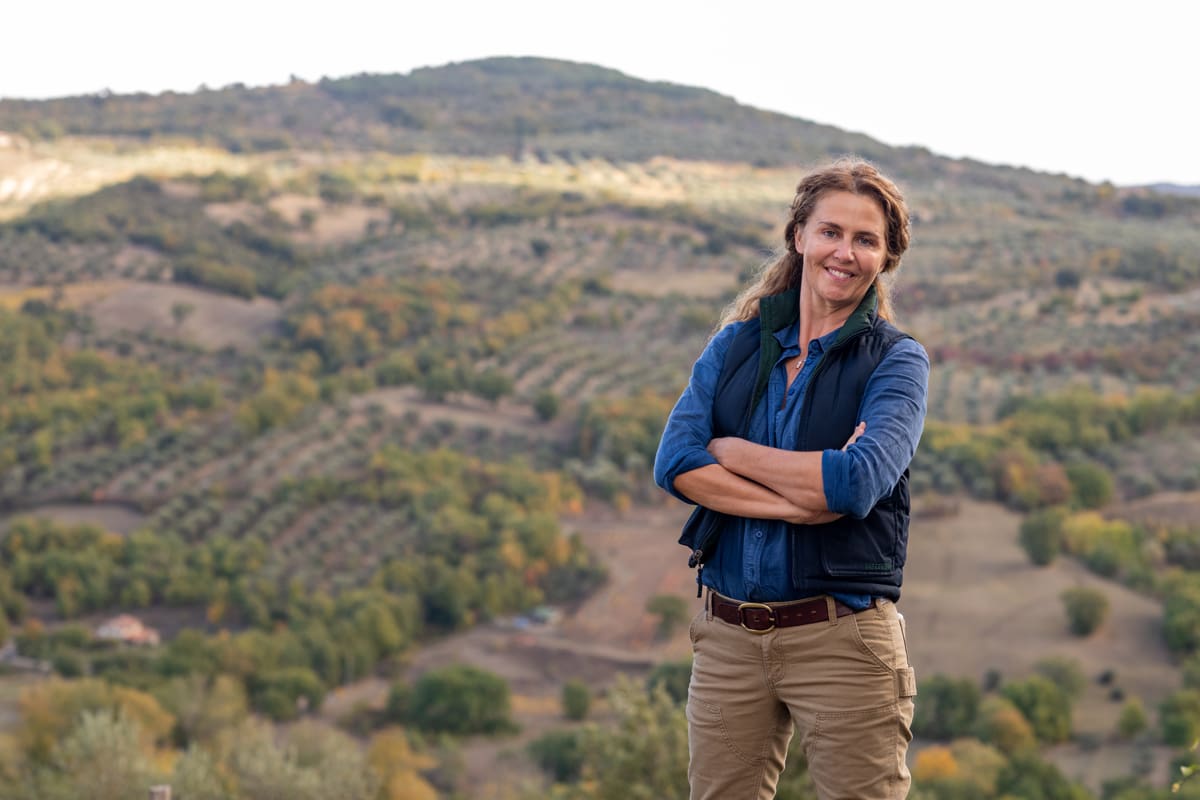
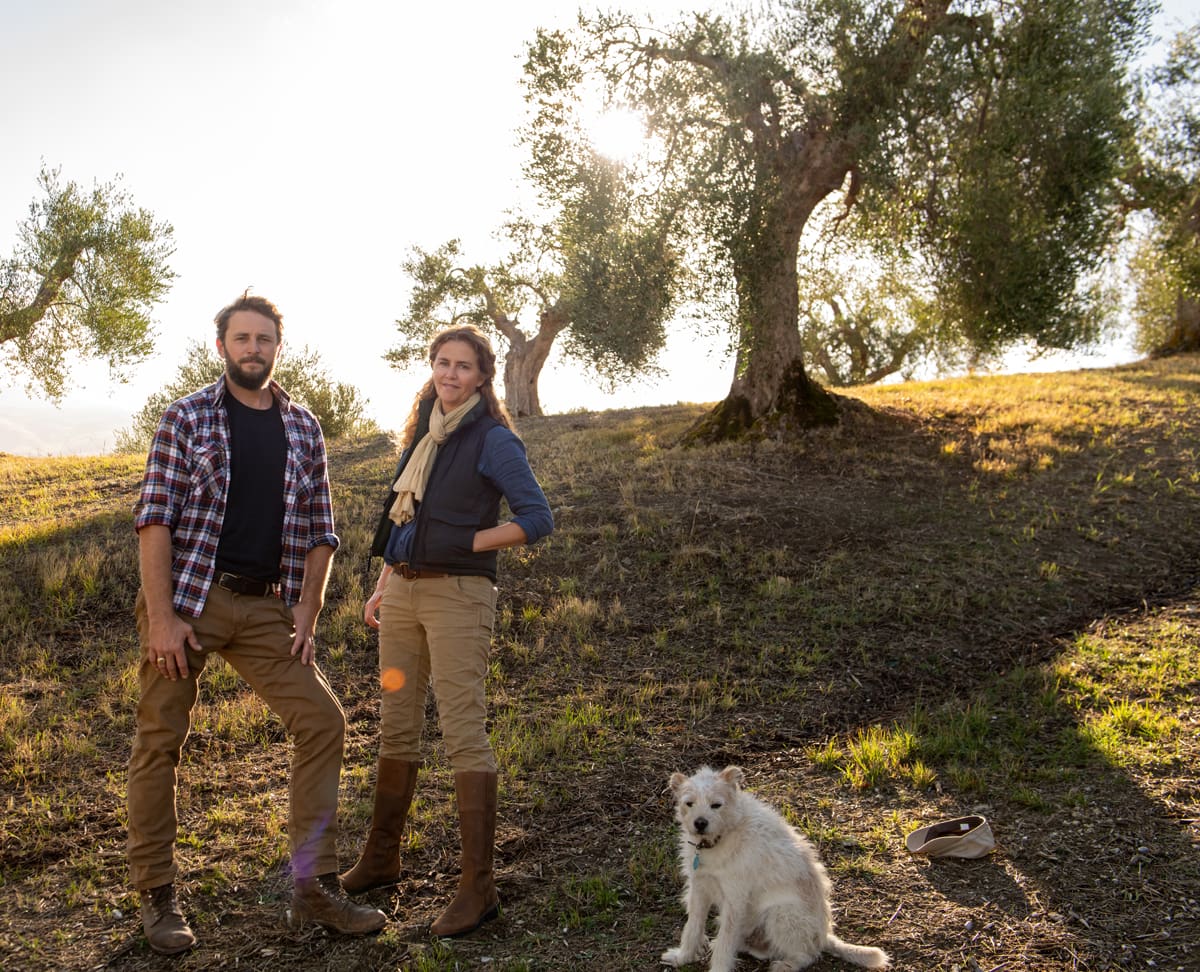
Featured image above: Romain and Marie-Charlotte Piro in their olive groves in Southern Tuscany. (Photo: Courtesy of Vikki Colvin)