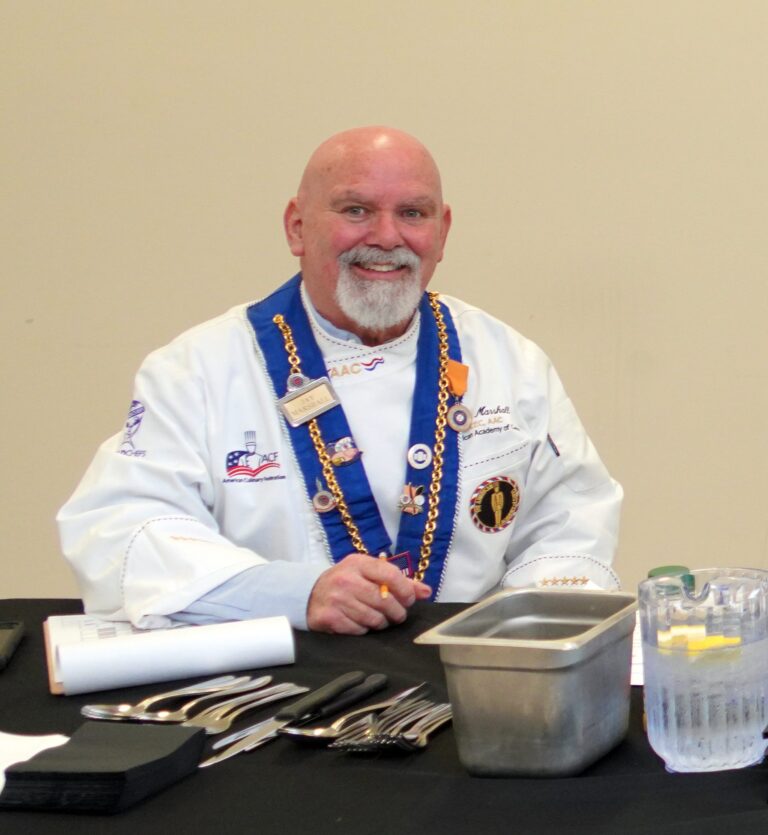
Nov. 22, 2024 – In 1989, Chef Janet Marshall, a Culinary Institute of America (CIA) Hyde Park graduate who was born and raised in California, told her husband, Chef Jay Marshall, also a CIA Hyde Park graduate, that she was done with New Jersey winters. She sorely missed California’s sun and surf so they made the cross country move. Without experience cooking California cuisine, Jay had a difficult time finding a job even with his CIA credentials and a few years of experience, including three years at Walt Disney World Resort in Florida. Then he received a CIA newsletter that advertised a job opening at San José State University. Soon he was commuting from the Bay area one hour each way to the university. He thought the long commute was crazy. “I was going to spend six months there and find another job. It turned into 21 years,” Chef Jay Marshall, CEC, AAC, Chaîne Conseiller Culinaire Provincial Pacific Northwest, said to Chaîne during an Oct. 2 telephone interview.
Jay’s path to his culinary career began on the boardwalk in Asbury Park, New Jersey when he was a teenager. Born and raised in New Jersey, his uncle owned a restaurant on the boardwalk where Jay worked in the summer to earn extra money. “It was just boardwalk food, nothing spectacular,” Jay said. His uncle recognized his talent and suggested he gain experience at another restaurant.
In addition, Jay’s parents had a part-time catering business. “One thing led to another and after high school, I didn’t know what I wanted to do so I looked into culinary schools and applied to the CIA and Johnson & Wales,” he said. He chose the CIA. “It was so eye opening and as a student, to see the chefs working there. It was just so inspirational to become a chef. Back in 1977 and 1978, chefs were not all over television. It wasn’t a glorious job. It was just the passion you had to cook and serve people fine food. As a student, you were in awe every single day.”
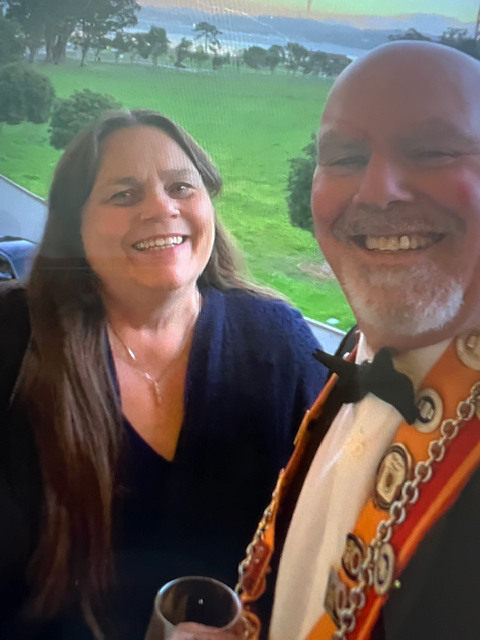
Jay completed his four-month CIA externship at Disney World and met Janet when he returned to New York to finish his degree requirements. “One year later, we got married. We’re still married – 45 years,” Jay said. Janet is retired from her career as a chef at the Veterans Administration (VA) Medical Center in Martinez, California. Speaking of Janet’s career, Jay said: “It was special for us because we live there and she saw many veterans come through the hospital whom we knew or our children knew. Sometimes the result was good and sometimes the result was not so good. That was the hardest part for me. I don’t know how Janet could do that,” Jay said.
San José State University Career
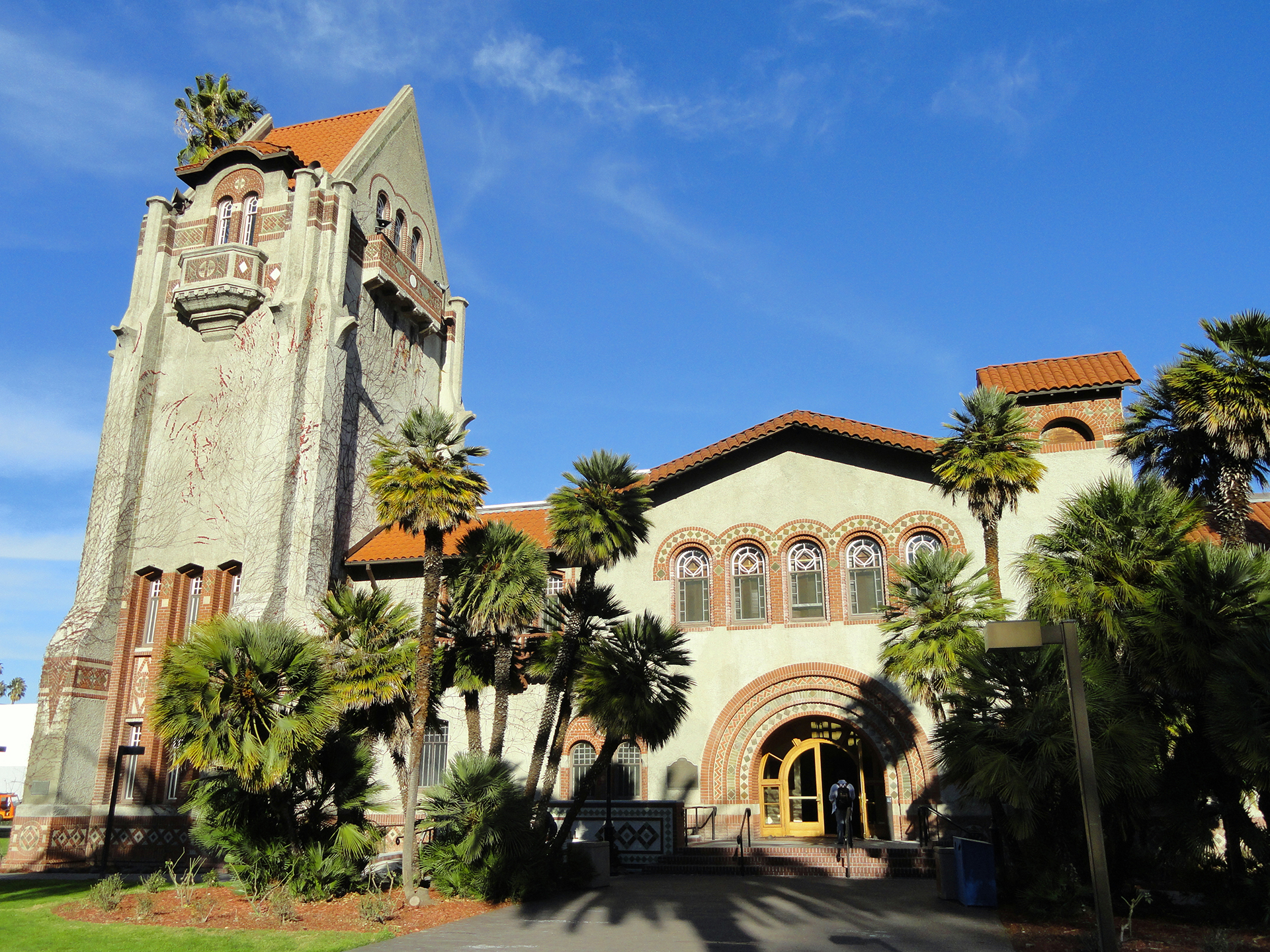
Jay accepted the position at San José State to support his young family. In the hierarchy of culinary careers, he knew it was not a prestigious job, particularly in the early 1990s, but a good stepping stone for him. He worked eight to 10 hours per day, five days a week, with responsibility for the residence hall dining rooms. His schedule worked well with his young family. And then much to his surprise, the long commute was no longer that crazy. He found himself looking forward to going to work. “I kind of liked it,” he said.
His boss, the director of university dining services who previously worked at Cornell University, made all the difference. In his first months there, he told Jay they were going to up the ante for food service on university campuses. “It started a movement,” Jay said.
Jay thrived in the innovative environment providing 1,000 meals per day in the residence halls and a total university footprint of 10,000 meals per day. He stopped looking for another job. “The job got so good. My director and his assistant director made the job so inviting and so fun that we were on the cutting edge of making the difference in food service on university campuses,” Jay said.
In the early 1990s, Dr. Shirley Everett, director of dining services at Stanford University, sought to assemble a panel of five university chefs to discuss campus dining at the annual National Association of College and University Food Services (NACUFS) conference. She could only find four chefs for the panel. Jay was one of them and spoke about the exciting changes San José State had made. He explained their culinary team was now cooking food to order, batch cooking, frequently changing menus, cooking in front of students and tossing salads in front of students. “In the early 1990s, that was an amazing feat on campuses. I can say we were spearheading fine dining on campuses that you see today,” he said. They were able to pivot quickly to innovate because food service at the university was operated in house and not outsourced. “If we wanted to change something, we would meet and change it the next day.”
About one year after the conference, Shirley asked Jay if he would approach the American Culinary Federation (ACF) to ask them to sanction a competition of university chefs. Jay collaborated with the ACF to create a “Special Category” competition. Admitting that the first couple of years were a bit “clunky,” eventually the NACUFS Culinary Challenge found its legs. As university chefs learned ACF competition rules and word spread about it, more and more university chefs entered the competition to vie for an ACF Gold, Silver or Bronze medal. “It’s the feather in the cap of NACUFS and the ACF right now,” Jay said.
For 2025, regional Culinary Challenge winners will advance to the National Competition to be held before a live audience at the NACUFS National Conference in Salt Lake City in July.
Sysco
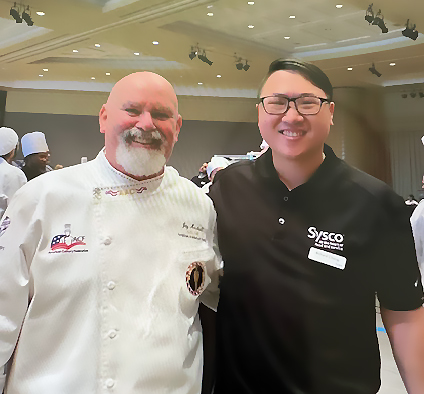
After 21 years at San José State, Jay decided to leave in 2011 to accept a position with Sysco. Originally in the sales and marketing department, he was quickly asked to be an Executive Chef of the Sysco operating company in the Napa/Sonoma area. In that consulting role to Sysco customers, Jay went from cooking for thousands to cooking for less than 10 people per day. “It was a big adjustment,” he said. “It’s been a lot of fun and Sysco has been really good to me.”
Last week, he retired from Sysco to cap a fulfilling and successful professional culinary career.
Jeunes Chefs Rôtisseurs
For more than 10 years, Jay has volunteered his time to judge Chaîne’s Jeunes Chefs Rôtisseurs competitions. Chef Reimund Pitz asked him a couple of years ago to become Chaîne’s Conseiller Culinaire Provincial for the Pacific Northwest and he agreed. “Watching young chefs is just inspiring for me. It brings back so many memories when I was young. I just want to pass along knowledge and experience to them and help them grow in their careers,” he said.
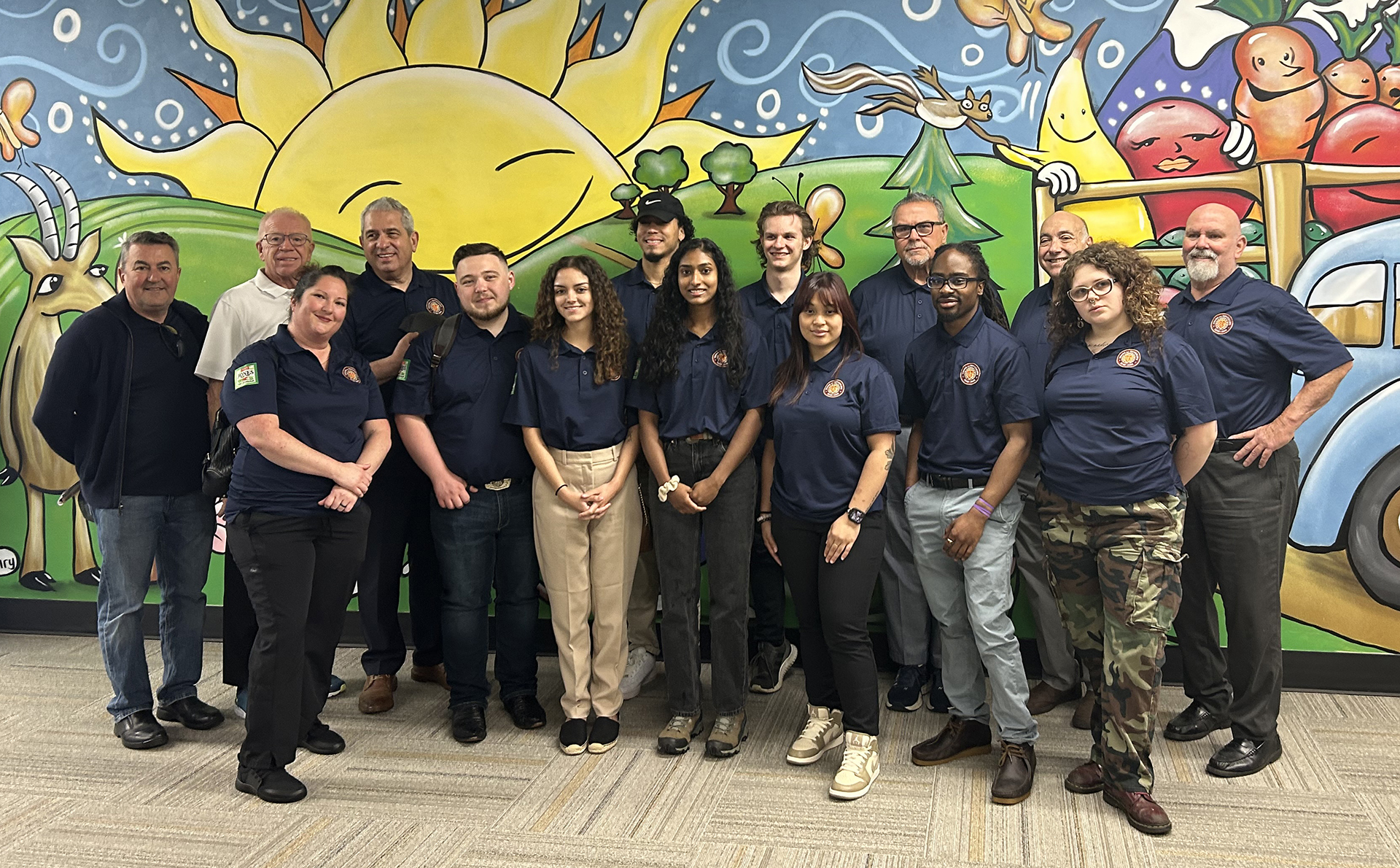
Echoing other chefs who mentor young chefs, Jay said that while technology has innovated culinary education, foundational skills will always be integral to success. “The great chefs have a great foundation of culinary skills.”
When he was a student, the only way he could learn a new skill was to read about it, watch a chef in action and then try to replicate it himself. Now students merely watch a video and are ready to go but mastery of the skill will always take practice. Jay has observed that as he watches young chefs compete. Eager to demonstrate current trends and cutting edge techniques, students must build upon basic skills.
“It’s a lot easier today. I think it’s great. But there are still basic cooking skills that they have to know before they can do the advanced skills and a lot of them show that during the competition,” he said. “If you have 100 people dining at a fine dining restaurant, every single plate has to be perfect and there’s only one way to do that – practice and practice and practice.”
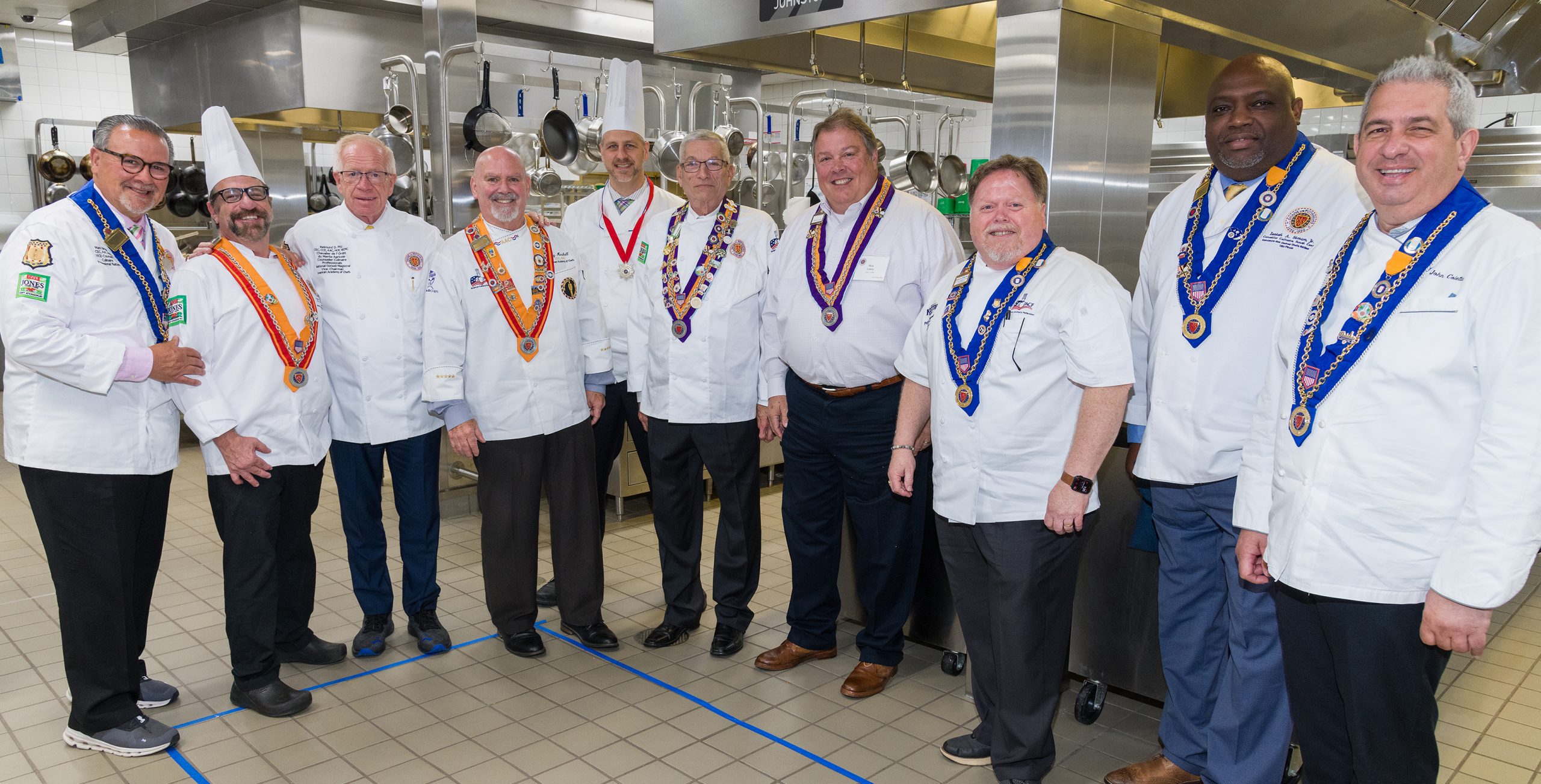
In a post pandemic environment, enormous challenges remain not only in the Bay area but also across the country, Jay said. Before the pandemic, particularly in the Bay area where the cost of living is very high, people were working two jobs to make ends meet. But after the pandemic, many people left the industry and have not returned. Jay is the first to admit he and his fellow chefs do not have the answer.
He is definitely looking to the future. “I think we’re at a point in our industry that things are really going to get interesting. Who is going to rise to the top? Is it going to be the fine dining restaurant or is it going to be the chain of restaurants that can sustain with a minimal amount of skilled labor yet produce a nice meal for their customers?”
A promising development he has seen in the Bay area is the idea that all employees share equally in both tasks and tips. Everyone stays to help close and tips are distributed evenly among employees. After visiting a restaurant with this operating philosophy, Jay said: “I’ve never seen happier employees both in the front and back of the house. I think that’s going to be the wave of the future and I look forward to that. That might bring people back or people will get into the industry because they know it’s a good life.”
Military – John L. Hennessy Award
Jay’s support for young chefs extends to the U.S. military as well in his role as a judge for the National Restaurant Association Educational Foundation’s Military Foodservice Awards competition. “It’s one thing our service members look forward to and that is eating a good meal,” Jay said.
Foodservice operations on military bases here in the United States and around the world compete annually to be recognized for excellence. As a judge, Jay has traveled to Turkey, Belgium and the Netherlands visiting military bases to evaluate their culinary operation. Last year he was a judge for the John L. Hennessy Award, which honors excellence in foodservice on Air Force bases. He spent three days evaluating the 701 Munitions Squadron on the Kleine Brogel Air Base in Belgium, the 2024 Hennessy Award winner in the “small site” category.

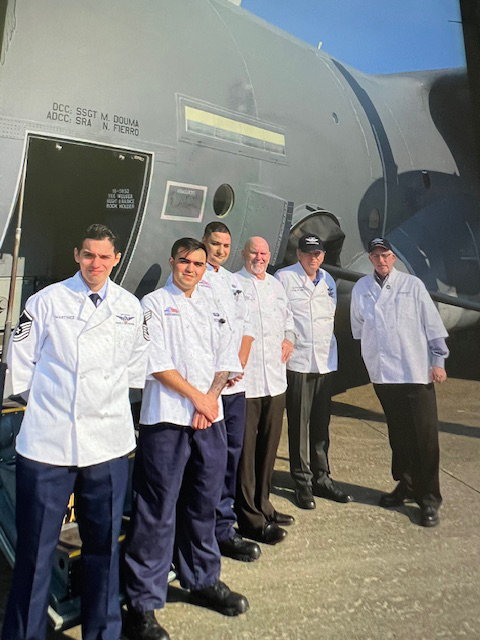
“We go from top to bottom – paperwork, serving skills, cooking skills and cleanliness,” Jay said.
“The skills and character displayed by military foodservice personnel are a great fit for our industry, which offers numerous opportunities for career growth and advancement,” Rob Gifford, president of the National Restaurant Association Educational Foundation, said in a May 20, 2024 press release. “We remain committed to helping these American heroes build professional skills while in-service and connect them with post-duty career opportunities.”
California School of the Deaf
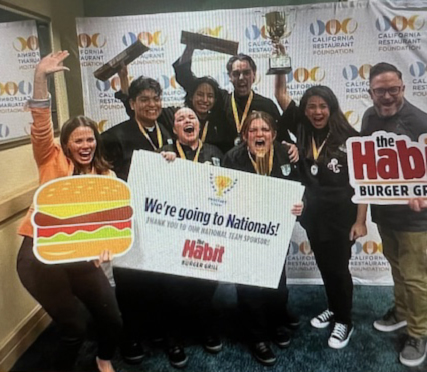
Jay is a member of numerous local and national committees and is currently the ACF-San Francsico Chairman of the Board.
One of his outreach efforts to which he remains deeply committed was the result of an introduction from Kelly, a graduate of San José State who went to work for Wilcox High School teaching in their culinary program after graduation. Kelly asked Jay to speak to her students to tell them his story as a professional chef. One session turned into monthly sessions as the students learned about the culinary industry. With his ability to connect with students, the California School for the Deaf asked him to conduct similar sessions with their culinary high school students.
He used his playbook from his early days at San José State. Now a member of the school’s Technical Advisory Committee, in 2019, Jay helped mentor students for the Deaf Culinary Bowl, a national competition of high school culinary students attending Schools for the Deaf throughout the country. Ten schools competed in Las Vegas. “It was the most interesting and inspirational thing I have ever seen, how they work together without being able to hear. They produced some amazing food,” Jay said.
Throughout his career, Jay has certainly walked the walk, begun on that New Jersey boardwalk, to spread his knowledge and experience far and wide to help culinary students and young chefs. And he certainly upped the ante on long commutes!
Featured Photo: Chef Jay Marshall, CEC, AAC, Chaîne Conseiller Culinaire Provincial Pacific Northwest was a tasting judge at the 2024 Jeunes Chefs Rotisseurs competition.
Links
2024 Chaîne Jeunes Chefs Rôtisseurs
National Restaurant Association Educational Foundation – Military Foodservice Awards