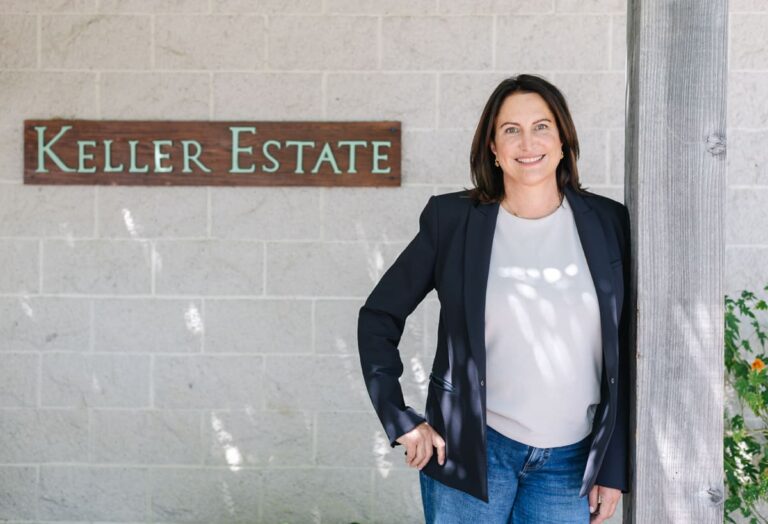
June 20, 2025 – When Ana Keller, winemaker and Estate Director of Keller Estate, meets with Theresa Heredia, Keller Estate’s consultant winemaker, their conversation can quickly elevate to a level few others can understand. Both women have biochemistry degrees. They can correctly combine the letters, C, H and O, a few numbers, and an arrow to write the chemical equation for what is happening inside of Ana’s French oak barrels at her family’s winery in the Petaluma Gap in California. Understanding that chemistry at a molecular level helps Ana and Theresa manage the fermentation process to achieve the desired outcome – exquisite Keller Estate chardonnay, pinot noir and syrah. “I’ve known Theresa for more than 20 years. I get to geek out and learn a lot from that, particularly over a glass or two of wine,” Ana, Chaîne Professionnel du Vin member, said to Chaîne during an April 7 telephone interview.
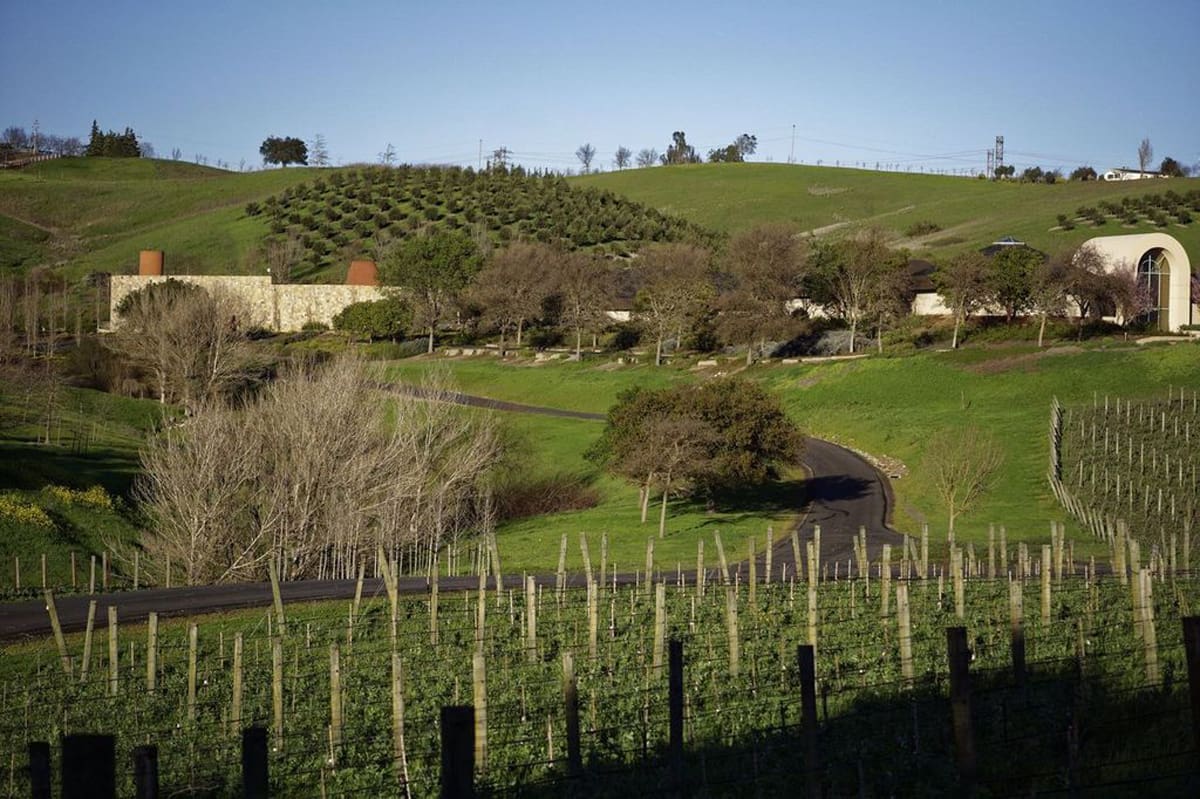
Ana is new to having responsibility for winemaking at her family’s vineyards and winery but not new to its operation. Arturo and Deborah Keller, her father and stepmother, planted their first 13 acres of chardonnay grapes in 1989 on the lower elevation of a hill in the Petaluma Gap. “This is a region mainly guided by wind. Basically, from March through December, it’s just windy every afternoon out here,” Ana said. For those 10 months, wind speeds are consistently up to eight miles per hour in the afternoon. As her parents planted their vines, they wondered if those climatic conditions would be beneficial or detrimental to grapes. They had to wait a few years but once they had the answer in 1993, there was no looking back. Grapes growing on vines in their La Cruz vineyard turned into fine wine and their dream come true.
“Everybody was pleasantly surprised we could harvest the beautiful chardonnay. We started selling our first grapes to Rombauer Vineyards. It became clear we could grow grapes and sell them to a high end Napa chardonnay producer. It was a really good start. So we planted a few acres of pinot noir grapes,” she said.
Conquering chemistry, biochemistry and calculus classes among many others, after graduation, Ana joined the family business in the late 1990s. “I studied biochemistry because I love plants. Plants are my passion. And everything I love about plants happens here.” It was a perfect fit. She immediately began thinking beyond supplying other wineries with grapes grown in their vineyard.
She was fortunate early on to meet David Ramey at a symposium in Sacramento. She asked him to evaluate their grapes to assess their potential to make their own wine. After visiting their vineyards and tasting their grapes, Dave told Ana they definitely had what it takes to produce beautiful wine.
With that confirmation, Keller Estate released their first vintage, a production of 1,000 cases of chardonnay, in 2000. “You don’t build a winery overnight. It takes years. We’re very happy this is our 25th harvest in 2025. We’re celebrating a quarter of a century year-long, celebrating our Mexican heritage. It’s going to be a fun year,” Ana said. On Saturday, June 21, Keller Estate will host a Salsa Dance party, one of their flagship anniversary events this year.
Their celebration includes 25 years of staying true to their mission to make wine solely from fruit grown on their property. “We are 100 percent estate grown,” Ana said.
For most of those 25 years, Keller Estate employed a winemaker. Ana’s role centered on business and vineyard management with a focus on sales and marketing. That job included watching over 100 sheep they have on the property to mow grass and fertilize soil. “In looking at how to grow better grapes we began farming organically a few years ago,” Ana said. Sheep move around the property seasonally. “They go and mow and fertilize at the same time. When not in the vineyard because they would eat the grapes, they mow elsewhere, which is good for fire control. I can’t stress how important the sheep are for the health of the vineyard. They are part of our fire prevention team.” With little brush, Keller Estate has been spared damage from rapidly spreading wildfires.
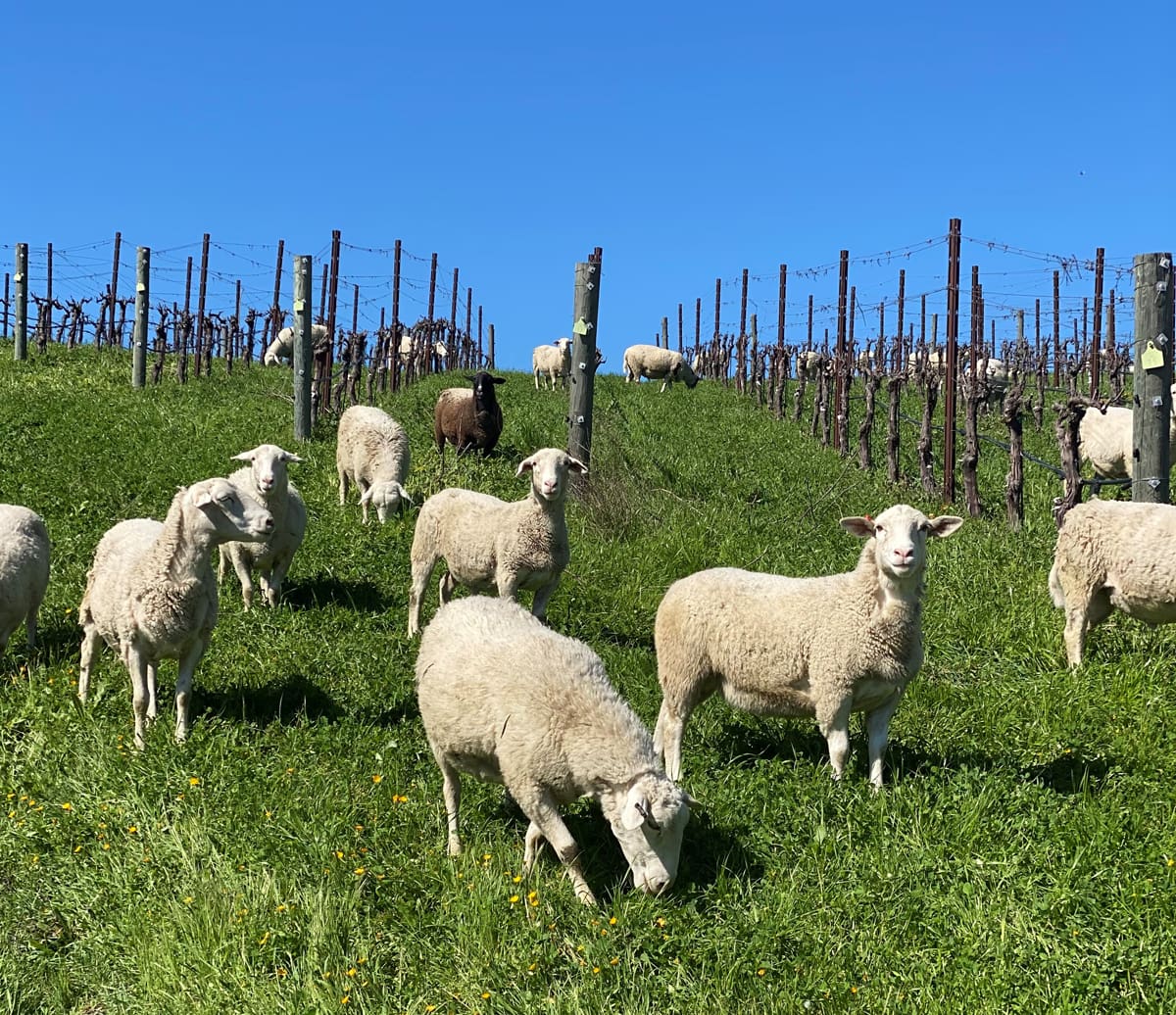
In addition to sheep, Ana said they installed owl boxes to provide habitat for the nocturnal animal that eats gophers, a threat to vines. And bees on the property support pollination. It’s all a balance of nature, Ana explained.
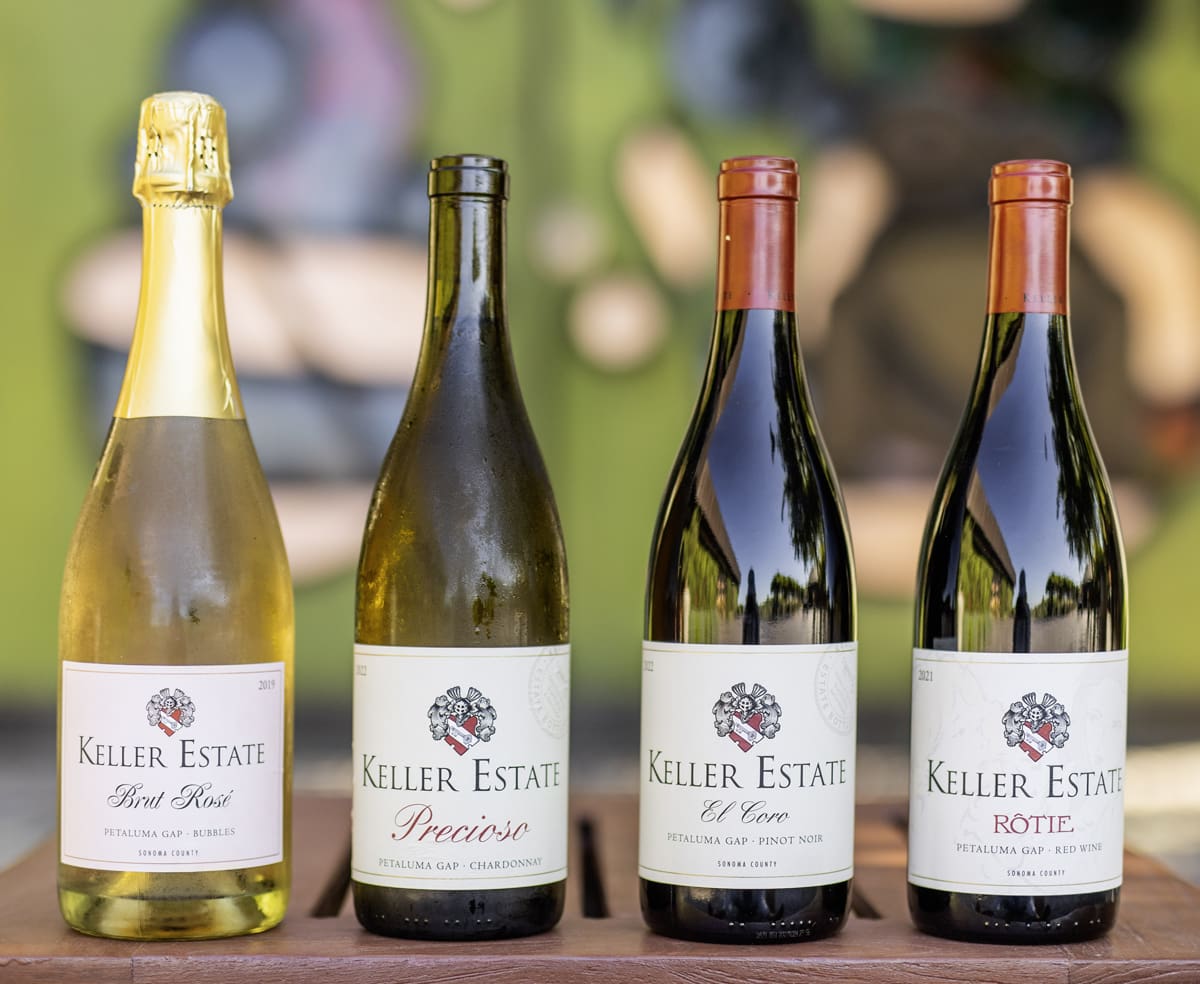
Soon after Ana came on board, her scientific curiosity prompted her to wonder if grapes would flourish at the top of the hill. While the bottom portion of the hill has clay soil and is somewhat sheltered from the wind, the top has different soil and is more exposed to wind. In 2000, they planted their El Coro vineyard at the top of the hill with pinot noir grapes. With some pinot noir also at the lower elevation, they now offer two very distinct pinot noir wines with a bright future for both varietals as they manage their vineyards. “The more we learn about the area, the more we are able to farm carefully and make sure we take care of them so they can age as gracefully as possible,” Ana said.
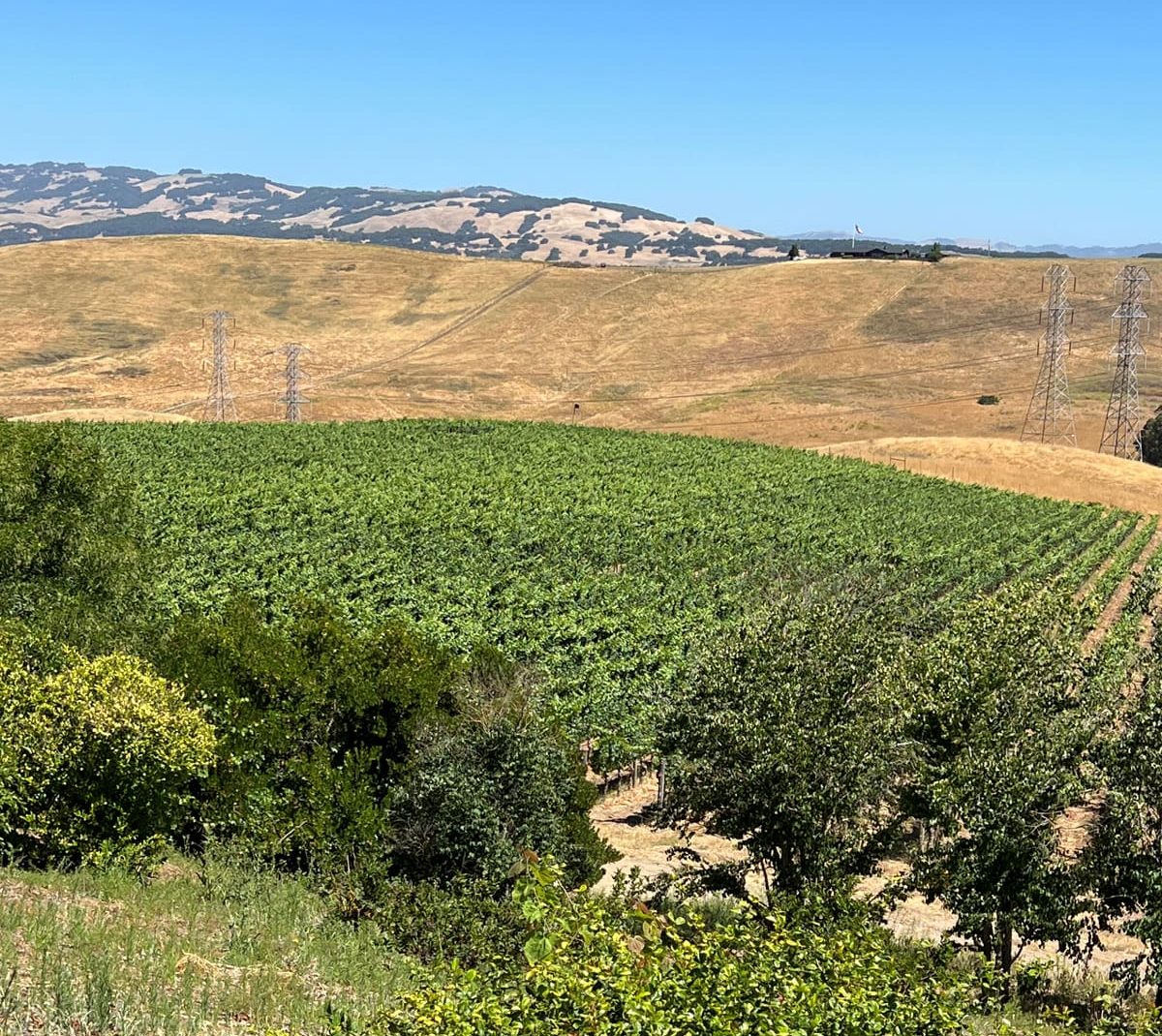
Last year the family decided to have Ana take a more active role in the winemaking process as their chief winemaker. “My biochemistry degree helps us actually produce the wine. It was a convenient career to have and fast tracked my learning curve. I understood what fermentation was. I understood what the dangers of a bad fermentation could be. I understood sanitation. The biggest thing in winemaking is you are moving the fermentation in the way you want it to go,” Ana said.
Any deep dive into a new job or subject always brings surprises. “What has been most surprising to me are the little details. There’s a lot of moments in the process where I understand the big picture and big steps. But with all of the fine tuning and attention to details that you can bring to winemaking as you move from the vineyard to the sorting table to the winery to the tanks and then to the bottle, there are extra steps where you can take care of making even better wine. It’s been really interesting to see how you can fine tune and make wine even shine more.”
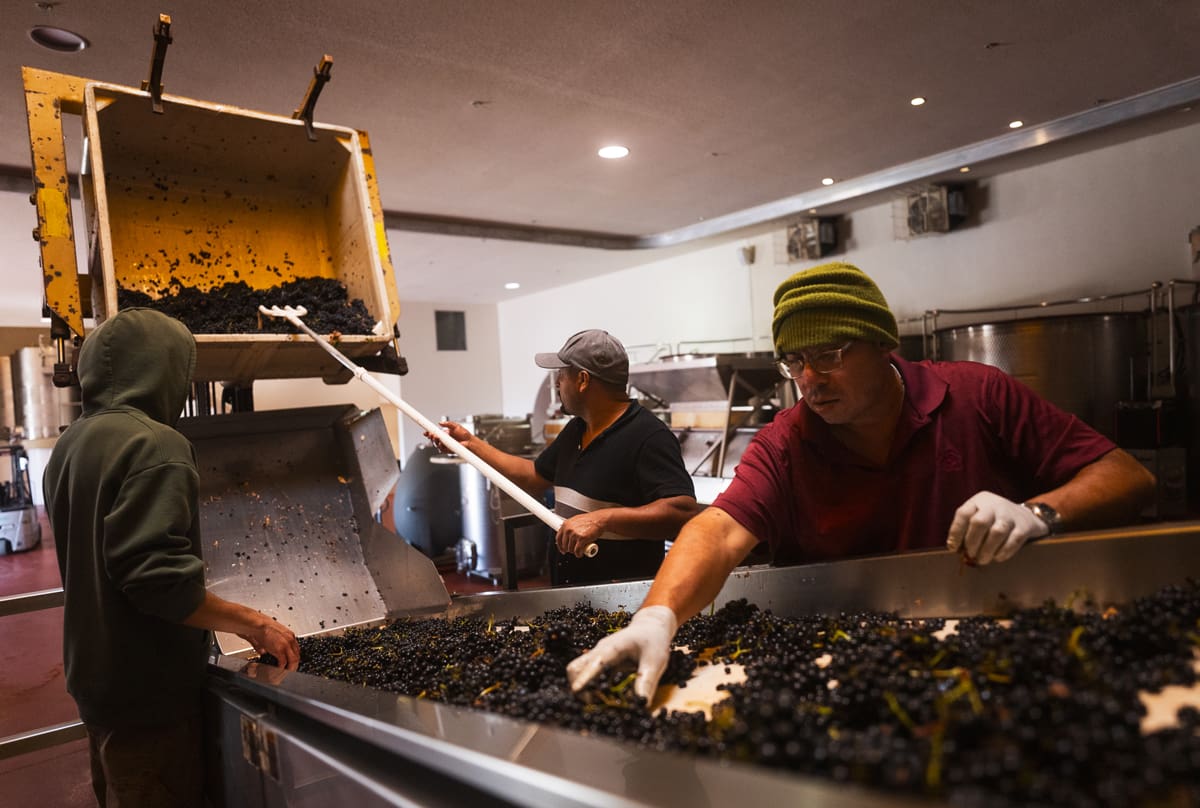
As an estate winery, it’s a nature and nurture combination that holds the formula for Keller Estate’s success. “Vineyard trumps winemaker,” Ana succinctly said.
The important natural element in the Petaluma Gap is the wind. “From wind to wine,” Ana and her fellow local vintners like to say. She explained the wind creates a unique growing condition. With long, cool days, wind constantly beats on grape skins causing thick skins to develop, physically thick but also chemically rich in tannins and the grape’s flavor compounds. The inside of a grape is simply water, acid and sugar, she said. The vines respond to the windy conditions and geography with slow maturation and slow ripening that preserves the balance and acidity of the grape.
Back to basic science, Ana explains a plant’s production of fruit is to ensure the plant’s survival for future generations. If plants have enough water, sunshine and nutrients, plants can be lazy. For winemakers, plants need to be a little stressed to support optimal fruit yields.
Now with 35 acres under vine, Ana said they recently replanted 18 acres of the original vineyard her parents began planting in 1989 at the bottom of the hill. “Early on we planted with different knowledge. So we changed the orientation and changed clones because we know better now,” Ana said. In about three to four years, they are looking forward to bountiful fruit with beautiful acidity and beautiful minerality so characteristic of wine produced from grapes grown in the Petaluma Gap.
Petaluma Gap AVA
In 2014, grape growers and vintners in the Petaluma Gap came together as the Petaluma Gap Winegrowers Alliance to discuss their unique region and the common elements to all of their wine because of the terroir. They concluded the Petaluma Gap should be designated as a formal American Viticultural Area, an AVA. Thus began a four-year process of applying to the Alcohol and Tobacco Tax and Trade Bureau in Washington, D.C. for that distinction. Ana said they formed a great team of growers, vintners, an environmental engineer, and an historian to write and submit the application. About 10 wineries collaborated on the application.
According to the AVA federal government website, an AVA “is a specific type of appellation of origin used on wine labels. An AVA is a delimited grape-growing region with specific geographic or climatic features that distinguish it from the surrounding regions and affect how grapes are grown.”
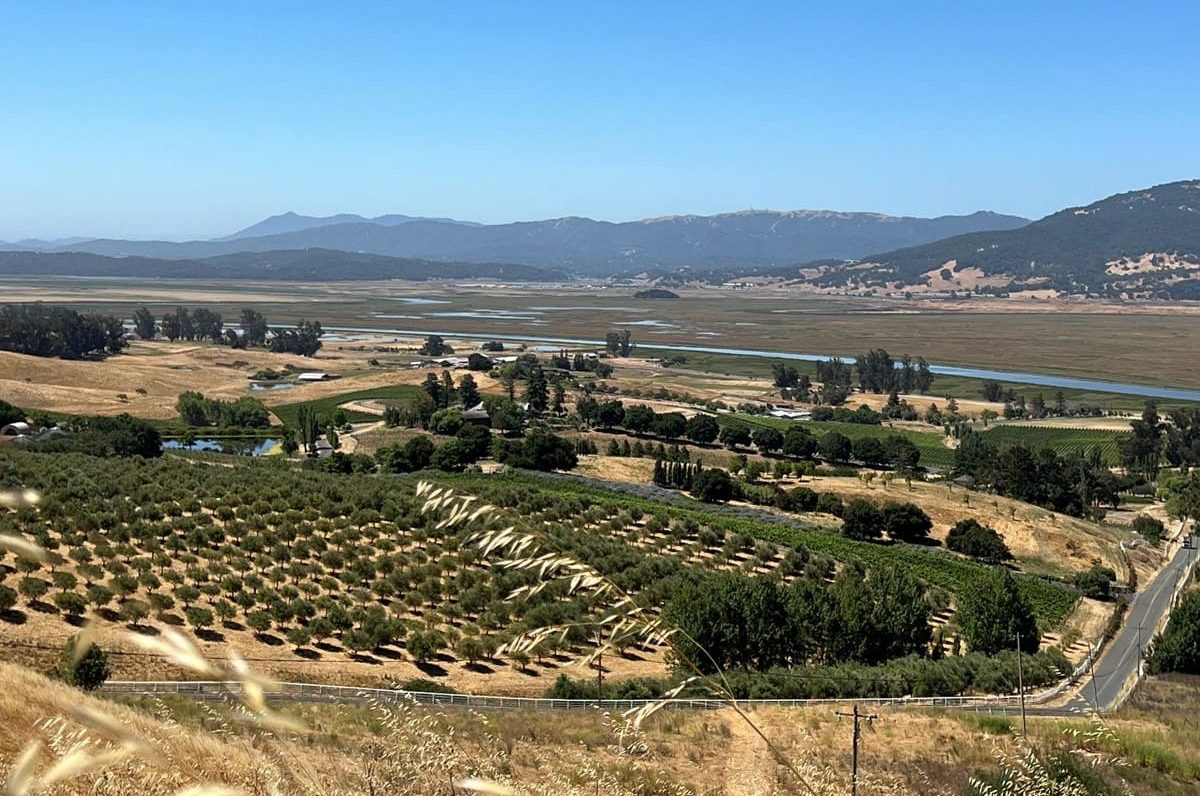
In their application, Ana’s group emphasized the Petaluma Gap unique wind pattern as their specific climatic condition that warranted the AVA designation. They also knew the government wanted the AVA to make sense on a map and also to consumers. Petaluma is a city in Sonoma County, north of San Francisco, so they had the geography base covered. In 2018, the government approved their application, one of the fastest ever to be granted. Their application did not receive any objections so it moved forward without delay. “We were lucky and smart we presented the AVA the way we did,” Ana said.
As of 2024, there were 276 established AVAs in the United States with 154 of the 276 in California, according to the federal government.
Although some people don’t want more AVAs approved, Ana said in the end, it’s helpful to growers, vintners, sommeliers, trade and media, and especially to consumers who are then able to compare wines within the AVA and know what to expect because of the unique features of the region.
Glancy Wine Education Foundation
Ana is president of the Glancy Wine Education Foundation (GWEF), a nonprofit organization founded in 2020 with a mission “to assist wine and hospitality professionals in furthering their career goals.” According to their website, over the past four years the foundation has awarded more than 200 scholarships, totaling more than $300,000, primarily to minority and underserved professionals working in wine and hospitality.
The Board of Directors evaluates applications with key criteria of financial hardship, economic need, work experience, and educational and career goals guiding the selection process. Scholarships are awarded year-round on a monthly basis. Recipients in the wine industry can take courses at the San Francisco Wine School, The American Wine School, or the International Wine Center.
In 2024, GWEF received a generous sponsorship from the Chaîne Foundation to support their vital effort in the industry. “We are really grateful to Chaîne for that donation. It has really helped,” Ana said.
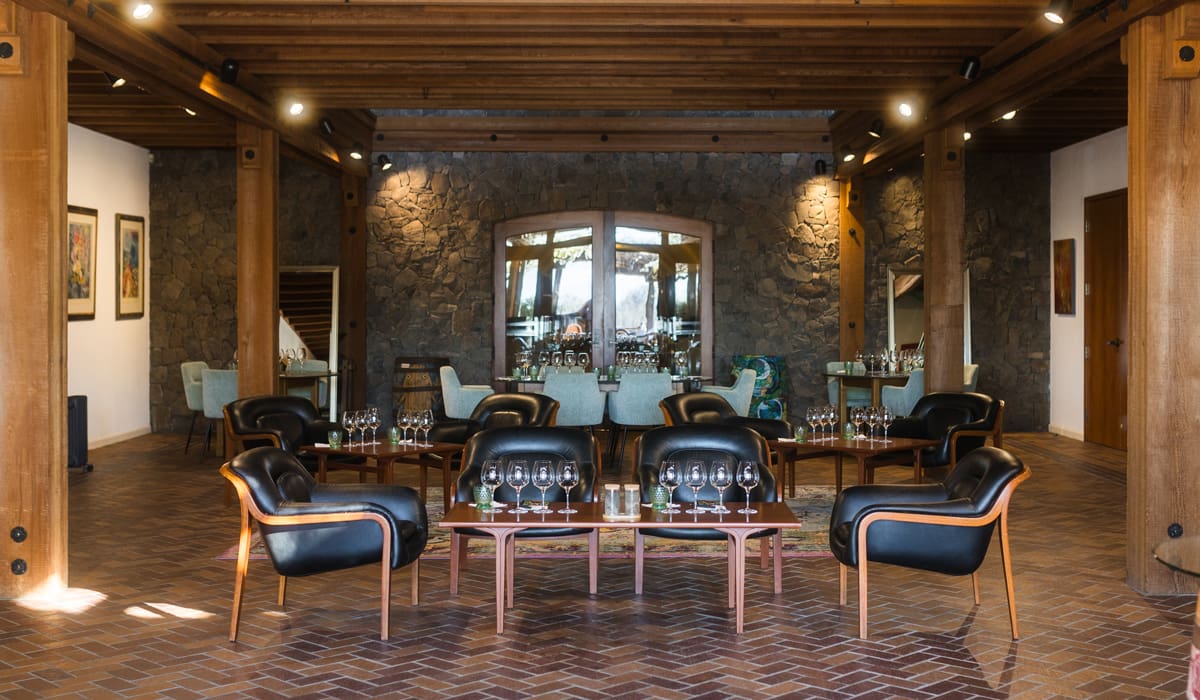
As Ana works to produce exquisite wine and support the future of the wine industry, she has a window into the next generation of wine drinkers. “They love to learn. They love to understand what’s going on. They love experiences,” Ana said. The wine tasting experience is much different today than it was in the past. Ana said their wine tastings have become family friendly and pet friendly as young families like to bring their children and pets when they travel. “They live very differently than other generations,” she added.
Keller Estate in 2025

Now with a production of 3,000 cases per year, 40 percent of Keller Estate wine is chardonnay, 40 percent is pinot noir, and 20 percent is syrah. And since the region’s AVA designation, about 30 to 40 wineries participate in Petaluma Gap wine festivals where Ana will bring one of their older vintages to see how it is holding up. Even though they are a small winery, Keller Estate is one of the largest and oldest located in the Petaluma Gap. At one festival, she brought a Keller Estate 2004 vintage. “It gives a lot of pedigree to the region,” Ana said.
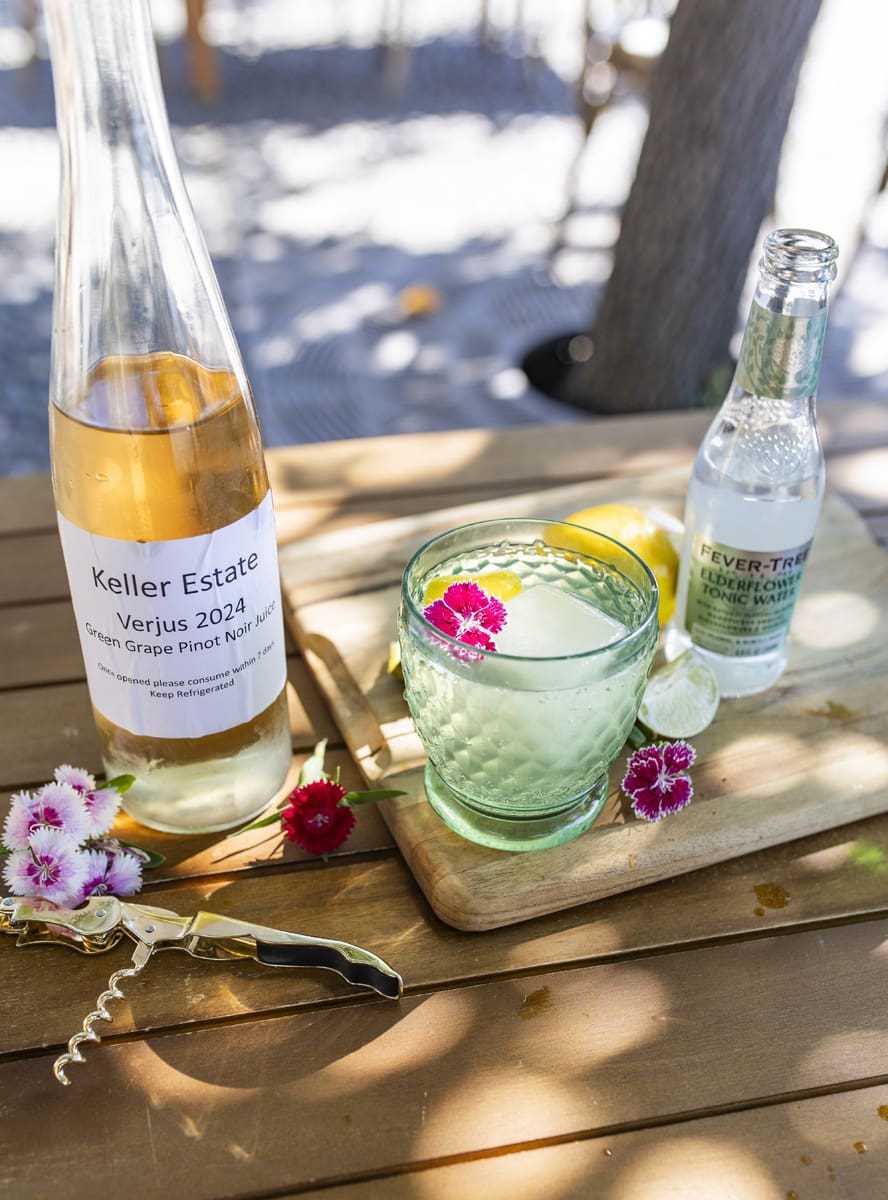
And with more interest in nonalcoholic options, Keller Estate produces Verjus, which is made from young pinot noir grapes grown on the property.
According to their website, Verjus is a tasty balance of sweetness and acidity making it a perfect aperitif with sparkling water or on its own. For their nonalcoholic Keller Spritz recipe, made with Verjus, tonic, and soda water, visit Keller Estate.
Ana has been at the vortex of nurturing that Petaluma Gap pedigree. There’s not a biochemical equation for that contribution and dedication to her family’s estate winery, to the region, and to the broader wine industry – just simply defined by heart and hard work!
Check back for photos from Keller Estate’s Salsa Dance Party on Saturday as they celebrate their 25th vintage!
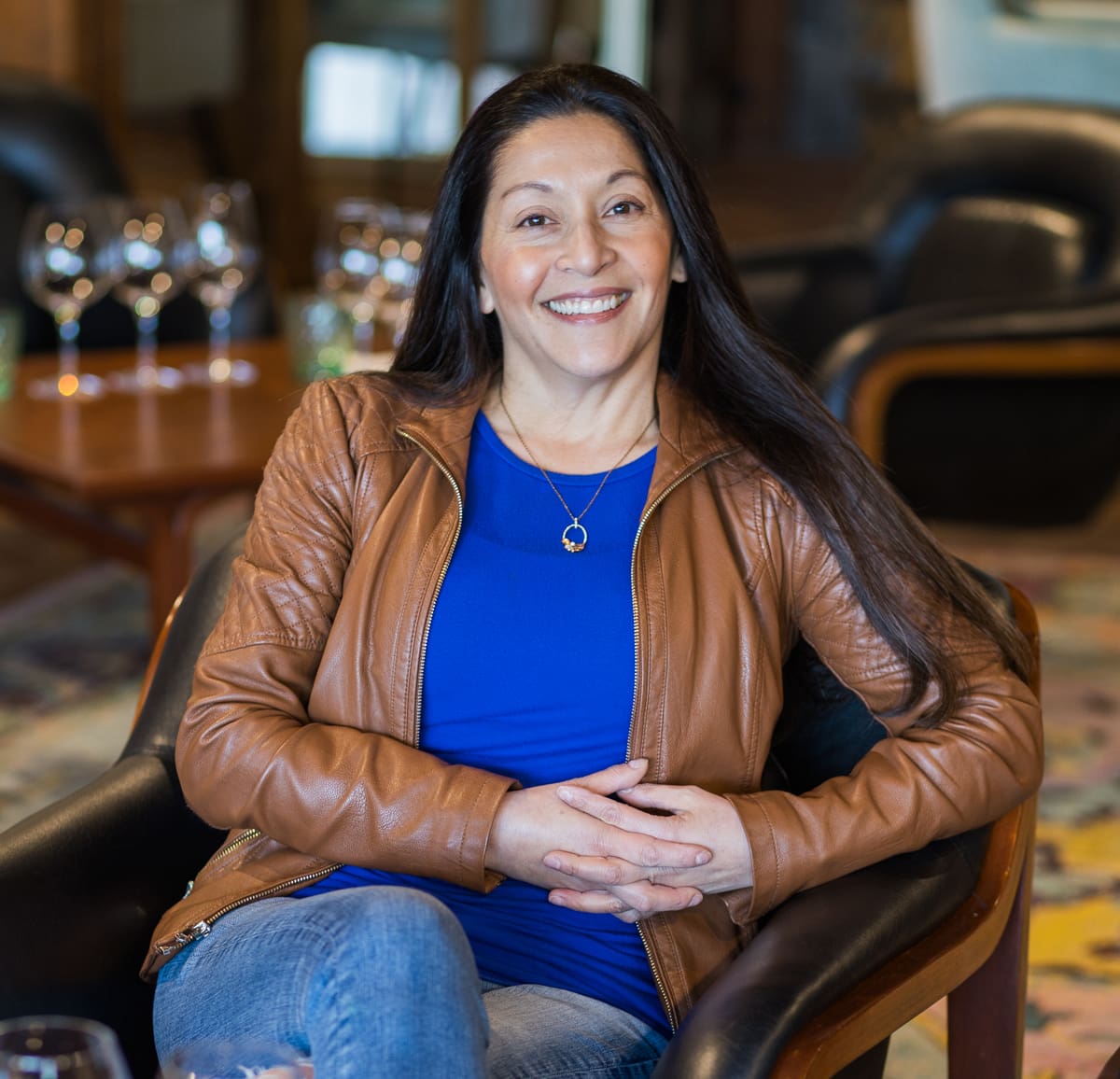
Featured image above: Ana Keller, biochemist and Keller Estate winemaker. (Photo: Courtesy of Keller Estate)
Links