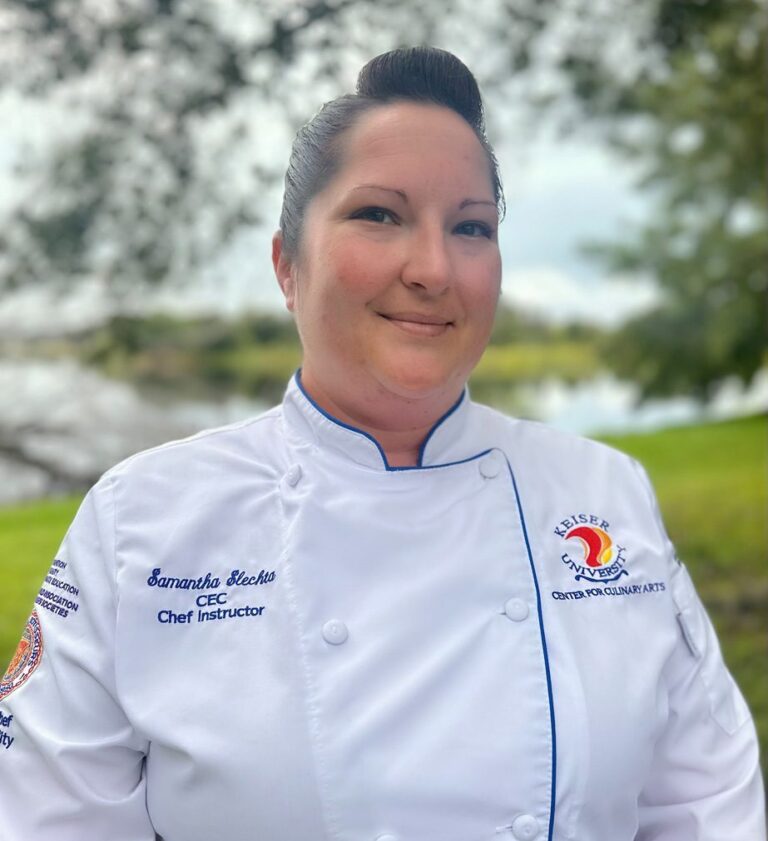
Nov. 8, 2024 – Keeping one hand on her bicycle handlebars and the other hand holding a cake for her best friend’s birthday as she rode to middle school in Melbourne, Florida, Samantha Slechta’s future in the culinary industry was never in doubt. After school, she rode her bike to her mom’s restaurant to help her for a couple of hours doing small jobs to prepare for dinner service. As the eldest of five children, she then rode home to finish making dinner for her siblings and help them with their homework. Her youth and future career path spun in harmony. “I just always wanted to make people smile with food. It was always going to be food,” Samantha Slechta, CEC, Chaîne Conseiller Culinaire Provincial Southeast (SE), said to Chaîne during a Sept. 27 telephone interview.
Having mastered the front of the house at her mom’s fine dining restaurant, during high school, she was finally old enough to work there and began to take notice of what the chefs were creating in the kitchen. She asked a lot of questions. To her surprise, one of the “big” chefs said to her: “Women didn’t belong in the kitchen.” Samantha was taken aback to say the least. “It wasn’t really long ago, the late 1990s or early 2000s. He said that when I was 16. At 18, I decided to go to culinary school,” Samantha said.
Culinary School at Keiser University

She enrolled in the Culinary Arts program at the Melbourne campus of Keiser University, a private, not-for-profit university founded in 1977 that now has more than 19 campuses throughout Florida, 10 international locations, and a vibrant online division. Three locations – Melbourne, Sarasota and Tallahassee – have Culinary Arts programs where students can earn an Associate of Science degree as well as their first American Culinary Federation (ACF) certification as an ACF Certified Culinarian (CC). At the Sarasota campus only, a second Associate of Science degree in Baking/Pastry is offered.
Samantha said students can complete the first degree in 16 months and because both programs share four required classes, students can earn their second degree in Baking/Pastry in eight additional months. Many students choose that path to be a well rounded chef and elevate their appeal to future employers.
From her own experience as a Keiser graduate, Samantha began working immediately after graduation for the DoubleTree and Hilton Hotel chain in Melbourne Beach, going back and forth between the hotels as needed. Guests who stay at DoubleTree hotels across the country look forward to receiving a complimentary, warm chocolate chip cookie upon check-in. Samantha said the recipe changes depending on the region of the country but the magic is in the hospitality. Each hotel has a special oven to keep the cookies at just the correct temperature and humidity. “It’s very comforting. The cookie warms your heart, part of the hospitality,” Samantha said.
Five years of the frenetic pace and overtime demands as a hotel chef ultimately motivated Samantha, who was now a mother of two young children, to seek a career change. “I was just getting burnt out working in hotels and wanted to look for something where I could see my children more often,” she said.
In 2010, she spotted an ad for a Chef Instructor at Keiser University’s Sarasota campus. She applied and was hired. “I was thrilled to have weekends and holidays off and even be able to come home and help the kids with their homework before bed,” she said. “That was a great transition.”
The job was a little bit stressful her first year as she went from teaching line cooks at a hotel restaurant to students in a classroom. The most difficult aspect for her was the age difference because she was much younger than many of her students. Keiser attracts a large number of nontraditional students, many who are veterans, adults, and parents. She worked diligently to earn all of her students’ respect. ”I demand a presence. I make the students pay attention,” she said.
Culinary Career Matchmaker
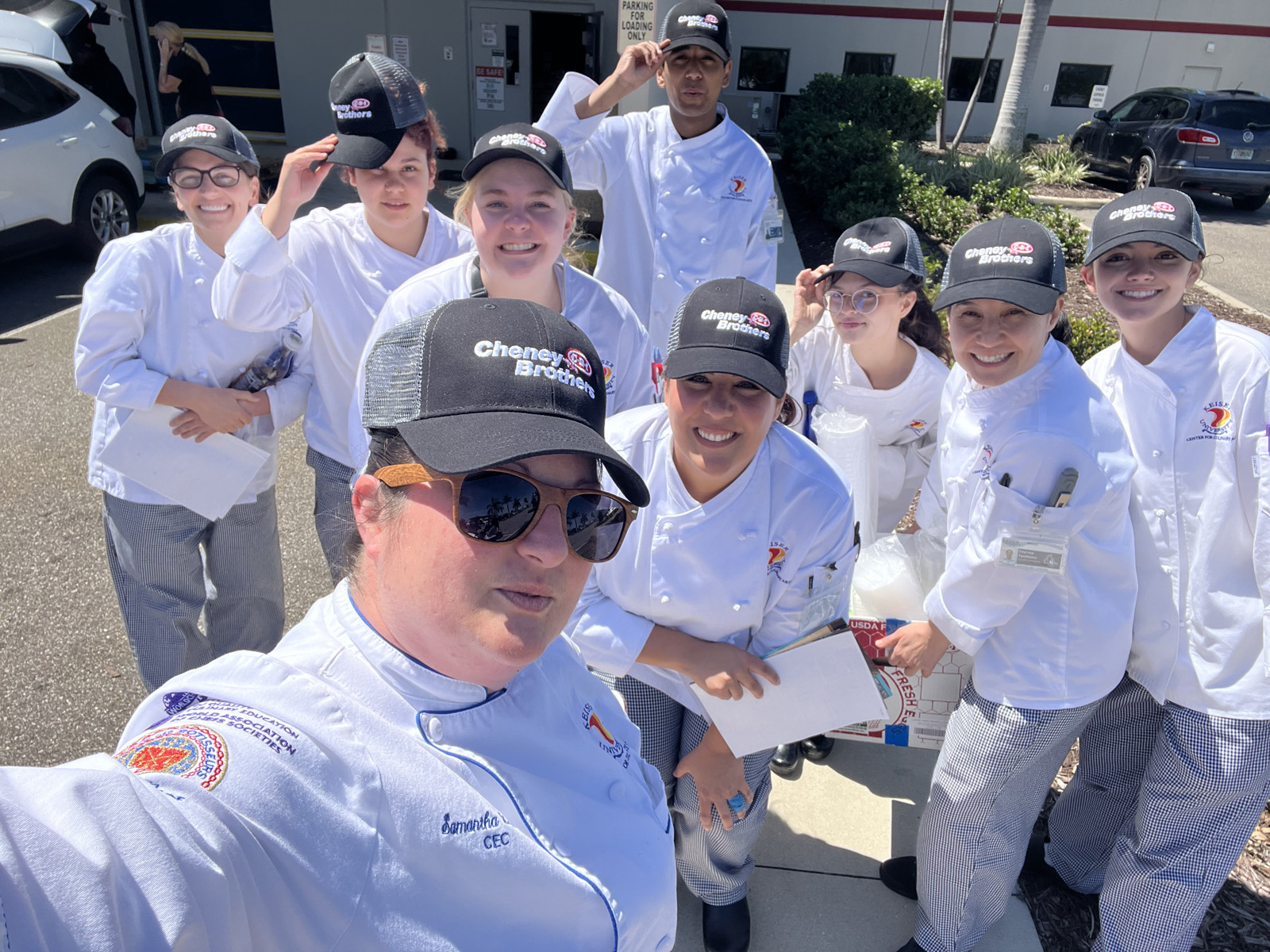
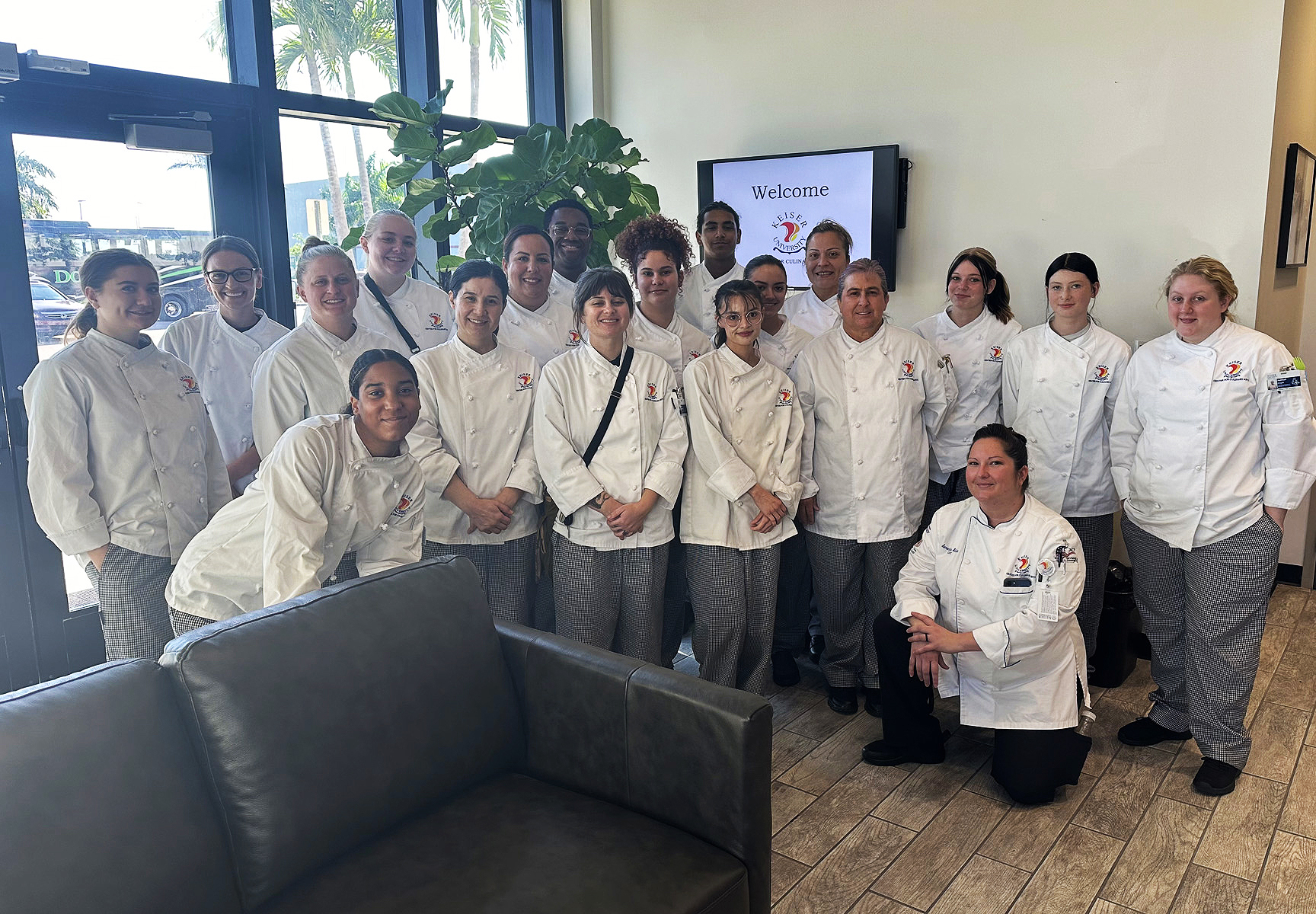
With her personal and professional background, she grew seamlessly into her role not only as a teacher but also as a trusted mentor. To fulfill degree requirements, Keiser students must complete a four-month externship, working under a chef at a full service operation at a restaurant, hotel or resort. Samantha is currently the faculty coordinator for the externship program, a culinary matchmaker par excellence.
She approaches placement with a student-centered philosophy by matching students, whenever possible, to their goals post graduation. And even after graduation, she helps her students find their first job in the real world.
“I have students all over the state working right now. Most of them stay there a little longer, at least one year after they have graduated,” she said. She keeps a “Wall of Fame” to highlight her students’ successful culinary careers. “It’s not hard for me to find a job for students, especially in Sarasota, Tampa, and the Orlando area.”
If a student wants to work outside of Florida, either for their externship or for a permanent job, she gladly reaches out to her national and regional contacts to help them.*
With small classes and individual attention, the Keiser University Culinary Arts program has a very high graduation rate and works with Keiser’s Student Services team to place students who are eligible in positions all over the country. Keiser offers lifetime job assistance to all graduates as part of their Students First philosophy. Culinary Arts professors supplement this placement through their own contacts across the country. With their diplomas in hand, Samantha helps graduates complete the paperwork to receive their ACF CC certification
Chaîne
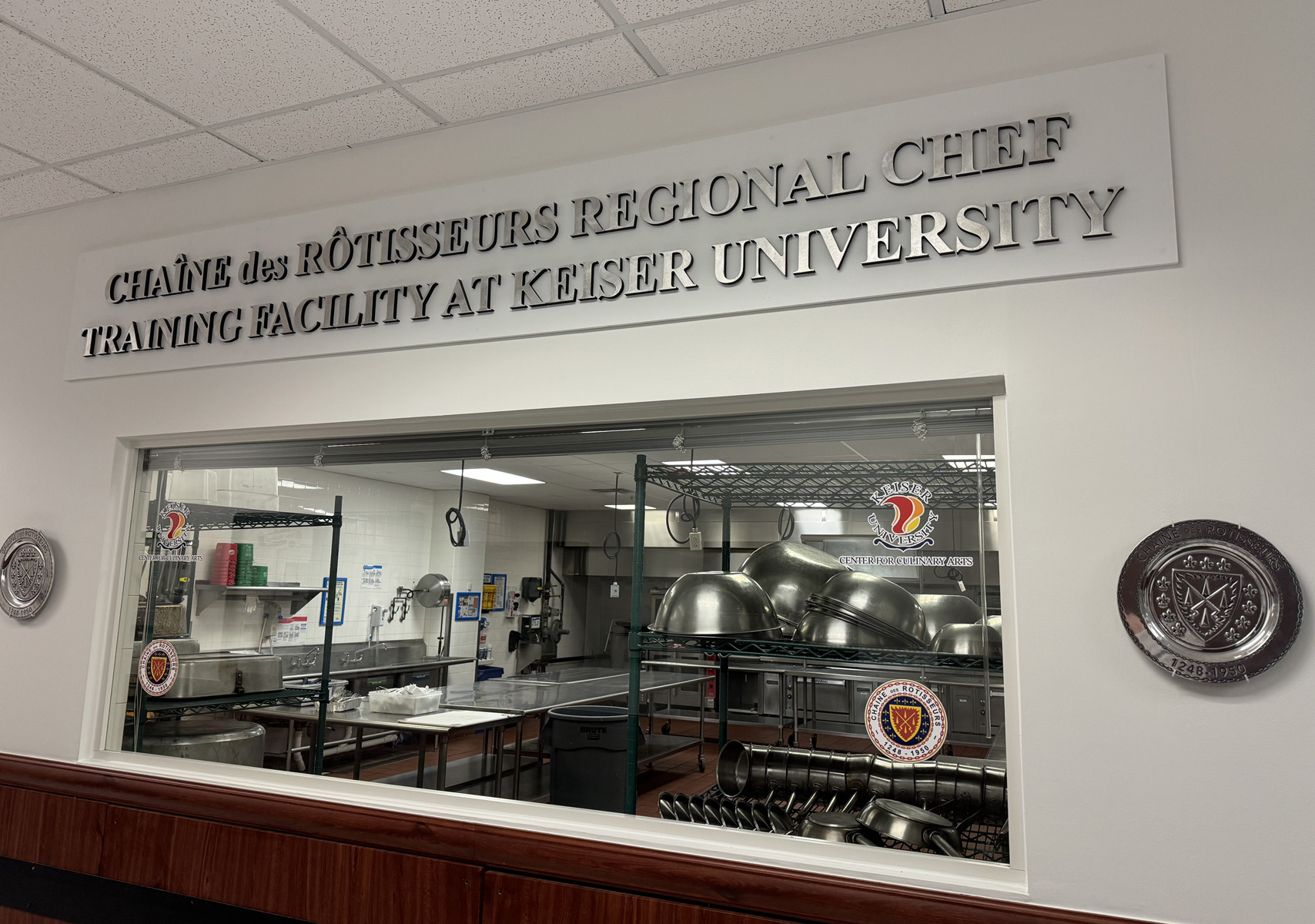
Samantha gives back in many ways. She is President of the ACF Sarasota chapter and serves as Chaîne’s Conseiller Culinaire Provincial Southeast, a responsibility that includes coordinating the annual Jeunes Chefs Rôtisseurs (JCR) competition. Keiser is one of just a few Chaîne regional training facilities for JCR, she explained. This year’s national competition in Seattle was quite remarkable for her and one of her students.
Leading up to the national final in June, Samantha first held an internal competition at Keiser for her students. Carly Villanueva topped her fellow students to advance to the SE Provincial JCR where she again won first place. In Seattle, she was awarded second place, or runner up to the JCR winner, Roman Nourse.
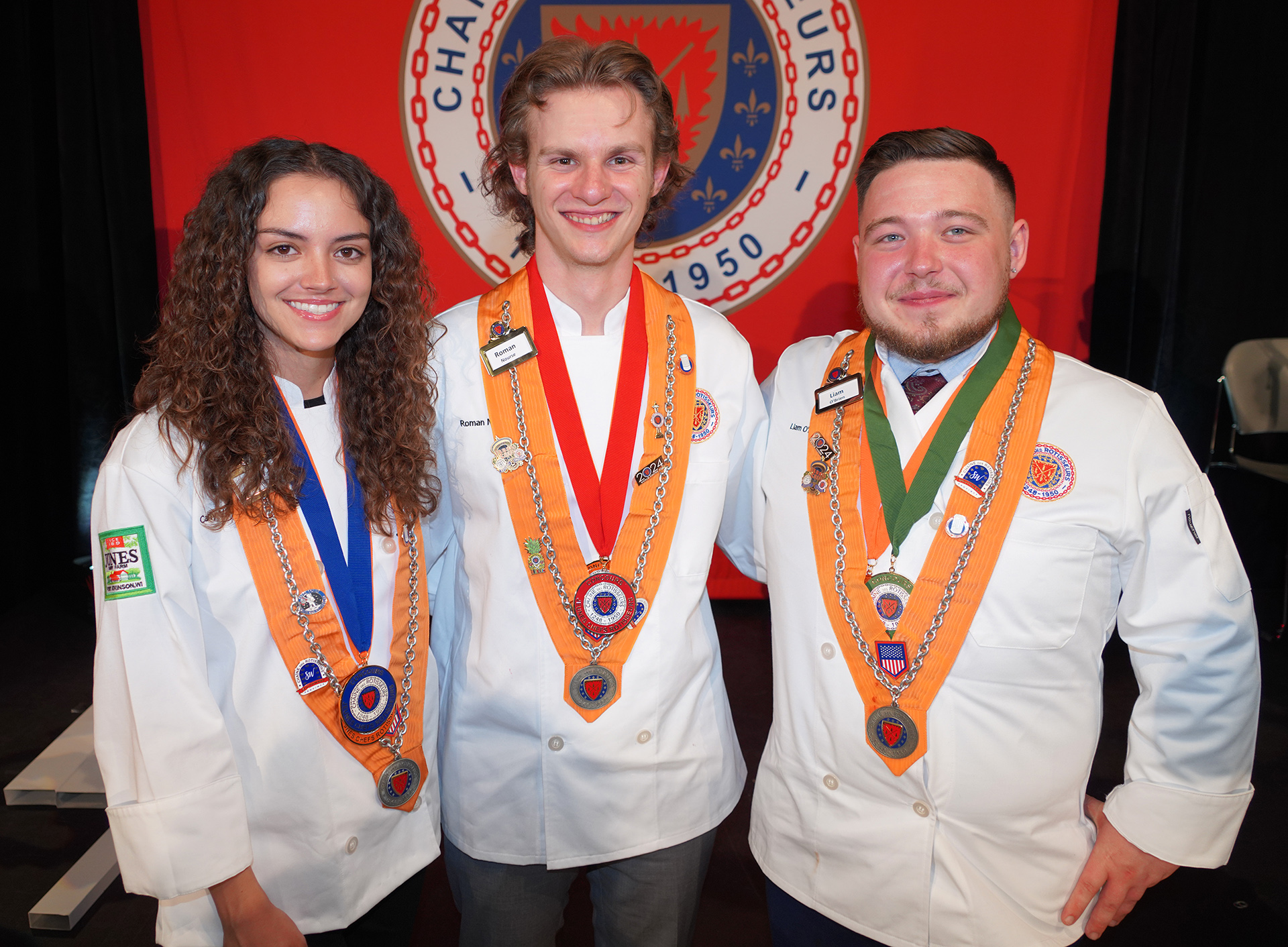
For all JCR competitions, young chefs and young culinary students (26 years old or younger) have 30 minutes to write a menu and then three hours to prepare and plate a three-course meal. Samantha said almost all of the judges (Floor and Tasting) in Seattle were Chaîne professional members.
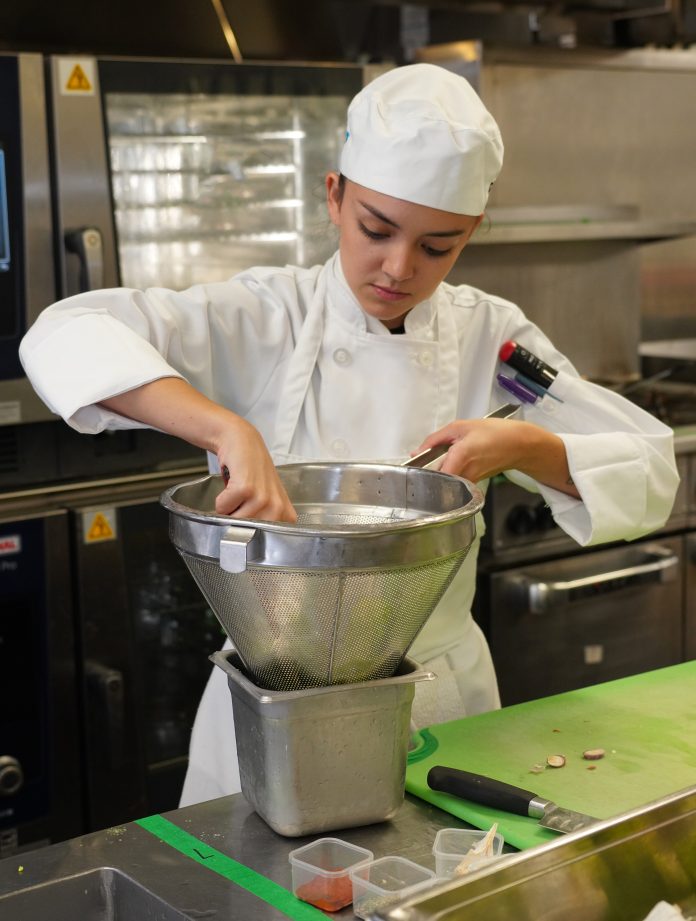
When the final results were announced, Samantha was stunned but not surprised by Carly’s performance. “She started culinary school in January,” she said. “She is so new and so passionate about it. I knew she would do well but I didn’t realize it would be second place well. She did phenomenal. She has an eye for beautiful plates. The detail she puts in is just fantastic. I was so proud of her. It’s fun to watch her.”
Carly kept following her passion to culinary school after pursuing two other careers so Samantha is really excited about her future. “She’s learning and training with as many people as I can get her in front of to absorb ideas and creativity from everyone she works with.”
In Seattle, Samantha had her own second place finish, competing in the Turkish Tastes Ambassador Challenge for best hors d’oeuvres plate prepared using all Turkish Tastes ingredients.
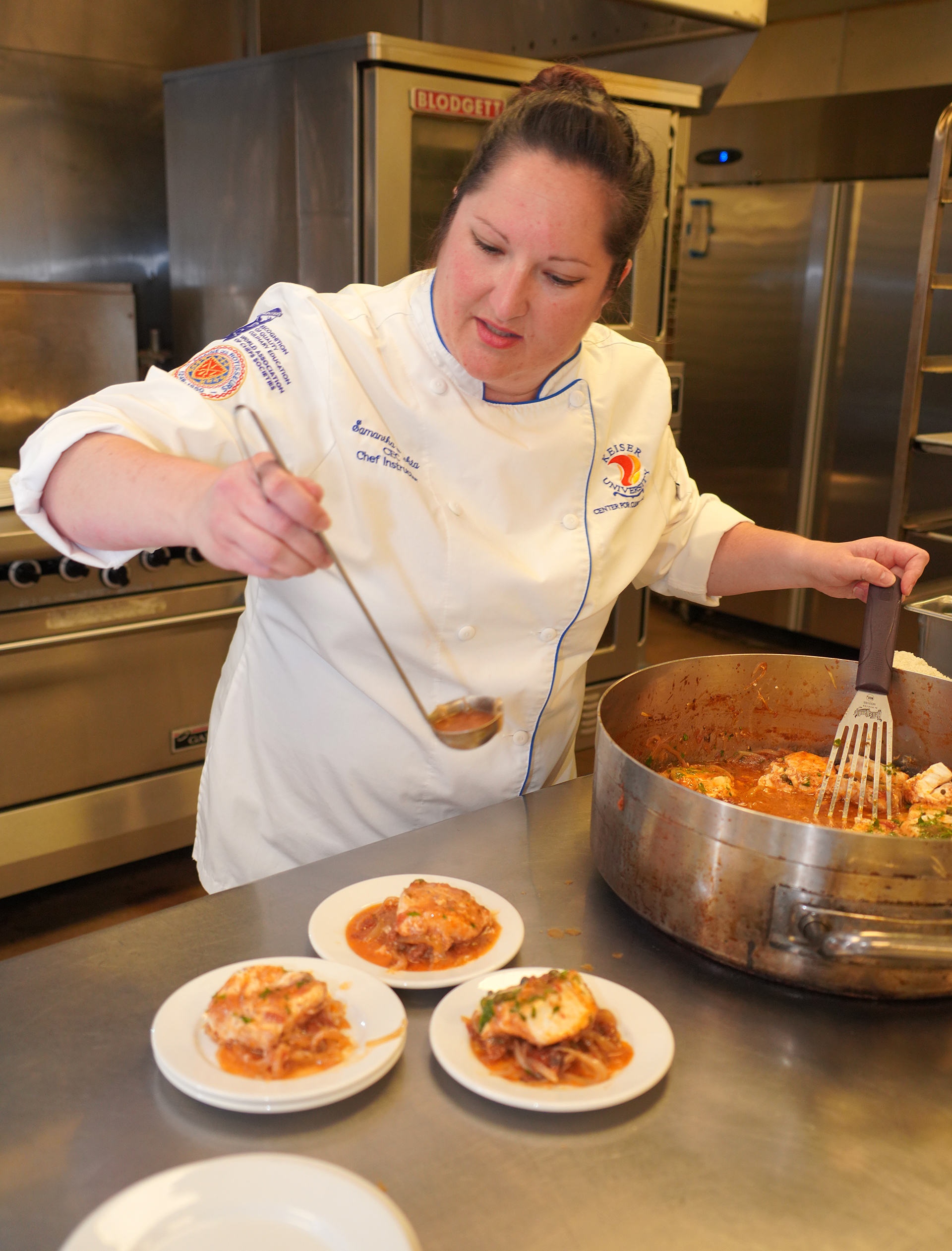
Samantha believes students today are as committed to culinary excellence as those she taught many years ago. Today’s students may only want to communicate via text messages but that is fine with her. “We can work anything out with communication,” she said.
At times, she and other faculty members receive a request from a student to learn a new culinary trend. The faculty often responds quickly. For example, when “smoking” food became popular, they immediately bought smoking equipment and demonstrated it. Because she teaches her students basic culinary skills to prepare them for the next level, she has an inherent advantage in terms of consistency. “Techniques never change. If they understand the techniques, they can make any of these trendy items.” Trends are demonstrated; basic techniques are taught, Samantha succinctly stated.
Always looking to the future for her students, her large culinary network, with the Chaîne playing a vital role, gives her students a definite advantage.
“The Chaîne has given me an opportunity to travel and to meet people. It’s also given me an opportunity to be more of a mentor to my students to help them meet and network. The Chaîne is near to my heart. I think it’s amazing I get to share it with young culinarians, these young kids who don’t even know how many people are there to help them,” she said.
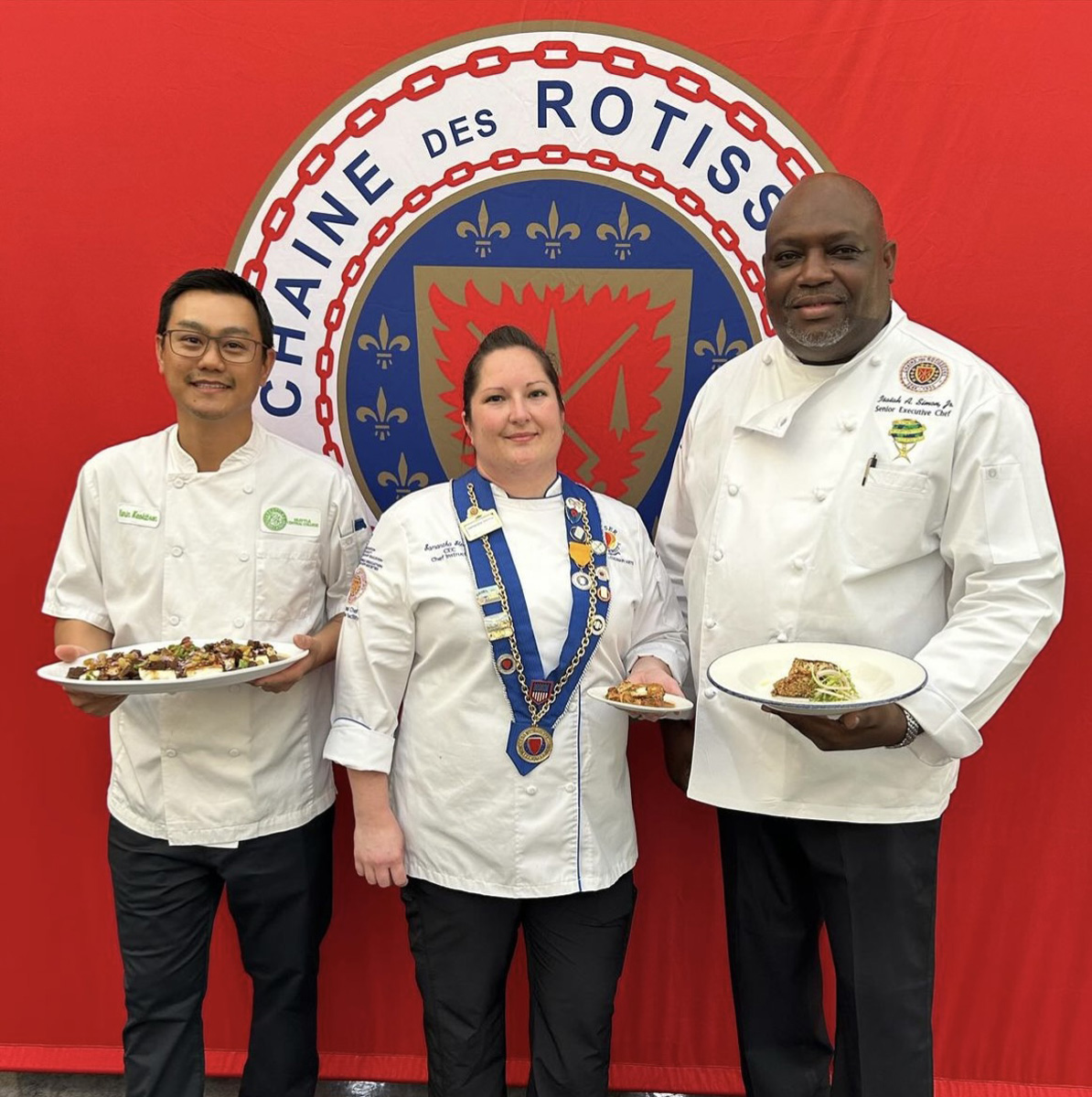
Samantha advises Chaîne members to warmly welcome student chefs to their events as they naturally feel a bit intimidated and out of place because of their age. She recommends: “Be easy to approach and be very inquisitive of the young chefs. Just because they are younger doesn’t mean they don’t belong.” The Sarasota Bailliage is planning one dinner that will raise funds to pay for more student chefs to attend Chaîne dinners.
Samantha’s dedication to her students, the culinary profession through her work with the ACF and the Chaîne, and her family keeps her busier than ever. Thank goodness there are now electric bicycles if she ever needs to carry a cake across campus!
*Chef Slechta welcomes those looking to mentor chef students or hire graduate chefs to reach out to her at the following email address: sslechta@keiseruniversity.edu