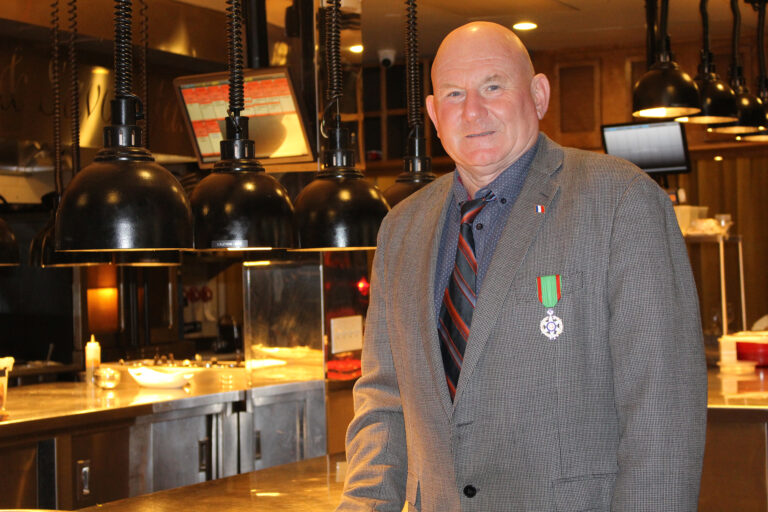
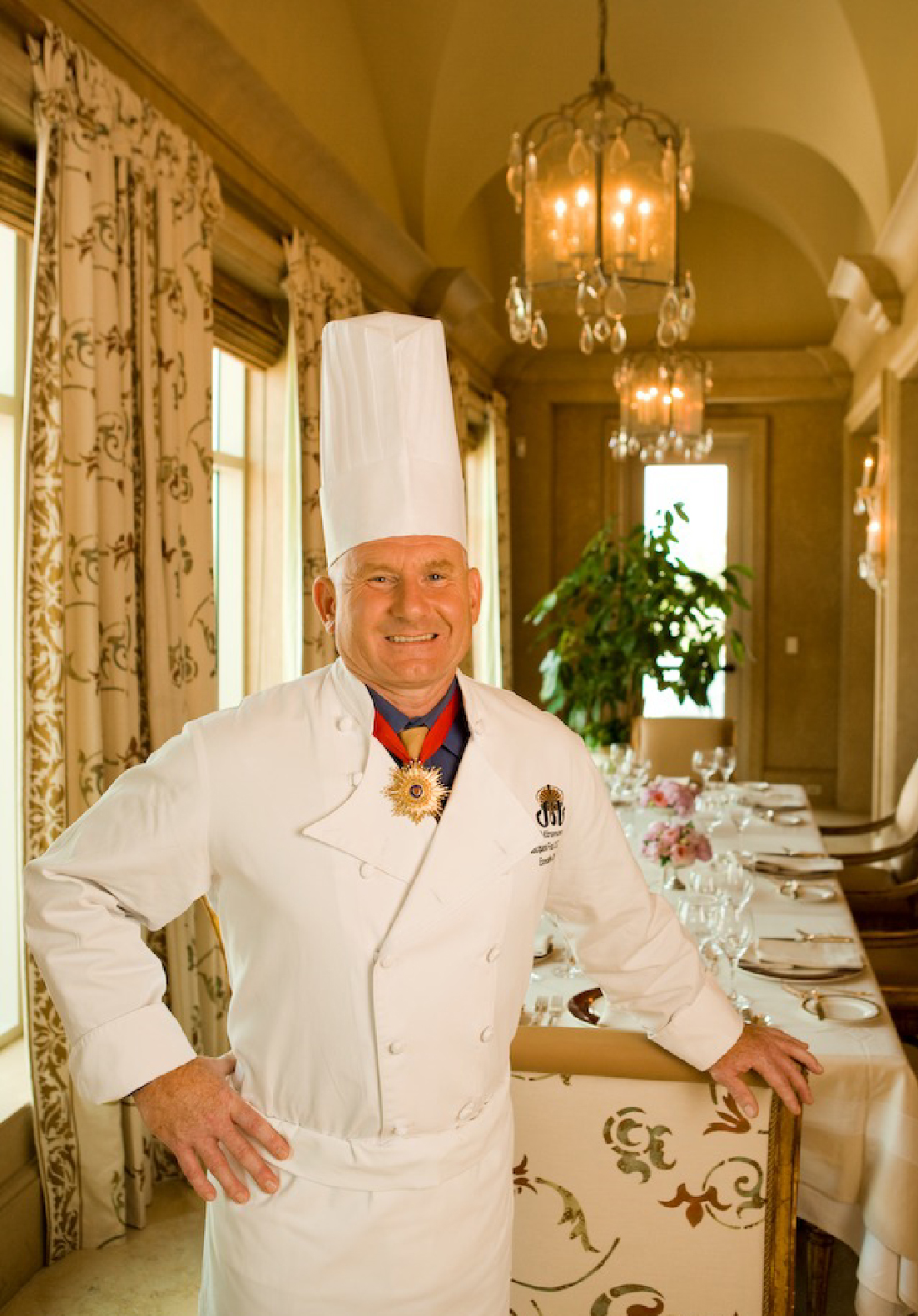
April 19, 2024 – To many a young chef working to ascend to an Executive Chef position and/or participate in a Jeunes Chefs Competition, Chef Jacques Fox has been their knight in shining armor for years, teaching and guiding them to success. But that’s not just a metaphor as in January 2020, Chef Fox became Chevalier de l’Ordre National du Mérite Agricole de la République Française (Knighted as Chevalier of the Agricole National Order of Merit from the French Republic), second in importance only to the Legion of Honour. The high honor caps a lifetime of culinary excellence and commitment, especially to the Chaîne that Chef Fox joined in 1993 as a Professional Member of the Galveston Bailliage. “I remember like it was yesterday. I got very involved very quickly,” Chef Fox, Conseiller Culinaire et des Professionnels des États-Unis Honoraire, said to Chaîne during a March 6, 2024 telephone interview.
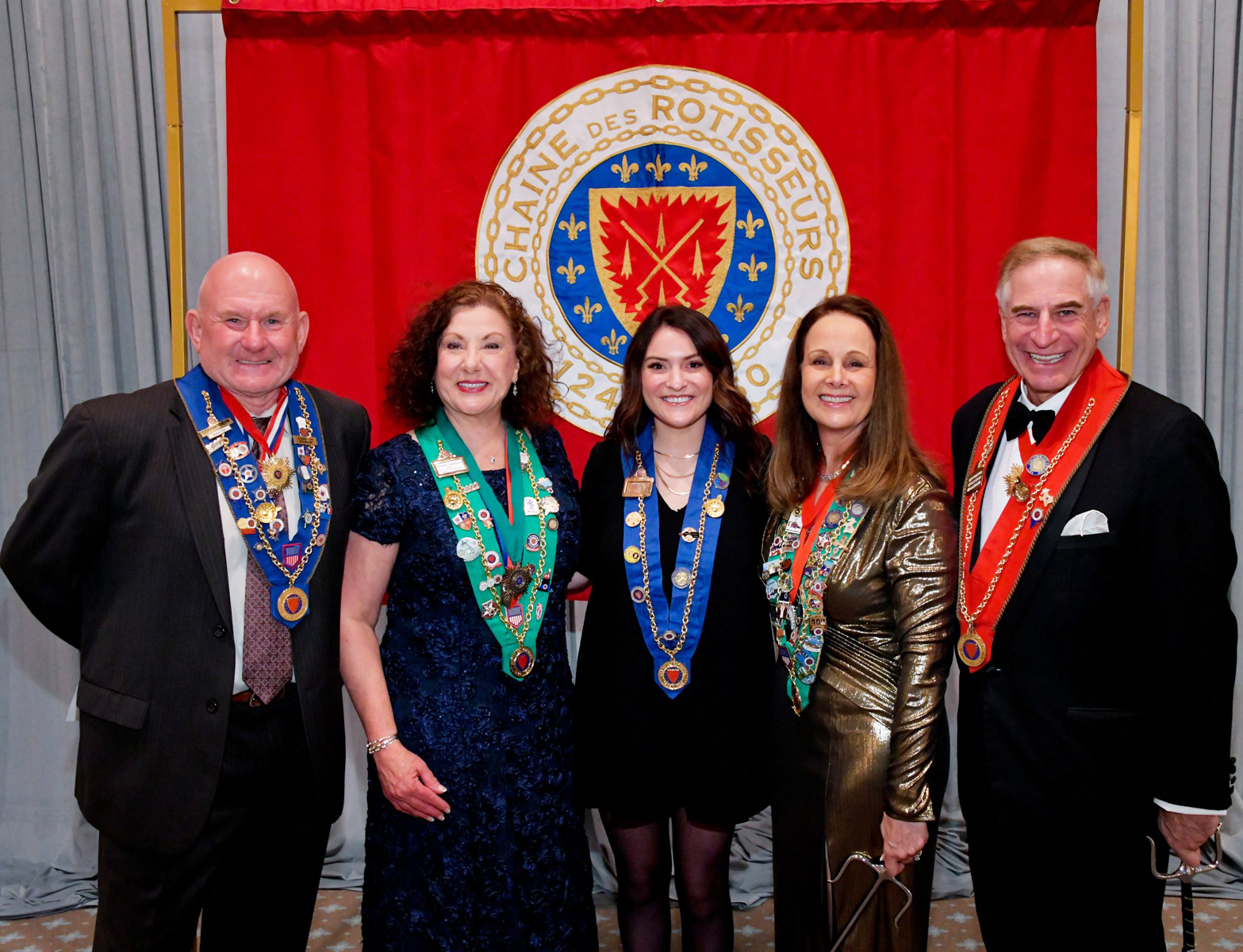
Recognizing his talent mentoring young chefs, Robert Epstein, Galveston Bailli and eventually Bailli Provincial Southwest, asked him to manage the 1996 Provincial Jeunes Chefs Rôtisseurs Competition and in 1999, Jacques was named Conseiller Culinaire et des Professionnels des États-Unis, taking on the responsibility of developing the competition manual. “Robert Epstein was a fantastic man,” Jacques said.
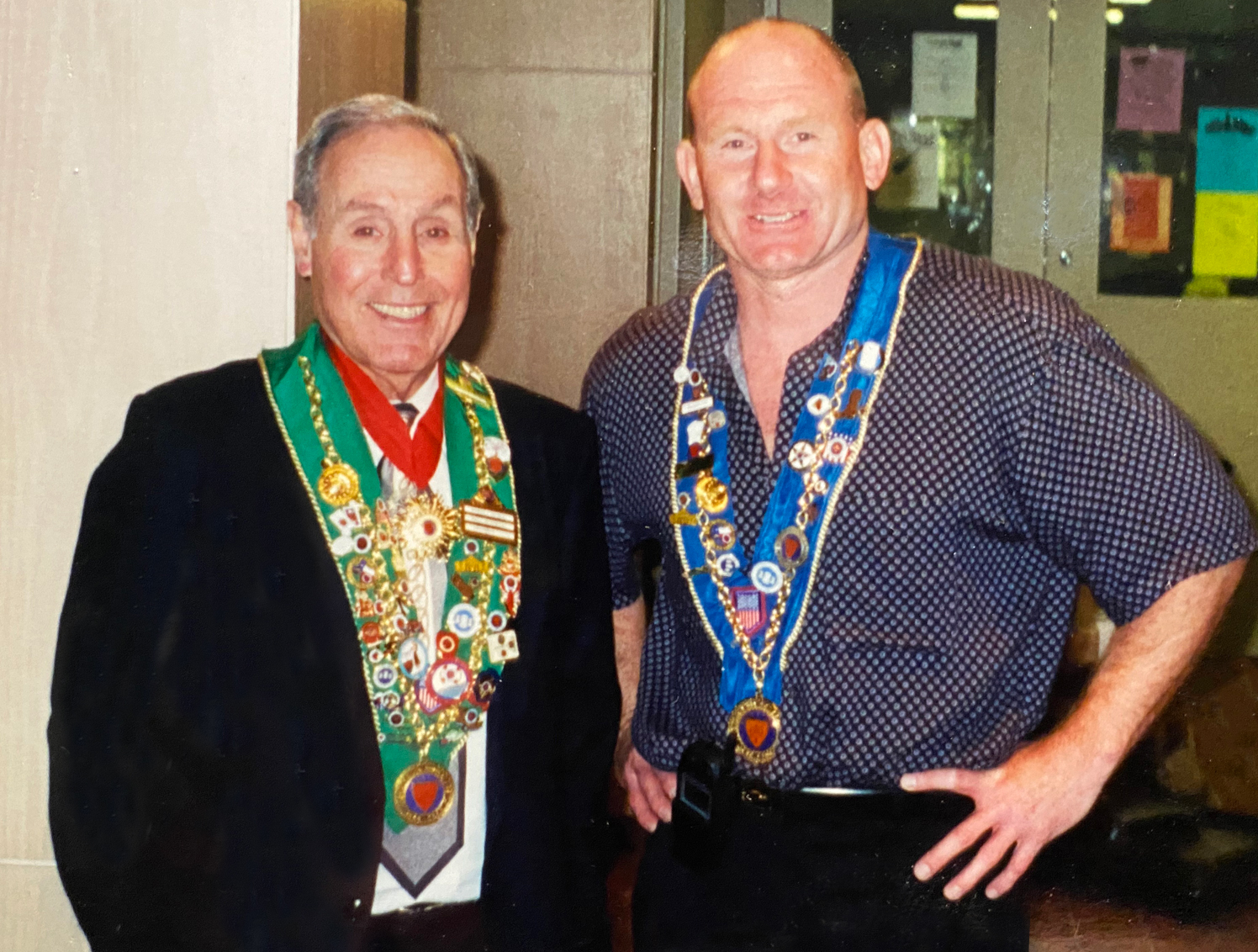
Having moved to Houston in 1991 from Louisiana, during these early years while he was forming the model for the Jeunes Chefs competitions he was extremely busy working as the Executive Chef of The Conrad N. Hilton Hotel and teaching at the College of Hotel and Restaurant Management at the University of Houston.
His deep roots in Houston today came via deep roots he established not only in Louisiana but also in Colorado, Paris, a small village in France, and North Africa where he was born in 1957. His father served in the French Foreign Legion stationed in North Africa. At age 4, he moved to France when his father died and North Africa’s geopolitical climate dramatically changed.
Raised in France
Raised by his grandparents in France, their influence on his life and career was immeasurable. Of Polish ancestry, his grandmother perfected Polish cooking by working in Poland but she also excelled in many varieties of international cuisine. Jacques remembers his grandmother’s small kitchen in France with a wood stove that she knew how to regulate manually like the back of her hand. In fact, she used her hand to determine its temperature as she cooked and baked. “She could put her hand in the oven and tell the temperature. Cakes always came out. I’ve never seen that in my life. It was incredible,” Jacques said.
His grandfather retired as a coal miner in the 1960s, enjoying a fulfilling second career as the family gardener, growing the family’s fruits and vegetables in gardens around their home. The Fox family’s garden-to-table focus for a healthy lifestyle predates the farm-to-table movement by a couple of decades. The family enjoyed the fruits of their labor year-round as fall canning followed fall harvest to stock their cellar for the winter. That way of cooking and eating is the only way Jacques has ever known.
Culinary School and Professional Career
“At age 16, I tried to figure out what career I would follow. Since I was doing a lot of cooking with my grandmother, I said, why not culinary? So I went to culinary school,” he said.

While learning new French techniques at Brevet D’Etude in France, his chef instructors told him he was already very good. They readily witnessed the result of his years of experience as an “apprentice” under his grandmother. It’s no surprise today that apprenticeships are finding new advocates.
Upon graduation in 1975 with stellar recommendations and introductions from his instructors, Jacques moved to Paris to work as Chef de Partie at Maison Prunier, a 3-star Michelin restaurant. With a drive to match the fast pace of Paris, quite a change from his small French village where he grew up, he flourished.

He joined La Société des Cuisiniers in Paris that placed chefs for one to a few days at top restaurants throughout France to advance their skills. While conventional thinking is a chef needs 10 to 20 years of experience before becoming an Executive Chef, Chef Fox said the process can be accelerated by working hard. And that’s what he did. He would work from 7 a.m. to 3 p.m. at one restaurant and then report for duty at 5 p.m. for a second shift at a different restaurant. His day ended at 11 p.m. and then started over again just eight hours later. “I did that for many years,” he said.
His dedication to learn as much as he could, as fast as he could, eventually paid off.
In 1980, he was named Executive Chef at Elit’air Maxim’s Hotel Valbievre in Jouy-En-Josas where he served meals weekly to French National Sports Teams including soccer, basketball, rugby, and handball.
Move to the United States
In 1983, Club Mediterranean (Club Med) in Paris named him Executive Chef, a position that sent him around the world, including leading the kitchen at Kamarina in Sicily where he would serve 1,600 to 1,800 meals per day. “You have to be very, very organized,” Jacques said. From Sicily, Club Med sent him across the globe directing kitchens in New Caledonia, Haiti, Greece and in 1985, at Copper Mountain in Colorado.
“I came to the United States saying I am a French chef and know everything but I did not,” he said. After just two weeks at Copper Mountain, he introduced some classic French dishes at lunch. “I learned very quickly it was not working.” His general manager took him on a tour of fast food restaurants in the area telling him when people ski, they want to eat burgers and tacos. “It was a little bit crazy for me at the beginning. 1985 was a big eye-opening year for me.”
But Colorado captured his heart. He met his first wife there and decided to stay in the United States, moving to Louisiana, his wife’s home. He secured a job as Executive Chef at Hotel Bentley in Alexandria, a 4-star hotel in central Louisiana that earned a 5-star rating while Chef Fox worked there, the only 5-star hotel in Louisiana at the time. He supervised the hotel’s restaurant.
On his first morning on the job, he walked into the kitchen to find a black skillet with fish smoking. “Oh my god,” he thought. “They do not know how to properly cook fish.” Then he learned about blackened fish and classic Louisiana spices, a step up from his use of mainly pepper while preparing French dishes. “Louisiana is an incredible state – the way they are not very fast paced, enjoy life a lot,” he added.
From Louisiana, he and his wife traveled extensively and then settled in Houston when he was named Executive Chef of the Nassau Bay Hilton.
In 1993, he helped open Moody Gardens in Galveston and also met Robert Epstein who invited him to join the Chaîne.
“I guess I like to move around. Sometimes it’s good for a chef to stay at the same place. But it’s not my case. I like a lot of moving around. I like different challenges. It’s good for me. It keeps me on my toes. I like new things and to have fun,” he said.
Reflecting on his career, he believes the culinary profession has changed in some ways but not at its core. “It’s the same and not the same. You have to work very hard if you want to make it so nothing changes.”
Technological advances have made it easier for chefs to conduct research and advance their skills by watching demonstrations from top chefs on computers and then practicing. At the foundation of any career as a chef is education. He advises students who aim to be an Executive Chef and choose to attend a community college culinary program to grab a backpack after graduation and go to Europe to work with top chefs. In addition, after community college, he advises students to earn a Bachelor’s degree as it will open a lot of doors for their path to an Executive Chef position.
Artisans Restaurant

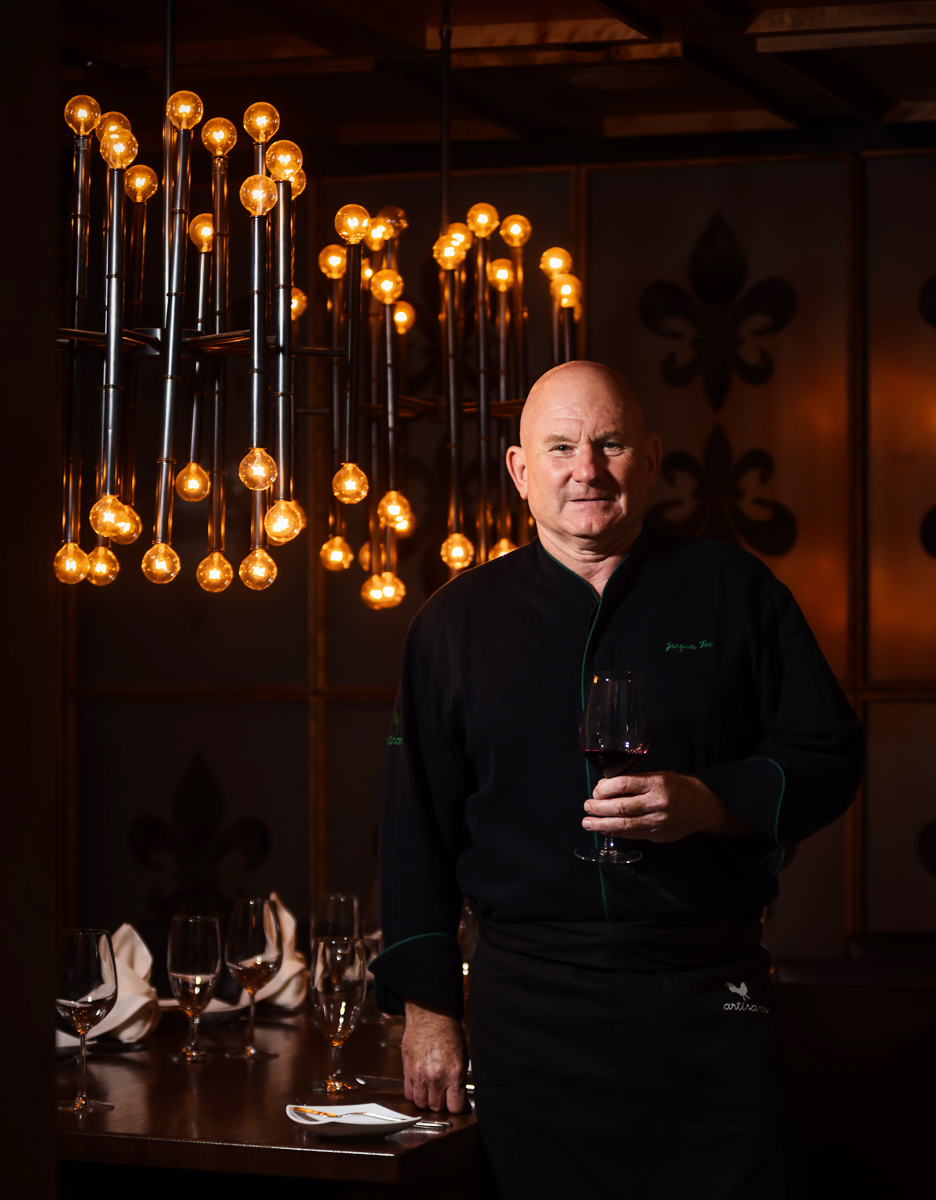
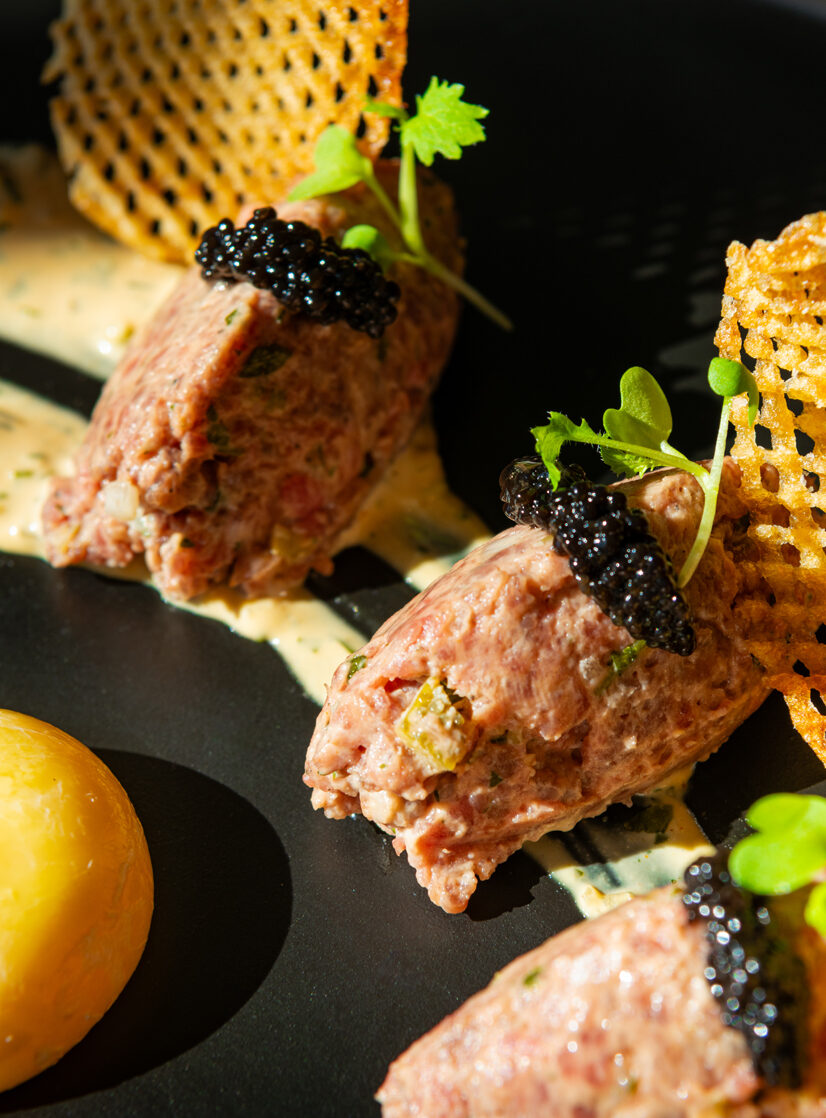
In 2010, Chef Fox opened Artisans, his own restaurant in Houston. In 2023, he moved Artisans to a stand-alone location closer to the Galleria Luxury Shopping Mall. Designing the restaurant himself, it features “La Table du Chef,” a one-of-a-kind open kitchen concept.
The last few years have certainly been difficult for fine dining restaurants. Jacques laments the many restaurants that were forced to close during and after the pandemic. He believes it could take up to five years for people to return to offices, which is essential for metro fine dining restaurants to thrive.
More than the pandemic though, he candidly speaks about changes in corporate culture over the years that has all but eliminated the business lunch, a tradition for more than 100 years in cities from coast to coast. The two factors combined to transform once bustling downtown business districts at noon to ghost towns. It’s a national phenomenon that many downtown restaurants are closed for lunch service.
Lunch service at Artisans has been difficult as Jacques explains he has to cover costs to serve top quality French eclectic cuisine that requires highly skilled personnel to execute.
However, the hopeful side of the conundrum is human nature with an unbridled desire to share the pleasures of the table with family and friends, the essence of the Chaîne.
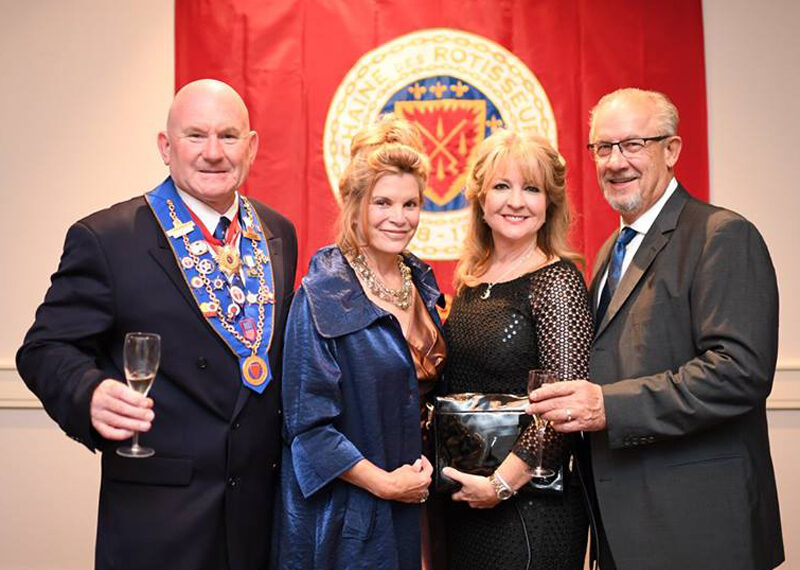
With more than 30 years of active involvement in the Chaîne, Chef Fox has ideas on how to sustain the incredible organization as he describes it. To members, he says, “I want them to be more involved. Eat at restaurants. Get involved at city, regional and national levels like I did. Do different things to be able to promote the Society. I don’t want a bunch of members who are sleepy. The more involved the member is going to be, the better it is going to be.”
He points to country clubs as one model to study. Eight to ten years ago, country club membership was decreasing but is currently bouncing back. “Look at how country clubs operate, we can take some ideas from that,” he advised.
Jacques leverages his three years of experience as the Executive Chef of the Miramont Golf Course and Country Club in Bryan, Texas from 2006 to 2009 to credibly create his vision to sustain and expand the Chaîne footprint in the United States. A dab of this and a touch of that from his vast experience and one has the sense his vision for the future is spot on.
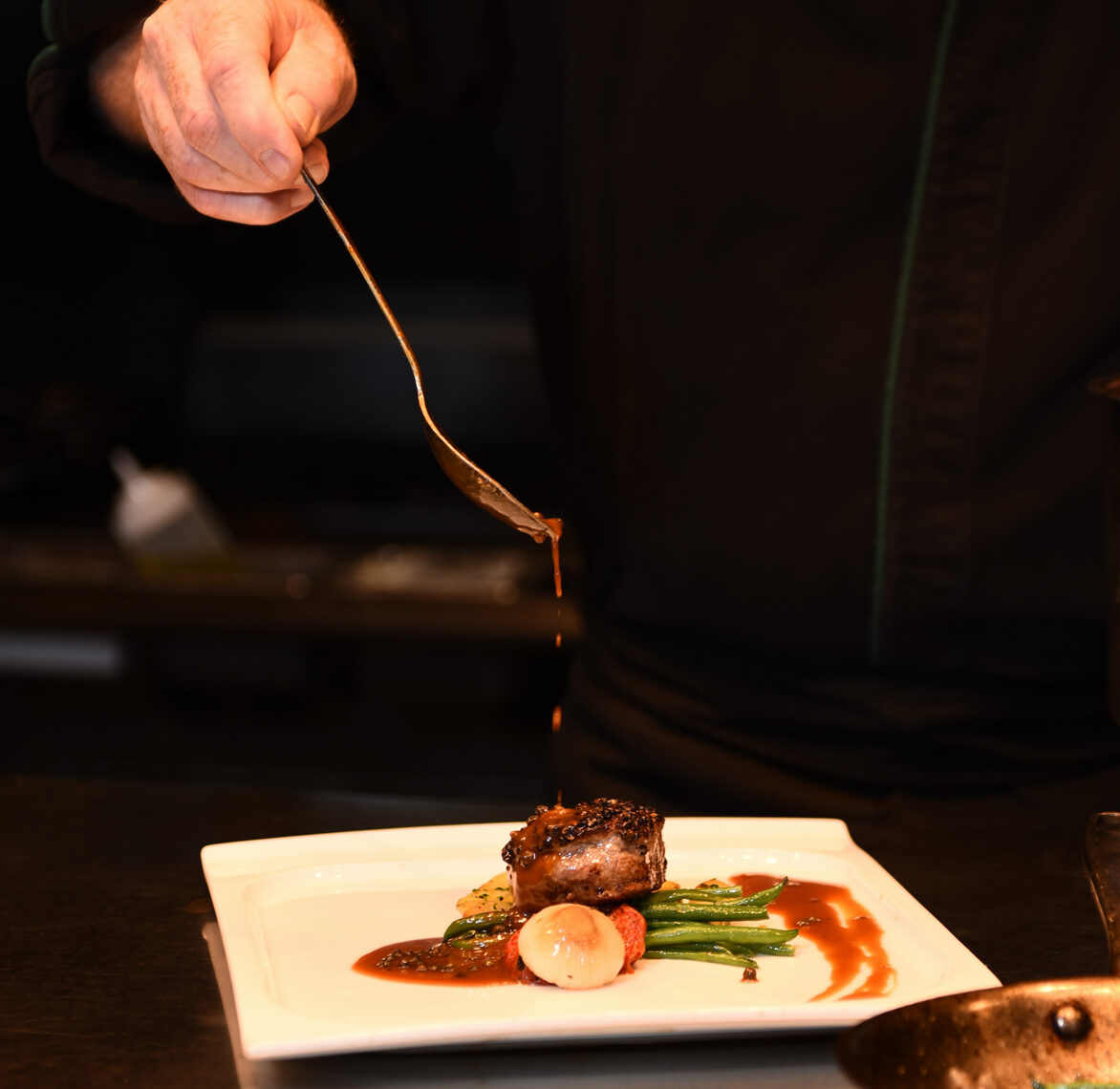
From his early footprints in North Africa to his formative years in France to his professional career that has taken him around the world, Chef Fox has made an indelible mark on the culinary profession. He is that knight in shining armor to his guests at Artisans who tell him his French cuisine is better than top-rated restaurants in France. He credits his footprints in Louisiana for inspiring and elevating his cooking. And he remains the knight in shining armor to young chefs who flock to his Chef’s Table at Artisans to learn how to walk in his footsteps, both practically and philosophically.
Ordre du Mérite Agricole (Order of Agricultural Merit)

There is no doubt about his impact, affirmed publicly on July 14, 2021 when French officials pinned the 2020 Ordre du Mérite Agricole (Order of Agricultural Merit) medal to his chest during a ceremony at the residence of the French Consul in Houston.
Established on July 7, 1883 based on a proposition by then Minister of Agriculture Jules Méline, the award sought to adequately reward services to agriculture in view of the maximum number of Legion of Honour recipients who could be awarded yearly. Because more than 18 million Frenchmen made a living directly from the industry and because of its powerful impact on the national economy, Méline believed individuals working in agriculture who were rarely recognized for their talents and contributions should be honored through the new medal.
The present form and statute of the Order of Agricultural Merit were outlined in 1959 and had vital support from then French President Charles de Gaulle.
To be Knighted, a person must be at least 30 years old with 15 years of service/work in the industry. The medal, a star, is made of silver and is surrounded by a narrow blue enamelled band bearing the golden semi-circular inscription, “RÉPUBLIQUE FRANÇAISE.” On the reverse, the inscription on three lines reads: MÉRITE AGRICOLE 1883. The order hangs from a 37 millimeter (mm) wide silk moiré green ribbon with 5mm amaranth vertical stripes located 1mm from the edges.
But Chef Fox is not one to rest on his laurels. He is as busy as ever, operating his restaurant and appearing on local television shows to connect with the public to promote his profession. Burnished by education, hard work, and his grandparents, mentors like no other, Chef Fox is a shining star to more than culinarians. He offers timeless life lessons that can best be summarized by “Un pour tous, tous pour un” or “One for All, All for One.”
Links
Artisans