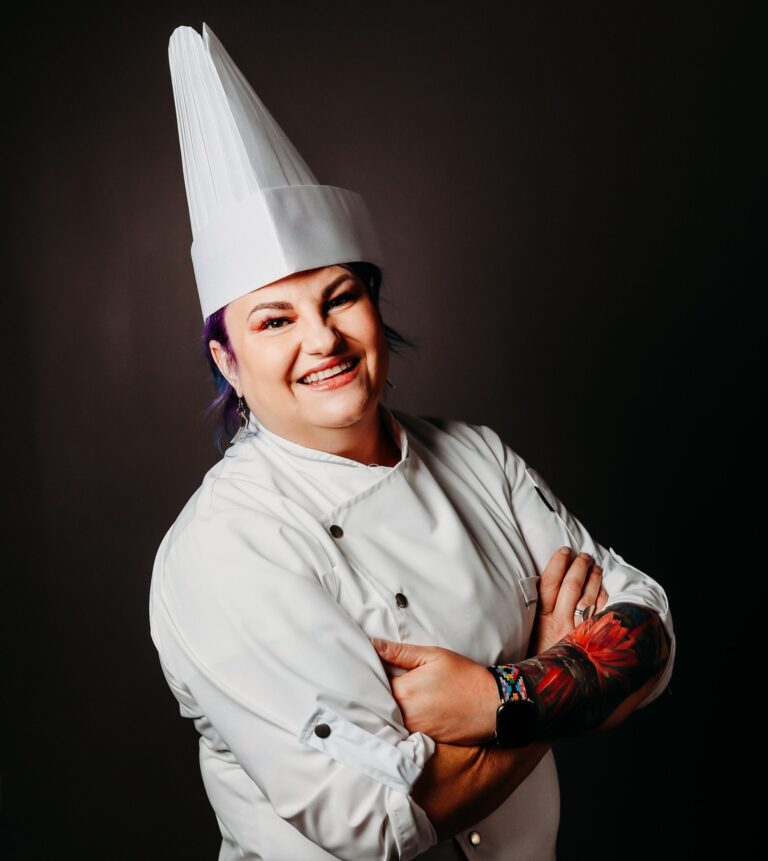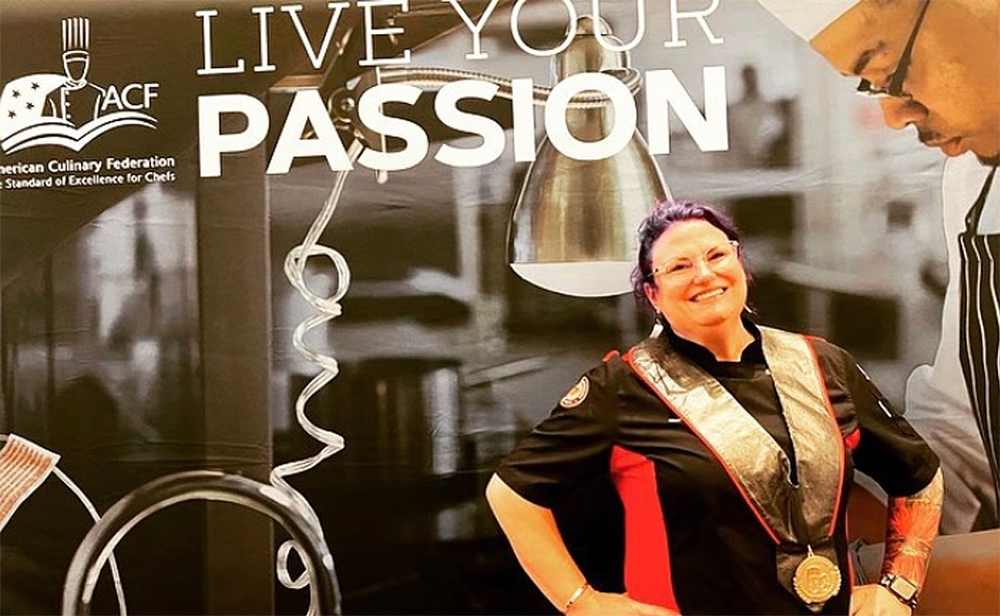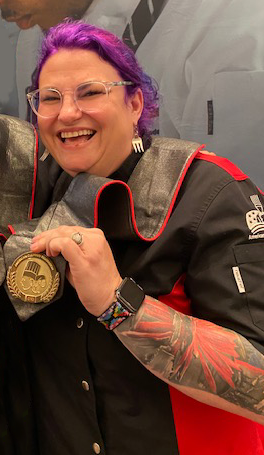
Home Blog Page 5

Friedr. Dick Keeps Sharp Edge in the Culinary Industry

Sept. 23, 2022 – No matter how one slices it or dices it, Friedr. Dick (F. DICK), a German company founded in 1778 to manufacture steel files and rasps, and then knives beginning in 1889, has a sharp edge with professional chefs and butchers and more recently, culinary aficionados at home.
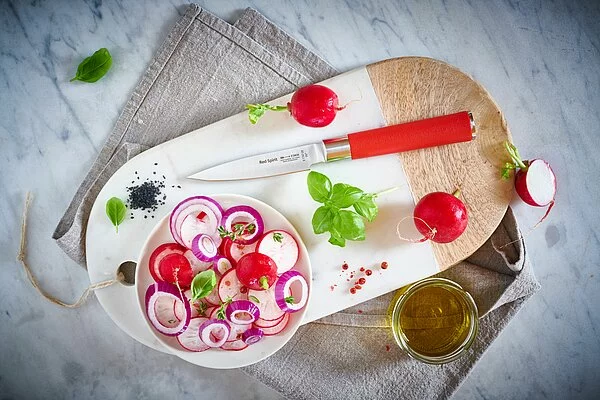
Red Spirt paring knife with plate of veggies
F. DICK Red Spirit paring knife. (Photo: Courtesy of Friedr. Dick)

Johann Friedrich Dick, the company’s 18th century founder from Esslingen, Germany, set high quality standards that remain to this day as the company’s seventh generation of the Dick family leads the business in the 21st century. Johann’s manufacturing processes laid the foundation for the company’s steady growth and long term viability. “The industrial transition from making files and rasps was brought over to manufacture cutlery products,” Steve Kurek, General Manager, Friedr. Dick US, said to Chaîne during an Aug. 25 telephone interview.

Holding a knife made by Friedr. Dick craftsmen is in essence, holding almost 250 years of product design and history. Steve explained that the foremost factor in knife design has been and will always be the balance between the blade and the handle. “One of our primary goals in the development and manufacturing of our cutlery is that the end user is comfortable with the knife,” he said. For comfort, the blade cannot be too heavy and repetitive motion, sometimes up to eight hours at a time, cannot strain the arm or hand. In addition to its ergonomic design, the knife must fulfill the task at hand. “It has to be 100 percent functional and get the job done the way the chef or the cook is looking to have the product perform,” he added.
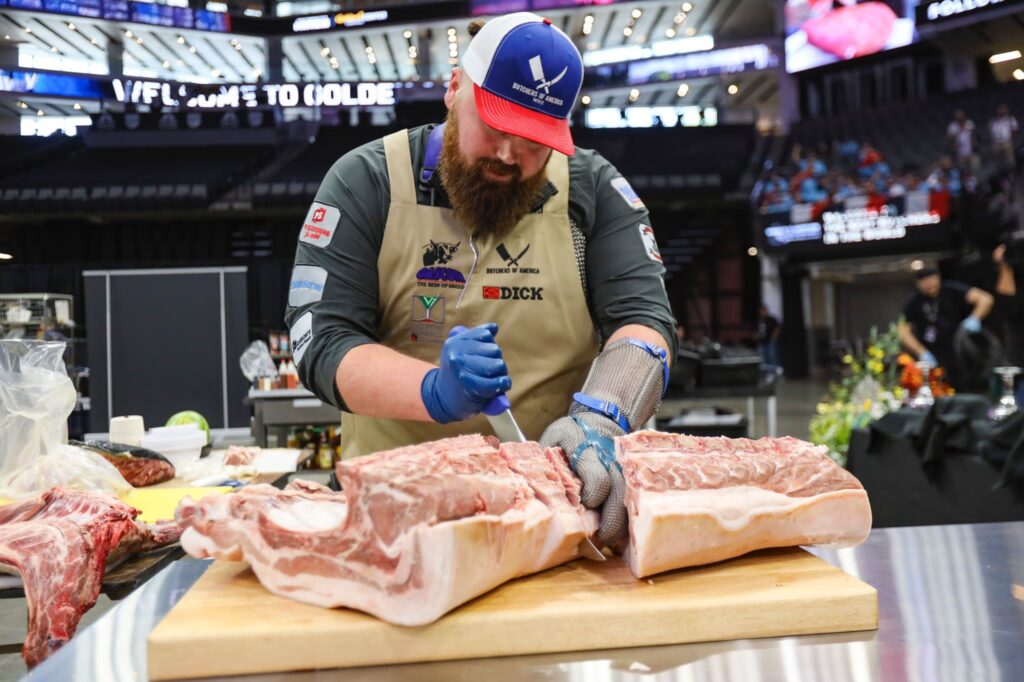
Tucker Speer at the World Butchers' Challenge
Tucker Speer competes in the young butcher/apprentice category at the World Butchers’ Challenge, held in September in Sacramento, California. (Photo: Courtesy of the World)

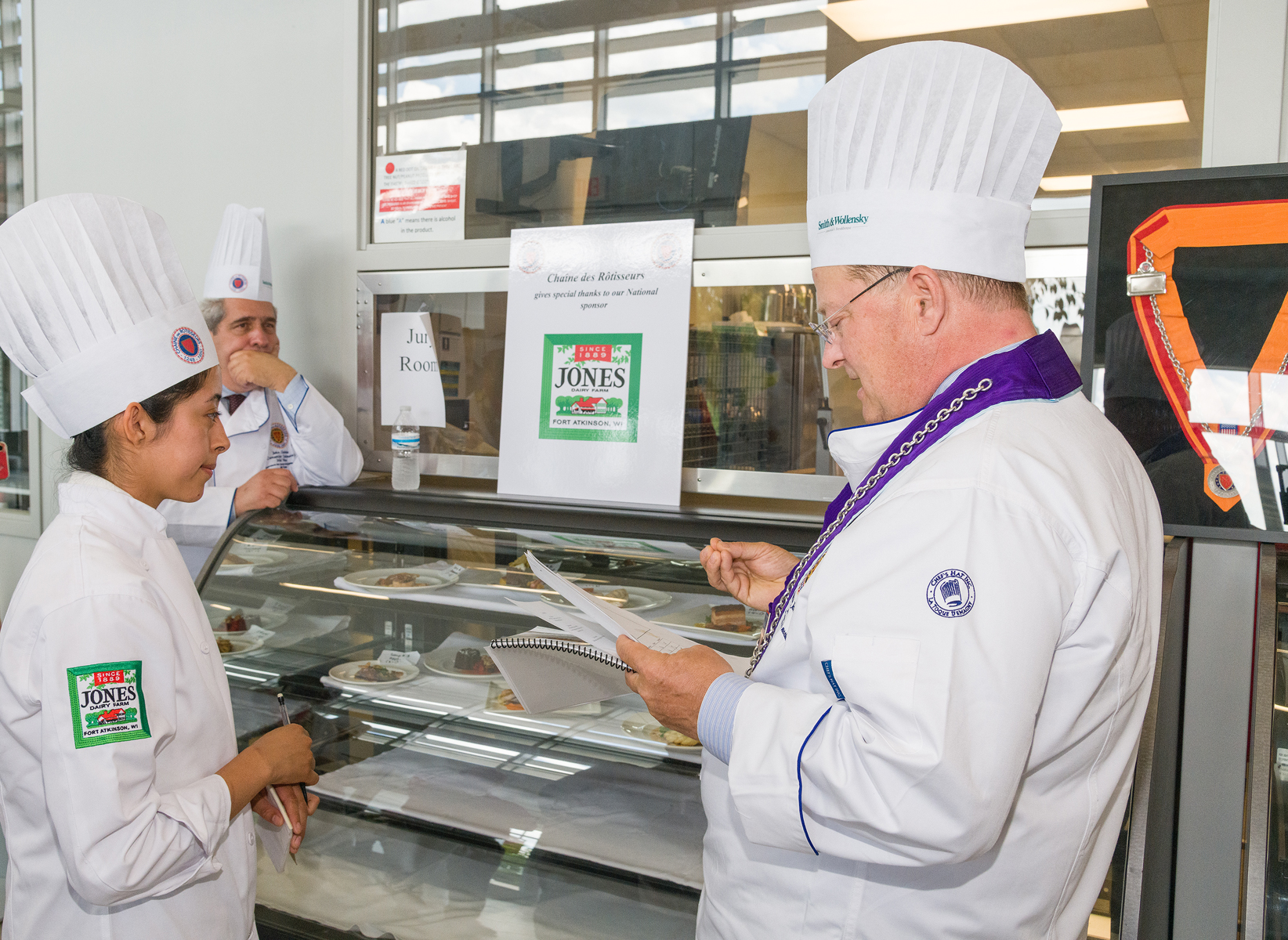
Next spring when Provincial winners of Chaîne’s Jeunes Chefs Rôtisseurs Competition meet at Madison Area Technical College in Madison, Wisconsin to determine the national winner who will represent the United States at the International Competition, they will be using F. DICK knives. As a sponsor of the competition, Friedr. Dick has been committed to the culinary industry at all levels for many years.

In addition to their support for Chaîne’s Jeunes Chefs, they are a sponsor of the American Culinary Federation (ACF) Culinary World Cup Teams and ACF Culinary Olympic Teams.

Steve and company representatives recently returned from the 2022 World Butchers’ Challenge in Sacramento where Friedr. Dick was a primary sponsor. The global competition in Sacramento marked the first time the elite competition was held in the United States and the world was able to watch via live stream.

“All competitions are important to Friedr. Dick because we want to put the finest manufactured and sharpest products into the hands of the competitors to give them the tools to be successful. It’s important for us to invest in the future of our industry,” Steve said.

Company History

In 1875, Paul Friedrich Dick took over the company as the family-owned business approached its Centennial. With European factories humming at the advent of the Industrial Revolution, Germany was no exception. The company constructed its first file-making machine. Deftly balancing new technology with sales efforts, Paul kept a keen focus on his customers, guiding the company to supply many area butcher shops with sharpening steels. He created a firm foundation for the path the company charted at the end of the 19th century and beginning of the 20th century.

The company expanded into North America after exhibiting at the 1893 Chicago World’s Fair and the 1904 World’s Fair in St. Louis where they earned an international gold medal. Soon the company had professional chefs on all seven continents using their knives. With that worldwide handprint, the company continued to grow and today is a multi-million Euro company in annual revenue.

Friedr. Dick corporate headquarters in Germany. (Photo: Courtesy of Friedr. Dick)

Honoring long held traditions for excellence in manufacturing does not preclude innovation and adoption of new techniques. As robotic manufacturing entered factories, in 2010 Friedr. Dick merged programmable mechanical devices into their manufacturing facilities to ensure precision and reliability. “Robotics allows us to produce knives at the highest efficiency rate so that when the knives are ultimately inspected by our quality assurance and quality control departments, the knives being shipped out to the end user customer leave the factory at the highest quality that they possibly can within all specification ranges and requirements,” Steve said.

Friedr. Dick innovation even involved building a customized “mousetrap” for their customers. The company noticed a trend years ago that required a solution. “The art of grinding a knife to keep it sharp has been lost. And not many people are maintaining, practicing and passing along the knowledge to teach it properly,” Steve explained. The answer came in the form of building a new mousetrap, the Rapid Steel Action Set.

Rapid Steel Action Set. (Photo: Courtesy of Friedr. Dick)

To solve the dearth of grinding experts, a problem that was not going away, about 15 years ago the company designed the Rapid Steel Action Set, a “mousetrap” to sharpen knives. The knife is sharpened by dragging the blade through metal rods.

Photo: Courtesy of Friedr. Dick

“It allows the professional chef or the home cook to be able to put a nice edge back on their knives to hone the knife, to keep the blade straight. When you’re working with a knife that maintains its original sharpness to the edge of the knife, it makes the task you’re performing a lot easier,” Steve said. Ease of use equates to safety in this case. “It’s well known and documented that more injuries with cutlery or knives occur because of a dull knife, not a sharp knife. When the blade is dull, people use the knife incorrectly.” Incorrect usage is commonly in the form of the user putting extra pressure on the knife, which is a recipe for disaster.

Brand expansion into home kitchens

Photo: Courtesy of Friedr. Dick

Sharply focused on sharp knives for professional chefs and the food processing industry for decades, the F. DICK brand is now gaining traction in home kitchens, especially in the last two years during the pandemic. Home cooks took the opportunity to learn new culinary skills, experiment with new recipes and host virtual parties for friends and family. Important to improving skills was improving the quality and durability of their knives. “Our knives are statement makers,” Steve said.

Steve said the company never closed either their corporate headquarters in Deizisau, Germany or their U.S. office in Farmingdale, New York one day due to the pandemic. Demand for their products remained high and they remained open for business.
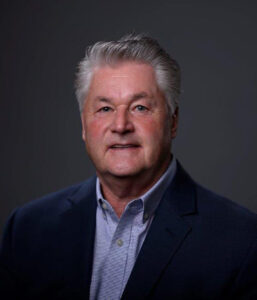
Steve Kurek, General Manager Friedr. Dick US


Now that culinary trade shows are returning to in-person events, Friedr. Dick representatives are returning to the skies, crisscrossing the country to support their customers. Their calendar is planned as far out as 2024 when the World Culinary Olympics will be held in Stuttgart, Germany. Friedr. Dick will be sponsoring the American team that includes equipping each chef with F. DICK knives, vital tools in their culinary toolbox.

From young culinarians to seasoned professionals, Friedr. Dick designs products to meet every skill level and every task. For Steve, it’s essential to stay connected to their products’ end users.

“The opportunities I have to work with chefs of all calibers, elite award winning chefs, world renowned food manufacturing companies and butchers across the United States allows us to stay at the forefront of the industry. It’s not only the quality of Friedr. Dick products, but also the ingenuity, the design and the workmanship that are exceptional. We’re very proud of the products we market and sell.”

EXCLUSIVE OFFER

Chaîne members can take advantage of an exclusive offer from Friedr. Dick to purchase a set of knives in F. DICK Red Spirit series with the Chaîne logo on the blades. Available only to Chaîne members, the unique offering is a perfect holiday gift idea. Let the slicing and dicing begin! For more information, call Chaîne US at 973-360-9200.

F. DICK Red Spirit series with Chaîne logo on blades (Photo: Chaîne)

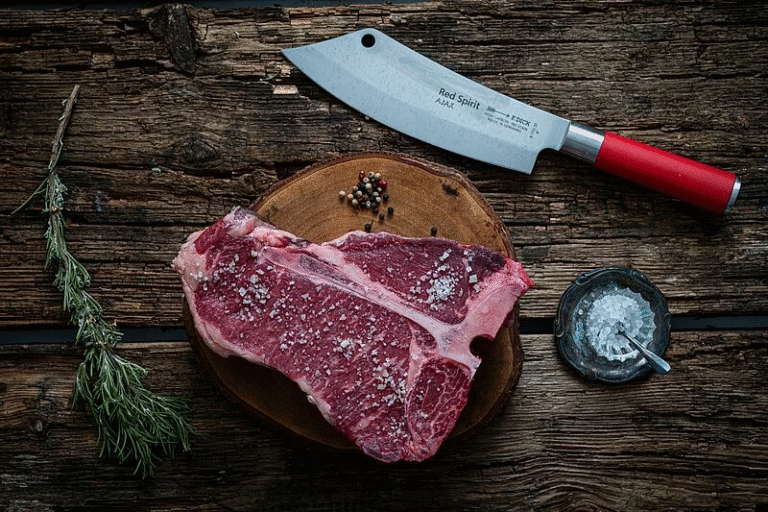
Featured Image: F. DICK Red Spirit AJAX knife (Photo: Courtesy of Friedr. Dick)

LINKS
Friedr. Dick
Chaîne Jeunes Chefs Rôtisseurs Competition
World Culinary Olympics
World Butchers’ Challenge
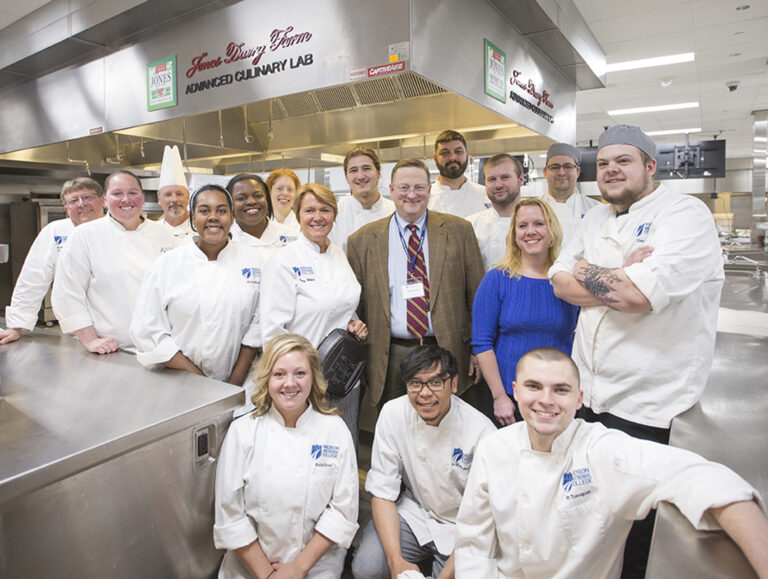


‘Commitment to Culinary’ Defines Philip Jones and Jones Dairy Farm

Aug. 19, 2022 – In the blink of an eye, toddlers tugging on their parents’ apron strings become teenagers pondering a career path to their future. Their consequential decision is not made in isolation. Family, friends, teachers, guidance counselors and yes, even social media “influencers” affect high school students at this pivotal time in their lives. Sage guidance is critical as is some important homework for parents, especially for children interested in culinary arts/hospitality careers. “Take an active role in your children’s investment in themselves because there is a ton of scholarship money available to students and many of them don’t take advantage of it. Learn what resources are available,” Chef Philip H. Jones, Chaîne member, CEO/Chairman of Jones Dairy Farm and sponsor of Chaîne’s Jeunes Chefs Rôtisseurs Competition, said to Chaîne in an Aug. 9 telephone interview when asked what parents can do to support their children who express an interest in becoming a chef.

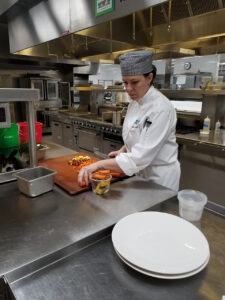
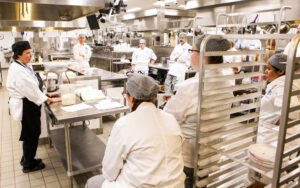
Culimary students in the Jones Dairy Farm Kitchen at Madison Area Technical College in Madison, Wisconsin. (Photo: Courtesy of Jones Dairy Farm)

While some parents may not perceive culinary arts as a real career, it’s just the opposite. “Culinary education, like any education, is expensive. It’s an investment in one’s future that really can take young people into so many career avenues. You learn so much about organization and management by being in that business that it is a bona fide career path,” Philip said. He advises parents to seek out information from high school guidance counselors, local community foundations and financial aid offices at schools, colleges and universities to help their children fulfill their dreams.

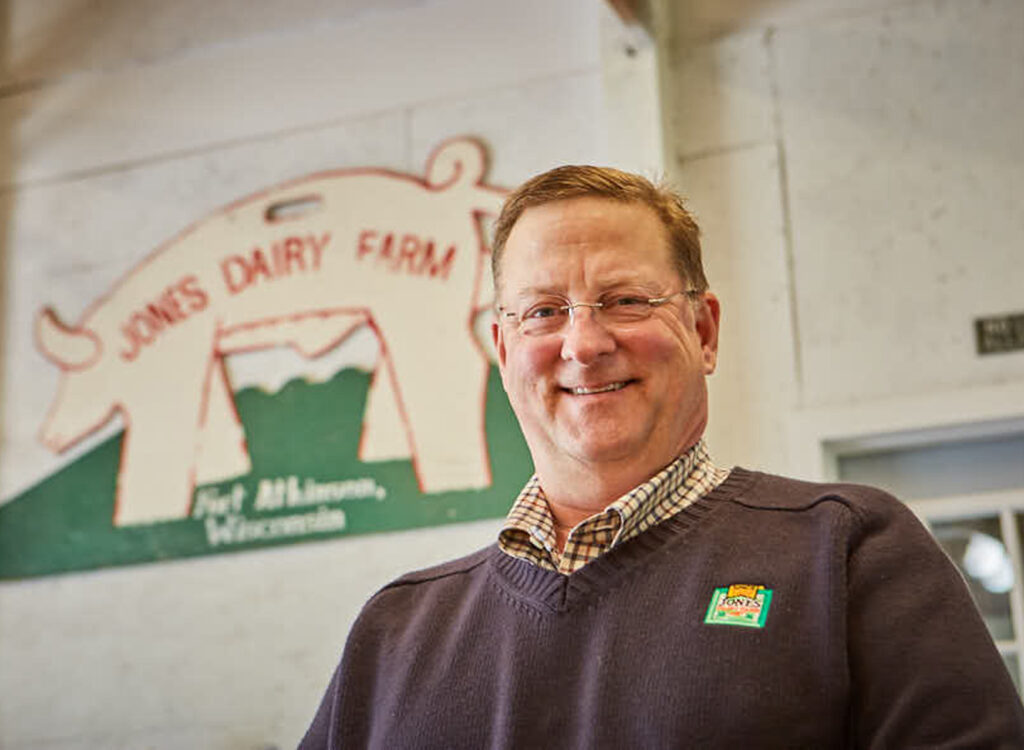
Chef Philip Jones, CEO and Chairman of Jones Dairy Farm (Photo: Courtesy of Jones Dairy Farm)

His own personal educational journey took him from what he thought would be a career as an archaeologist to a fulfilling career as a chef and business executive. As he began his freshmen year with courses in anthropology, he said it didn’t take long to realize it wasn’t for him. He followed his heart. “What I thought I wanted and how I was going to get there were two very different things. I quickly found a home in the culinary world,” he said. That world included years of working and studying in France where in 1984, he earned Le Grand Diplôme d’Etudes Culinaries, La Varenne.

Philip reflects on his days as a culinary student with humor. “We had a gas burner and a whisk. I’m not saying I’m as old as dirt but I am definitely a dinosaur!” He is a type of dinosaur that thankfully will never be extinct. He has been sharing his knowledge and expertise with young culinarians for more than 30 years.

Under his leadership as President and CEO of Jones Dairy Farm from 2001-2021, the company has long supported and continues to support national and local culinary schools, and young chefs. With financial support from Jones Dairy Farm, the culinary arts program at Madison Area Technical College in Madison offers students a state-of-the-art learning environment, the Jones Dairy Farm Kitchen. Philip can see and feel students’ passion for their futures. “Students in culinary programs are there for a dedicated reason. It’s amazing when you’re witnessing those students in the classroom. There is a level of engagement you don’t see in a lot of other places. And I find that really rewarding,” Philip said.

A culinary student at Madison Area Technical College intently focuses on the task at hand. (Photo: Courtesy of Jones Dairy Farm)

In June 2023, Madison College will host the Chaîne’s Jeunes Chefs Rôtisseurs Competition with Jones Dairy Farm a major sponsor. Regional competitions in early spring will select the young chefs who will travel to Madison to compete for the national title. Philip anticipates from eight to 12 young chefs will face off as finalists in Madison. The champion will then advance to an international competition. Jones Dairy Farm’s support for young chefs is embedded in their “Commitment to Culinary” business philosophy. Competitions are capstone events that speak to a daily commitment to support culinary students and young chefs.

Students in the Jones Dairy Farm Kitchen at Madison Area Technical College in Madison, Wisconsin (Photo: Courtesy of Jones Dairy Farm)

The company has awarded more than 145 scholarships to students enrolled in the Culinary Institute of America (CIA) in Hyde Park and San Antonio, Madison College, and Fox Valley Technical College, another Wisconsin school offering a culinary arts/hospitality program. Each student’s educational journey is as unique as their fingerprints as they decide between attending a nationally known school solely focused in culinary arts or a local school with a plethora of academic programs. “Culinary schools all have their special niche and reason for being. Whichever one works best for them, pursue your passion,” Philip advises students.

The company considers their scholarship recipients part of their Jones Dairy Farm family so their family is ever expanding. Besides Philip, four other members of the leadership team have culinary credentials so they have walked the walk of these students, a bond that authentically connects generations.

Chef Philip Jones, Jones Dairy Farm CEO and Chairman, and Lisa Caras, Jones Dairy Farm Marketing Manager and Philip’s stepdaughter, walk past the iconic Jones Dairy Farm barn where generations of the Jones family have operated the business in Fort Atkinson, Wisconsin. (Photo: Courtesy of Jones Dairy Farm)

Support for culinary education is also smart business strategy. Philip said when he returned to the United States from studying and working in France, he noticed chefs remained loyal to familiar brands they used in culinary school. “I found it fascinating, I never forgot.” He returned to his roots and the family business in Wisconsin.

Founded in 1889, Jones Dairy Farm, based in Fort Atkinson, Wisconsin, produces All Natural Sausage, Naturally Smoked Hams, and Dry-Aged Bacon products and is known worldwide for its clean ingredient statements, minimal processing, fresh ingredients and small batches. That consistency strengthens both business relationships and the bridge to the next generation of culinarians and customers. The two go hand-in-hand.

Chef Philip Jones, right, in Kansas City at the 2021 Jeunes Chefs Rôtisseurs Competition. (Photo: Courtesy of Jones Dairy Farm)

“It’s very much a grass roots strategy of developing people’s awareness of who we are, what we do, and what we stand for as a company, which many times aligns with what their aspirations are for their own careers. You can count on us down the road,” Philip said.

Philip Jones stands in front of the farmhouse where the original recipe for Jones Dairy Farm pork sausage started. (photo: Courtesy of Jones Diary Farm)

There is no doubt the last few years have been challenging but Philip sees the same passion for the profession today as in years past. After all, everybody has to eat every day! Philip believes the hospitality component of the dining experience cannot be diminished. “We all love to go where hospitality is front and center, where we are welcomed as a guest and get to enjoy someone’s labor of love. Those are the things in a very crazy world that I think help keep us all grounded. It’s time with family, with friends, a ritual whether at home or dining out that is going to continue into the future. It’s not going to change,” he said.

For Chaîne members, it’s la raison d’etre. Sharing delectable food and fine wine while basking in a beautiful atmosphere, whether it be a themed Halloween party or a formal gala, Chaîne members instantly connect as kindred spirits. Philip said they are thrilled to be a Chaîne sponsor and partner.

“First of all, Vive la Chaîne! It’s a wonderful organization that we’re really proud to be affiliated with. We gets lots of brand recognition. It’s a unique advertising opportunity for us because it crosses through Chaîne in both retail and food service segments. There are so many people who are food enthusiasts and they are usually the demographic who appreciate our products,” Philip said. “And Chaîne events are really fun!” In 2020, he was awarded the Chaîne des Rôtisseurs Maître Restaurateur Ribbon and in 2021, the Bronze Star of Excellence.

Bailli Délégué des Etats-Unis Bertrand de Boutray, Chef Phillip Jones, Conseiller Culinaire et des Professionnels des Etats-Unis Chef Reimund Pitz, and Chancelier des Etats-Unis Rufus Cressend
Philip Jones’ ACF Presidential Medallion (Photo: Courtesy of Jones Dairy Farm)

In addition, his many career culinary accomplishments include serving today as a member of the Board of Trustees of The Culinary Institute of America (CIA) Hyde Park campus and as a member of the Board of Directors of the North American Meat Institute (NAMI). In 2014, NAMI honored Philip with their Edward C. Jones Community Service Award and in 2017, he was inducted into the Wisconsin Meat Industry Hall of Fame. In 2020, he was named an American Academy of Chefs Honorary Fellow.

At the 2021 American Culinary Federation (ACF) National Convention in Orlando, Philip received the ACF Presidential Medallion as did Bailli Délégué des Etats-Unis Bertrand de Boutray. In addition, at the 2021 event, Bertrand and Kevin Dunn, Executive Director, Confrérie de la Chaîne des Rôtisseurs, were inducted into the American Academy of Chefs Honor Society. “Jones Dairy is a true partner to the Chaîne and it was wonderful to see Philip, along with our own Bailli Délégué des Etats-Unis Bertrand de Boutray, recognized by the American Culinary Federation last August with the ACF’s highest award. It’s this community of gourmands that make the Chaîne such a special place,” Kevin said.

These awards are symbols of a rich history and a bright future as young culinary professionals seek to emulate the “dinosaurs” who have years of experience in the industry. Chef Susanne Ebacher-Grier, Chaîne member, was recently awarded the ACF Presidential Medallion at the 2022 ACF Convention in Las Vegas. As a young chef, she said she watched the Presidential Medallion being awarded and set that as a goal for herself. Now a Chef Instructor at the high school level, Susanne is a vitally important bridge between the “dinosaurs” and young adults aspiring to enter the profession.

And to ensure the future remains bright, parents and grandparents can help by encouraging their toddlers to keep tugging on their apron strings!

Links

Jones Dairy Farm

Madison Area Technical College

Madison Area Technical College – Culinary Arts Program

Fox Valley Technical College – Culinary and Hospitality Program

American Culinary Federation (ACF)

Culinary Institute of America (CIA) – Hyde Park, New York campus

Chef Ebacher-Grier Awarded ACF Presidential Medallion

August 5, 2022 – With about 800 people in attendance at the American Culinary Federation (ACF) President’s Gala Reception and Dinner, held on Thursday, July 28 at Caesars Forum in Las Vegas, the ACF awarded Chef Susanne Ebacher-Grier, member of Chaîne’s Indianapolis Bailliage, its Presidential Medallion, the highest award given by the ACF President.

Chef Grier with Award
On July 28, 2022, Chef Susanne Ebacher-Grier received the ACF Presidential Medallion. (Photo: Courtesy of Chef Susanne)

Chaîne featured Chef Ebacher-Grier as its Professional Spotlight in the July 22, 2022 edition of Cuvée Magazine.

The ACF has more than 15,500 members spanning more than 170 chapters nationwide with more than 15,500 members spanning more than 170 chapters nationwide. According to the ACF, the Presidential Medallion is “presented in recognition of outstanding representation of the ACF fundamental principles, including superior strength of character and continued contributions to ACF and/or the culinary industry as a whole.” ACF President and Executive Chef Kimberly Brock Brown, CEPC, CCA, AAC, from Summerville, South Carolina, presented the Presidential Medallion to Susanne.

When asked this week through an email what the ACF award means to her both professionally and personally, Chef Susanne said:

Chef Susanne with her ACF Presidential Medallion. (Photo: Courtesy of Chef Susanne)

“I joined the ACF 19 years ago. I was a bright-eyed culinary student who was already in the industry. I have attended numerous regional and national conferences. When I would see the Presidential Medallion awarded, it became a goal. Was I always cognizant of it – no. I just continued to serve the chapters I belonged to and then serve the Greater Indianapolis Chapter with a giving heart, mentorship and a passion for the hospitality industry. Receiving this award is an accumulation of hard work and unknown wins shared with many. What makes me emotional about this is thinking about my Dad. He would have been beyond proud of me being a person of integrity and wanting to do the right thing while utilizing my culinary talents.”

In a previous interview, Chef Susanne said she is grateful to her father for guiding her to attend a small liberal arts college in the Midwest for her first undergraduate degree in Fine Arts. With work experience during and after college that solidified her interest in the hospitality industry, she then earned additional degrees in culinary arts. That combination has served her well as her culinary students today call her a “Swiss Army knife” because she knows the answer to any question they have.

And Susanne most likely fields a lot of questions. There are 350 students enrolled in the Culinary Pathway program at Center Grove High School in Greenwood, Indiana that she helped to develop. School began this week so pencils are sharpened, laptops are charged, and most important, students are engaged for another great year.

As the 2014 Greater Indianapolis ACF Pastry Chef of the Year, the 2016 Greater Indianapolis ACF Chef of the Year, the 2019 Indiana Prostart Teacher of the Year, the 2020 Dan Ryan Award of Excellence winner by SkillsUSA and her ACF Presidential Medallion, Chef Susanne’s students are in capable, caring hands.

Susanne cherishes her time spent at Chaîne events as an important part of her culinary and personal life. “When you can have that amazing experience where the wine is perfectly paired with the food and the food is perfectly paired with the wine and you’re breaking bread with fellow Chaîne members, it is an amazing experience,” she said.

Photo: Courtesy of Chef Susanne

Other ACF awards presented at the National ACF Convention in Las Vegas included:

Chef of the Year – Danielle Hughes, U.S. Coast Guard

Pastry Chef of the Year – Troy Matthew Shaw, U.S. Coast Guard

Chef Educator of the Year – Jack Birren, CEC, Waukesha County Technical College

Dr. L.J. Minor Chef Professionalism Award – Michael R. Thrash, CEC, CCA, CCE, AAC (Note: Chef Thrash was featured in a May 14, 2021 Cuvée Professional Spotlight.  Read the article here. 

Student Chef of the Year – Lindsay Peck

Student Pastry Chef of the Year – Sarrenity Dickson

Student Team of the Year – Culinary Institute of New York at Monroe College

L. Edwin Brown Leadership Award – Ryan Manning, MX Taco

Lifetime Contribution Award – Willie Lewis

LINKS

American Culinary Federation (ACF)

Chef Ebacher-Grier is a Beacon for Her Students and Ambassador for Her Profession

July 22, 2022 – Chef Susanne is preparing the next generation of culinarians as thoughtfully and skillfully as crafting the finishing touches on one of her classic French pastry creations. With Executive Chef experience, a Bachelor of Fine Arts from Coe College, three associate degrees in Baking Pastry Arts, Culinary Arts, and Professional Catering from Sullivan University, and French Pastry Certification from École Grégoire Ferrandi, Susanne began teaching 10 years ago. “It’s still feeding my soul. When it stops dong that is when I know I should leave teaching,” Susanne, a member of the Indianapolis Bailliage, said to Chaîne during a May 4 telephone interview.

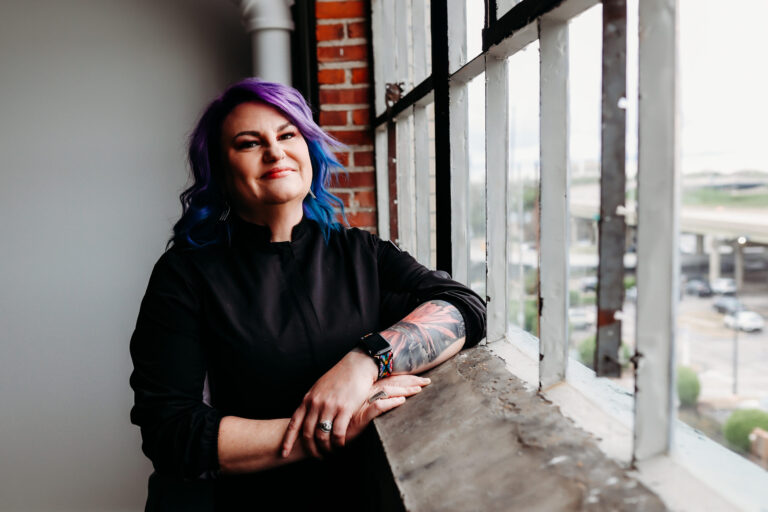
Chef Susanne Ebacher-Grier (Photo: Courtesy of Chef Susanne)

Susanne was drawn to culinary arts at a young age. She would come home from school and watch a PBS chef series. “I was obsessed with it,” Susanne said. Inspired to emulate chefs, the bug to bake would bite her late at night. Her parents began calling her “the midnight baker.” “In the morning, the kitchen would be a mess but there would be fresh muffins,” she said.

After her father was transferred to Colorado, they moved to Evergreen, near the Rocky Mountains. Of course she wanted to learn to ski so her father told her she had to get a job to buy her own skis. If she had to work, it was going to be a culinary job. She convinced a local catering company that also operated a restaurant to hire her as a dishwasher. It was the first time they had hired a female dishwasher so her job performance was under a microscope. She delivered. As is the case with many great chefs who begin at the dishwasher, Susanne watched the pastry chef closely and asked question after question. Soon Susanne was a prep cook and then a line cook. Finally, the head chef told her she needed to go to culinary school.

“That’s not a real profession,” her father told her. He insisted she attend a small liberal arts college in the Midwest, the best kept secret in his opinion. So Susanne enrolled in Coe College in Cedar Rapids, Iowa majoring in Fine Arts with a focus on ceramic sculpture. In addition, she declared a minor in K-12 education so she would be certified to teach, a career path her father supported.

But the hospitality industry was never far from her heart and to earn money during college, she became a bartender at a local restaurant. “I always had my foot in the hospitality industry,” she said.


Upon graduation in 2000, she moved to Cincinnati, her hometown, where her parents had returned after her father was transferred back home. Following her heart in the hospitality industry, she took a job as a bartender and waitress at a high-end Cincinnati restaurant.

That sealed the deal. It was time to go back to school to earn culinary credentials. After reviewing her options, she enrolled in Sullivan University in Louisville, Kentucky in their night and weekend culinary arts program so she could keep working. There was just one logistical issue to solve. Louisville was a two-hour drive from Cincinnati. No problem for the free spirit who had unbridled energy to embrace a schedule that some would say was impossible – and insane.

Sullivan University

She enrolled at Sullivan and also took another job as a pastry cook for Aramark at Proctor and Gamble. She was quickly promoted to Sous Chef and Executive Chef for Aramark at Humana and then CitiBank.

Chef Susanne would often make muffins for her parents so they called the “midnight baker.” (Photo: Courtesy of Chef Susanne)

For one year, Susanne would drive two hours each way on Thursday night to attend class. On Friday, she would have her bags packed in the car. After working until 3 p.m., she drove to Louisville for class. With her father’s career in sales and marketing, which involved plenty of travel, he had a lot of hotel rewards so he would book a hotel for her each Friday evening. On Saturday, Susanne would attend her lab class until early afternoon and then drive home so she could report to work for dinner at the Cincinnati restaurant, her second job. “I don’t know how I did that the first year,” she said.

But it’s easy to explain. Of Sullivan University, she said, “It felt like home.”

Soon Louisville was her home after moving there to complete her program. She graduated with three associate degrees in Pastry Baking Arts, Culinary Arts, and Professional Catering. Paris, France was the next stop on her educational journey. In summer 2005, she earned a French Pastry certification at École Grégoire Ferrandi.

One of Chef Susanne’s stunning pastry creations. (Photo: Courtesy of Chef Susanne)

Bursting with pride, her father paid off one of her student loans. “I’m proud of you finding your way. I wish I had supported you wanting to go to culinary school,” her father told her. Susanne graciously reassured him that she would never trade her four years at Coe because the experience made her a well-rounded person. Her culinary arts students today think of her as a “Swiss Army knife” because she knows the answer to anything they ask. “I’m just a curious person. I like to learn,” she said.

The call to teach has been a “running monologue” in her life as she describes it. As she was completing her student teaching in Arts Education 20 years ago at Coe, Sheri Black, her teacher leader, said, “If you don’t teach, you’re doing a disservice to children.”

But first she notched more experience as a chef after graduating from Sullivan in 2007. For two years she was the Pastry Chef at 10 Wilmington Place, a senior living community in Dayton, Ohio. “I think working in healthcare is fascinating. You are people’s relationship with food,” she said. “If I didn’t serve pie twice a week, hell hath fury on my soul.”

Photo Courtesy of Chef Susanne

Seeking to broaden her horizons, in 2009, Kroger hired her as an Executive Pastry Chef for their new Fresh Fare concept at stores. “It’s like Kroger and Whole Foods had a baby,” Susanne said with a chuckle. Chefs, sommeliers, cheese mongers, and cake decorators collaborated to offer customers an experience instead of merely a mundane trip to the grocery store. Without realizing it, her culinary education career had begun.

Now married, she moved to Indianapolis in 2011 and through serendipity while attending an American Culinary Federation (ACF) Gala, she was hired to create all of the pastries for the NFL Honors portion of Super Bowl XLVI in Indianapolis. She made 2000 sliders, 150 cake pops and 500 mini cupcakes. “It was a lot of fun – baptism by fire,” she said.

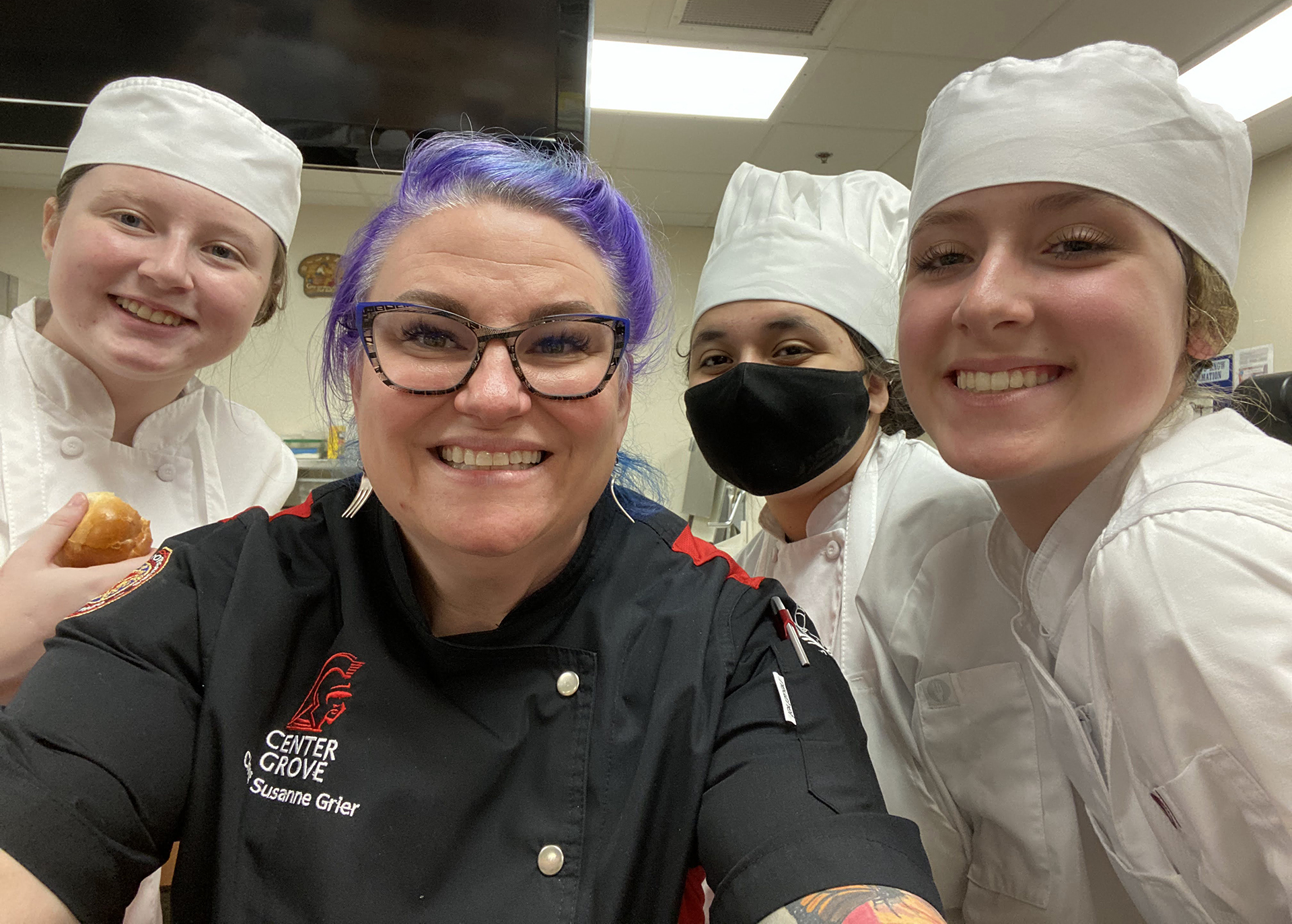
Chef Susanne and three of her students (Photo: Courtesy of Chef Susanne)

Chef Educator

Her running monologue became a force to reckon with as she evaluated her career options while balancing marriage and family. Ivy Tech Community College hire her in 2012 as a Chef Instructor where she developed core curricula for the Baking and Pastry Arts program and was instrumental in developing a Bakery Merchandising course. She continues teaching there today as an Adjunct Instructor. She recommends high school seniors interested in a culinary career consider community colleges. “Students can earn a two-year degree for $12,000. That’s insane,” she said.

Five years ago she left higher education to have an impact on high school students, a vitally important yet often overlooked cohort of future culinarians. From 2017 to 2020, Susanne was the Chef Instructor at the J. Everett Career Center where students could enroll in a Dual Credit program with Ivy Tech. At the Career Center, Susanne’s broad experience in the industry was invaluable. Students ran a restaurant at which 80 percent of the menu was scratch cooking and through student organizations that Susanne coached, students gained experience by competing in SkillsUSA, Prostart and FCCLA. She made a difference in their lives. Realizing that some of her students were going home hungry, she sent food home with them to practice.

Although shorter than her drive from Cincinnati to Louisville, her 40-mile drive each way to the Career Center began to take its toll. In 2020, she traded her 40-mile drive for a 4-mile drive when she accepted a position as Chef Instructor at Center Grove High School, a traditional high school in the same school district where her daughter is enrolled.


Chef Susanne’s students think of her as a “Swiss Army” knife because she knows the answer to every question they ask. (Photo: Courtesy of Chef Susanne)

It did not take long for Susanne to make her mark there. Her students competed in SkillsUSA this year with three of them placing in the Top Eight at a regional competition so they qualified to advance to the state competition. There they placed in the Top Ten, the first time ever. “I was tinkled pink,” she said. But as much as she was thrilled about winning, it’s what her students demonstrated at the competition that made her heart sing. A student from another school buckled under the stress of competing and broke down. Susanne’s students sprang into action hugging him and offering supportive words. “That right there is excellence in action. We need to be better humans to each other,” she said. For the upcoming year, Center Grove High School has 350 students enrolled in their Culinary Pathway program. With school starting in early August, Susanne is prepping her classroom as she would for any major culinary event.

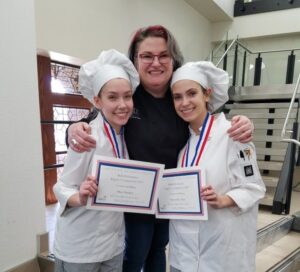
Chef Susanne and two of students (Photo: Courtesy of Chef Susanne)

Educators and chefs have recognized Susanne’s excellence. In 2019, Susanne was named the Indiana Prostart Teacher of the Year and in 2020, she was the recipient of the Dan Ryan Award of Excellence by SkillsUSA.

These awards followed recognition by the culinary profession. In 2016, she was named the Greater Indianapolis ACF Chef of the Year and in 2014, was named the Greater Indianapolis ACF Pastry Chef of the Year. Paving the way for other female chefs, Susanne was the first female chapter president of the Indianapolis ACF, serving now as its Board Chair.

Stay tuned as next week Chef Susanne will attend the National ACF Convention in Las Vegas so there could be additional lines needed on her resume.

With her very busy schedule, Susanne cherishes the opportunity to share her passion for food and wine with fellow Chaîne members. She loves being able to converse with Sommeliers at dinners, still in awe of their ability to sip a glass of wine and know instantly all about its origins. “I love sitting with foodies and for lack of a better term, winos. When you can be with people who appreciate wine and food, the balance of it, and the magic that can happen at the table, it’s something special,” she said.

Susanne’s monologue is now a dialogue with scores of others, a beacon for her students and an ardent ambassador for Chaine and the culinary arts profession.

LINKS

Coe College

Sullivan University

Harlan Family is Stalwart Steward of Napa Valley

July 8, 2022 – Massive geologic upheaval of tectonic plate movement and volcanic eruptions tens of millions of years ago sculpted a valley 50 miles north of present day San Francisco. Nestled between the Vaca Range to the east and the Mayacamas Mountains to the west with the Pacific Ocean 35 miles from western foothills, Napa Valley is home to half the world’s 12 recognized soil orders and protected by a dry Mediterranean climate only present on 2 percent of Earth’s surface.*

Napa Valley (Photo Credit: Napa Valley Vintners)

For centuries, the valley was a viticultural blank canvas until 1838-1839 when George Calvert Yount planted the first commercial vineyards. Today with hundreds of Napa Valley wineries, respect for the land and its history permeates Napa’s viticulture. The nature of the challenge for winemakers to succeed is nature itself. “Every single artist has a different paint brush and a different vision and skill set. It’s the same with every piece of land in the Napa Valley. Everyone has the opportunity to express their story through the medium of wine,” Amanda Harlan Maltas, Director of Communications for The Napa Valley Reserve and Meadowood Napa Valley, said to Chaîne during a June 6 telephone interview.
Amanda Harlan Maltas (Photo: Courtesy of the Harlan family)

Overview

Bill Harlan, Amanda’s father and founder of Harlan Estate, released his first wine for commercial sale in 1996 from his 1990 and 1991 vintages after purchasing land in Napa Valley to develop a California “First Growth” vineyard in 1984. Specializing in Cabernet Sauvignon, Harlan Estate comprises 240 acres with about 40 acres under vine from which its eponymous Harlan Estate label is produced. BOND comprises five small, jewel-box vineyards averaging seven acres each, and Promontory’s territory, which is south of Harlan Estate between Yountville and Oakville, consists of 840 acres, with just 10 percent under vine.

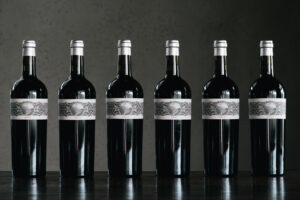
The Mascot, first released in 2013, is made from the young vines growing at the Harlan Estate, BOND and Promontory vineyards, a project proposed and spearheaded by Will Harlan, Bill’s son.

The Mascot was first released in 2013. (Photo: Courtesy of the Harlan family)

Hiking along Oakville’s southwestern ridge in the early 1980s, Bill came across a secluded canyon unlike any he had seen in Napa Valley. He learned that within the canyon, two distinct fault lines roughly demarcate boundaries between volcanic, sedimentary and metamorphic soils. Stretched across 500 feet of elevation with dramatic slopes and panoramic exposures, the land captured his spirit and desire to have it speak through his wine. His dogged determination paid off in 2008 when the Harlan family finally acquired 840 acres of land in what Bill calls ‘the last frontier within the Napa Valley.’ The Harlan family’s flagship Promontory label was born. Within the rugged canyon lie a few small parcels that since 2009 have magnificently revealed the territory’s complex geologic history to oenophiles around the world.

Promontory (Photo: Courtesy of the Harlan family)
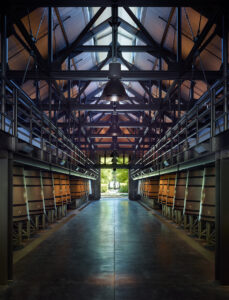
Promontory winery (Courtesy of the Harlan family)

The Napa Valley Reserve is a private membership-only winegrowing estate with about 600 members who have exclusive access to wines produced solely for the membership. Members can be as involved with the winemaking process as they please, creating their own masterpieces with the world class team that oversees Harlan Estate, BOND and Promontory. Meadowood Napa Valley is a Relais & Chateaux boutique hotel and member club, located on the 240-acre wine-country estate, that also serves as common ground for local vintners, grape growers and the community.

Reception at The Napa Valley Reserve (Photo: Courtesy of the Harlan family)

For many years, the Harlan family has supported and sponsored Chaîne’s Jeunes Sommeliers competitions and Mondiale events to foster excellence in and sustainability of the industry. “The Harlan family has been very supportive of the Chaine’s Jeunes Sommelier’s Program and in 2019, hosted competitors and judges for dinner at their world class Promontory winery in Napa Valley, a fabulous event. The Chaîne is extremely grateful to the Harlan family and values its relationship with them,” Kevin Dunn, Executive Director, Confrérie de la Chaîne des Rôtisseurs, said.

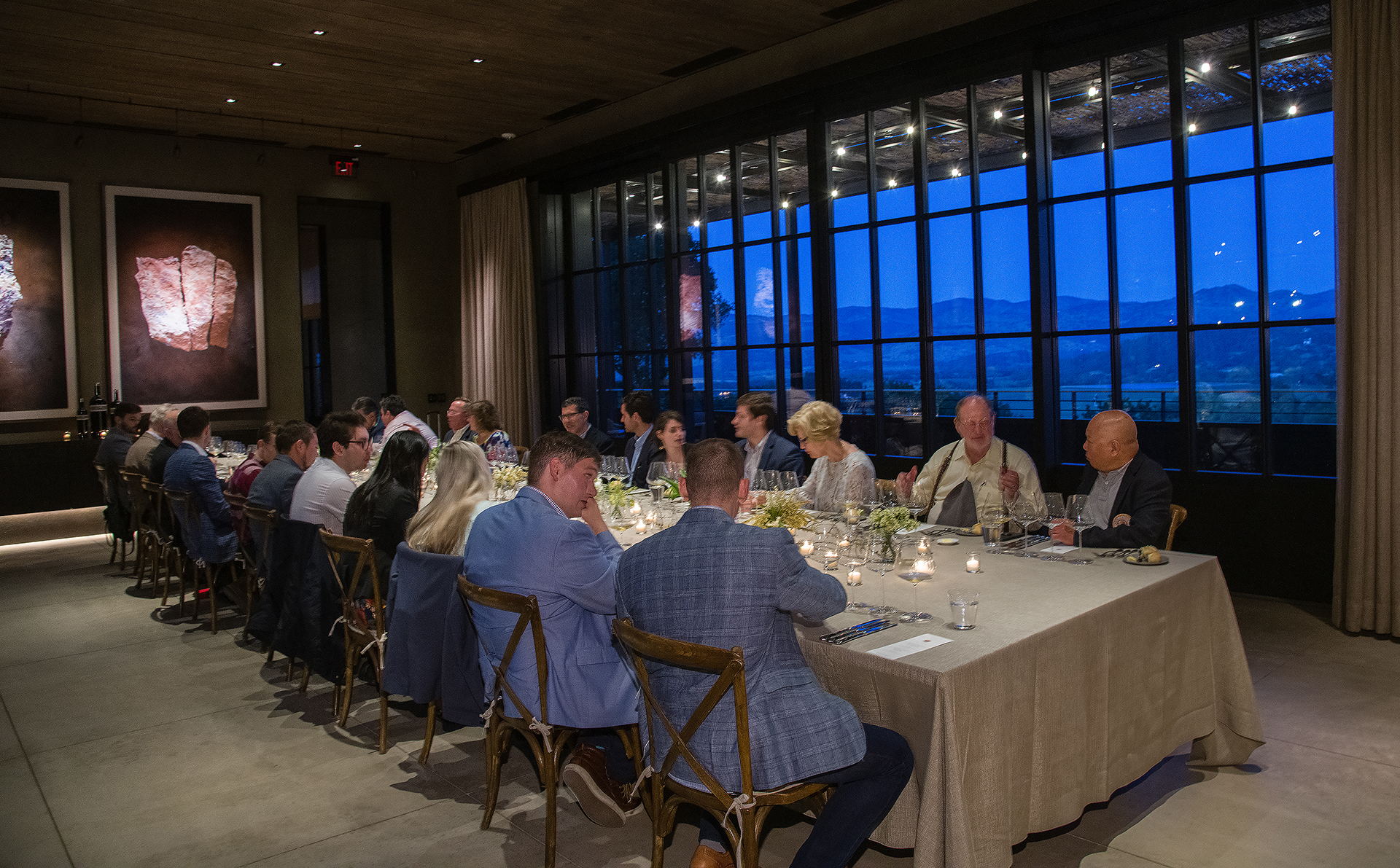
Chaine dinner at Promontory Winery
The Harlan family hosts judges and competitors at their magnificent Promontory Winery in Oakville during Chaîne’s 2019 Jeunes Sommeliers Competition. (Photo: David Ramsey/Chaîne)

Napa Valley

Thirty miles long and five miles across at its widest point, Napa Valley was California’s first American Viticultural Area (AVA) when it was formally designated on Feb. 27, 1981, the second AVA in the United States. Attesting to its soil and climate diversity, there are three distinct microclimates and 16 sub AVAs within the Napa Valley AVA. With sunny, dry days and cool evenings during the growing season, grapes ripen slowly and evenly, a gift of consistency from one vintage to the next for vintners.

But there is wide temperature variation within the valley. Temperatures in southern portions of the valley that are close to the bay can be 15 degrees cooler from those in the northern region. Combined with soil diversity, the Napa terroir supports cultivation of more than three dozen varieties of grapes. Cabernet Sauvignon is the most widely planted grape, accounting for 40 percent of harvest yield and 60 percent of crop value, according to the Napa Valley Vintners.

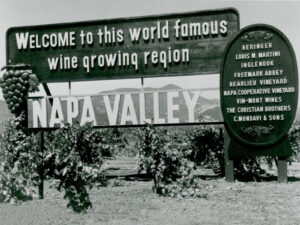
Tourists from around the world have been visiting Napa Valley for many years. (Photo credit: Napa Valley Vintners)

Long before Napa Valley was officially recognized in 1981 as a premier grape growing region not only in the United States but also around the world, vintners established wineries following in Yount’s 19th century footsteps.

Facing mounting hurdles during the first half of the 20th century, seven vintners, including Robert Mondavi of CK Mondavi and Sons, formed a “an eating and drinking society” in 1944 to collectively solve problems and elevate the status of Napa Valley wines. The society became the Napa Valley Vintners (NVV) nonprofit trade association, which today is the bedrock of Napa’s wine industry and culture, estimated to contribute $50 billion annually to the U.S. economy.

Harlan Estate History

Bill Harlan had a dream of one day owning and planting a small vineyard. As a successful real estate entrepreneur in San Francisco who, together with his partners, started Pacific Union Co., his dream became reality in 1979 when he purchased the Meadowood Country Club in St. Helena after one visit. After sipping a Strawberry Daiquiri one Sunday from a club deck overlooking a breathtaking vista of a secluded valley within Napa Valley, Bill was on the steps of the bank the next morning to purchase the property, Amanda said. At age 45 and a bachelor, his dream of planting a “First Growth” vineyard was in clear sight and his dream of raising a family on that vineyard would also soon come true.

Deborah, Bill’s wife, recalls those early days in Observations from the Hillside, an extensive compilation of reflections and experiences by Harlan Estate and other wine industry experts.

“When Bill and I moved to the Napa Valley, we put up stakes as a team. For a long time no one knew who we were. We lived a very sweet and modest life in our little house in St. Helena, and put every cent we made back into our wine business. On weekends, we’d all pile into the car and drive with Dad the dreamer up into the hills where the winery is now. We’d stop for a half an hour here or there, looking at the wild grapevines, studying the trees, and our children, Will and Amanda, would bicker about whose turn it was to get out of the car and open the gate. So much of our children’s experience is grounded in those first ten years in that little house, and in the eight years after in the house where The Napa Valley Reserve is now built.”

Entrance to The Napa Valley Reserve (Photo: Courtesy of the Harlan family)

Bickering about who would open the gate was an anomaly for Will and Amanda who both joined the family business starting in their twenties. In 2021 upon Bill’s passing of the baton from day-to-day operations, Will took the reins after successfully launching The Mascot label and overseeing the opening of Promontory. About 50 percent of Amanda’s time is spent as an ambassador for the Domain and its iconic labels.

Amanda and Will are an integral part of Bill’s 200-year business plan to build a thriving enterprise not just for the next generation but for centuries, an echo of French winemaking heritage. With a mission greater than themselves, rivalry is nowhere to be found in the second generation. “Our gifts are very complementary. We’ve never really had any fights our whole life,” Amanda said of her brother. That relationship formed the foundation for their current professional paths. “We divide and conquer in a beautiful way,” she said.

Their gifts were nurtured by their parents who remain incredibly devoted to the business. Of her father, Amanda said, “He’s dedicated to shepherding this second generation for as long as he possibly can.” And of her mother, Amanda said, “My mom is really the glue. She’s tuned in to every detail from planning and design to execution.” Amanda marvels at their energy. “My parents keep us going. It is inspiring to see them day in and day out, seven days a week, 365 days a year living and breathing this dream!”

Thoughtfully planning far into the future and sibling synergy to ensure business sustainability are rare attributes in this nanosecond popular culture of the 21st century. What influenced Bill to articulate and then reify his long term vision for his family and community?

One month after Bill bought Meadowood in 1979, Robert Mondavi invited him to lunch. Amanda said her father had attended the opening of Mondavi’s winery years earlier. At lunch, Mondavi asked Bill to tell him about his dream in coming to the Napa Valley. Imparting his wisdom, Mondavi told Bill he believed that the Napa Valley region had the potential to make some of the greatest wines in the world and that Meadowood, while not vineyard land, could become common ground for the community and visitors who wanted to experience the Napa Valley. Bill asked him to explain. Instead, Mondavi said he would arrange for Bill to spend one month in France meeting with First Growth families in Bordeaux and the owners of Grand Cru domaines in Burgundy to give him perspective. That firsthand, immersive experience provided the explanation.

Returning from France, Bill’s view of time had changed, Amanda said. He had been living “pedal to the metal” for years with a short term outlook on life but with his horizon expanded, his life took on new purpose. He sought to build something larger than himself that would last longer than a lifetime.

From Bill’s time in France, he concluded French winemaking families succeed because their business is family owned; the business is based on the land; and they operate without debt. And in talking with Robert Mondavi, the two determined that together creating a ‘wine auction,’ one that would emulate the Hospice de Beaune, the oldest wine auction in the world that continues today, would be a dream – to help provide the Napa Valley with a platform that would enable them to be just maybe be recognized as some of the great wines of the New World, help raise money for education and medical, and build resources for the community.

Auction Napa Valley began 41 years ago and since then, has raised $200 million to sustain the Napa Valley farming infrastructure and people who toil amid tumultuous times, recently suffering from devastating wildfires in 2017 and 2020 and the global pandemic.

“Who we are together as a community helps each and every one of us as individuals. The commitment and devotion to protecting this valley now and for generations to come rests on our shoulders, and having The Napa Valley Vintners Association as a leading force in bringing our community together has in large part enabled us as a region to work closely alongside our neighbors,” Amanda said.
The Harlan family is a strong team. Bob Levy, Harlan’s Estate’s Founding Winemaker, has been with Bill since the start and many employees have been with the company for more than 30 years.

Promontory’s Fermentation Room (Photo: Courtesy of the Harlan family)

Being stalwart stewards of the land and what that means for forest management to protect the land, which gives so much joy to so many people, are being deeply discussed and studied by Napa Valley vintners and grape growers in collaboration with scientists at universities nationwide.

“We are continually educating ourselves and supporting our neighbors. It’s really about sharing the knowledge we gain and strategically implementing these practices with serious fire mitigation planning into the future,” Amanda said.

Recent California wildfires deeply affected the family. They were evacuated in both 2017 and 2020 and in 2020, most of the north portion of the Meadowood Resort burned to the ground, Amanda said. Of 100 rooms at the boutique hotel, 36 survived and are open today. They also lost Meadowood’s 3-star Michelin resort restaurant to the fire but true to their pioneer spirit, the Harlan family developed and is enacting a recovery plan. “It will be another good five years or so before we’re able to finish the rebuild but we’re very excited about the renaissance and re-imagining Meadowood!,” she said.

As she recalled dealing with the pandemic beginning in March 2020 and then the wildfire in fall 2020 during harvest, the Napa Valley sprang into action to help one another.

“Collectively as this community came together, we felt very fortunate to be part of the Napa Valley Vintners association, because all of the money they raised at the auction provided so many resources for vaccines, medical help, childcare and shelter,” she said.

In 2017, the Harlan family organization started The Invictus Fund to help their employees who lost homes and were displaced by the fire. They reinstated the fund in 2020 with Amanda as its chair. They were able to raise $500,000 in just a few short months. “We were able to give immediate assistance and write checks within two weeks. It brought us joy to be able to help in some small way,” she said.

Amanda joined the Domain after working the 2014 harvest in the BOND cellar, which was physically challenging, yet rewarding work. Working under Managing Director of Winegrowing Cory Empting was the pivotal moment that inspired her to commit her career to the family’s 200 year plan. “If Mother Nature were just a constant, there would be no depth, there would be no character and that’s what makes this business so remarkably demanding of our patience and humility. We have no idea what’s going to happen tomorrow. It keeps us asking questions every day about how we can better understand and translate this place of ours.”

The Harlan family has taken that blank canvas and exquisitely painted the future.

*Information from the Napa Valley Vintners

Links:
Harlan Estate
The Mascot
Promontory
BOND
Meadowood Resort
Napa Valley Vintners
Soil Orders (USDA)

Master Chef Ferdinand Metz, a Tour De Force in American Cuisine

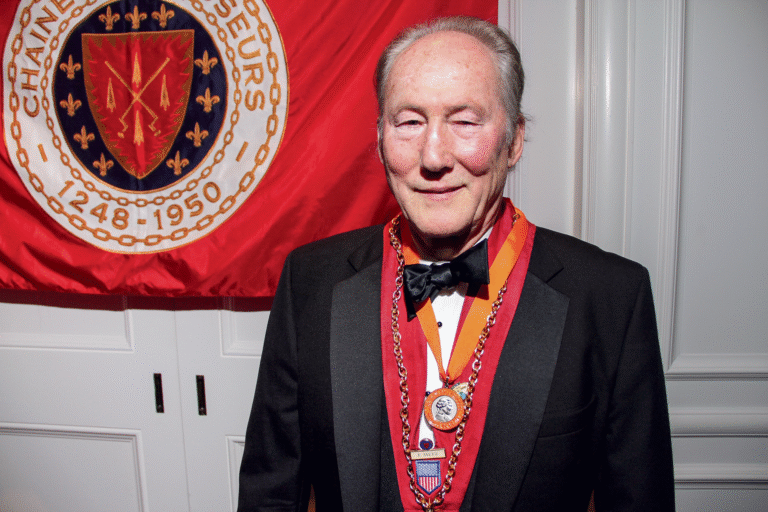
Chef Ferdinand Metz (Photo: Courtesy of the Culinary Institute of America)

June 6, 2022 – Culinarians seeking certification at any level are following the path forged by Master Chef Ferdinand Metz, President Emeritus of the Culinary Institute of America (CIA) and past President of the American Culinary Federation (ACF), who helped codify American Culinary Federation (ACF) chef certifications more than 45 years ago. As a German immigrant to the U.S. in 1961, Chef Metz was stunned at the low quality he observed in the kitchen when he started working at a New Jersey country club. “While the ingredients were good, what they did with them, for the most part, was terrible. If I had the money at the time, I would have gone back to Germany. That’s how bad it was,” Chef Metz, Chaîne des Rôtisseurs Maitre D’ Honneur, said to Chaîne during an April 25 telephone interview.

At the time, anyone wearing a toque in the kitchen would call themselves a chef. There were neither standards nor certifications in the industry. Ferdinand made the very best of a bad situation by drawing upon two apprenticeships in culinary arts and baking/pastry that he completed in Munich before coming to America. It did not take long for his talent to shine. The country club promoted him to Sous Chef and within two years of his jarring introduction to American cuisine, he was reporting for work at Le Pavillon Restaurant in New York City.

The iconic French restaurant had its origins at the 1939 World’s Fair in Flushing Meadows, New York where visitors were treated to a glimpse of “the world of tomorrow.” Following its spectacular success at the World’s Fair, in 1941, Le Pavillon opened in the heart of Manhattan. In 1962, Chef Metz burnished his world of tomorrow under the tutelage of Chef Grangier at Le Pavillon.

“The cooking there was absolutely impeccable. I went from the very bottom to the very top. It was just a fantastic experience,” Ferdinand said. In 1964, Craig Claiborne, famous New York Times restaurant critic, named Le Pavillon the best French restaurant in the country. With his culinary pedigree solidified, that same year Metz accepted a position as the Banquet Chef at The Plaza Hotel, another New York City iconic landmark.

In what can only be described as a meteoric rise in the culinary profession, in 1965, the H.J. Heinz Company, based in Pittsburgh, hired Ferdinand as their Senior R&D Manager, a position he would hold for 15 years. Known for 57 varieties of ketchup, Ferdinand said early on in his career at Heinz there were more than 2,500 different products under his umbrella, a role he embraced and one that provided a foundation for his tomorrow as President of the Culinary Institute of America (CIA). “It was a very challenging and enriching experience,” he said about his years at Heinz.

While at Heinz, Ferdinand became very involved with the ACF to help advance and define the culinary arts profession through a rigorous certification process at all levels. His own education through apprenticeships in Germany inspired his advocacy for similar programs in the United States. The training is now standard in the industry and has withstood the test of time. In 1975, ACF issued its first certifications and in 1976, ACF advocacy convinced the U.S. Department of Labor to list an “executive chef” job in the professional category instead of the “service” category.

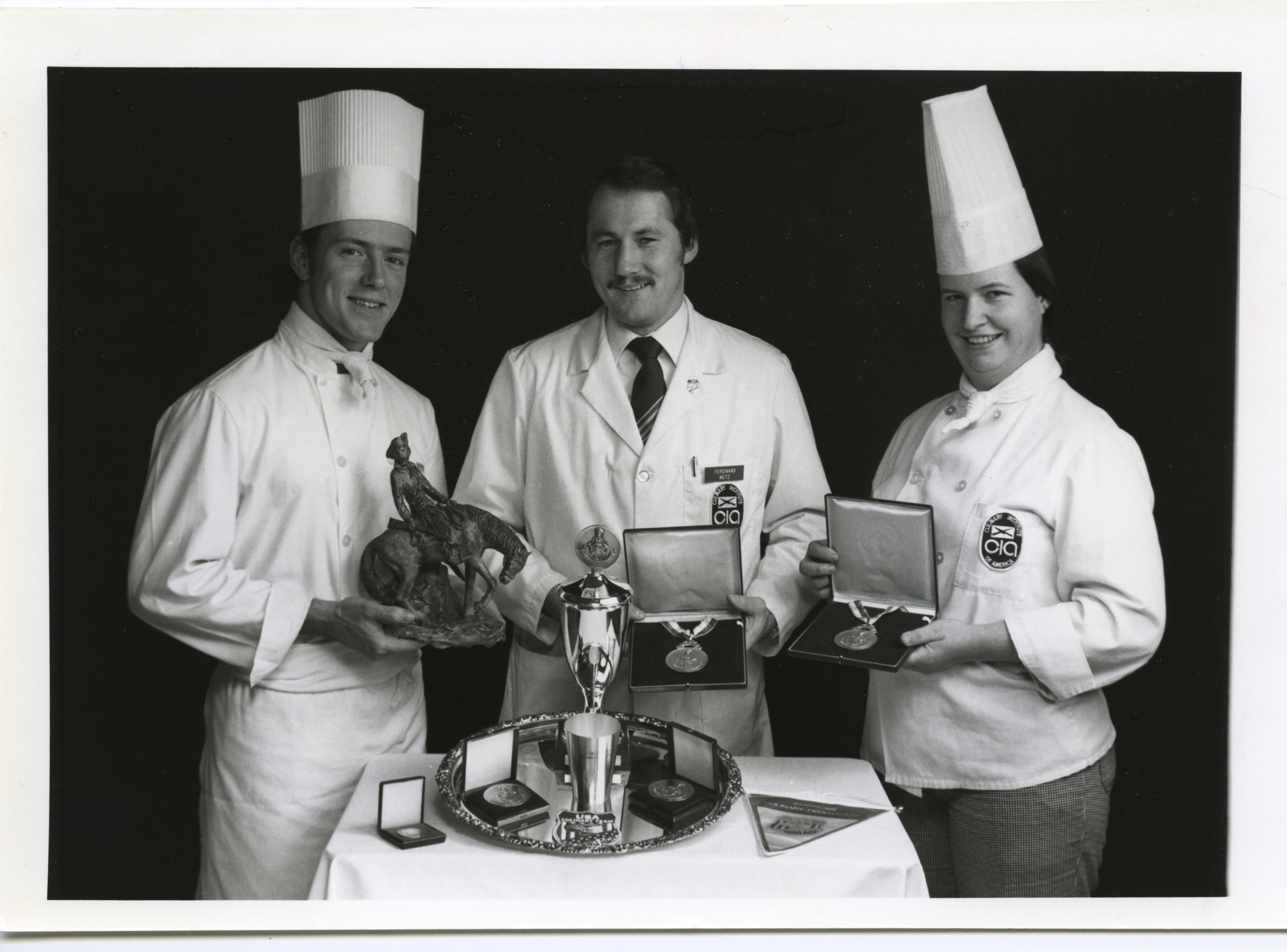
1980 Culinary Olympics From left: CIA Student, Ferdinand Metz, Lyde Buchtenkirch, and student. (Photo: Courtesy of the Culinary Institute of America)
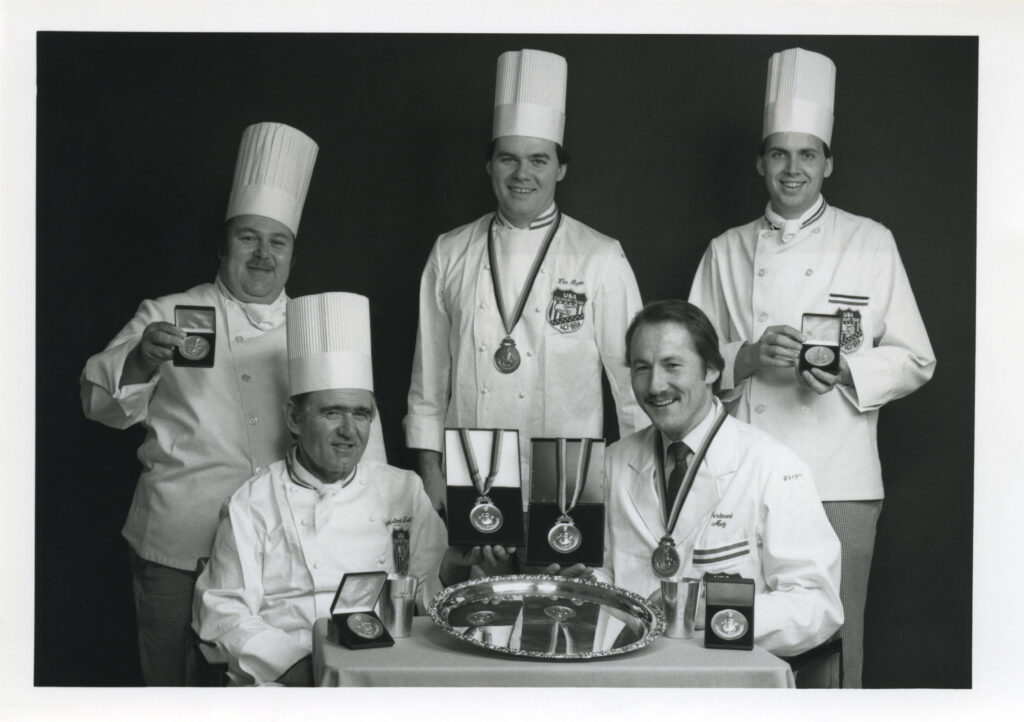
From left: Ferdinand E. Metz, Tim Ryan, Mark Erickson, and Victor Gielisse with World Cup (1986) (Photo: Courtesy of the Culinary Institute of America)

Always with an eye to mentoring young culinarians, in 1976 under his guidance as Captain, an American team reached the top platform for the first time at the International Culinary Olympics. Disrupting all norms, Ferdinand had his team cook nothing but American food, a radical departure from all previous attempts to compete with the world’s best chefs. America has a long history of beloved and traditional regional cuisines, Ferdinand thought, so he decided it was time to showcase American cuisine on the international stage. His bold direction for his team propelled them to third place, finishing in a tie with the French team, a tie they gladly embraced. “It was a star-studded French team managed by Chef Joel Robuchon and we could not have been any happier to tie them for third place. It was better than having third place all to ourselves.”

From left: Fritz Sonnenschmidt, Helmut Loibl, Tim Ryan, Ferdinand E. Metz, Mark Erickson.

The sharpened definition of American cuisine evolved organically in the 1970s and 1980s as farm-to-table cuisine became popular. “We did not set out to define American cuisine,” Ferdinand said. “What are the fresh ingredients available to us most of the year? That’s when we began cooking with those ingredients. It was an important revelation for people to look at American cuisine.”

Ferdinand boils American cuisine down to three timeless elements: 1) updated regional cuisines, 2) fresh ingredients, and 3) uncompromising cooking skills.

Integral to elevating American cuisine for the past 45 years with adherence to sound culinary principles and practices, Ferdinand said the profession today has been informed by the past. “The biggest change has been no change. Today we really don’t have to talk about American cuisine much because it’s what we do. Ideally, every restaurant is doing it. We no longer have to defend it.”

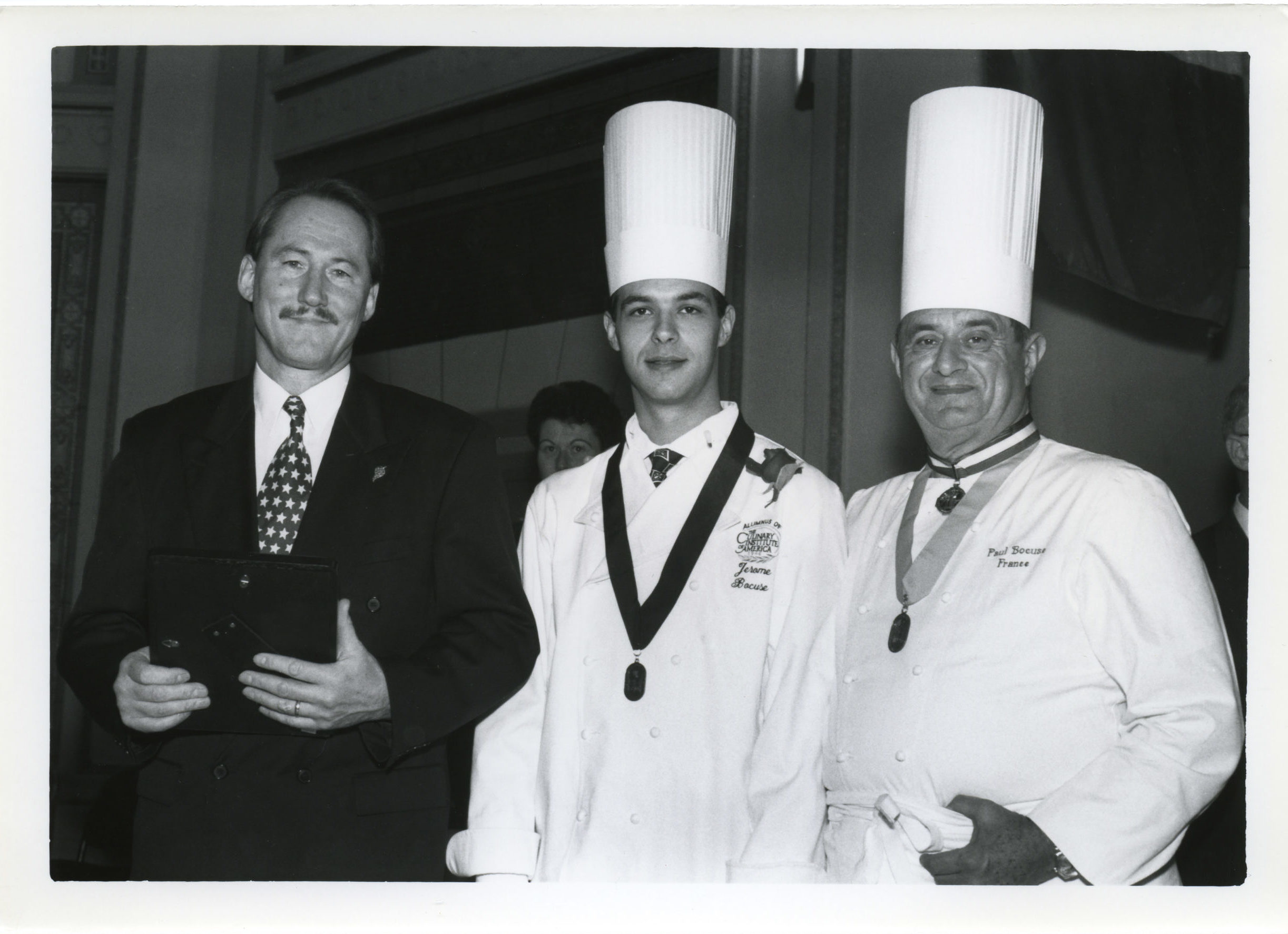
From left: Ferdinand E. Metz, Jerome Bocuse, Paul Bocuse in Alumni Hall [now Farquharson Hall] after the graduation.
Chef Metz’s expertise and experience provides a fascinating perspective on plant-based culinary trends today. “Plant-based cuisine is nothing new,” he said. Ferdinand explained that for centuries, every continent has invented a dish that combines a carbohydrate with a legume vegetable for a complete protein. Think of iconic dishes such as lentils and potatoes in Germany; garbanzo beans and rice in India; rice and beans in South America and Italy’s Pasta Fagioli. But there is one modern aspect to the plant-based trend that perplexes him. “What I do object to is when people want to make something that looks like meat. Why do that? Why bother? Why do you want to make a hamburger patty that isn’t a hamburger. Why don’t you just focus on the ingredients?”

His perennial focus on ingredients, his firm belief in American cuisine, and his Master of Business Administration (MBA) from the University of Pittsburgh made Ferdinand the perfect candidate to lead the CIA in 1980 when Jacob Rosenthal, CIA’s president at the time, personally recruited him. Once at the beautiful Hyde Park, New York campus, Ferdinand again tipped the apple cart and in doing so, ushered in an exciting era for culinary students that remains today.

Ferdinand fondly and proudly recalls his more than 20 years leading the CIA. “It was one of the most exhilarating experiences for us, for me, for the faculty, for the students because up until then, teaching was all about French ways,” he said. With a sophisticated public and great ingredients, what America did not have was skilled culinarians. He revamped the curriculum to teach students the functionality of ingredients widely used in American cuisine and trained them in classic techniques that have withstood the test of time. And what better way to explain his new educational paradigm than by opening five restaurants on campus where guests could experience it first hand, he thought.

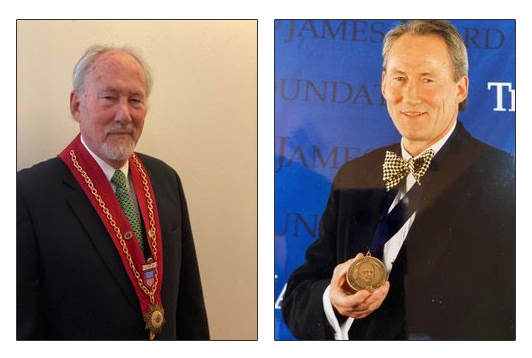
From left, Chef Metz with his Chaine Maitre D’Honneur and Chef Metz with his Lifetime Achievement Award from the James Beard Foundation

He reached out to faculty and students for input into all aspects of a new restaurant for the campus. They flooded him with ideas. In 1982, CIA’s American Bounty Restaurant, a new concept at the time with a sole focus on American cuisine, opened and it’s still going strong 40 years later. “It was a super exciting time,” Ferdinand said. Julia Child was a regular visitor and he invited James Beard to its grand opening. “I got to know him personally.”

“Julia was a very generous person with her time and a very good friend of the CIA. She was very gracious,” he added.

Ferdinand always placed students at the center of any decision at the CIA. He taught classes and played hockey and soccer on student teams to stay authentically connected with them. “You need to get to know the students and what their aspirations are. That’s how you help them,” he said.

His lifelong commitment to culinary competitions has cemented Chef Metz’s tour de force reputation around the world. As team manager, he won the Culinary World Cup in 1986 and led Team U.S. to three consecutive World Championships at the International Culinary Olympics. He has received more than 20 international and honorary awards, including The Medal of the French Republic, the Lifetime Achievement Award from the James Beard Foundation, and one of only three chefs to receive Chaîne des Rôtisseurs Maitre D’Honneur. Julia Child is one of the other two.

Photo: Courtesy of Chef Metz

Ferdinand appreciates Chaîne’s commitment to young culinarians through its long term support of culinary competitions. “I applaud the Chaîne for doing this because that really helps maintain the standards of the profession,” he said.

Today he remains busy as the Managing Partner of the Master Chefs’ Institute that certifies food products from major multi-national companies and Metz Culinary Innovations, an educational consulting company based on his 21 years at the CIA.

This will be an especially busy summer for him with the publication of his book, From Many We are One: The Rise of The CIA and American Cuisine, scheduled for July. Undoubtedly, Master Chef Ferdinand Metz has been at the vortex of American cuisine as it came into its own at the end of the 20th century and into the 21st century.

It’s a good thing Ferdinand did not have the money to return to Germany in 1961!

John Kapon Propels Acker Fine and Rare Wine Auctions to Stratospheric Success

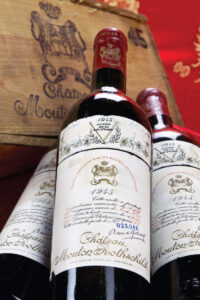
May 13, 2022 – John Kapon, Chairman of Acker (Acker, Merrall & Condit), a family-owned enterprise with a 200-year history in New York City that is now the largest auction house in the world for fine and rare wine, recently sold three magnums of 1945 Chateau Mouton Rothschild privately for $50,000 per magnum, a minor yet significant fraction of their $1.5 billion wine auction business.

As Allied soldiers marched through France in 1944 to liberate the country, many vineyards were left unscathed, allowing Chateau Mouton Rothschild in the Bordeaux region to produce an exceptional 1945 vintage. “The taste stays in your mouth and the feeling stays in your soul. It’s just a magnificent wine,” John said to Chaîne during an April 25 telephone interview.

1945 Chateau Mouton Rothschild (Photo: Courtesy of Acker)

John’s tasting notes reflect the unique, once-in-a-lifetime outcome. “It’s just one of the greatest wines I’ve ever had. It has this signature, minty, eucalyptus taste. There is a lot of caramel. Its fruit has such great sweetness to it – core of cassis. There’s a richness and a flesh to it that only old wines can have. The vintage was so strong. It still has a strong finish, tannins, expression and a tail. It lingers. You can taste it after it’s gone,” John said with unbridled enthusiasm for the vintage. “It’s in the hundreds, not in the thousands, of bottles left of the vintage.”

History of Acker, Merrall & Condit*

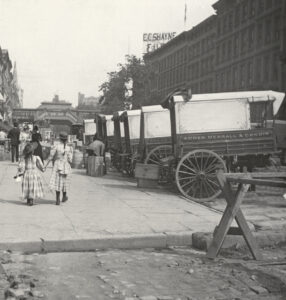
Across the Atlantic Ocean in New York City in the 1940s, Acker, Merrall & Condit was writing a new chapter in its history after the company, founded in 1820 as a grocer catering to wealthy families in Lower Manhattan, was recovering from the devastation of Prohibition from 1920-1933 and the Great Depression from 1929 through the 1930s. “When Prohibition hit, that changed everything and ultimately, it was resurrected from the ashes of Prohibition and became a single kind of spirits store,” John said.

Photo: Courtesy of Acker

The company rebounded and in 1940, Benjamin Botwinick, who owned a controlling interest in Acker but was too busy to operate the stores, turned to R. William Kapon, his partner and bookkeeper. In 1966 when William was very ill, he cashed in an insurance policy and bought out Botwinick to return Acker once again to a family-owned business, the first time in 73 years. From his hospital room before he died in November 1966, William met with his son, Michael, and Steve Green, Michael’s college friend, and asked them to run Acker during the upcoming holiday season. Michael and Steve were a good team. “Christmas came and went, and New Year’s came and went, and I was still there,” Steve said. (The Story of Acker, p. 72) The stage was set for Acker’s next 50 years.

With dramatic cultural shifts in the 1960s and 1970s, the store began catering to increasing demand for fine wine as more and more Americans refined their palates after traveling to Europe. Changes to New York’s “fair trade” laws in the mid 1980s opened up new opportunities as well. Michael and Steve realized there was money to be made in buying wine, not merely selling it. Continuing the company’s long focus on customer service and high quality products, Michael traveled around the world to bring the best of the best back to New York burnishing Acker as a trusted and innovative brand.

Then in 1993, a change in one regulation opened new marketing channels for Acker and every other wine merchant in New York City. Before 1993, a retail store could not even serve alcohol samples. Retraction of that regulation in 1993 allowed retailers to offer wine tastings. Acker took it to another level by offering wine education workshops and a wine-of-the-month club to entice people to drink wine. In 1994, Acker held its first auction, but Michael was not enamored with the new sales channel.

John Kapon, the oldest of Michael’s three sons, had just joined the business full time. After a few years, John concluded wine auctions could contribute significantly to their bottom line. He recommended to his father that they look again at its potential. “I was young and exuberant and aggressive,” John said. They were doing wine workshops and wine tastings so why not wine auctions, John thought.

Photo: Courtesy of Acker

In 1998, Acker began conducting independent, live wine auctions in New York City. John Kapon realized that partnering with an established auction house would markedly reduce profits, so he set out to make a name for Acker on its own. Rather than follow in the footsteps of traditional auction houses who, at the time, charged commissions to both buyer and seller, Acker set itself apart by removing the sellers commission entirely, attracting a new audience to the world of wine auctions and fundamentally changing the economics of selling wine collections. This move benefited Acker’s clients financially, and accelerated Acker’s growth past long established, far less innovative firms who relied solely on tradition.

In 1999, Michael promoted his son to Auction Director of Acker, Merrall & Condit. John was one of the first to recognize the high quality of California wines and in 2001, started a monthly online auction that is now weekly. From $13.5 million in auction sales in 2001, John nearly doubled sales during the next four years. Michael retired and turned over the entire operation to John who became Acker’s CEO.

“My father was like a rock, always working, He instilled a work ethic in me. I’m very grateful for that,” John said.

John, fueled by his passion for wine and enjoying wine and food with others, turned the commonly staid atmosphere of auctions into a spirited celebration at New York City’s, and later Asia’s, best restaurants. John himself enjoyed not only holding the gavel but holding court with guests and sharing tastes of wines from the collections being sold. The auctions and bidding parties were social and “bring your own bottle” friendly, transforming the wine auction archetype from a stiff, business event to a vivacious assembly of oenophiles.

Only ten years after its first auction in New York City, Acker became the first auction house to recognize the growing thirst for wine in Asia and held its sale in Hong Kong in 2008. Acker Asia’s first sale was a tremendous success, selling over $8M USD to a market recently freed from prohibitive tariffs on wine. In 2011, Acker cemented its position at the top of the wine auction market by being the first wine auction firm to exceed US$100 million in revenue between all its affiliates, setting hundreds of world records for wine throughout the year in the process.

Hong Kong wine auction (Photo: Courtesy of Acker)

In 2017, due to the demands of Acker’s successful auctions, John became Acker’s Chairman and brought in Irvin Goldman as the company’s new CEO. It crossed the $1 billion mark in auction revenue in 2018. That record was shattered in 2021, when Acker crossed the $1.5B lifetime threshold at auction, and sold over $200M across its businesses in that year alone. It was that same year that Acker launched its official Spirits Department, with global expert representation in the US, Asia, and the UK.

Photo: Courtesy of Acker

Only a very small number of companies can write a 200-year history as Acker did in 2020.* They have strategically bridged three centuries from horse-drawn wagons delivering fancy groceries in the 19th century to fancy computers bringing wine lovers together from around the globe for Acker auctions in the 20th and 21st centuries. Facing their fair share of adversity, they nonetheless prevailed when many did not. When asked what accounts for Acker’s longevity, John said, “It’s hard work and customer service. The customer is always right even when they are wrong. It takes a lifetime to build a customer relationship and it takes one bad day to lose them forever.”

It’s a commitment Matthew Hope brought with him from Scotland; Baron Philippe de Rothschild taught the world after World War II; and three generations of the Kapon family adopted as their guiding philosophy that has propelled Acker to stratospheric success.

What a fantastic story of fancy groceries!

Acker Support for Chaîne

At Chaîne’s 2021 National Grand Chapitre, held in Nashville in October, Acker graciously provided wine for two events. “Chaîne US is thrilled to have Acker as a sponsor for our National Grand Chapitre. John’s vast knowledge, coupled with his charismatic personality, is unparalleled in the industry and we look forward to our ongoing collaboration with him; Lambert Jemley, Acker Managing Director; and their capable team,” Richard Smith, Bailli Provincial of the South Central Province, said.

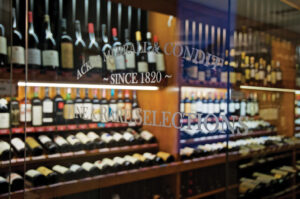
Acker hosts live auctions in the U.S. and Asia nearly every month, dedicated spirits auctions monthly, and a continuously running weekly web auction, providing clients constant access to the world’s best wines and spirits. The Acker name is synonymous with personalized, polished, and expert services in all areas of wine and spirits. Chaine members are invited to contact Acker’s committed team of wine and spirits experts to personally answer any questions. And they invite Chaine members to delve deeper into the world of Acker auctions via their auction starter guide.

Links

Acker Wines

Acker Auction Guide

*Reference: The Story of Acker: The 200-Year History of America’s Oldest Wine Shop, a company history published in 2020; written by Kenneth Durr

From Ice Carving to Caviar, Chef Mercer Mohr is a Sage for Young Chefs

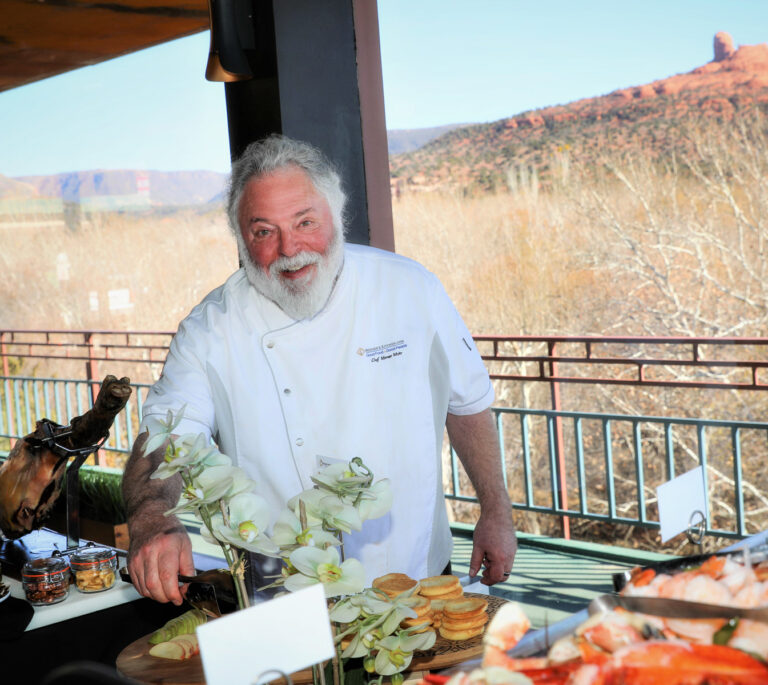
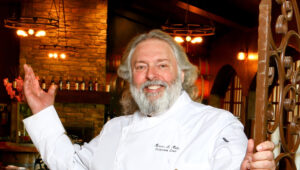
April 29, 2022 – Before Chef Mercer Mohr’s mother married, she made certain her fiancé knew she did not cook. But that did not mean she lacked interest in the household’s hub of activity. “My mother was an artist. She designed kitchens. We did get a new kitchen like most people get new cars. Every two years we had all of the latest toys. We liked playing around with the latest microwave and JennAir,” Chef Mohr, co-founder of the Wild Thyme Restaurant Group, founder of Mercer’s Kitchen Restaurant Group, and Chaîne member, said to Chaîne during a March 8 telephone interview.

Chef Mercer and his wife, Emily Mohr (Photo: Courtesy Chef Mohr)

Now 64 and semi-retired, Mercer continues to professionally play around in his home kitchen where he produces and bottles his popular “Chef Crafted and Chef Tasted” hot sauce used in all of his restaurants. In addition, Mercer remains busy creating menus, supporting his staff and above all, staying current and on top of the culinary industry. “Teaching is everything,” he said.

Accumulating vast experience working at fine hotels and successfully transitioning from the corporate world to the unique world of culinary entrepreneurship with a home base in Sedona, Arizona, he is a sage for young chefs. “Make sure you have a retirement plan because chef is not a retirement job. Either work for yourself or have a plan,” he advises. It’s the reality of the profession that after age 50, job offers slow down and after 60, job offers are nonexistent, he added.

Mercer’s passion for the profession is evident as he speaks fondly of his experiences over the years and the many friends he has made. He has been cooking and grilling with friends since he was a teenager growing up outside Buffalo, New York.

Chef Mercer Mohr (Photo: Courtesy Chef Mohr)

Early Years and Culinary Education

Mercer, his two siblings and his dad made good use of their state-of-the-art kitchens, courtesy of his mother’s design expertise. His dad especially liked to cook breakfast. Immersed in German cuisine and Buffalo’s famous chicken wings, Mercer’s high school friends would often come over to grill outside. His family and friends firmly planted his roots in the culinary world but he did not think of it as a career until he was a college student majoring in business at East Carolina University in Greenville, North Carolina.

Washing dishes and mowing lawns to earn money, the Chef at the restaurant where Mercer worked took him under his wings and then literally asked him to take a stab at carving wings on a swan from a block of ice for their weekly Sunday brunch. Mercer’s mother sent him a book with pictures and instructions on ice carving. His second sculpture was far better than anything the chef had created to date, Mercer said. He became the restaurant’s ice carver, a task the chef was more than willing to relinquish since he had just two carvings in his repertoire, a swan and a basket.

Soon the restaurant Chef where Mercer had been working had some advice for his precocious ice carver. He said: “You really should go to school. You are kind of good at this.”

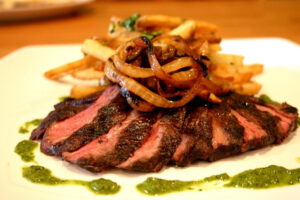
Carne Asada (Photo: Courtesy Chef Mohr)

After researching culinary schools, he informed his parents he wanted to enroll in the Culinary Institute of America (CIA) in Hyde Park, New York. His father was not keen on the idea as he thought Mercer would have a lonely life as a chef. His mother supported the switch and convinced his father. Mercer’s culinary career was firmly rooted.

After graduation, Mercer accepted a position in the first three-year Hyatt Culinary Training Program, a comprehensive hospitality experience through which professional trainees worked in every department at three hotels of varying size. “It was a great experience,” Mercer said as he chuckled when he added that his training in the laundry department could have been shorter. At the time, Hyatt had about 45 hotels in the United States with aggressive expansion plans that added another 50 hotels in the next few years. After graduation from the Hyatt program, Mercer began his corporate culinary career as part of the Hyatt opening team and in four years, they opened 36 restaurants.

What launched his culinary career path continued as he honed his ice carving skills during this time. A large Hyatt hotel could require four to five ice carvings per day so Mercer became the Dallas Hyatt’s ice carver. The hotel had one freezer just for their ice sculptures. Back then one block of ice cost $30 to $45 but today, each block is $150 so not many customers are willing to pay $1000 for the mercurial amenity, Mercer said. The cost of ice, and its labor intensive nature, have combined to make ice carvings cost prohibitive today.

Professional Career

As a CIA graduate and three years of Hyatt training, job offers poured in. He first worked in Dallas and then became the Executive Sous Chef at the Park Hyatt in San Francisco. From Hyatt, he went to the Four Seasons as the Executive Chef for the 5-star Clift Hotel. A unique job opportunity then opened up with the vendor from whom he was purchasing caviar while at the Four Seasons.

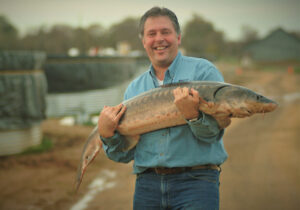
In 2000, Mats and Dafne Engstrom, owners of Tsar Nicoulai Caviar, offered him a job supervising their sustainable fish farm and planning special events to market their caviar. “That was the best job I ever had,” Mercer said. “One day I would be knee deep in mud on a fish farm and the next week I would be doing a caviar dinner at the Waldorf Astoria in New York City. It was just fantastic.”

The company opened the Caviar Cafe in San Francisco’s Ferry Building, which has recently reopened as the Tsar Nicoulai Caviar Cafe after being closed for a period of time.

Chef Mercer Mohr while working for Tsar Nicoulai Caviar in the early 2000s. (Photo: Courtesy Chef Mohr)

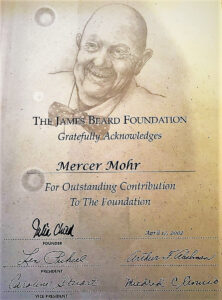
After being invited more than three times to prepare dinner at the James Beard House, in 2002, Chef Mohr received the James Beard Foundation Certificate. Julia Child presented him the honor and the two spoke briefly about wine pairings. “I had my three minutes of fame with Julia Child,” Mercer said.

In 2002, Chef Mercer Mohr received The James Beard Foundation Certificate for Outstanding Contribution to the Foundation. (Photo: Courtesy Chef Mohr)

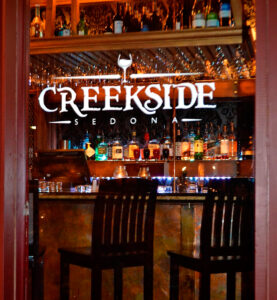
Mercer spent five years working for Mats and Dafne. “It was the best time in my life,” he said. After the business was sold through a hostile corporate takeover, Mercer decided he would move on. While playing golf in North Carolina, he met Ken Erickson who owned a small shopping complex in Sedona, Arizona. They hit it off right away. Ken explained his anchor restaurant was losing $20,000 per month so he was about to close it. Mercer and a friend had been looking to open a restaurant. Because of their serendipitous meeting on the golf course, Mercer told Ken he would have someone look at it. After hearing Ken’s Creekside Restaurant in Sedona was packed, Mercer committed to moving there to operate it, sight unseen. Within one month, the Creekside American Bistro was paying rent. And the rest is culinary history.

Creekside American Bistro in Sedona, Arizona (Photo: Courtesy Chef Mohr)

With the Creekside success, Mercer and his partner eventually developed a portfolio of 12 restaurants across multiple states within their Wild Thyme Restaurant Group.

Now a successful culinary entrepreneur, calls for job offers changed to calls to purchase the business. In 2016, Mercer sold Wild Thyme Restaurants and started Mercer’s Kitchen Concepts in Sedona. Mercer retained ownership of Creekside American Bistro and the Mesa Grill. Mercer’s Kitchen Group then started Rascal, a modern diner concept in The Wilde Resort & Spa, as well as Rene Restaurant & Wine Bar. After they had three restaurants, Mercer’s Kitchen Group began a profit sharing program with their employees. “We have very little problem getting people to work here. We treat them right. We pay them more. They’re worth it,” Mercer said. Mercer’s Kitchen Concepts focuses on local, fresh, and organic ingredients in his farm-to-table menu of comfort food.

“Hamburgers have never been more popular,” Mercer said. As the Slow Food movement gains traction again, he has healthier options with less carbs and smaller portions on his menus. Mesa Grill offers three different types of veggie burgers.

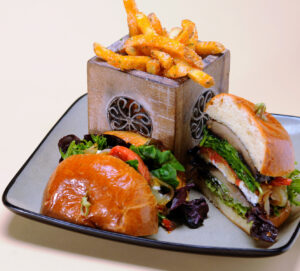
Chef Mohr’s mushroom burger (Photo: Courtesy Chef Mohr)

His young diners are also embracing non-alcoholic and craft cocktails without questioning price. “I’m so amazed people pay $20 for a cocktail. They don’t even flinch or question it. I think that’s odd. To me, I did not see that coming,” he said. “We sell a lot of them.”

A Mercer Martini (Photo: Courtesy Chef Mohr)

Rascal also sells a tremendous amount of wine with 18 wines on tap and a Captain’s list of 28 wines that can be purchased by the bottle. Arizona vintners are making themselves known both nationally and internationally. The 2022 San Francisco Chronicle American Wine Awards recently bestowed on Arizona’s Pillsbury Wine Company two Double Golds and a total of 13 awards. Pillsbury’s 2019 Petite Sirah “Reserve” and their 2019 Shiraz ‘Guns and Kisses!’ won top honors.

Because of his long focus on high-quality comfort food and his location in Sedona, he weathered the pandemic storm. After being closed for six weeks in 2020, his restaurants have been open continuously since summer 2020. “Mercer’s Kitchen Group did more business during COVID than we ever did before,” Mercer said. Sedona attracted droves of residents from Florida, California and many other states who hopped in their cars for a road trip and a break from the pandemic. It created traffic problems and resulted in long lines at restaurants but Mercer quickly adapted. To handle the surge, Mercer streamlined his menus and constructed a large tent in the back of Mesa Grill for his event and catering business. “It never slowed down,” he said.

Mercer mentors his young chefs to help them on their path to a successful career. He tells them to “make sure and hire people to do what you are not good at. If you are not comfortable with numbers, hire a numbers person and treat them well.” He said he is fortunate in that he made good decisions and made a lot of friends during his career. “I’ve had fun all the way along.”

Links
Mercer’s Kitchen Restaurant Group
Creekside American Bistro
Mesa Grill
Rascal Restaurant
Rene Restaurant & Wine Bar in Tlaquepaque

Justin Baldwin Blended Career with Passion for Wine and Food

April 1, 2022 – At first glance, it may seem incongruous that in 1981, Justin Baldwin, a highly successful investment banker at the time, would purchase 160 acres of undeveloped land along California’s Central Coast to plant a vineyard 10 miles east of San Simeon on the back side of the mountain where William Randolph Hearst built his opulent castle. But the purchase was as congruent as an isosceles triangle.

JUSTIN Vineyards and Winery (Photo: Courtesy of JUSTIN)

Through his job in international banking and as a Chartered Financial Analyst (CFA), Justin traveled and lived in cities around the world, including London and Hong Kong. He found himself frequently exploring vineyards and wineries in his spare time, an avocation that enhanced his vocation. “In the banking world, I found I had one tool in particular that greatly endured me to the wine world and that was a great expense account. I did a lot of entertaining,” Justin said to Chaîne during a March 11 telephone interview.

While living in London for three years, he spent many weekends across the English Channel visiting vineyards and wineries in Western Europe. “It saturated my palate and my mind with the wine world. I had in the back of my head that at some point in my life, I wanted to at least try my hand at making wine,” he said.

That point came in 1981 when his career had him based in Los Angeles. As a California native born and raised in San Francisco, the logical place to try his hand at becoming a part-time vintner was Northern California where about 40 wineries had opened in Napa Valley. It was the dawn of the American wine industry and the Napa/Sonoma region was its epicenter. He looked at buying an existing winery but on two occasions decided against it. Reality set in. Working in Los Angeles, driving back and forth from Napa in one day was not feasible. He began looking along the Central Coast about 300 miles south of Napa.

In the early 1980s, there were less than 200 wineries nationwide, Justin explained. Today there are 15,000 and every state, including Alaska and Hawaii, has at least three wineries. In 1981 in Paso Robles, there were four wineries. As Justin studied the pros and cons of purchasing 160 acres of land, located halfway between the Hearst Castle and the town of Paso Robles with a 4,000-foot mountain in between, the land checked a lot of boxes in the pros column.

The Chateau at JUSTIN Vineyards and Winery (Photo: JUSTIN)

It was a three-hour drive to LA; the soil was calciferous limestone similar to soil in France’s famous Bordeaux wine region; the area had a good differential between daytime high temperatures and nighttime low temperatures; and it was in the middle of nowhere. That last factor had an appeal to his adventurous and pioneering spirit. Finally, as a bachelor in his early 30s, the timing for a deep dive into farming and winemaking was perfect. He bought the 160 acre “piece of dirt.”

“I wanted to do something different. I wanted to be the new kid on the block and not just rubber stamp what someone had done next to me that previously someone had done next to them,” Justin said.

Justin planted his first vineyard by hand in 1981. (Photo:Courtesy of JUSTIN)

With his new piece of dirt, he quickly got his hands dirty. He hired one worker who helped him plant 160 acres of vines by hand. They each took one side of a 200-foot rope with knots every seven feet. After eyeballing a straight line, they placed a plastic knife in the ground by each knot where the vines were planted. Row by row, vine by vine, the piece of dirt became JUSTIN Vineyards followed by its first JUSTIN Winery release in 1984.

“We’re still getting grapes from those vines 40 years later,” Justin added.

JUSTIN has 25,000 square feet of wine caves at their Paso Robles winery. (Photo: Courtesy of JUSTIN)

A lot of people thought Justin was crazy as he balanced a high stakes financial career with a burgeoning career as a vintner. But the two did overlap. He brought a financial discipline to his new business so that he always had one eye on the grapes and the wine and one eye on the bottom line. He said he instituted strict financial protocols to which he held himself and his staff. It was a crucial step to minimize the inherent risk in all new businesses. Because of those protocols, the business was able to get through some tough times.

“The winery has been successful because I applied financial metrics to an agrarian industry,” he said.

But how did he learn to be a farmer and a vintner?

He sought advice from consultants, read a lot of books, and leveraged his global experiences to operate. Justin recalls people asking him in the first few years how he knew when to pick his grapes if he never had a winemaking course. Justin replied, “Easy – Saturday” because that was the only day he had free.

The quality of fruit from vines grown in limestone-rich soil on hillside vineyards produces top quality grapes year after year. Limestone is the backbone of vineyards in Western Europe and is unique to California’s Central Coast. Justin said limestone does three things. Those are: 1) adds flavor, particularly to white wines because of its chalky minerality, 2) binds nutrients because of its alkalinity, which forces vines to stretch its roots to seek nutrients and moisture, allowing the vines to pick up flavor nuances, and most importantly, 3) acts like a sponge absorbing moisture and nutrients.

Average rainfall in Paso Robles is about 35-40 inches but since California’s drought began in 2011, average rainfall has been down to eight to 15 inches. However, 2017 was an exception when 52 inches of rain fell. Justin said they had a bountiful harvest that year because the rain had a curative, restorative effect on the vines. They had the luxury to pick and choose the best grapes for their dozen different varietals.

Founded to specialize in Bordeaux-style Blends, in 1987, JUSTIN introduced ISOSCELES, a blend of predominantly Cabernet Sauvignon plus Cabernet Franc and Merlot that was styled after First Growth producers of Bordeaux. It evolved quickly into JUSTIN’s flagship premium wine and is their quality benchmark. Today JUSTIN also produces the top selling premium Cabernet Sauvignon in the country, if not the world, Justin said.

By 1990, JUSTIN Vineyards and Winery was performing well enough that Justin became a full time vintner after leaving his financial career in stages throughout the 1980s. In the early 1990s when Robert Parker, the famous wine critic whose reviews could instantaneously move sales up or down, named Justin Baldwin as one of his 10 wine stars of the year, the nascent winemaker and winery had arrived. By the end of the 1990s, Justin relinquished his winemaking tasks to a stellar team of vintners but remains involved in creating the blends for the now 41-year-old winery.

“A lot of things have changed in the 40 plus years since I started but my passion and interest in wine has not abated at all during that time,” Justin said.

JUSTIN now produces more than 100,000 cases of wine annually, sourced mainly from its 1,300 plus acres of vineyards. The original site has expanded to include the eponymous JUST Inn, a hotel; The Restaurant at JUSTIN, led by Chef Rachel Haggstrom, that was nominated for a Michelin star in 2021; and a wine tour that allows visitors to view their 25,000 square foot underground wine cave and ISOSCELES Library. JUSTIN also opened a tasting room in downtown Paso Robles. In addition, patterned after the London Times Wine Society (now called The Wine Society) that was founded in 1874, Justin began the JUSTIN Wine Society, their wine club which enjoys more than 20,000 members and is one of the top five wine clubs in the country.

Chef Rachel Haggstrom (Photo: Courtesy of JUSTIN)

“We may be 15 miles down at the end of a dead end road but we seat 500 people for lunch,” Justin proudly stated.

Challenges Past, Present and Future
JUSTIN wines have been so popular that before the pandemic, most of their production was sold to domestic and international restaurants, and to their Wine Society members. When the pandemic hit and restaurants closed, they stepped up selling to retail outlets and directly to consumers. Justin notes that grocery stores were particularly innovative in selling meals to go that included wine. During those trying times JUSTIN experienced a significant surge in online sales from individual consumers.

Photo: Courtesy of JUSTIN

While their on site venues were closed for three months at the pandemic’s peak, they kept all of their employees working. “We had our best year ever the year before last,” Justin said. With restaurants opening back up and new customers who have discovered their wine, the winery has a good problem to solve. “We still can’t keep up with demand. It’s crazy.”

During the pandemic, Justin hosted hundreds of virtual wine dinners and tastings, expanding his ambassadorial role to the virtual environment. A few months ago he appeared simultaneously to more than one thousand attendees at three movie theaters in Naples, Tampa and Palm Beach. Wine lovers can also meet Justin on demand through his CRUSH IT WITH JUSTIN brief, online tutorials with topics ranging from how to decant wine to food pairings and even how to set a table.

Living and breathing the wine industry for the past 41 years and most importantly, learning the business literally from the ground up gives Justin a unique perspective and voice on the future of wineries and the wine industry. He has cause for concern.

Again referencing metrics, Justin explains that according to Silicon Valley Bank State of the U.S. Wine Industry reports, the gold standard in the industry, there has been an alarming decrease in wine consumption in the $20 or less per bottle category but an increase in premium wine sales over $20 per bottle.

A survey imparts clarity to those statistics. Different generations were asked what they would bring to a dinner party. The only generation who said they would bring a bottle of wine was the 60 years and older category. Those in their 50s would bring alcohol or spirits and younger generations answered hard cider or sparkling seltzers.

The decline is a global trend. Justin said Western Europeans are drinking 50% less wine per capita now than they did 10 years ago. But they are still harvesting the same acreage of grapes and producing the same amount of wine. Their prime market for excess inventory is the United States, which for only the past seven years has been the top wine market in the world.

“So not only does a winery in America have 15,000 domestic competitors, it has the rest of the world beating a path to its door trying to sell its wine,” Justin observed. “It’s great news for restaurateurs. It’s great news for consumers but there will be a meeting of the minds, a reality check moment here in the next five to 10 years that our industry will have to deal with.”

Justin suggests an industry-wide sales campaign to rival the advertising force of the beer, spirits and sparkling seltzer market to encourage people 50 years and under to try wine. “I did my part. Both of my children are wine drinkers,” Justin added with a chuckle.

As a long time Chaîne member and the Central Coast Bailli in the late 1990s who dramatically increased membership, Justin worries about this trend and its impact on Chaîne membership. “The more we are able to speak to the younger generation, the better we are,” he said.

There is good news. Many Bailliages share the same concern and are actively broadening their base. At a recent event held by Chaîne’s Toledo Bailliage, more than 40 members attended the dinner at which they were given a choice to pair courses with either wine or cocktails.

An important part of the wine experience is taking time to appreciate the label. JUSTIN’s ISOSCELES wine label graphically speaks to Justin’s success. With three triangles connected to create a beautiful rectangle, Justin’s career mirrors the art and science of that design. Equal parts of financial expertise and learning by doing, with Mother Nature as his silent partner in the vineyards, seamlessly bonded with his passion for wine and food to create one of the top domestic and international wineries. Buying that piece of dirt made all the sense in the world.

Links

Note: For Chaîne members interested in tours of JUSTIN Winery (link below), Justin said some tour guides are Chaîne members and special tours/tastings for members can be arranged.
JUSTIN Vineyards and Winery
JUSTIN Wine Society
JUST Inn
The Restaurant at JUSTIN
JUSTIN Tours

Chaîne Local Bailliages

Chef Gingrich and Chef Weber Grow Culinary Magic in the Pacific Northwest

March 18, 2022 – “If you build it and grow it, they will come.” Those inspiring words describe both a magical Iowa cornfield and a small herb farm, located about 30 miles east of Seattle, that began almost 50 years ago. With an extensive wine cellar, a three-acre herb farm, and a limitless supply of conifer trees for their Douglas Fir Sorbet, The Herbfarm Restaurant is an unparalleled fine dining experience. It traces its roots to 1974 when Lola Zimmerman had extra chives from her garden that she decided to sell. From those humble beginnings, today, new owners Executive Chef Chris Weber and Chef Jack Gingrich, Sous Chef and Chaîne member, curate nine-course “rhythms of the season” experiences that are booked months in advance.

The Herbfarm Restaurant and farm, located 30 miles east of Seattle, traces its roots to 1974 and a few extra chives! (Photo: Courtesy of The Herbfarm)

“Yes, we are a fine dining restaurant. Our main goal really is just to make people feel comfortable and welcome,” Chef Gingrich said to Chaîne during a Feb. 10, 2022 telephone interview with both chefs.

A sweet dose of happenstance brought Jack to The Herbfarm in 2012. He first heard of it when he was running a Washington D.C. restaurant after graduating with a degree in Hospitality Management from Cornell University in Ithaca, New York.

As he was completing a second degree from the Culinary Institute of America in Napa Valley, he reached out to restaurants up and down the West Coast for internship opportunities. The Herbfarm was on his wish list based on the earlier recommendation from a coworker. Patience and planning turned into an internship there and then a full time position as a Sous Chef after he finished culinary school.

Chef Jack Gingrich at work in The Herbfarm kitchen (Photo: Courtesy of the Seattle Bailliage)

Chef Weber, a graduate of the Johnson and Wales Culinary Institute in Providence, Rhode Island, began working at The Herbfarm in 2007, quickly rising to the top as Executive Chef of the award winning restaurant. Among their many awards, National Geographic Traveler named it the #1 Destination Restaurant in the World. Chris said his prior work experience in special events and his desire to blend a fine dining experience with a plethora of local ingredients made The Herbfarm a perfect fit for him.

From left, Chef Chris Weber and Chef Jack Gingrich at The Herbfarm (Photo: Courtesy of The Herbfarm)

At The Herbfarm, it’s hyperlocal when it comes to incorporating fresh herbs because about 24 different types of herbs are grown on site. With such a broad spectrum of flavor profiles, the chefs have endless possibilities to elevate their menu. “Fresh is best,” they said. Even within one herb, there can be multiple expressions. As an example, Chris and Jack explained that cilantro is a herb that yields three different flavors depending on the part of the plant used so they think of the herb as three different crops. Cilantro leaves, flowers and seeds all find their way into culinary creations at the restaurant. They incorporate cilantro seed (coriander) in savory dishes to lighten those up and also pickle the seed.

The Herbfarm has three acres of herbs planted on a five-acre farm. (Photo: Courtesy of the Seattle Bailliage)

For the home chef with a herb garden, Chris offers a pearl of wisdom, “Use more than you think you need.”

With three acres of herbs planted on their five-acre farm, the sky is the limit at The Herbfarm.

“That’s what makes having our own farm fantastic because if we want to use a pound of lemon thyme a day, we can use a pound of lemon thyme a day,” Chris said.

Photo: Courtesy of The Herbfarm

The “rhythms of the season” determine the nine-course thematic dinner, which is carefully planned to take advantage of the best the Pacific Northwest has to offer from land and sea. On a daily basis, Chris and Jack “chase the culinary glories of the Pacific Northwest” as their website so perfectly describes their culinary philosophy.

Photo: Courtesy of The Herbfarm

From mid April into the first week of May, they will be offering guests their “Cascade to Coast” experience to take advantage of the season’s fleeting flavors. And from April 8-10, their “Super Cattle in Seattle” dinner will highlight Kobe beef raised in the Pacific Northwest.

The two chefs are authentically elevating herbs in the food chain hierarchy that has been dominated for years by caviar, truffles and foie gras because of cost and scarcity. But some herbs share the same attributes or can be incorporated in such creative ways that the end result is spectacular.

“We talk a lot about trying to redefine luxury and what does that mean to have luxurious ingredients to work with. Our ability to use a pound of herbs a day is also luxurious,” the chefs said.

Chef Gingrich cuts herbs for The Herbfarm kitchen. (Photo: Courtesy the Seattle Bailliage)

A perfect case in point is The Herbfarm’s Douglas Fir Sorbet, a dessert that has been on the menu for years. Typical of how Chris and Jack approach their evolving menu, they revisit the recipe each year to make minor adjustments. Of course, its foundation is ensuring the flavor of the fir needles is optimally extracted. Over the years, Chris said they have learned to first do a hot infusion by steeping the needles for a few minutes, identical to how one would steep tea leaves. That process is followed by a cold infusion. “It’s a great example of using more than you think you need. There’s plenty of Douglas fir around,” the chefs commented with a chuckle.

Guests are surprised when they see it on the menu but after tasting the delicious sorbet with hints of grapefruit, they marvel at the creative use of natural ingredients. Jack said it’s common to hear guests say “Wow! I’m eating a bunch of pine needles!”

Herbfarm History
The little slice of heaven in the Pacific Northwest began in 1974 when Lola Zimmerman had a bumper crop of chives and decided to sell the extra yield. At a farm stand along the road, she posted a small sign that said, “Herb Plants for Sale.” The plants sold so she added extra plants each spring. As her business blossomed, Bill, her husband, built greenhouses for her nascent nursery.

In 1986, Ron Zimmerman, their son, and Carrie Van Dyck, his wife and partner, joined the business and began remodeling part of the farmhouse and garage into a small restaurant. They opened on May 25, 1986 with a six-course luncheon that included an educational component about their herbs. Excellent reviews followed and seats were always full.

In September 1996, The Herbfarm built an addition to the restaurant that housed a spacious new kitchen, an underground wine cellar, and much-needed new dining space.

Tragically, just a few months later a fire ignited by an electric short started. When the volunteer fire department arrived, there wasn’t water in the hydrant. The Herbfarm Restaurant and offices were a total loss.

In the months that followed, instead of hosting guests Ron and Carrie had to manage the complicated process of rebuilding. Months stretched into a year as they waited for permits to start construction at a site 20 miles from the original farm.

In the interim, they ran the restaurant from a large tent they constructed on the farm. Without a kitchen, all of the dishes had to be transported each night to wash. Eventually, they moved to temporary quarters inside the Hedges Cellars winery in Issaquah, Washington, their home for the next two years as they slowly rebuilt. Bill and Lola raised fruit and vegetables for the restaurant. Ron and Carrie transplanted fruit trees, berries, and specimen herbs to the new land.

Crops at The Herbfarm (Photo: Courtesy of the Seattle Bailliage)

On May 25, 2001, 15 years to the day since the first restaurant opened, they again opened their doors to guests. In a tribute to their business, many of the staff returned. Bill passed away before the opening but saw it almost to completion. Lola passed away in 2004 but the Zimmerman legacy lives on.

Chris and Jack purchased The Herbfarm in March 2021.

More Challenges
Facing the pandemic was another hurdle to overcome. In spring 2020 after most restaurants closed, The Herbfarm was community funded to provide 250-300 meals per day for hospital workers. The Seattle Bailliage stepped up quickly, raising $10,000 in two weeks, the largest donor to the vital effort to sustain local healthcare personnel facing unprecedented times.

The restaurant reopened in late June 2020 only to close again in November. They made it through this second closure by offering guests semi-prepared meals, with instructions, that diners picked up. In late February 2021, they reopened again. In May, the Seattle Bailliage bought out the restaurant for an in person private event, a joyous one for attendees that also continued their support for the venue.

On May 13, 2021, the Seattle Bailliage bought out the restaurant for a private event. (Photo: Courtesy of the Seattle Bailliage)

While Omicron caused cancellations in December 2021 and into January, The Herbfarm remained opened for the holidays and ever since.

Always seeing the silver lining in a cloud, the chefs noted that local vintners are making some interesting wines out of adversity, also the mother of invention. Because of smoke taint from recent wildfires, Washington winemakers are blending grape varieties. “We’re seeing a lot of multi-vintage blends of reds and whites. You are working with what you have. What’s wrong with that? There’s nothing wrong with that,” the chefs said.

The Herbfarm offers five to six wine pairings with their nine-course dinner. Chris advises wine drinkers to set aside their expectations. “At the end of the day, do we like the pairing with the food? If the answer is yes, then we feel good about it.” He emphasizes people should study the wine’s acidity as that is a very important factor in pairing often forgotten in favor of concentrating on flavor notes. “You just have to keep trying it until you find what you like. It’s a tough job but someone has to do it!” he added.

Advice for young chefs and students
As two young chefs who have caught the attention of professional experts, what advice do Chris and Jack have for young adults interested in pursuing a culinary arts career? If a student wants to enter the profession to become a celebrity chef and own a restaurant, it will be a difficult path because only a small percentage of chefs attain that level. Rather, students who express a love of cooking, and also learning, have a bright future with that perspective, Chris explained. For those students, he says, “Stay the course. It can be a hard path, particularly in the first few years. Take a good hard look if that is really the path you want to take. If you do, stay the course.”

From a few extra chives to one of the top fine dining experiences in the nation, Chris and Jack are steadfast stewards of The Herbfarm’s legacy. It’s as magical as that famous Iowa cornfield.

Links
The Herbfarm