Home Blog Page 3

Chef Jacques Fox Shines as Culinary Star

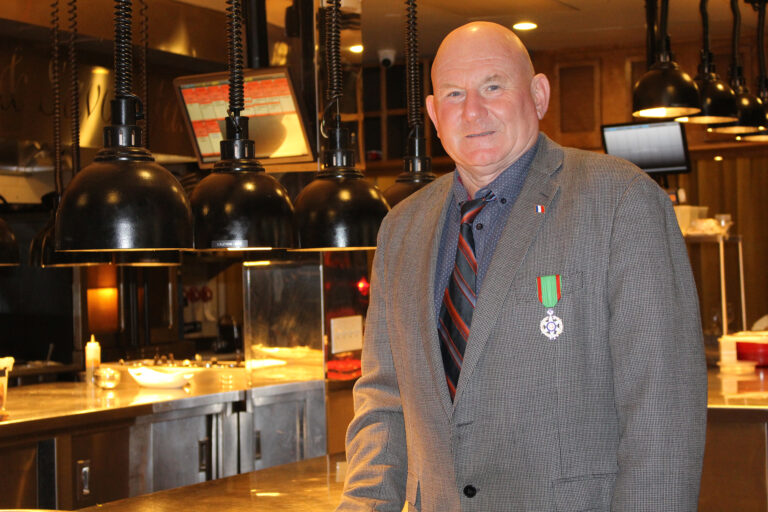
April 19, 2024 – To many a young chef working to ascend to an Executive Chef position and/or participate in a Jeunes Chefs Competition, Chef Jacques Fox has been their knight in shining armor for years, teaching and guiding them to success. But that’s not just a metaphor as in January 2020, Chef Fox became Chevalier de l’Ordre National du Mérite Agricole de la République Française (Knighted as Chevalier of the Agricole National Order of Merit from the French Republic), second in importance only to the Legion of Honour. The high honor caps a lifetime of culinary excellence and commitment, especially to the Chaîne that Chef Fox joined in 1993 as a Professional Member of the Galveston Bailliage. “I remember like it was yesterday. I got very involved very quickly,” Chef Fox, Conseiller Culinaire et des Professionnels des États-Unis Honoraire, said to Chaîne during a March 6, 2024 telephone interview.
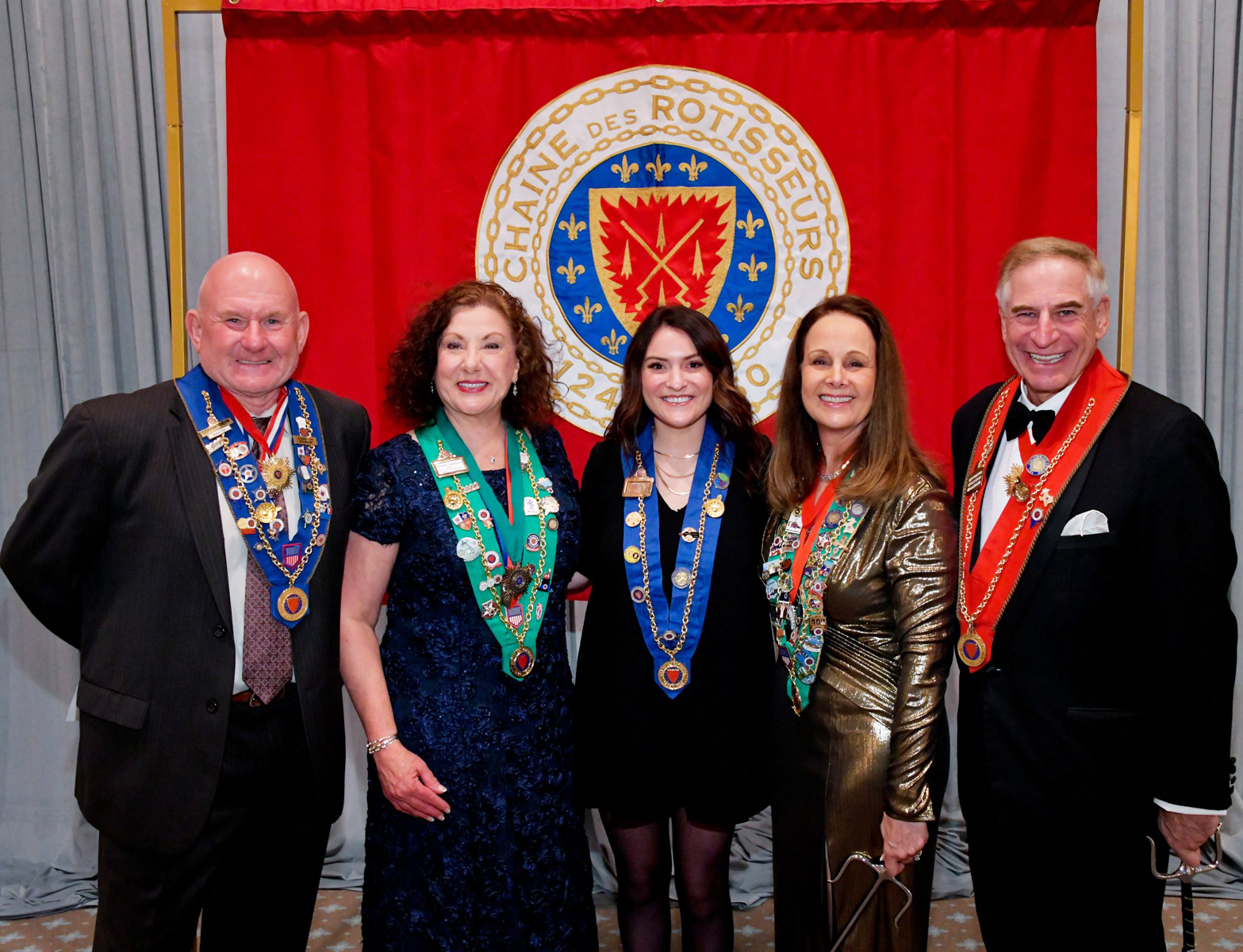
October 29, 2023 Houston Bailliage Induction – From left, Jacques Fox, Conseiller Culinaire des États-Unis Honoraire; Christine Hollinden, Houston Bailli; Michaela Claire Fox, Vice Chargée de Presse Houston (Chef Fox’s daughter); Cheryl Kenny, Balli Provincial Southwest; and Michael Parmet, Conseiller Gastronomique des États-Unis Honoraire. (Photo: Chaîne)

Recognizing his talent mentoring young chefs, Robert Epstein, Galveston Bailli and eventually Bailli Provincial Southwest, asked him to manage the 1996 Provincial Jeunes Chefs Rôtisseurs Competition and in 1999, Jacques was named Conseiller Culinaire et des Professionnels des États-Unis, taking on the responsibility of developing the competition manual. “Robert Epstein was a fantastic man,” Jacques said.
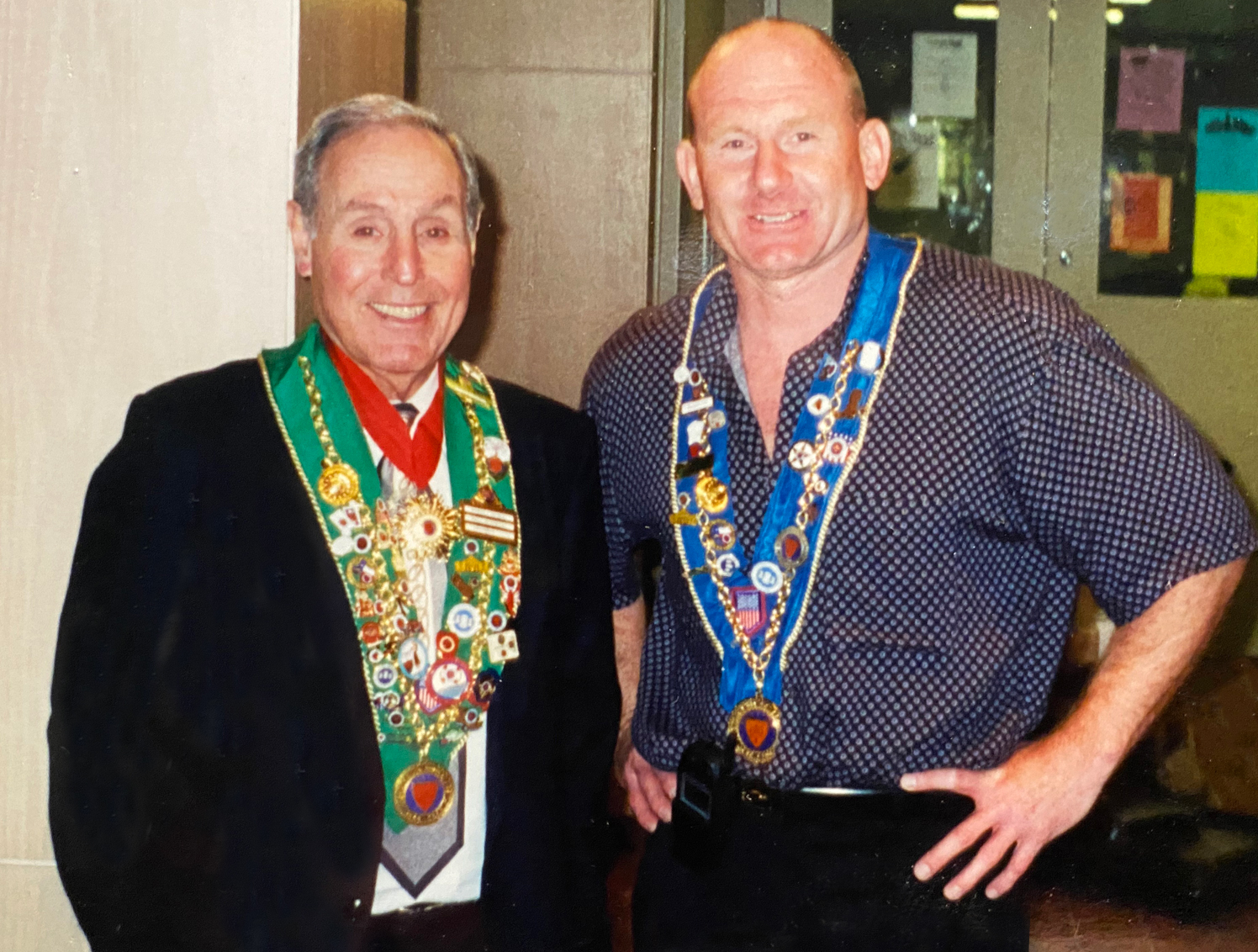
Robert Epstein (1923-2020), Bailli Honoraire (left), and Chef Fox in 1995 at the first Jeunes Chefs Rôtisseurs competition. (Photo: Courtesy of Chef Fox)

Having moved to Houston in 1991 from Louisiana, during these early years while he was forming the model for the Jeunes Chefs competitions he was extremely busy working as the Executive Chef of The Conrad N. Hilton Hotel and teaching at the College of Hotel and Restaurant Management at the University of Houston.

His deep roots in Houston today came via deep roots he established not only in Louisiana but also in Colorado, Paris, a small village in France, and North Africa where he was born in 1957. His father served in the French Foreign Legion stationed in North Africa. At age 4, he moved to France when his father died and North Africa’s geopolitical climate dramatically changed.

Raised in France

Raised by his grandparents in France, their influence on his life and career was immeasurable. Of Polish ancestry, his grandmother perfected Polish cooking by working in Poland but she also excelled in many varieties of international cuisine. Jacques remembers his grandmother’s small kitchen in France with a wood stove that she knew how to regulate manually like the back of her hand. In fact, she used her hand to determine its temperature as she cooked and baked. “She could put her hand in the oven and tell the temperature. Cakes always came out. I’ve never seen that in my life. It was incredible,” Jacques said.

His grandfather retired as a coal miner in the 1960s, enjoying a fulfilling second career as the family gardener, growing the family’s fruits and vegetables in gardens around their home. The Fox family’s garden-to-table focus for a healthy lifestyle predates the farm-to-table movement by a couple of decades. The family enjoyed the fruits of their labor year-round as fall canning followed fall harvest to stock their cellar for the winter. That way of cooking and eating is the only way Jacques has ever known.
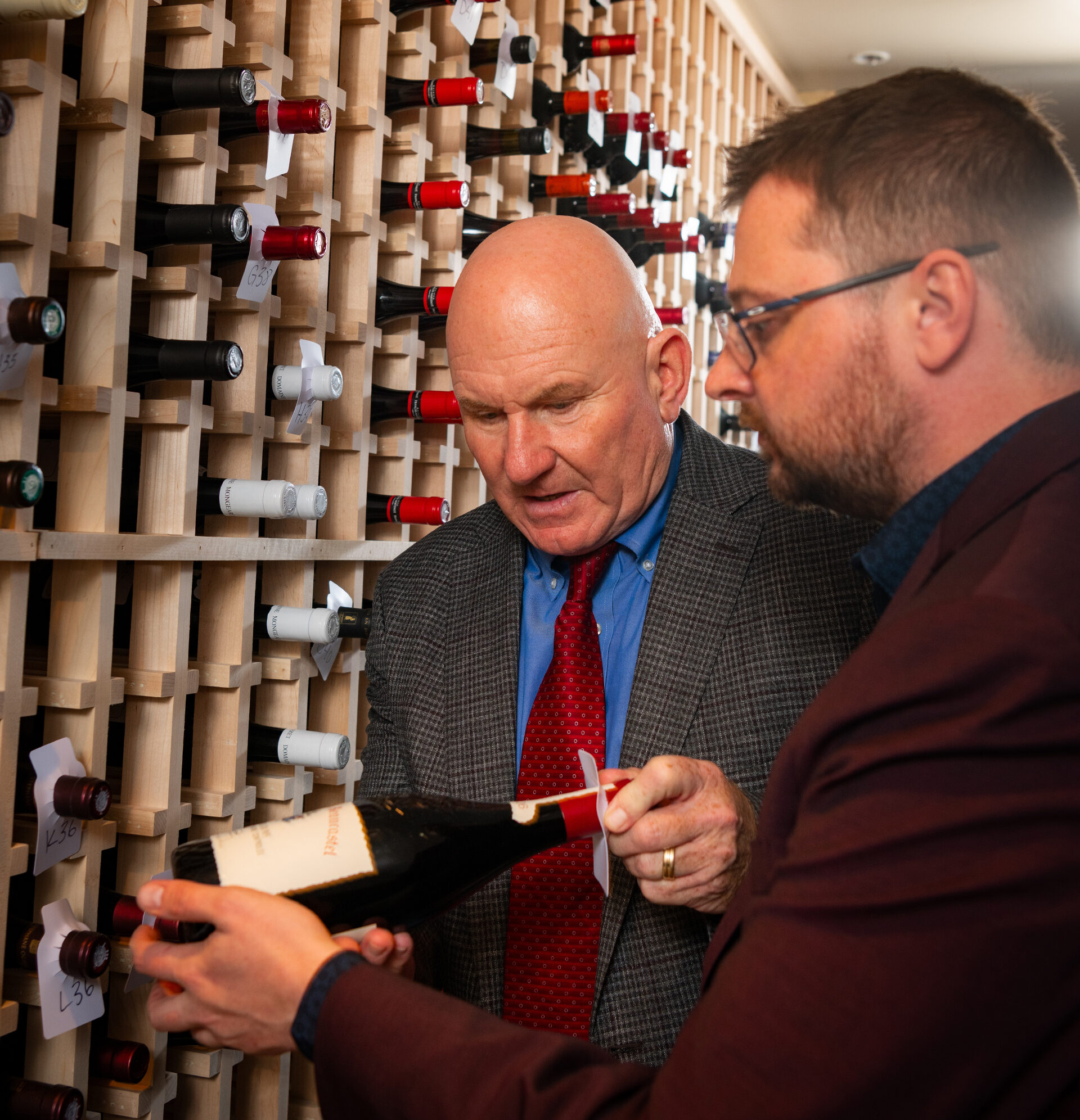
Chef Fox, left, and Jonathon Baker, Artisans Beverage Director/Sommelier review wine in their cellar. (Photo: Courtesy of Chef Fox)

Culinary School and Professional Career

“At age 16, I tried to figure out what career I would follow. Since I was doing a lot of cooking with my grandmother, I said, why not culinary? So I went to culinary school,” he said.

View of the Palais de Chaillot as seen from the Eiffel Tower in Paris. The two curved buildings making up the Palais house a number of museums including the Naval Museum, the Museum of Man (ethnology), and the Architecture and Heritage City. (Photo: CIA World Factbook)

While learning new French techniques at Brevet D’Etude in France, his chef instructors told him he was already very good. They readily witnessed the result of his years of experience as an “apprentice” under his grandmother. It’s no surprise today that apprenticeships are finding new advocates.

Upon graduation in 1975 with stellar recommendations and introductions from his instructors, Jacques moved to Paris to work as Chef de Partie at Maison Prunier, a 3-star Michelin restaurant. With a drive to match the fast pace of Paris, quite a change from his small French village where he grew up, he flourished.

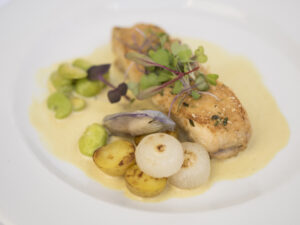
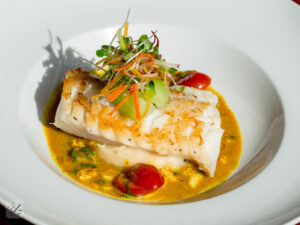
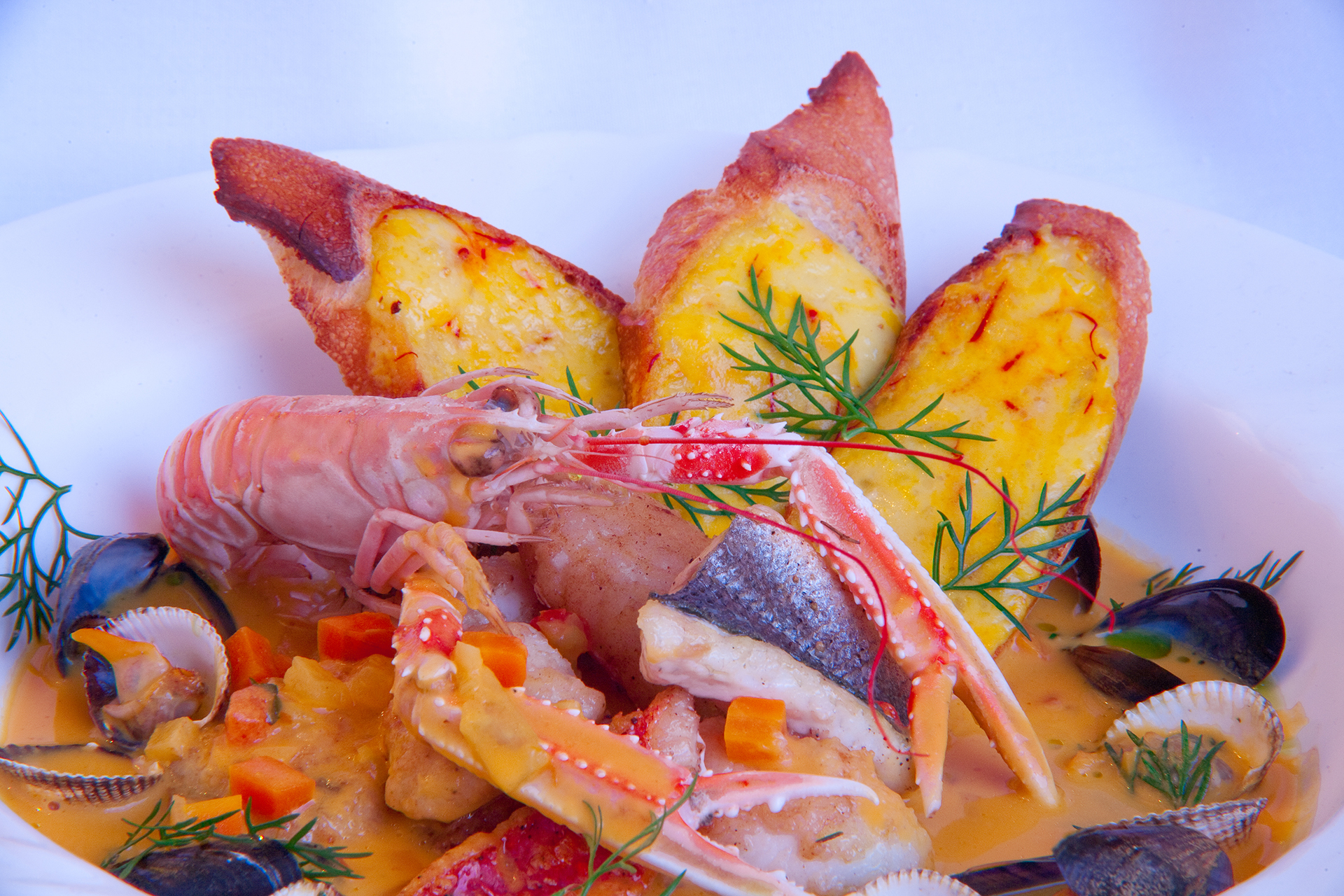
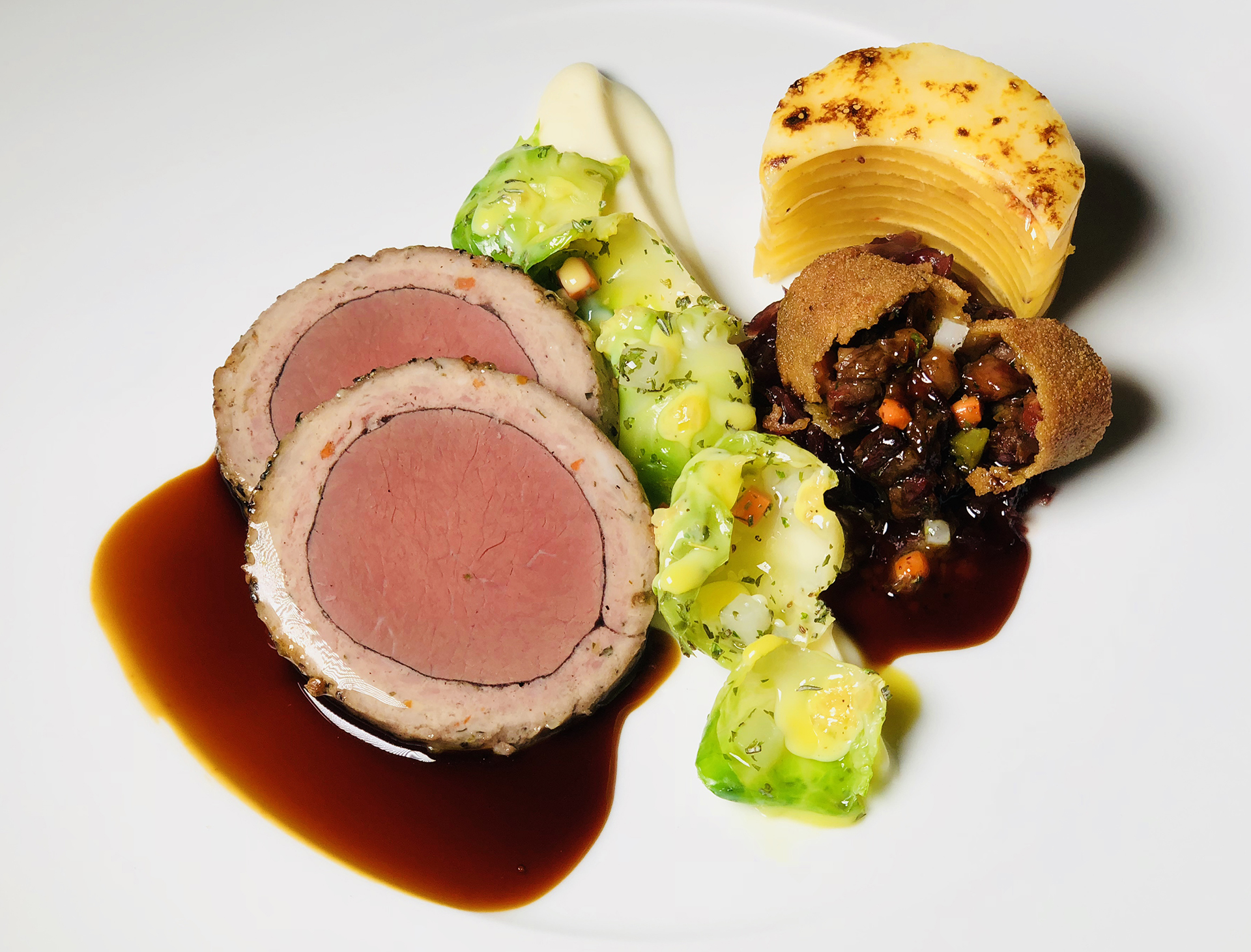
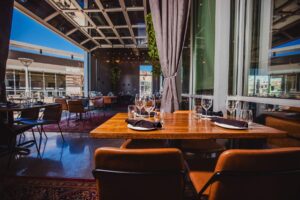
Artisans specializes in eclectic French cuisine. (Photo: Courtesy of Chef Fox)

He joined La Société des Cuisiniers in Paris that placed chefs for one to a few days at top restaurants throughout France to advance their skills. While conventional thinking is a chef needs 10 to 20 years of experience before becoming an Executive Chef, Chef Fox said the process can be accelerated by working hard. And that’s what he did. He would work from 7 a.m. to 3 p.m. at one restaurant and then report for duty at 5 p.m. for a second shift at a different restaurant. His day ended at 11 p.m. and then started over again just eight hours later. “I did that for many years,” he said.

His dedication to learn as much as he could, as fast as he could, eventually paid off.

In 1980, he was named Executive Chef at Elit’air Maxim’s Hotel Valbievre in Jouy-En-Josas where he served meals weekly to French National Sports Teams including soccer, basketball, rugby, and handball.
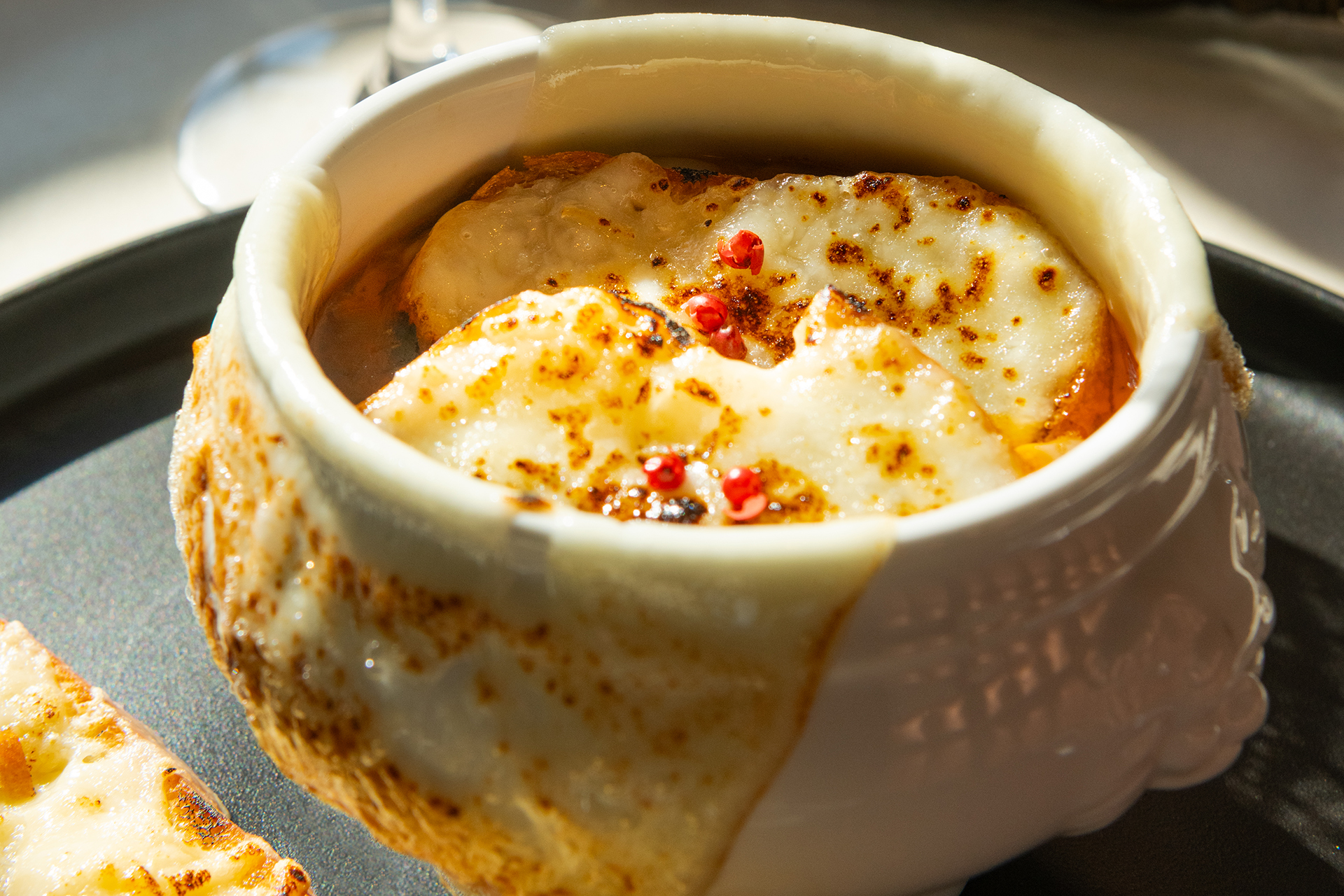
Photo: Courtesy of Chef Fox

Move to the United States

In 1983, Club Mediterranean (Club Med) in Paris named him Executive Chef, a position that sent him around the world, including leading the kitchen at Kamarina in Sicily where he would serve 1,600 to 1,800 meals per day. “You have to be very, very organized,” Jacques said. From Sicily, Club Med sent him across the globe directing kitchens in New Caledonia, Haiti, Greece and in 1985, at Copper Mountain in Colorado.

“I came to the United States saying I am a French chef and know everything but I did not,” he said. After just two weeks at Copper Mountain, he introduced some classic French dishes at lunch. “I learned very quickly it was not working.” His general manager took him on a tour of fast food restaurants in the area telling him when people ski, they want to eat burgers and tacos. “It was a little bit crazy for me at the beginning. 1985 was a big eye-opening year for me.”
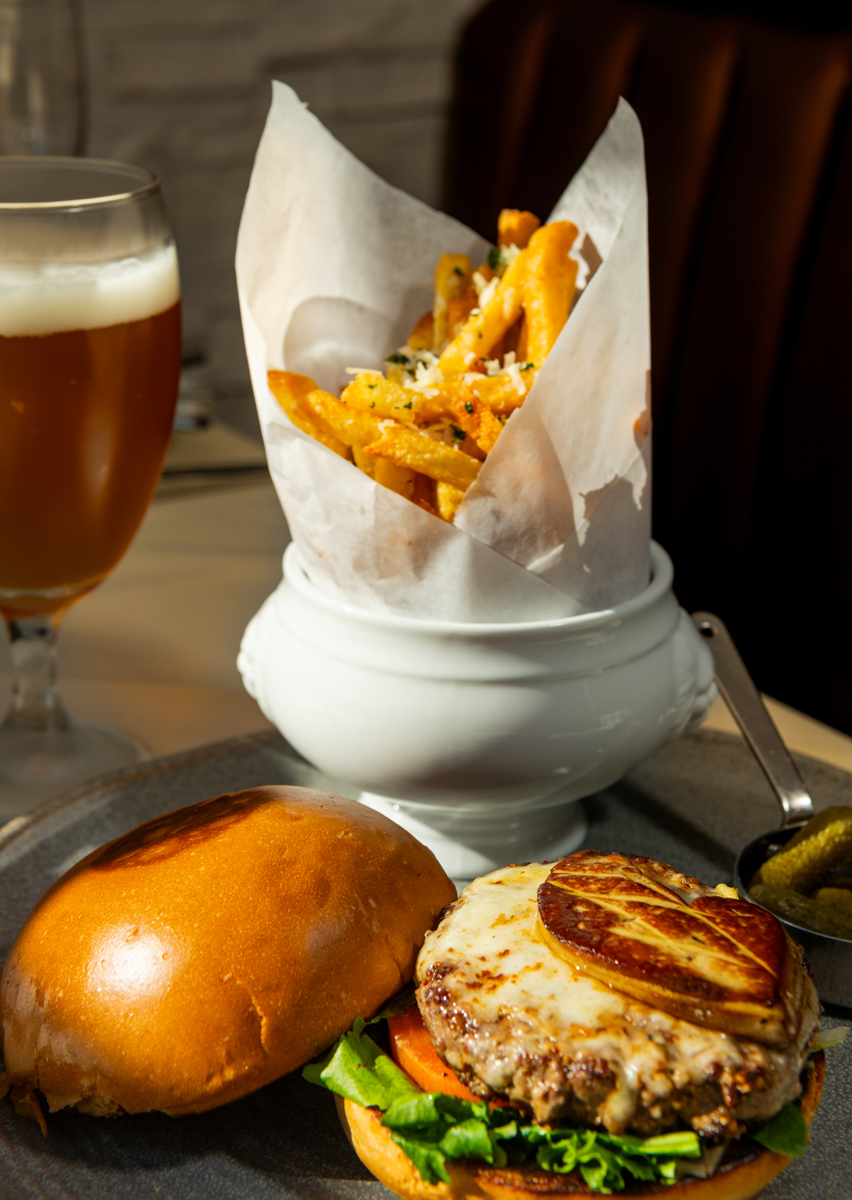
After coming to the United States, Chef Fox quickly learned that at ski resorts, guests want burgers and fries. (Photo: Courtesy of Chef Fox)
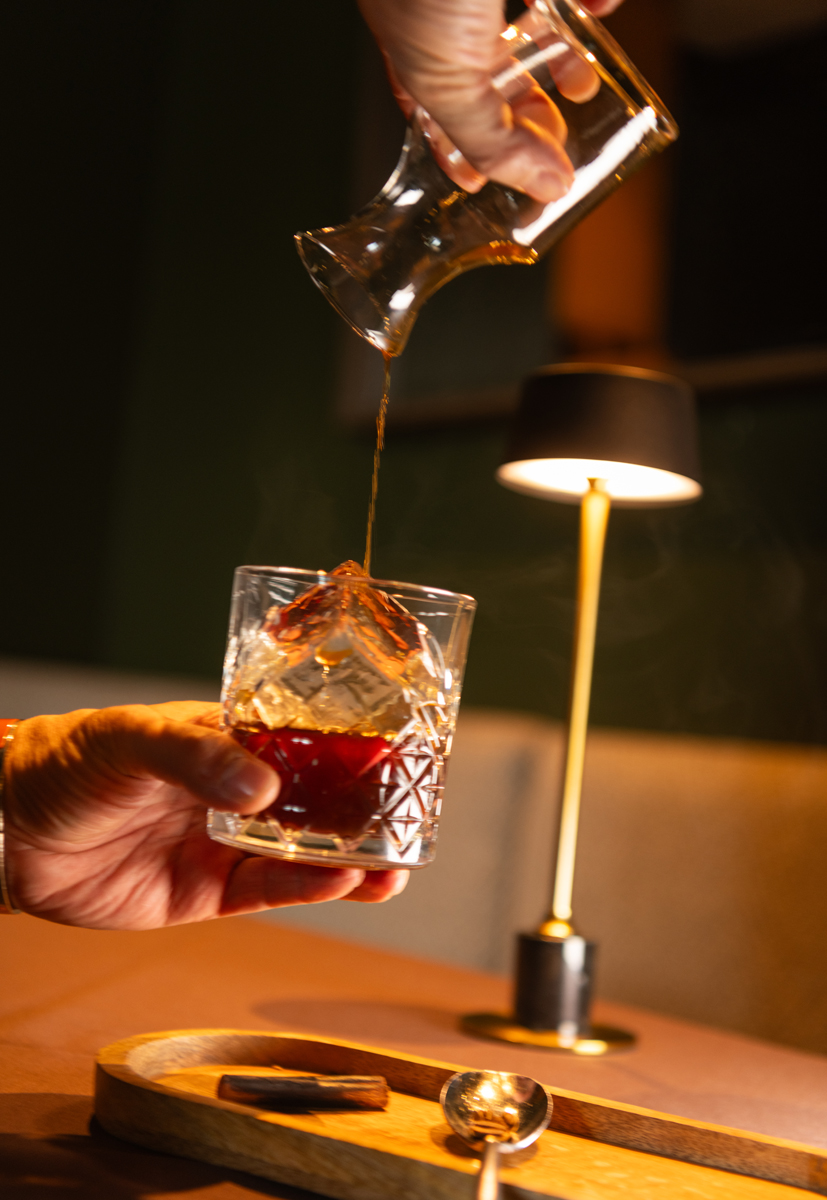
No detail in service is overlooked at fine dining restaurants. (Photo: Courtesy of Chef Fox)

But Colorado captured his heart. He met his first wife there and decided to stay in the United States, moving to Louisiana, his wife’s home. He secured a job as Executive Chef at Hotel Bentley in Alexandria, a 4-star hotel in central Louisiana that earned a 5-star rating while Chef Fox worked there, the only 5-star hotel in Louisiana at the time. He supervised the hotel’s restaurant.

On his first morning on the job, he walked into the kitchen to find a black skillet with fish smoking. “Oh my god,” he thought. “They do not know how to properly cook fish.” Then he learned about blackened fish and classic Louisiana spices, a step up from his use of mainly pepper while preparing French dishes. “Louisiana is an incredible state – the way they are not very fast paced, enjoy life a lot,” he added.

From Louisiana, he and his wife traveled extensively and then settled in Houston when he was named Executive Chef of the Nassau Bay Hilton.

In 1993, he helped open Moody Gardens in Galveston and also met Robert Epstein who invited him to join the Chaîne.

“I guess I like to move around. Sometimes it’s good for a chef to stay at the same place. But it’s not my case. I like a lot of moving around. I like different challenges. It’s good for me. It keeps me on my toes. I like new things and to have fun,” he said.
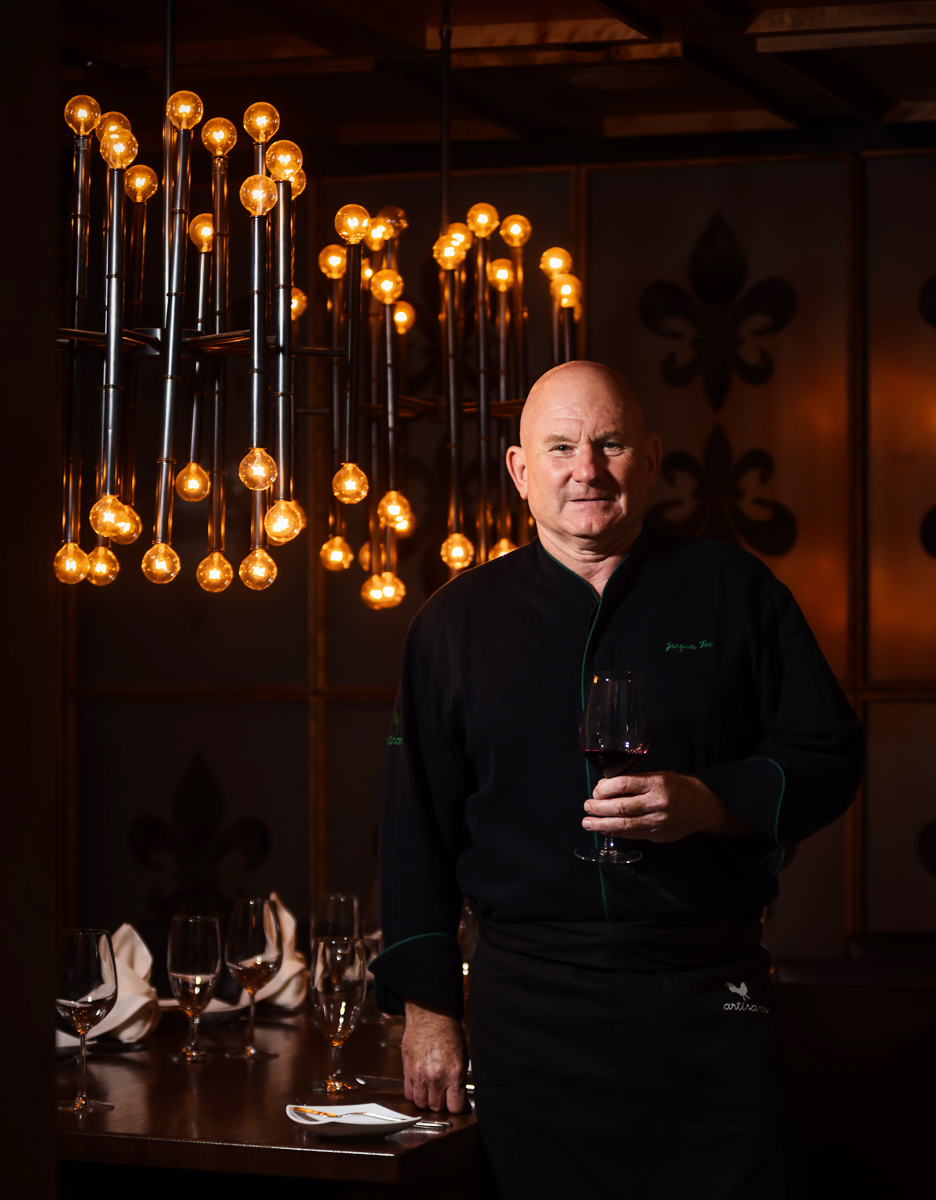
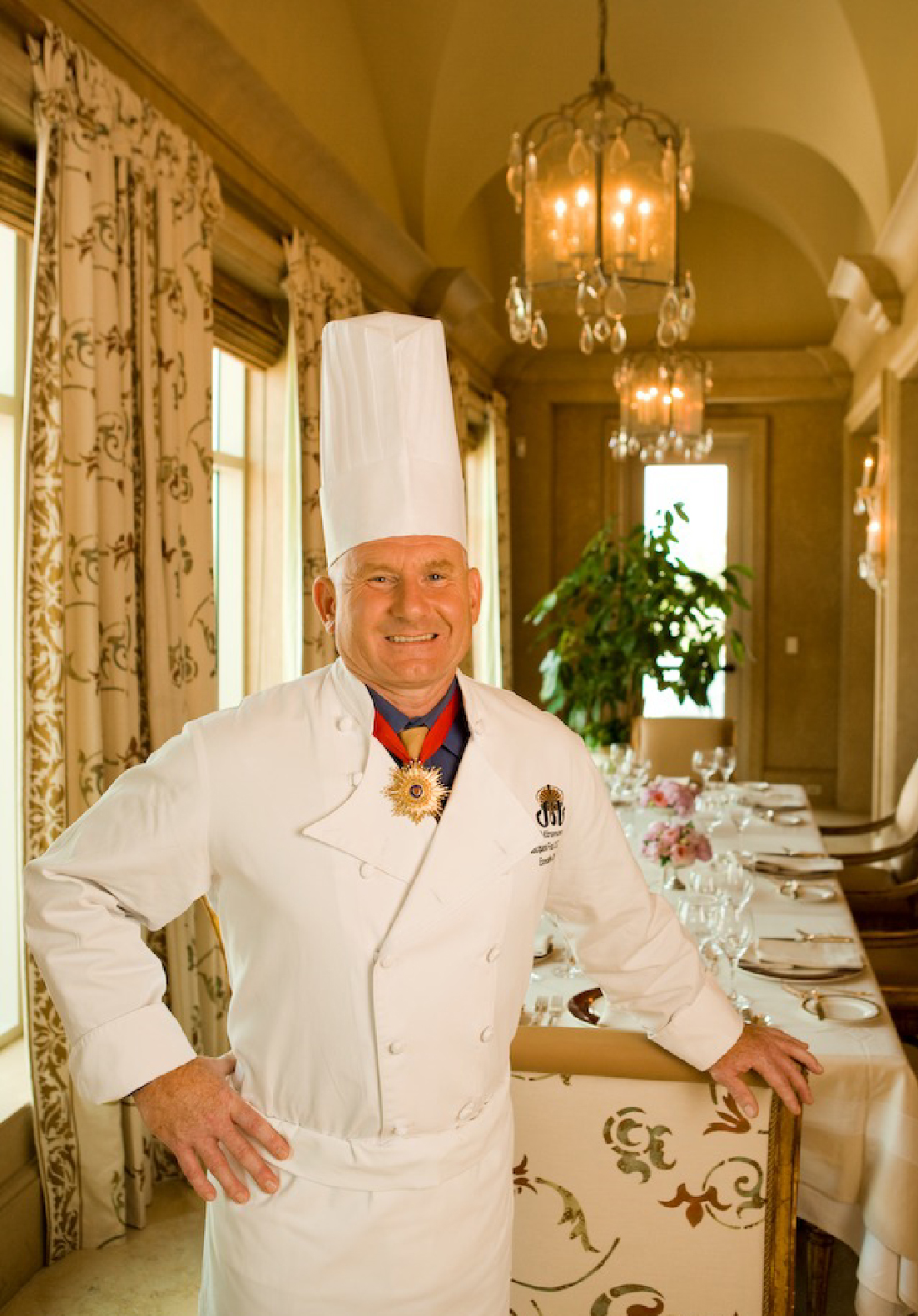
Chef Jacques Fox (Photo: Courtesy of Chef Fox)
Chef Jacques Fox, Conseiller Culinaire et des Professionnels des Éats-Unis Honoraire (Photo: Courtesy of Chef Fox)


Reflecting on his career, he believes the culinary profession has changed in some ways but not at its core. “It’s the same and not the same. You have to work very hard if you want to make it so nothing changes.”

Technological advances have made it easier for chefs to conduct research and advance their skills by watching demonstrations from top chefs on computers and then practicing. At the foundation of any career as a chef is education. He advises students who aim to be an Executive Chef and choose to attend a community college culinary program to grab a backpack after graduation and go to Europe to work with top chefs. In addition, after community college, he advises students to earn a Bachelor’s degree as it will open a lot of doors for their path to an Executive Chef position.

Artisans Restaurant
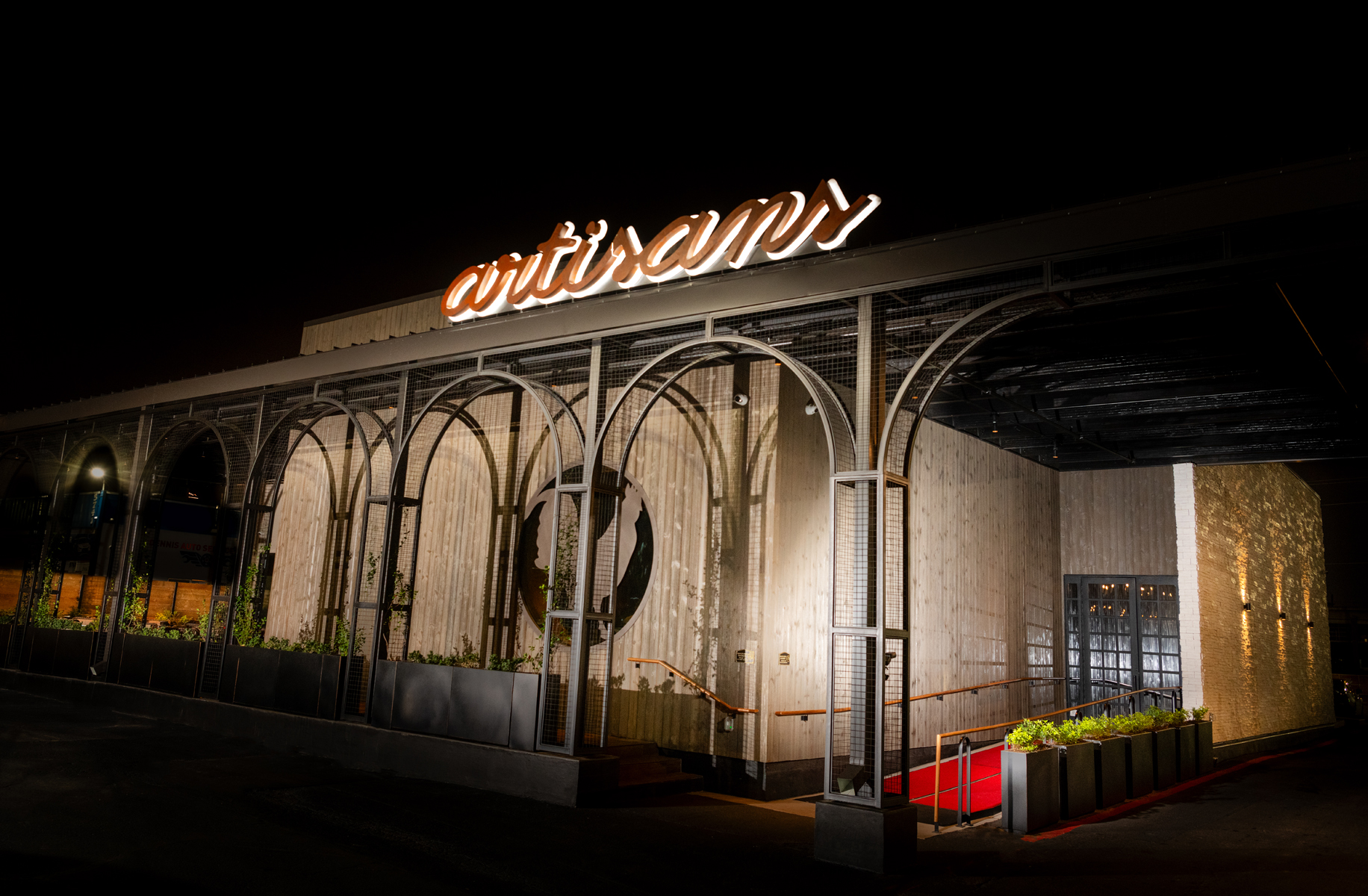
Chef Fox’s Artisans Restaurant in Houston (Photo: Courtesy of Chef Fox)

In 2010, Chef Fox opened Artisans, his own restaurant in Houston. In 2023, he moved Artisans to a stand-alone location closer to the Galleria Luxury Shopping Mall. Designing the restaurant himself, it features “La Table du Chef,” a one-of-a-kind open kitchen concept.

The last few years have certainly been difficult for fine dining restaurants. Jacques laments the many restaurants that were forced to close during and after the pandemic. He believes it could take up to five years for people to return to offices, which is essential for metro fine dining restaurants to thrive.
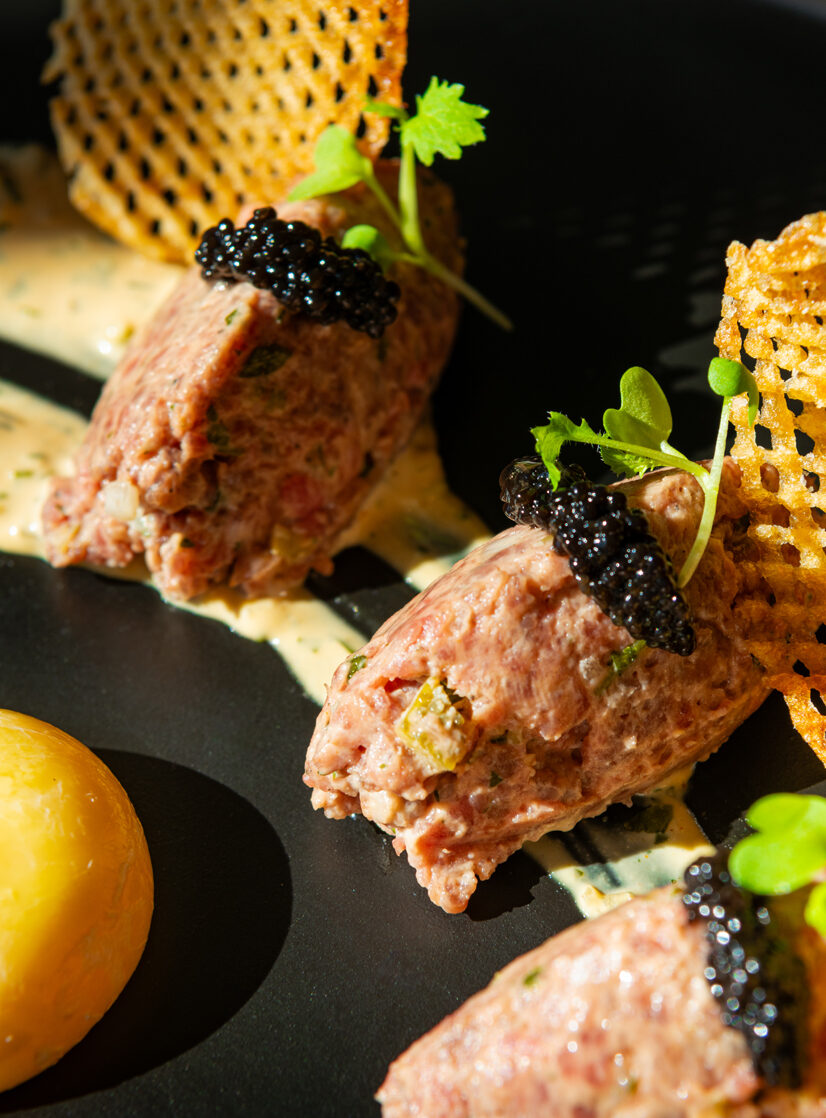
Photo: Courtesy of Chef Fox

More than the pandemic though, he candidly speaks about changes in corporate culture over the years that has all but eliminated the business lunch, a tradition for more than 100 years in cities from coast to coast. The two factors combined to transform once bustling downtown business districts at noon to ghost towns. It’s a national phenomenon that many downtown restaurants are closed for lunch service.

Lunch service at Artisans has been difficult as Jacques explains he has to cover costs to serve top quality French eclectic cuisine that requires highly skilled personnel to execute.

However, the hopeful side of the conundrum is human nature with an unbridled desire to share the pleasures of the table with family and friends, the essence of the Chaîne.

With more than 30 years of active involvement in the Chaîne, Chef Fox has ideas on how to sustain the incredible organization as he describes it. To members, he says, “I want them to be more involved. Eat at restaurants. Get involved at city, regional and national levels like I did. Do different things to be able to promote the Society. I don’t want a bunch of members who are sleepy. The more involved the member is going to be, the better it is going to be.”

He points to country clubs as one model to study. Eight to ten years ago, country club membership was decreasing but is currently bouncing back. “Look at how country clubs operate, we can take some ideas from that,” he advised.
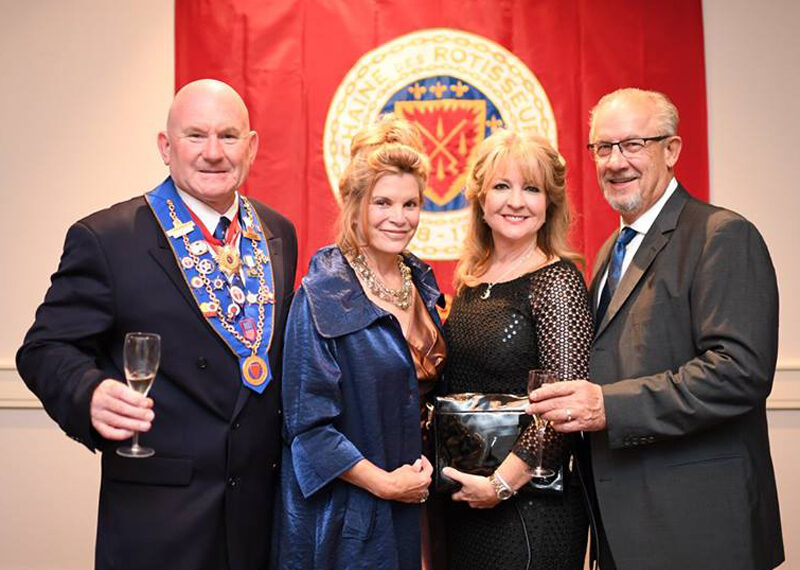
From Left, Chef Fox; Dr. Ann Brown, Chef Fox’s wife; Karen and Rod Leis. (Photo: Courtesy of Chef Fox)

Jacques leverages his three years of experience as the Executive Chef of the Miramont Golf Course and Country Club in Bryan, Texas from 2006 to 2009 to credibly create his vision to sustain and expand the Chaîne footprint in the United States. A dab of this and a touch of that from his vast experience and one has the sense his vision for the future is spot on.
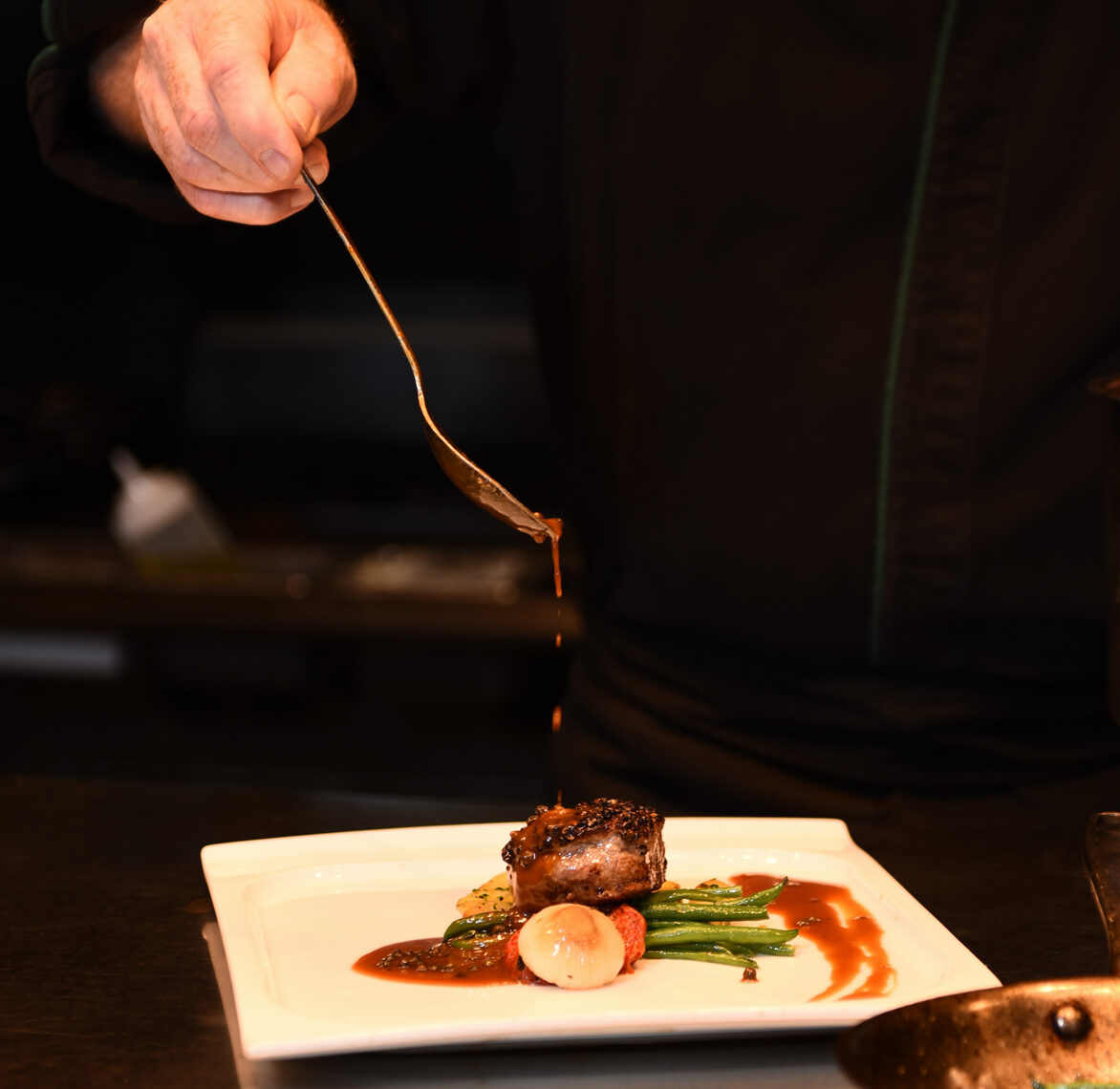
Dipping sauces (Photo: Courtesy of Chef Fox)

From his early footprints in North Africa to his formative years in France to his professional career that has taken him around the world, Chef Fox has made an indelible mark on the culinary profession. He is that knight in shining armor to his guests at Artisans who tell him his French cuisine is better than top-rated restaurants in France. He credits his footprints in Louisiana for inspiring and elevating his cooking. And he remains the knight in shining armor to young chefs who flock to his Chef’s Table at Artisans to learn how to walk in his footsteps, both practically and philosophically.

Ordre du Mérite Agricole (Order of Agricultural Merit)

The Ordre du Mérite Agricole medal is a silver star. (Photo: Courtesy of Chef Fox)

There is no doubt about his impact, affirmed publicly on July 14, 2021 when French officials pinned the 2020 Ordre du Mérite Agricole (Order of Agricultural Merit) medal to his chest during a ceremony at the residence of the French Consul in Houston.

Established on July 7, 1883 based on a proposition by then Minister of Agriculture Jules Méline, the award sought to adequately reward services to agriculture in view of the maximum number of Legion of Honour recipients who could be awarded yearly. Because more than 18 million Frenchmen made a living directly from the industry and because of its powerful impact on the national economy, Méline believed individuals working in agriculture who were rarely recognized for their talents and contributions should be honored through the new medal.

The present form and statute of the Order of Agricultural Merit were outlined in 1959 and had vital support from then French President Charles de Gaulle.

To be Knighted, a person must be at least 30 years old with 15 years of service/work in the industry. The medal, a star, is made of silver and is surrounded by a narrow blue enamelled band bearing the golden semi-circular inscription, “RÉPUBLIQUE FRANÇAISE.” On the reverse, the inscription on three lines reads: MÉRITE AGRICOLE 1883. The order hangs from a 37 millimeter (mm) wide silk moiré green ribbon with 5mm amaranth vertical stripes located 1mm from the edges.

But Chef Fox is not one to rest on his laurels. He is as busy as ever, operating his restaurant and appearing on local television shows to connect with the public to promote his profession. Burnished by education, hard work, and his grandparents, mentors like no other, Chef Fox is a shining star to more than culinarians. He offers timeless life lessons that can best be summarized by “Un pour tous, tous pour un” or “One for All, All for One.”

Links
Artisans

Chef Patrick Mitchell Shares Secret Sauce with Young Chefs

March 15, 2024 – Located on 170 acres bounded by cliffs overlooking the Hudson River in Hyde Park, New York, about 90 miles north of New York City, The Culinary Institute of America (CIA) is known worldwide for its stunningly beautiful campus. But its real beauty is what it delivers for students, a life changing educational path to successful culinary careers. Chef Patrick Mitchell, Class of ‘81, is a case in point. After hearing about the school from a friend and visiting, he sealed his future. “I fell in love with the school. Oh my gosh, that’s definitely what I want to do. But how am I going to pay for it. I have no idea,” Chef Patrick Mitchell, CEC, AAC, FWMCS and Chaîne Professional Member, said to Chaîne during a March 1, 2024 telephone interview.

The Culinary Institute of America in Hyde Park, New York on the Hudson River. (Photo Courtesy of The Culinary Institute of America)

Tough love for tough kids is one thing but tough love for good kids is quite another, one that forges grit, an unwavering determination to persevere to attain a goal. Patrick’s father spent his career in the Air Force, a familial military legacy he carried on by marching in the footsteps of his own father who succumbed from injuries sustained in World War I, when Patrick’s father was a boy. “My father fought for everything he  had so he thought that was the way we should grow up. So we did. I think it made us stronger and better,” Patrick said.

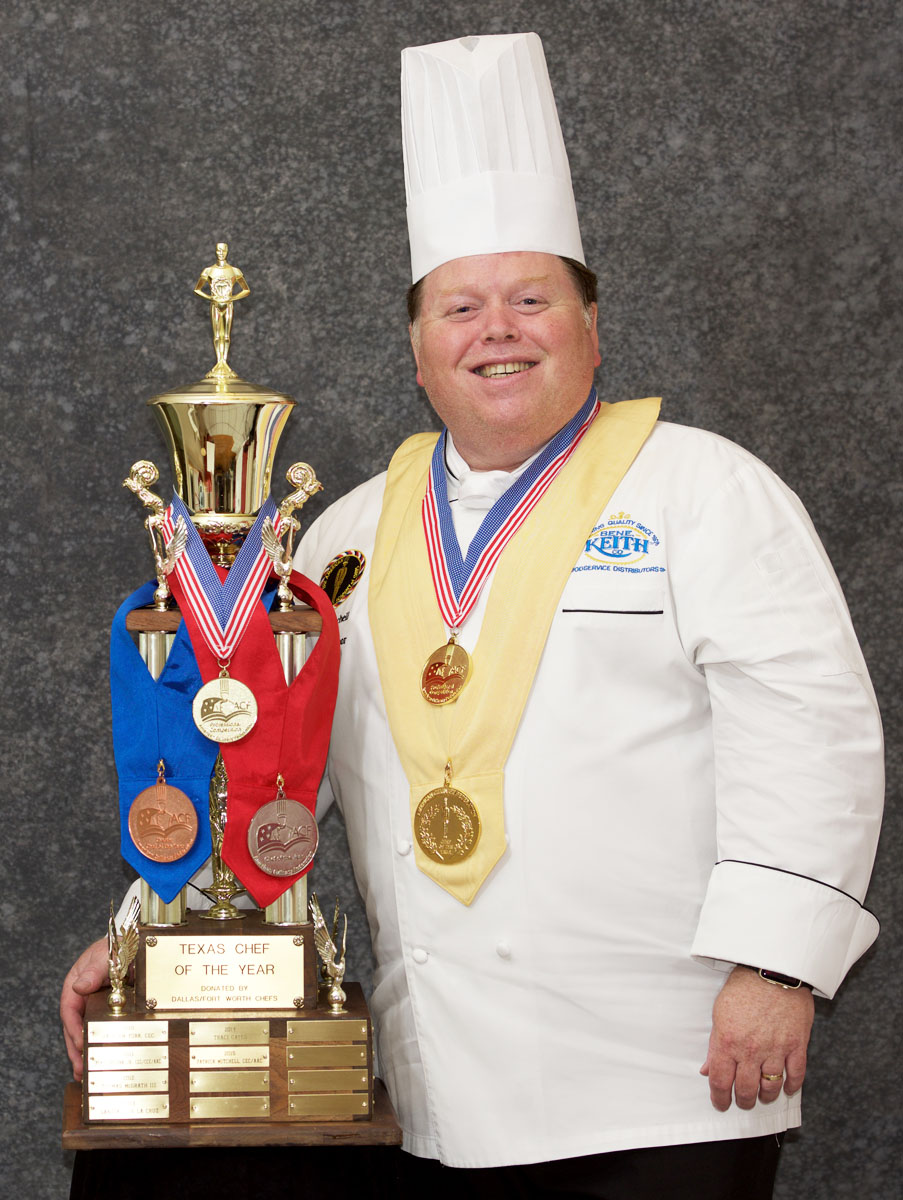
In 2016, Chef Patrick Mitchell was named ACF National Chef of the Year. In this photo, the ribbons from winning the State, Regional, and National Awards and the State Trophy are shown. (Photo: Courtesy of Chef Mitchell)

That’s not to say he and his father always saw eye-to-eye but upon reflection, Patrick is thankful for his upbringing in a strict military family that afforded him many unique opportunities only available to other children in their dreams. Even as a preschooler, food made an impression on him. He remembers living in Turkey and returning to the United States via Paris where he ate his first croissant with orange marmalade. He didn’t care for the marmalade’s bitter taste but the culinary experience found a secure spot in his long term memory. “Now I love orange marmalade,” he said.

Even though he lived in multiple cities. he found home base in kitchens as he would gravitate there to play and help his mother cook scrumptious meals for their family, another notch in his long term culinary memory. “My mom was a good cook. When I got into the industry she loved it. She was so proud of the fact that I was a chef. She was on top of the world when I went into cooking,” Patrick said.

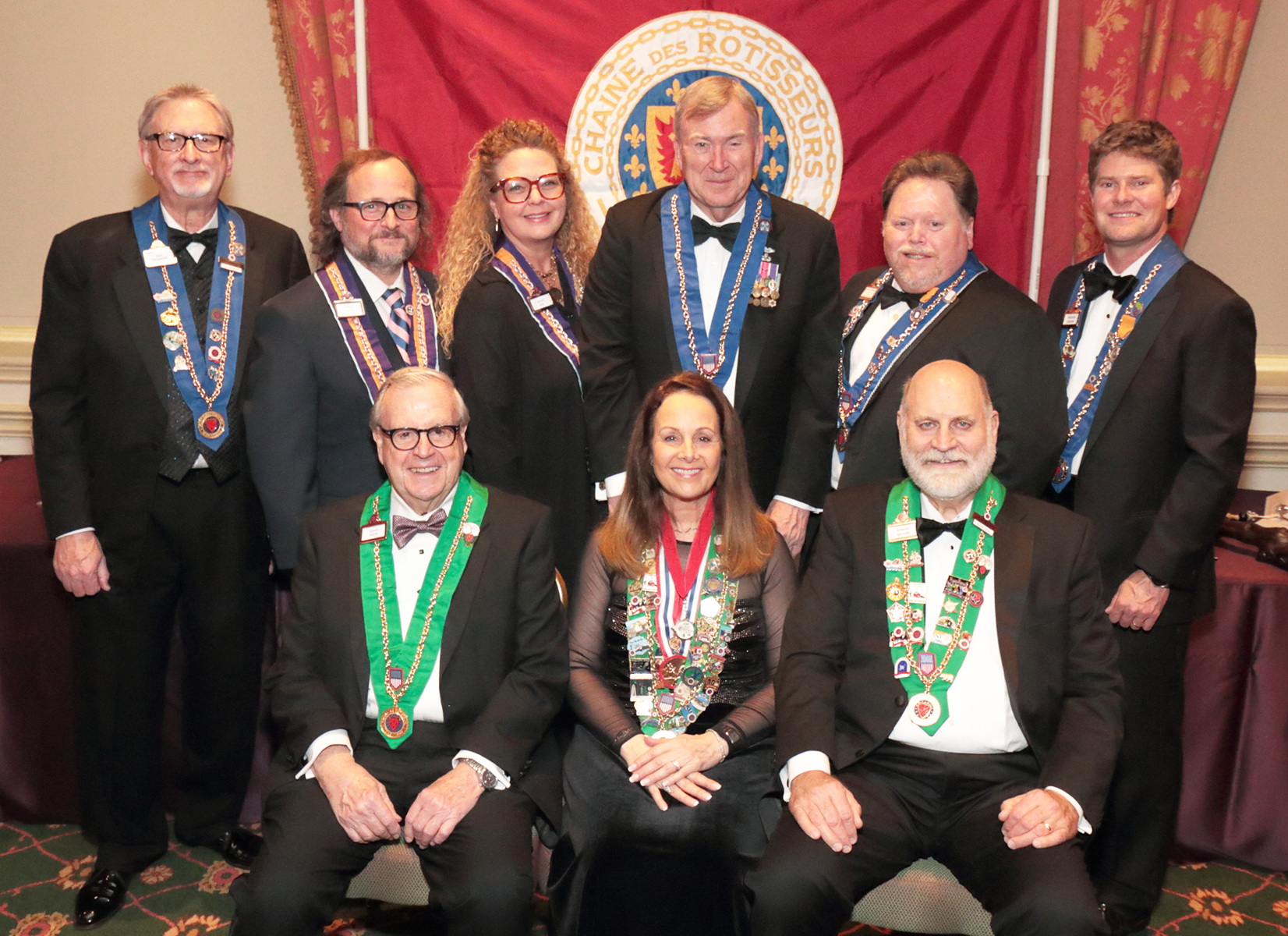
Chef Mitchell, second row, second from right, at the Aug. 8, 2023 Ft. Worth Bailliage Induction Ceremony. (l-r) Bailli Conrad Heede, Bailli Provincial Southwest Cheryl Kenny, Bailli Honoraire Randal K. Moore, Vice Chargé de Missions Honoraire Dan Fitzgerald, Professionnel du Vin Christopher Keel, Professionnel du Vin Deedra Keel, Vice Chargée de Missions Aubrey Bruce Stacy, Vice Conseiller Culinaire Patrick Mitchell, Vice Echanson Weston Eidson. (Photo: Chaîne, Ft. Worth Bailliage)

Hopscotching from base to base throughout the United States, the family eventually settled in south Jersey upon his father’s final assignment before retirement.

Cutting the cord and fending for himself after high school, Patrick worked as a dishwasher as an introduction to commercial kitchens. “I knew I didn’t like washing dishes. I would get caught up on the dishes, then go over to see what the guys were doing on the line and help out. Dishes would pile up and I’d go back and clean them, then head back to the line and do it all over again. I got hooked,” he said.

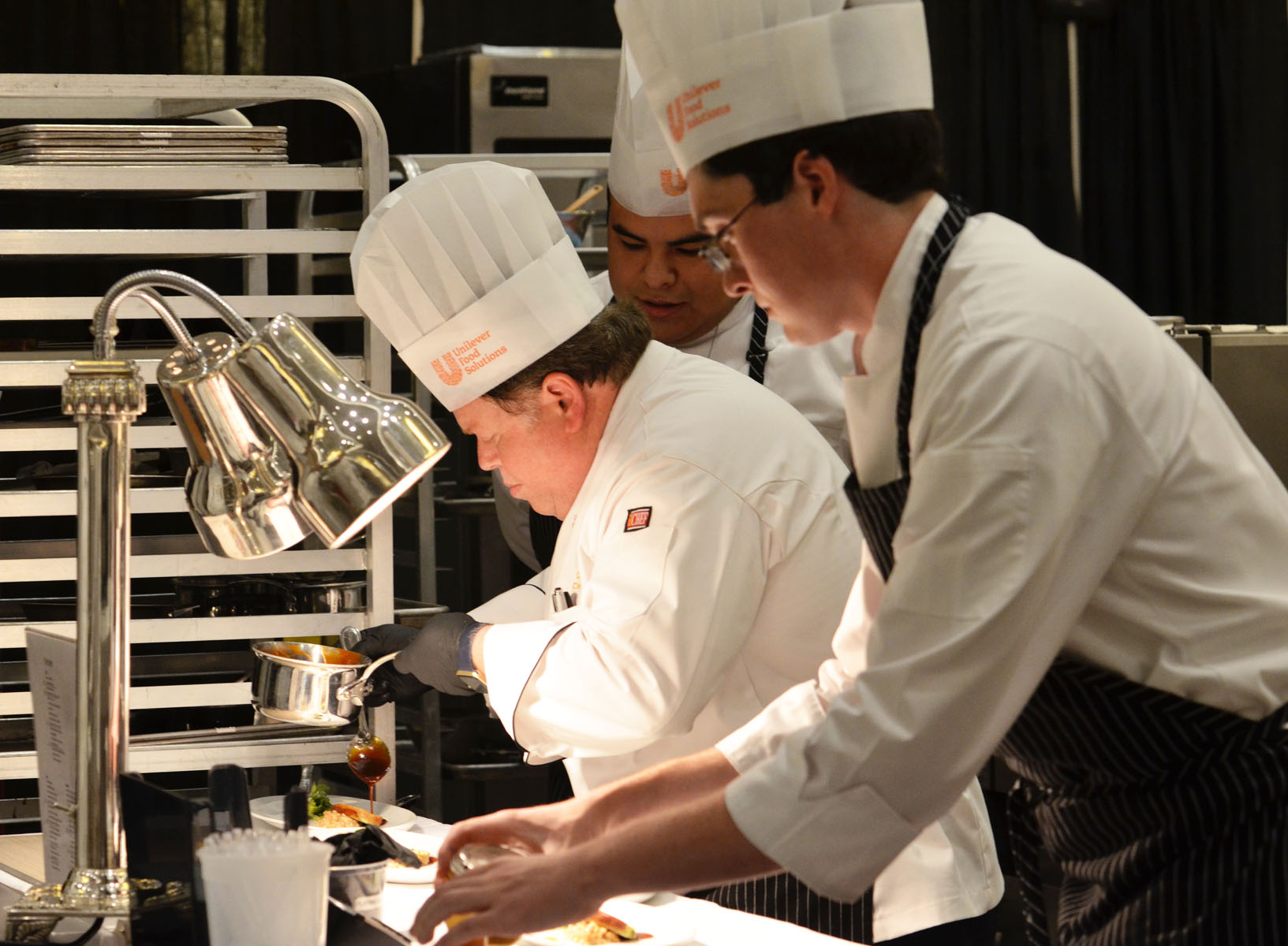
Chef Patrick Mitchell’s sauces the final plates at the National Competition in Phoenix. (Photo: Courtesy of Chef Mitchell)

The Culinary Institute of America (CIA)

His future became crystal clear after learning that just a few miles up the road, The CIA was training world class chefs and hospitality professionals. The school began in New Haven, Connecticut in 1946 to educate soldiers returning from World War II. From 50 students their first year, by 1969, more than 1,000 students were enrolled. In 1970, the school moved to Hyde Park after purchasing the campus of a Jesuit seminary that closed in 1968.

Students at The Culinary Institute of America (Photo: Courtesy of The Culinary Institute of America)

“The campus is just phenomenal. I got immersed into culinary. I did my fair share of partying off campus, like most college students, but every minute I could, I spent in the resource library looking at videotapes, watching, seeing how to do different techniques. And the instructors were amazing. It was life changing for me,” Patrick said.

To afford tuition, he cobbled together scholarships, grants, and loans, and worked as a short order cook on the weekends at a campus coffee shop that was more like an east coast diner. His girlfriend, now his wife of 42 years, would come up to visit and they would have picnics by the river. “It was a great, great time,” he added.

The CIA’s curriculum cadence is two semesters in classrooms/labs and then one semester of an externship followed by two final semesters on campus. For his externship, Patrick worked at a New Jersey restaurant under a CIA trained chef, an experience Patrick describes as “great.”

New Orleans

As graduation approached, the CIA hosted a job fair at which Patrick interviewed with The Royal Orleans Hotel in the French Quarter. They offered him a job on the spot as their Assistant Garde-Manger so after graduation in February 1981, he packed his bags and drove to New Orleans to start the first chapter of his professional career. It didn’t take long for a baptism by fire.

New Orleans on the mighty Mississippi River (Photo: CMiller)

By the time he arrived in New Orleans, the Garde-Manger chef had quit so the hotel hired a new chef. But after working for the hotel for just one month, they offered the job to Patrick when the new chef did not work out. “I jumped right into the role,” Patrick said. He seized the opportunity by immersing himself in his job and networking with other professionals through the local chefs association.

As a great food city, the culinary scene bustled with talent showcased at times through local competitions. Young and energetic, Chef Mitchell suggested they broaden their reach by hosting an American Culinary Federation (ACF) competition. He respectfully said to the group, “This is New Orleans. Don’t you guys know where you’re at?” The group agreed and gave him the task of organizing it.

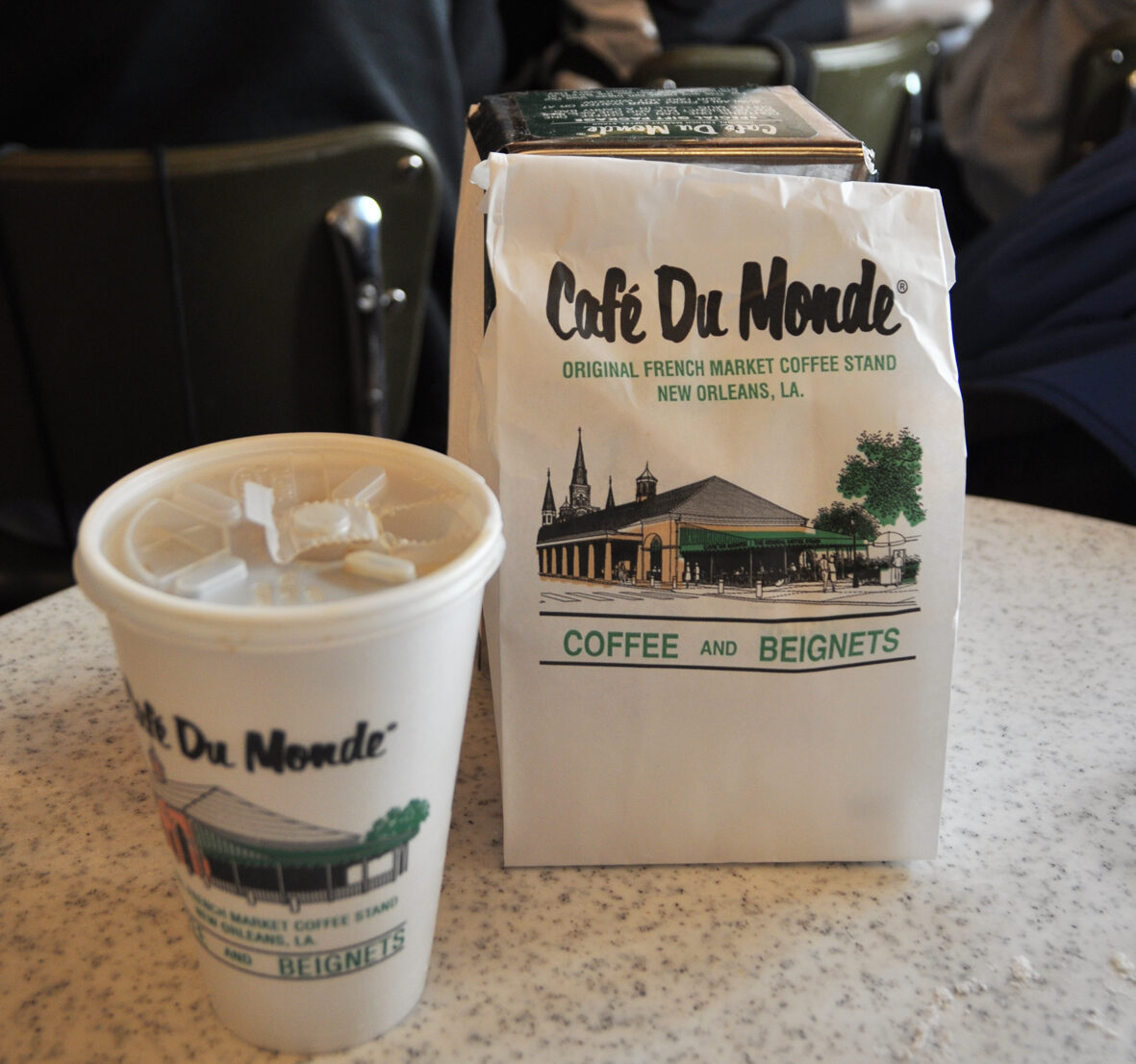
With its famous Beignets, Café du Monde in New Orleans is a very popular destination for both residents and tourists. (Photo: Courtesy of CMiller)

Patrick’s willingness to promote his profession beyond the walls of his kitchen paid off many times over. By serendipity, K-Paul’s Louisiana Kitchen, founded by Chef Paul Prudhomme, was a stone’s throw from The Royal Orleans. Chef Prudhomme offered to donate prize money for the competition but wanted to remain anonymous. However, Paul wanted to guide Patrick through the process of the competition so once per week, Patrick met with Paul at K-Paul’s between lunch and dinner. Paul’s staff would bring dishes to taste and approve for service that night. Chef Paul would always have Patrick taste them as well discussing culinary nuances and the upcoming competition. Only a few years from his time washing dishes, Patrick was now meeting professionally with one of the top chefs in the country. “I think now about those times and what a great experience it was. I knew it was great then but I didn’t realize a fraction of the magnitude of it. He was a great, great man,” he said.

Patrick’s interest and involvement in culinary competitions began even before he enrolled in the CIA. When he applied, he was working for a country club in New Jersey. With his acceptance letter in hand and about eight months to go before his first semester, the country club closed. He was out of a job, a serious setback in his plan to finance his education. So he took a job as a waiter at a hotel along the New Jersey Turnpike. Chef Arthur “Artie” Dupre led the kitchen, quickly taking Patrick under his wing after recognizing he was a duck out of water in the front of the house. He brought him into the kitchen taking a personal interest in Patrick’s professional growth. He didn’t hesitate to enter Patrick into a culinary competition in Philadelphia, coaching him how to prepare and present a pork loin. Artie also entered the competition preparing a Grand Buffet by himself while helping Patrick.

Patrick was fortunate to have such a dedicated, talented mentor so early in his career. It surprised Patrick as he took the job strictly for financial reasons but he developed a tremendous amount of respect for Artie and was afraid to tell him he would be leaving soon. When he finally did break the news, Patrick said Artie was “over the top excited for me.”

“The impact those months had on my career are unbelievable when you look back at what Chef Artie exposed me to, introduced me to,” Patrick said.

Dallas

Now in New Orleans channeling Chef Artie and his CIA degree, Patrick flourished. In 1984, a headhunter contacted him about an opening in Orlando. He interviewed and was hired but before he moved to Florida, a former colleague heard he was leaving and told him the Four Seasons Dallas was looking for a Garde-Manger. Encouraged to at least interview for the job, he did. The offer was better than Orlando so Patrick moved west instead of east. “I’m glad I did,” he said. “I’ve never heard from that headhunter again.”

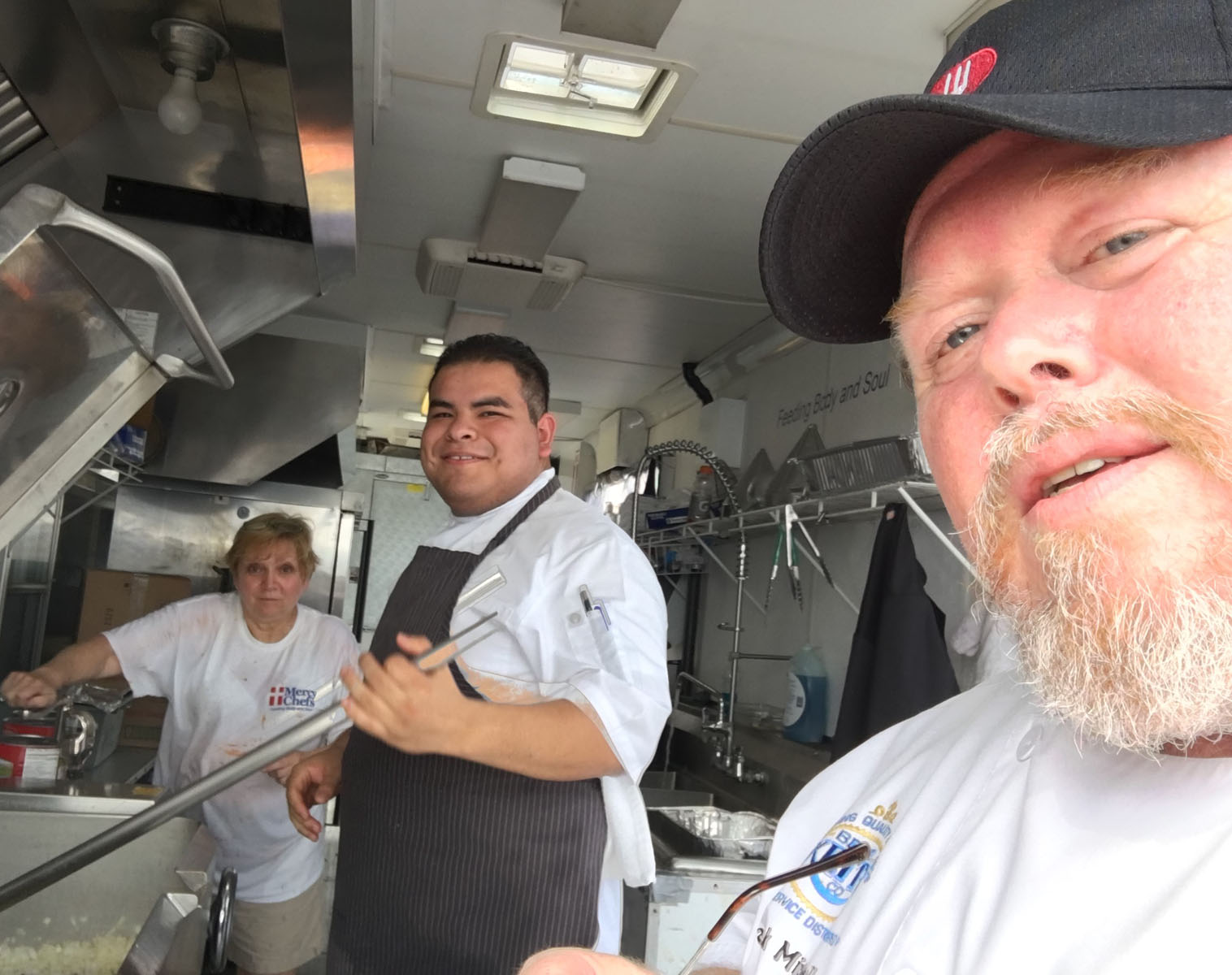
Juan and Patrick cooking in Houston at Disaster Relief site in 2015. (Photo: Courtesy of Chef Mitchell)

On the job for a couple of years, Marriott bought the Four Seasons giving Patrick a path for promotions to Banquet Chef, Executive Chef and then as their Food and Beverage Director. “I’m glad I went with Marriott,” he said.

Always looking for the next challenge, after 23 years with Marriott, Patrick left to help open a Great Wolf Lodge in Grapevine, Texas and since 2008, has been with Ben E. Keith Foods, first with their Dallas/Fort Worth division and now at their General Office as Corporate Culinary Ambassador. He consults with customers from all 10 of their divisions on a myriad of responsibilities including menu development, kitchen flow, new items, costs and any other need that bubbles up from their customers.

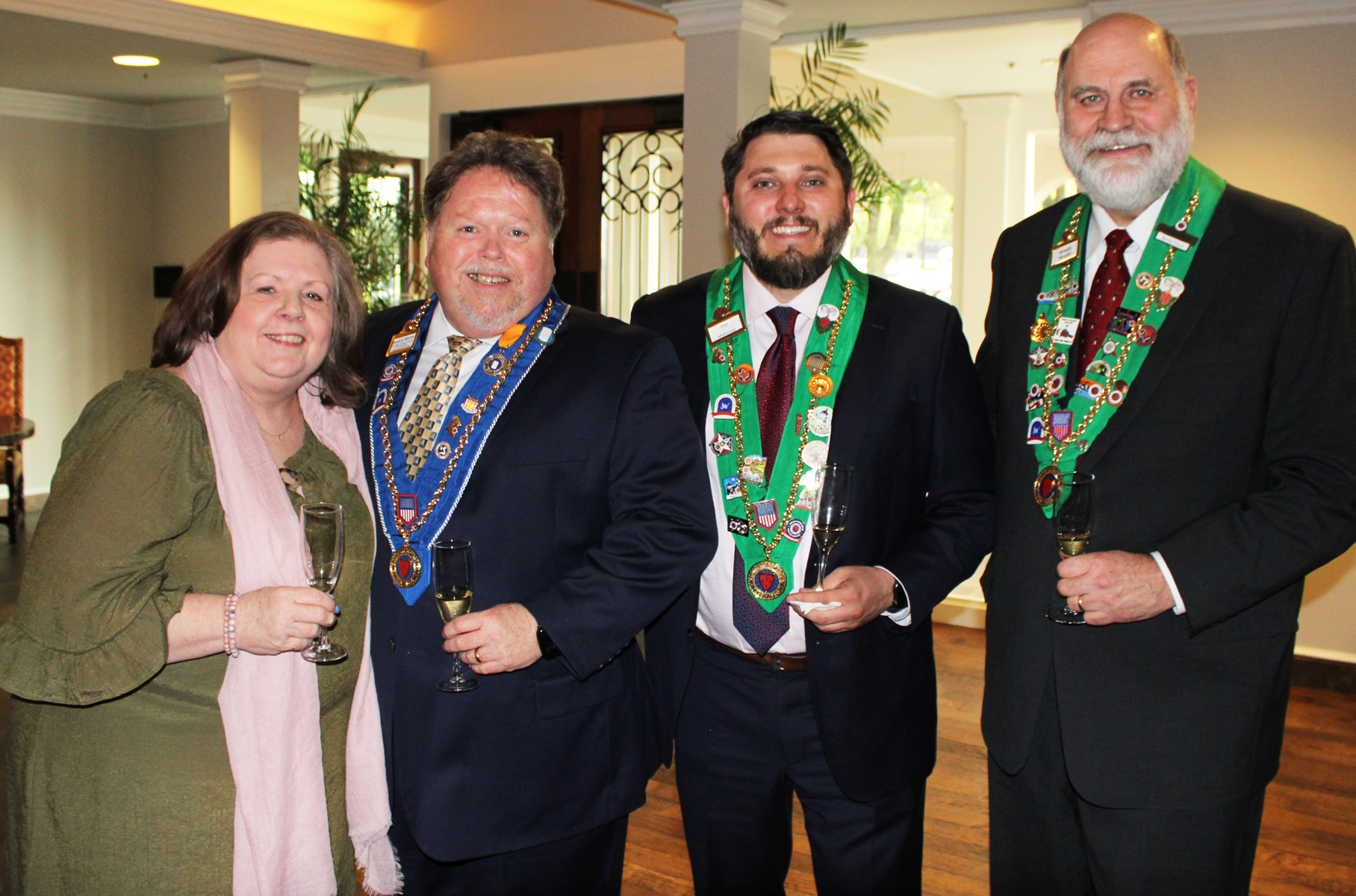
From left, Linda Mitchell, Conseiller Culinaire Provinciale Chef Patrick Mitchell, Bailli Dan Mahoney, Bailli Honoraire Randal Moore. (Photo: Chaîne, Dallas Bailliage)

Continuing his innovation for professional outreach that has defined his career from his early days in New Orleans, Patrick is currently helping support chefs in cities where the company does business by organizing “Chefs Luncheons.” The late Chef Willey Rossell started the idea in 1993 with the notion that chefs gather once a month to break bread with one another, just the chefs, a lunch “for the chefs, by the chefs,” Patrick explained. “Chefs get to know each other and talk about things they have in common.”

Ben E. Keith provides the food to one chef who hosts the luncheon. It’s not a sales meeting. Patrick said chefs are hesitant at first thinking the purpose is a sales pitch but once they attend, they think it’s pretty cool to be able to relax and enjoy time with their fellow chefs. Next month he will be in Little Rock, Arkansas and is introducing the Chefs Luncheon event in a number of markets. “It’s such a simple idea but it’s such a powerful idea too,” he said.

Since Chef Artie introduced him to his first competition in Philadelphia more than 30 years ago, Chef Patrick has participated in culinary competitions and cultural exchanges in 12 countries and won numerous awards. In 2015 he was named Texas State Chef of the Year and in early 2016, he won the Central Region competition placing him in the finals of the ACF National Chef of the Year, which he won. And in July 2018, he was one of 20 finalists from over 100 countries and represented the United States in the Global Chefs Challenge in Kuala Lumpur, Malaysia.

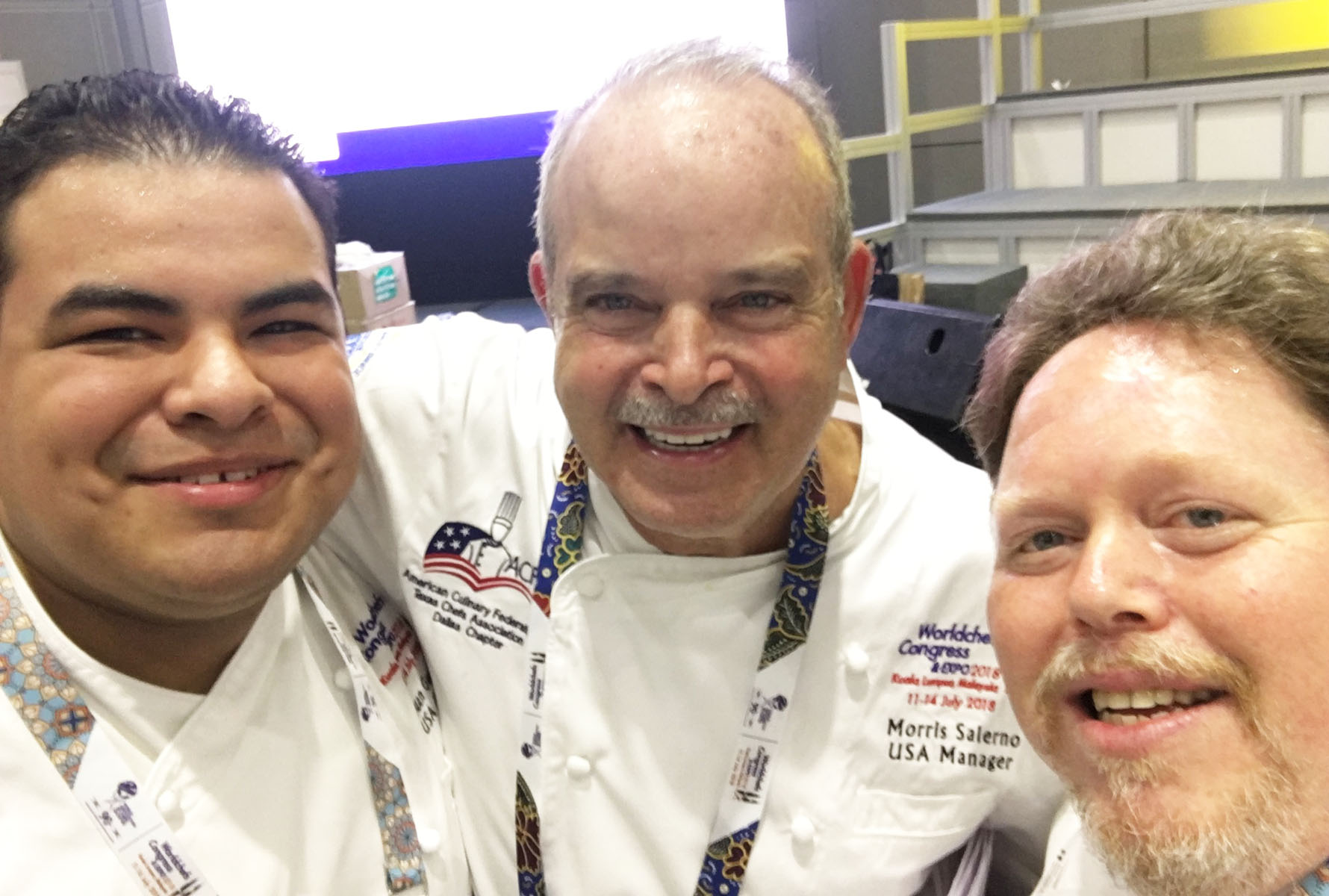
From left, Juan, Morris and Patrick, U.S.A. Culinary Team, at the 2018 Global Chefs Challenge in Kuala Lumpur. (Photo: Courtesy of Chef Mitchell)

No longer competing, Patrick is busier than ever organizing and judging competitions to provide his wings for young professionals to fly under. As Chaine’s Culinaire Provincial for the Southwest Province, he has planned the upcoming regional Jeunes Chefs Rôtisseurs competition to be held at Texas State Technical College (TSTC) in Waco. He recalled a recent conversation he had with a young chef that typifies his commitment to pay it forward. A young chef asked for help quickly rattling off a long list of what he wanted to accomplish including competing internationally for the United States. He wondered if Chef Patrick could help him. “YES,” Patrick told him emphatically. “But let’s take it a step at a time.” That young chef will be one of five chefs competing in Waco.

Judges give feedback to Patrick and his apprentices after the National Competition in Phoenix in 2016.   (Photo: Courtesy of Chef Mitchell)

From his vast experience in culinary competitions, what is the secret sauce to success? Patrick had a straightforward answer: “You have to be open to constructive criticism.” Although his hours upon hours of watching videotapes at the CIA were not that much different from students today accessing online videos to learn techniques, students today have dramatically shortened what they believe is the learning curve to mastery, Patrick said. In fact, there is barely a curve. Many students believe after watching an online video and doing it once or twice, they are good to go. As a judge, Patrick can tell when a student is frustrated by his comments on areas that need improvement. Judges always start and end their comments to young chefs with positive feedback so it’s a bit perplexing to him why students are not open to learn from accomplished chefs.

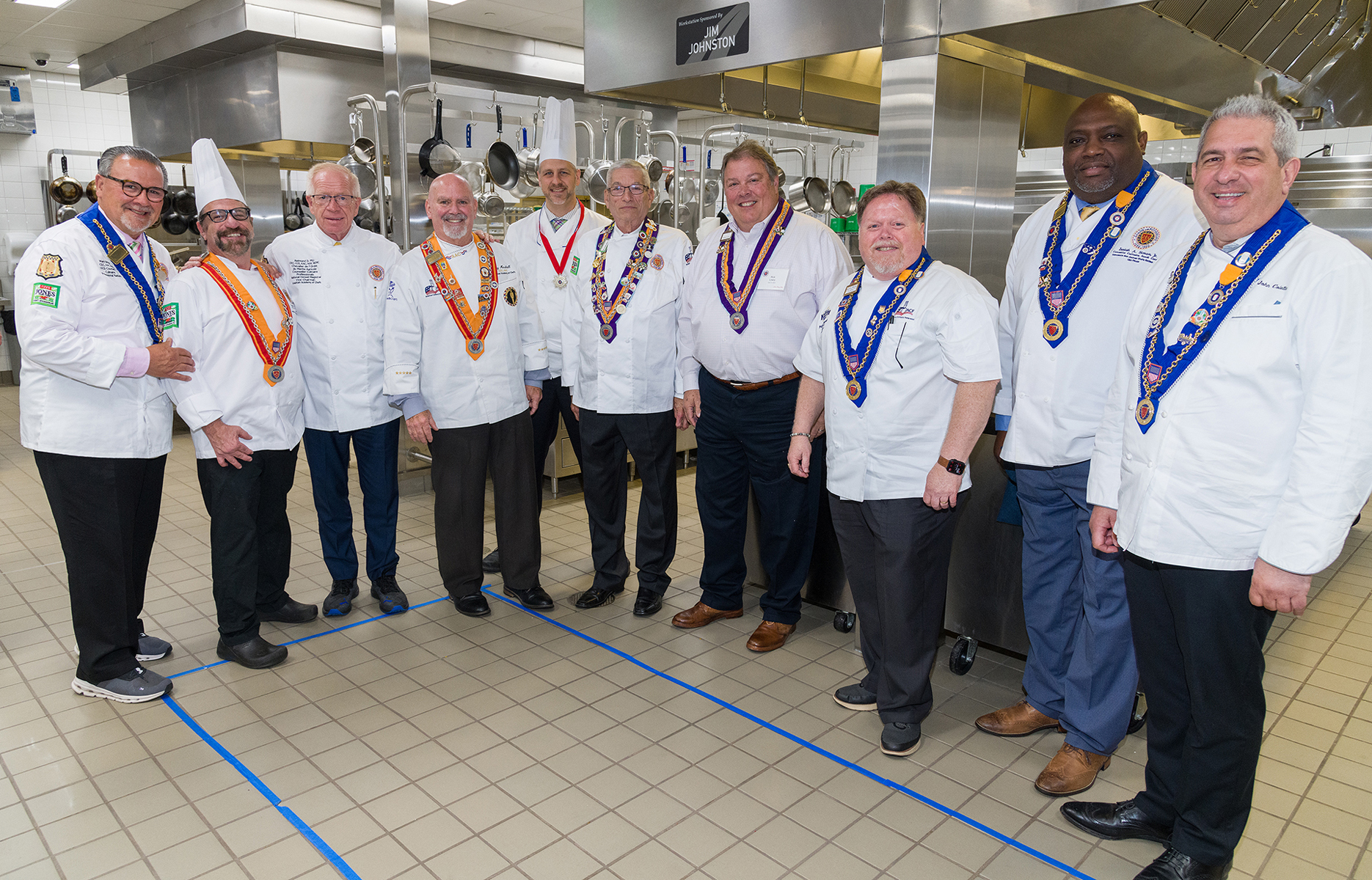
At the 2023 Jeunes Chefs Rôtisseurs competition, held in Madison, Wisconsin, chefs/judges gather in the Jones Dairy Farm Kitchen at Madison Area Technical College during the competition. (l-r) Chef Mark Wright, Chef Alan L. Romano, Chef Raymond Pitz, Chef Jay Marshall, Chef Gerald L. Ford, Chef Robert Philips, Dr. Rick Lowry, Chef Patrick Mitchell, Chef Isaiah Simon, and Chef John Coletta. (Photo: Chaîne)

Patrick advises students to tell judges at the outset of their evaluation that they are interested in learning how to improve. That will go a long way to ensure students maximize benefits of competing.

Even with daunting challenges of young chefs thinking in nanoseconds instead of months and years, Patrick sees a bright future for the industry. In particular, secondary schools are doing a stellar job as feeder schools to more and more affordable post secondary culinary schools.

“It’s just amazing for me to see what’s happening in secondary education, the high school. There are a lot of college and career academies that are popping up in those districts with a career center. We see the results in these ProStart competitions when high school students are coming in and doing work that’s the quality of professionals. And they have very limited resources to work with yet they’re doing these dishes that are just amazing,” Patrick said.

The Chaîne is a vital cog in that wheel and so appreciated by professional chefs. Patrick said, “It’s a great group of people to be around. Their love and passion for food and beverage is equal to none. They also support the young chefs and raise money for scholarships. I see what they give back to the young chefs. I want to help make sure that’s facilitated properly and we find people who can benefit from their generosity. That’s the reason I am doing what I am.”

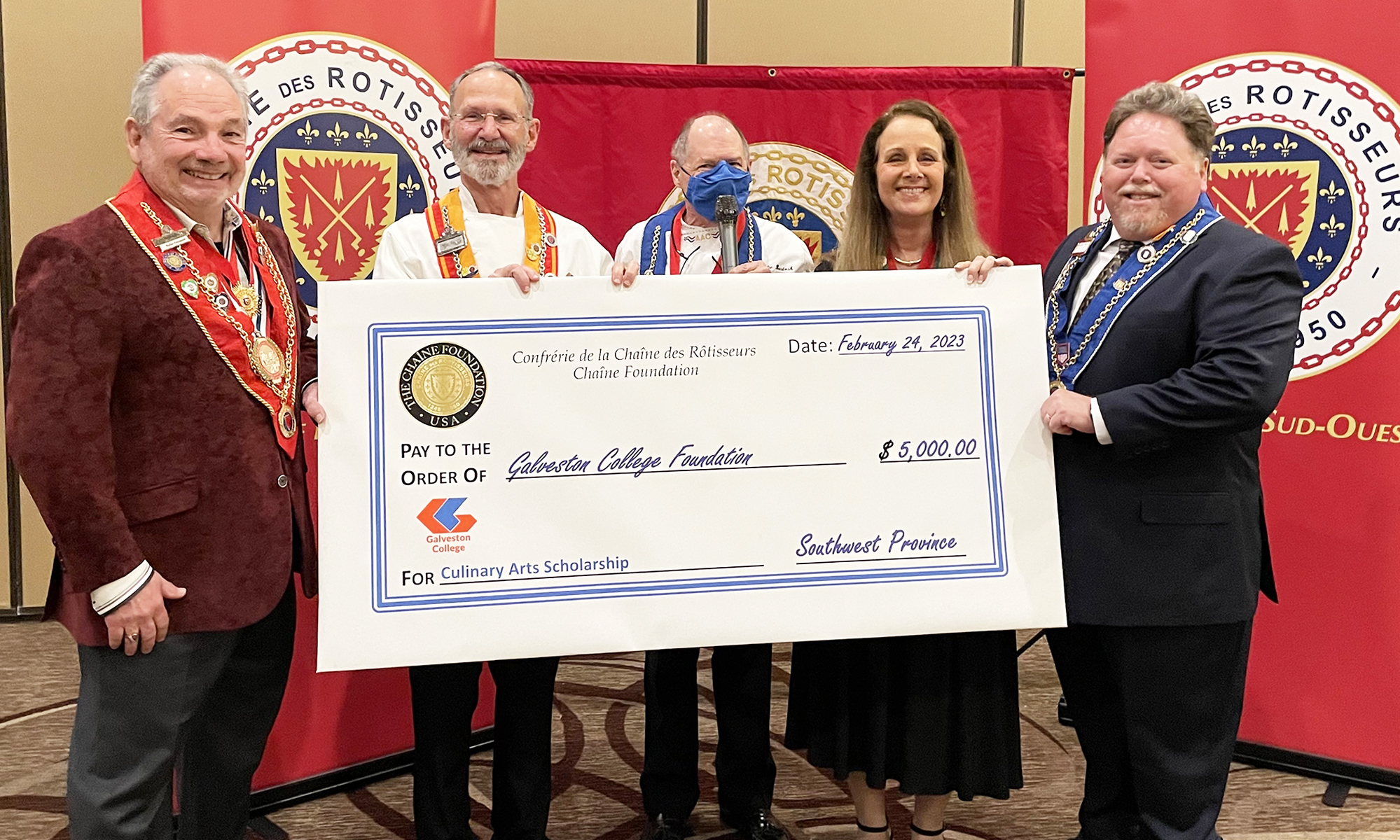
At the 2023 Southwest Province Chapitre, Chef Mitchell, far right, helps present a $5,000 check to the Galveston College Foundation for culinary scholarships. (l-r) Chancelier des Etats-Unis Rufus Cressend, Maître Rôtisseurs Paul Mendoza, Conseiller Culinaire Provincial Honoraire Leslie Bartosh, Bailli Provincial Southwest Cheryl Kenny, and Conseiller Culinaire Provincial Chef Patrick Mitchell.(Photo: Chaîne)

From his first competition in Philadelphia to the cliffs overlooking the Hudson to the French Quarter and finally to Fort Worth, Patrick has uniquely carved his career at each step along his path to success, a path paved with valuable lessons for young chefs today.

Tough love from a tough, talented chef with a goal to nurture the next generation to greatness is not a bad idea after all. Young chefs today just have a couple of cords to cut!

Links
Ben E. Keith Foods

Eric Weiss Has Sixth Sense for Hospitality

Feb. 2, 2024 – In today’s fast-paced, technologically driven world, “customer service” is predominantly an exercise in which customers have the burden to effectively communicate digitally with artificial intelligence (AI) software or an automated, often unintelligent menu that may or may not have a real person standing by to take over. But thankfully, humans can still experience superior service, exquisitely delivered by real humans, courtesy of the hospitality industry at fine dining restaurants, top hotels and carefully planned in-person events. Hold the phone app! Entire generations, known simply by a letter of the alphabet, may not even be aware this type of service exists. Will classic service and fine dining soon be relegated to a digital file 13? Not if Eric Weiss, Chaîne member and founder of Service Arts Inc., has anything to say, and do, about it.

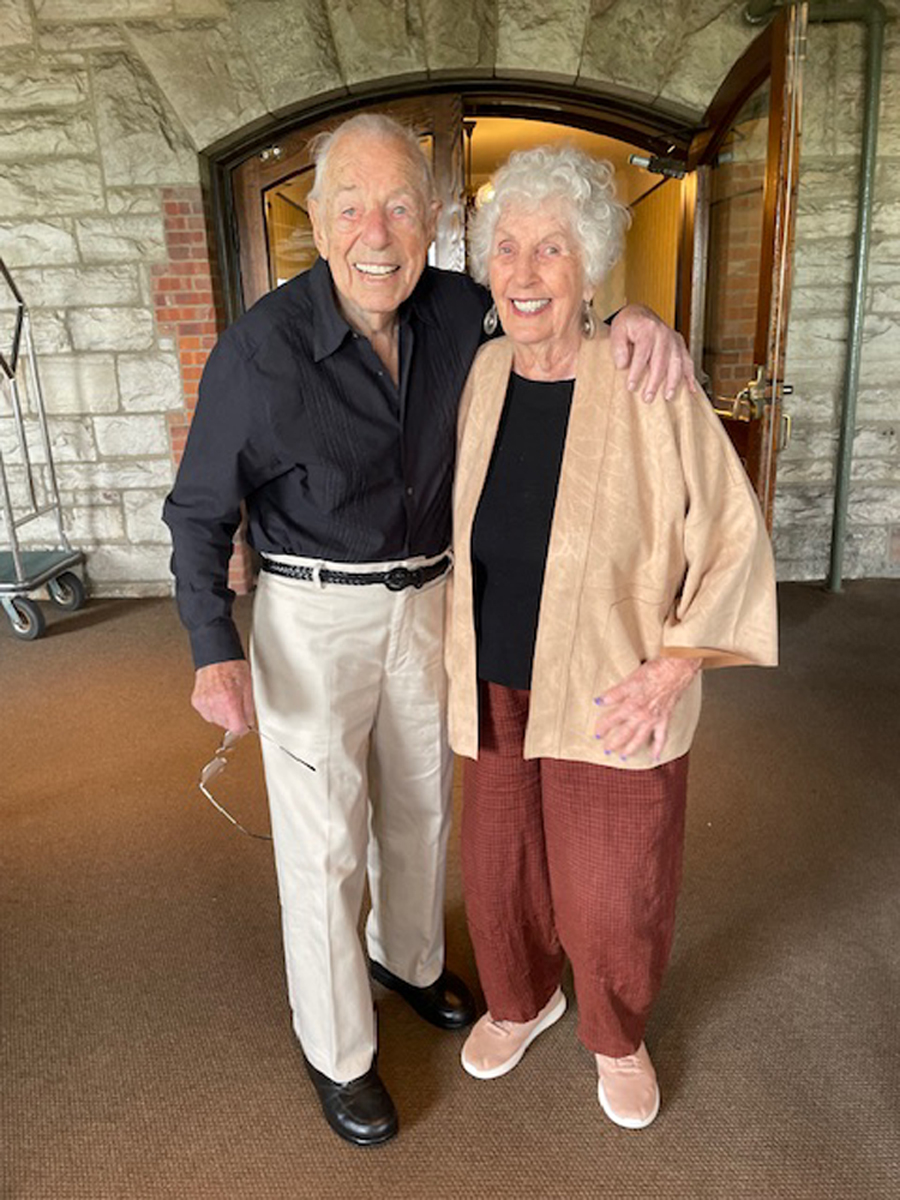
Arthur and Lola Weiss in 2023 at the Mohonk Mountain House in New Paltz, New York celebrating their 77th wedding anniversary. Only 0.1% of couples worldwide reach their 70th anniversary! (Photo: Courtesy of Eric Weiss)

Eric has been saying and doing a lot about it for more than 50 years having spent his entire career in the hospitality industry as a service consultant, sommelier, wine instructor and event planner. Growing up in Tenafly, New Jersey across the Hudson River from New York City, Eric’s father, now 102 years old, was a dentist with an office in Manhattan next to the Plaza Hotel. All that New York City had to offer was at his doorstep, the best restaurants, Carnegie Hall, world famous museums, and iconic retailers. Eric’s mother, now 98 years old, was a travel agent. “Their minds are so sharp and so focused. They are so interested in what I am doing and where I’m doing it. Their recall is astounding,” Eric said to Chaîne during a Jan. 23 telephone interview. Eric said his friends often ask him the key to his parents’ longevity. “It’s that they are incredibly curious. They want to be current and fortunately, they’ve passed that on to me because I’ve always been a curious person.”

In addition to curiosity, Eric has a natural talent for languages, which blossomed early. In French class in middle school, Eric had such a good accent his teacher thought he was mocking him and would rap him on the knuckles with a ruler for the putative offense.

That experience did not deter him. With support from his parents for his adventurous spirit that caught the travel bug early when Eric took a six-week summer tour of the United States with other teens, the world, not just the United States, was at his doorstep. Speaking Italian and French fluently and being able to communicate in other languages opened many doors throughout his career, a career that began when he was just a teenager.

Working at Sea and College

At age 16 Eric attended a one month training program at the National Maritime Union Upgrading and Retraining School in New York City to qualify for a job in kitchens and dining rooms aboard ocean liners. At age 17, he shipped out for his first job on the S.S. United States, which took him around the world to Africa, Germany, France, England and the Caribbean before returning to New York City. That experience, along with many trips thereafter as he worked holidays and summers during his four years of college at Boston University, set the tone and tenor for the rest of his life.

The S.S. United States, built in 1951 and 1952, was 990 feet long with 12 decks. It was the fastest ocean liner of its time. (Photo: Wikipedia Commons/Public Domain)

Eric fondly remembers standing in front of a large board at the Maritime office seeing where all of the ships were going and being able to choose his next job – and exciting destination. While learning the technical aspects of the job and visiting exotic locations were highlights, those advantages paled in comparison to what he learned living and working with people, a lot of people as each ship had hundreds of crew members to serve up to 2,000 passengers.

“I can’t emphasize enough how important that experience was for my future career in terms of being able to get along and find value in people. It was a huge gift right from the beginning,” Eric said. Crew members came from many different socioeconomic backgrounds with most having never been to college but they did not resent Eric for his ivory tower pursuits. To his credit, Eric embraced the differences and learned to appreciate all life experiences. After he ended his time working on ships, the crew of one ship sent him a postcard addressed to “Eric Weiss, Tenafly, New Jersey” with a single sentence on the back, “We really miss you.”

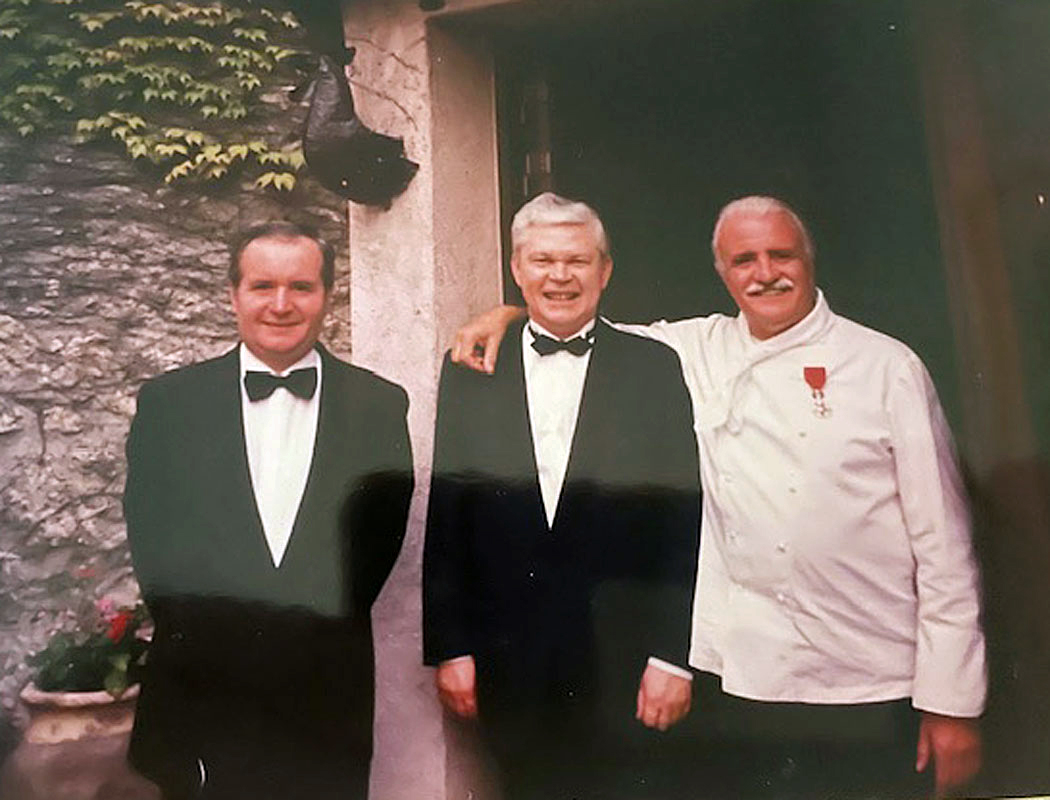
1981 photo: from left, Maitré d’s Christian and Sylvain and Chef Roger Vergé at Le Moulin de Mougins. (Photo: Courtesy of Eric Weiss)

After graduating with a degree in Communications, Eric fulfilled his lifelong dream to live and work in France although he is still not sure why he had a strong desire to live in France. He’s spent decades pondering that and to this day cannot point to any one moment except for the memory of his paternal grandfather, who was a superb cook, talking about his time as a soldier in France during World War I.

He settled into a new life in France and stayed there for eight years. Advancing his culinary education at the Culinary Institute of America (CIA) drew him back to the United States but not for long. For his mandatory three-month externship at the CIA, he convinced the CIA president to give him a one year leave of absence in 1979 so he could learn under one of France’s top chefs. He knew he would have to interview in person so he left for France without having a job.

Once there he wrote to five, 3-star Michelin restaurants. Famed Chef Roger Vergé of Le Moulin de Mougins in southern France agreed to meet him for lunch. At lunch Eric sketched plates being served and conversed comfortably with Chef Vergé in French. “If you can cook the way you can speak French, you’re hired,” Chef Vergé told him. “What an incredible opportunity that was,” Eric said adding that he may have been the first American hired by a 3-star Michelin restaurant in France for a full-time apprenticeship.

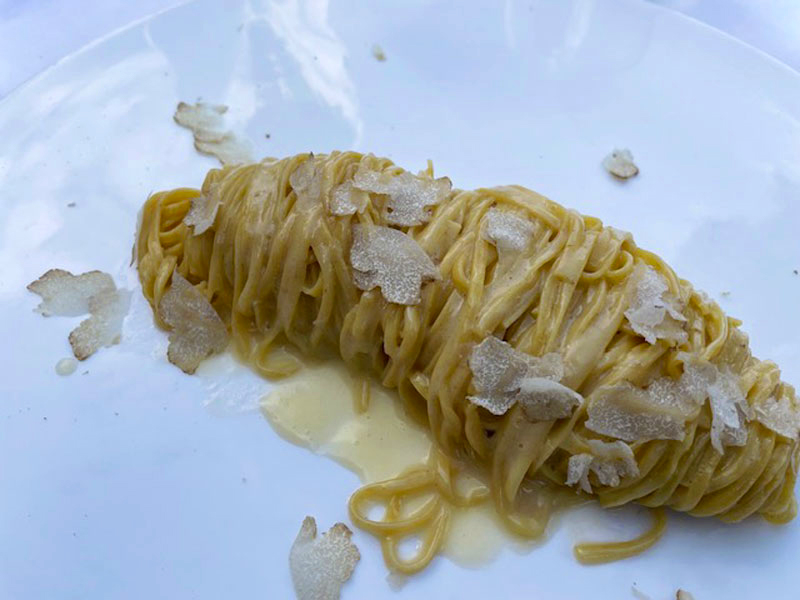
Pasta with white truffle (Photo: Courtesy of Eric Weiss)

Following his one year tutelage under Chef Vergé, Eric returned to the CIA to finish his education. Upon graduation, the CIA hired him as an assistant instructor. Always curious, Chef Eric soon decided he wanted to branch out to learn more about wine.

Seagram Chateau and Estate Wines

Opened in 1930, the famous “21 Club” entrance is adorned by many statues of jockeys, which were donated to the club over the years. The club is now closed. (Photo: Courtesy of 21 Club/Belmond Management Limited)

In 1985, Maurice Lartigau, Vice President of Seagram Chateau and Estate Wines, a top importer and distributor of French wine in the United States, interviewed Eric for a position with Seagram. “If you know about wine the way you speak French, you’re hired,” the Seagram executive told him. That was the second job Eric landed because of his language skills, a sweet vindication for Eric when reflecting on middle school.

For the next 12 years while working for Seagram, Eric traveled to France two to three times per year and of course, met all of the movers and shakers in fine dining and the hospitality industry in New York City. During this time, the famous “21 Club” needed a part-time sommelier so three nights a week, Eric filled that role recommending wine to celebrities from all walks of life. He recalls serving a well known opera director who, with one other person, ordered a magnum of 1982 Chateau Lafite Rothschild, a $3,000 bottle of wine, and then proceeded to order a second magnum finishing both. “I was amazed they were able to walk out of the club,” Eric said. They left him a $500 tip, the highest tip he ever received during his time there.

Workshops and Service Arts Inc.

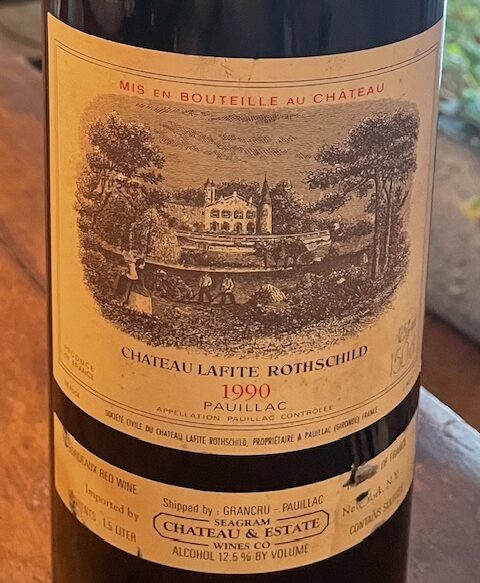
1990 magnum of Chateau Lafite Rothschild, a gift from Seagram to Eric in marking the end of his 12 years working for the company. (Photo: Courtesy of Eric Weiss)

In 1993, he had an idea, an idea that would launch the next phase of his career. Having extensive experience in both the back and the front of the house, he was all too familiar with friction between staff. The frenetic pace of service never allowed for on-the-spot conflict resolution. So Eric designed a series of workshops, each with four sessions, to bring together hospitality staff during off hours to air grievances and most important, develop solutions.

He approached the General Manager of the new Four Seasons Hotel in New York City to host the workshops. For three years, 12 times per year, Eric conducted his workshops bringing in guest speakers who were hospitality professionals or professionals in related fields.

Eric recalls one notable session led by Larry Bogdanow (1947-2011), an architect who designed many famous restaurants in the Big Apple. Larry and his staff created six models of restaurants with miniature furniture/equipment that teams of workshop participants had to place to optimize work flow for everyone. “It was really, really fantastic I must say,” Eric said.

Florence Fabricant, longtime food and wine writer at the New York Times, heard about the workshops and with a nose for something new, wrote an article about Eric and his workshops. Within one week, Eric was a guest on The Today Show with Katie Couric and then other networks picked up the story.

Now a nationally recognized service consultant, Eric expanded his reach with a monthly show on CNNfn (financial network) explaining to viewers how to get great service not only at restaurants but also at many different types of businesses and service providers. International acclaim soon followed when the London Times sent Tony Allen-Mills, a reporter, to cover one of Eric’s dinners.

In 1998, Eric’s free spirit and life experience gave him the confidence to strike out on his own so he left Seagram and launched his own company – Service Arts Inc. “I decided it was time to spread my wings,” Eric said. He cherishes his time at Seagram. “It was a wonderful experience and a great company to work for.”

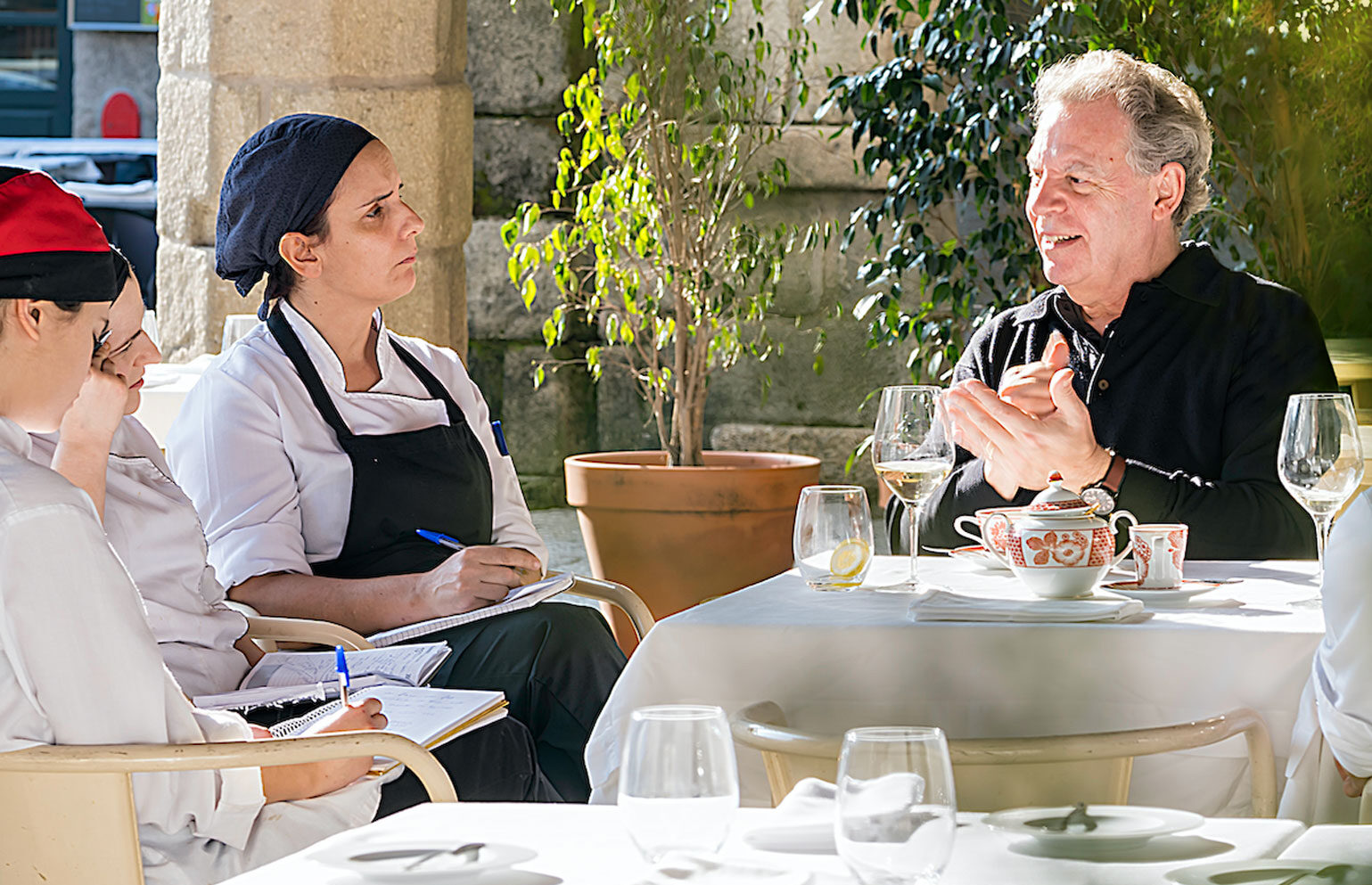
In 2022, Eric helps servers and staff at Hotel Da Oliveira in Guimaraes, Portugal customize and personalize their service. (Photo: Courtesy of Eric Weiss)

From Russia to Japan to Portugal and to many cities in the United States, Eric helps his clients understand and improve service. It may seem daunting since each culture is unique but there is a common thread to stellar service. “It’s a matter of being able to pick up cues, adapt and personalize that experience. In terms of great service, something I constantly espouse is the customization of it. It’s not generic,” he said. “One can always get better at that.”

Having consulted with the U.S. Naval Academy in Annapolis many years before, in fall 2001, the United States Military Academy at West Point hired Eric to help them personalize food service for their cadets. That was a daunting consulting task as logistics were already down to the second, the Army way. West Point staff efficiently serve 4,000 cadets a three-course meal in 26 minutes.

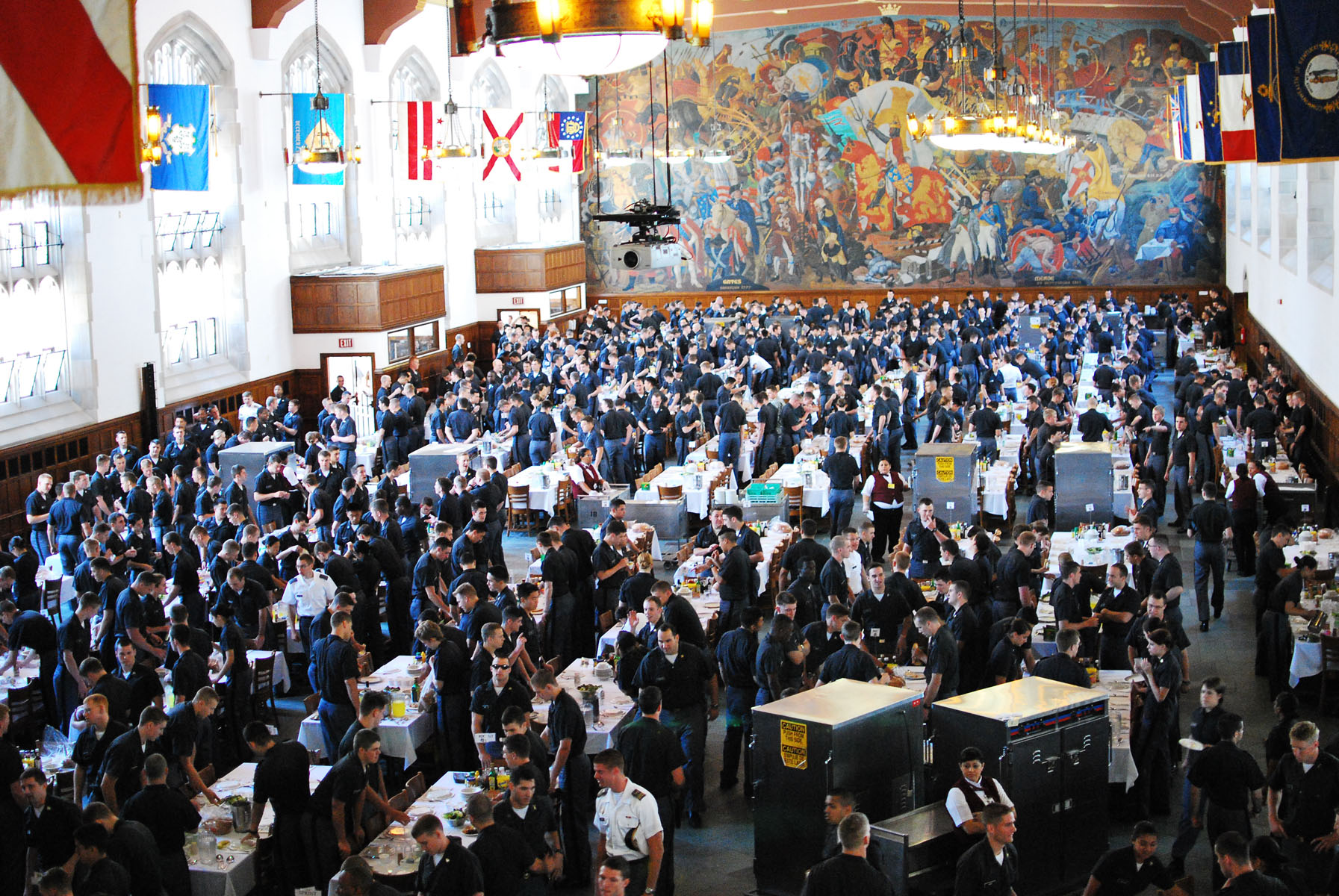
A 2010 photo of lunch being served in the “Mural Wing” of Washington Hall, the Cadet Mess Hall at West Point. (Photo: Ahodges7, CC BY-SA 3.0 DEED license.)

Eric’s task was to recommend strategies to personalize mealtime to give cadets a sense of home. To help servers learn and remember cadets’ first names, Eric adapted a method he had developed for his hotel, resort and restaurant clients. He also advised West Point servers to learn something important about each cadet such as a pet, a sibling or favorite sport.

His work at the military academies was just the beginning of many years consulting in the public sector, reaching the pinnacle in 2003 when he became an advisor to Daniel Shanks, the first Food and Beverage Usher at The White House. The demands of Daniel’s unique job are almost impossible to imagine. Eric said Daniel was a “golden prisoner” at the White House, rarely leaving except to attend Oregon’s annual Pinot Noir festival due to the demands of the job.

The White House (Photo: J.S. Miller)

For 25 years, Daniel orchestrated and managed every type of event from the annual Easter Egg Hunt for thousands of children to formal State Dinners for political leaders and royalty, including Queen Elizabeth II in 2007. Interestingly, every State Dinner is held to only 60 minutes so there is no room for even the slightest faux pas either in planning or execution.

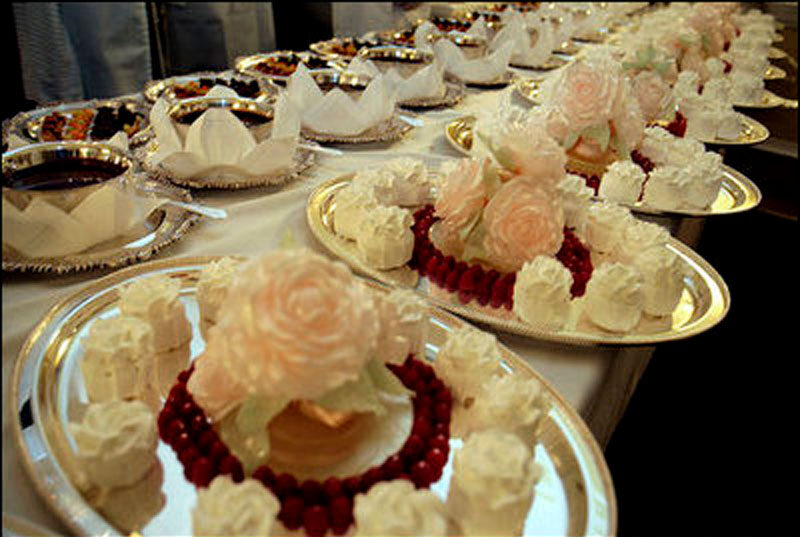
Dessert at the 2007 State Dinner in honor of Queen Elizabeth II and Prince Philip, Duke of Edinburgh. (Photo: www.georgewbush-whitehouse.archives.gov/by Shealah Craighead, White House photographer)

Eric became Daniel’s “eyes and ears,” outside of 1600 Pennsylvania Avenue, keeping him abreast of emerging food and wine trends, recommending wine for State Dinners and other events, and providing personnel recommendations for top level White House culinary staff.

He advised and collaborated with Daniel from 2003 to 2018 and they remain close friends. “Without a doubt, Daniel is probably the most amazing person that I’ve met in the hospitality world, as a human being, as a professional. He’s just an amazing human being and hospitalitarian,” Eric said.

As Eric evolved in his professional life, he took note of a few pieces missing from the hospitality puzzle. During his years working for Seagram, he hosted many wine dinners at fine dining restaurants in New York City when nobody else was customizing service in that way. Soon it was common practice. Then he had an epiphany. “I suddenly realized that wasn’t enough,” Eric said.

Harmony of the Senses

Pairing food and wine at dedicated events elevated the dining experience but why not interpret the pleasures of the table with other art forms such as dance, music, photography and art, he thought. Eric’s “Harmony of the Senses” concept came to fruition.

In 2023, dancers at La Samanna on St. Maarten interpret paintings at Eric’s three-day Harmony of the Senses event. (Photo: Courtesy of Eric Weiss)

At his first event in 2006, Eric consulted with Hilton Hotels for the opening celebration of the Conrad Indianapolis hotel. Eric hired pianist David Sancious to interpret food and wine with music. David was an early member of Bruce Springsteen’s E Street Band so he brought incredible expertise to the event, which rocked the city with its grandeur and creativity. Eric incorporated dance with 40 couples from Vienna, Austria, Indianapolis’ sister city, who traveled to Indianapolis to dance the waltz throughout two city blocks that were blocked off for the event. In addition, Vienna’s famous Lipizzaner stallions performed.

Barron Hilton (1927-2019) attended the event, the first time in 15 years he was present at one of his company’s openings, Eric said.

Lipizzaner stallions at the Spanish Riding School in Austria (Photo: ©SRS/Peter Rigaud) Used with Permission
Located near Lucas Oil Stadium in downtown Indianapolis, the Conrad Indianapolis features an art gallery with works by Warhol, Dali and Picasso and its Wine Bar & Bistro has the largest wine-by-the-glass list in the city. (Photo: Courtesy of Hilton) Used with Permission

Service Excellence City and Countywide

In 2012, Maureen “Mo” McElroy, then President and CEO of the Healdsburg Chamber of Commerce in Sonoma County, California, hired Eric to consult with both public and private entities to elevate service for both their residents and tourists. Eric said his series of Service Excellence workshops concluded when all 125 participants came together to design a symbol of excellence. Police, fire, and first responders collaborated with winemakers, hotel management and other independent business owners and staff to achieve the common goal of delivering excellent service. “Excellent Training. It was amazing to me that of the 125 attendees from the three sectors of the event, nearly all attended to the end of the program. Eric Weiss is not a person dedicated to a workshop, but a person passionate about service,” Eric Drew, Broker/President of Sotheby’s International Realty, said in a testimonial after the workshop.

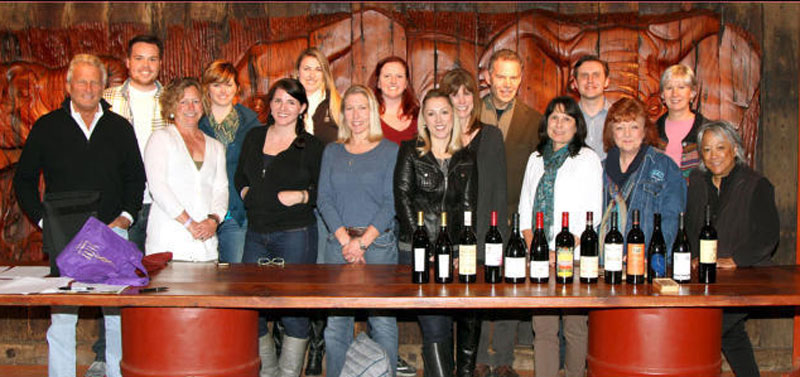
Service Excellence City and Countywide workshop participants in Healdsburg, California in 2012. (Photo: Courtesy of Eric Weiss)

Eric continues to plan and host customized Harmony of the Senses events. Most recently, 40 guests participated in a three-day event in 2023 at La Samanna on St. Maarten that first interpreted six Matisse paintings through food, wine, music and dance. On the final day, six paintings by Sir Roland Richardson, a local impressionist artist, were interpreted through Creole food, music and dance.

La Samanna on St. Maarten (Photo: Courtesy of Eric Weiss)

Elegant events integrating multiple art forms appealing to all of the senses are both timeless and ageless. In his vision to heighten food and wine experiences, Eric has identified a formula to more effectively engage younger generations in the real world.

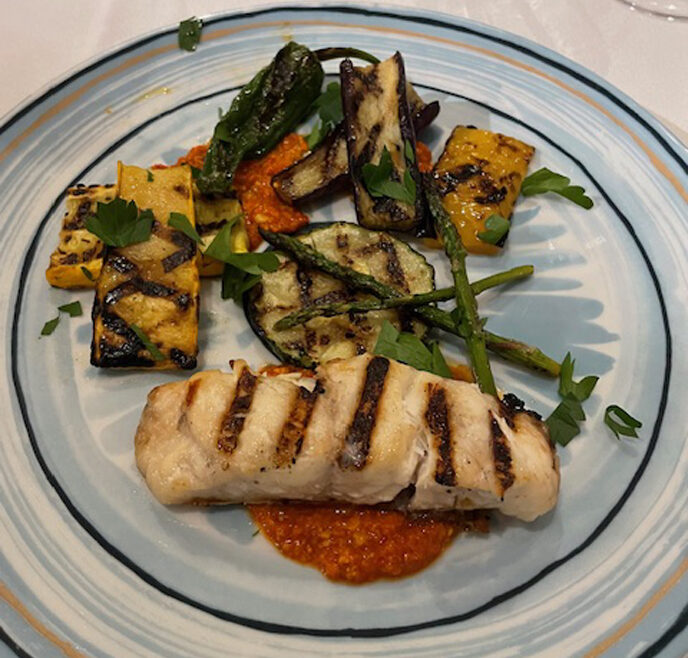
Chef David Waltuck, well known for his more than 30 years as owner of Chanterelle in New York City, interpreted the 1905 Matisse painting, Open Window, Collioure, by creating a dish of grilled fresh local fish and grilled Mediterranean vegetables at Eric’s 2023 Harmony of the Senses event at La Samanna on St. Maarten. (Photo: Courtesy of Eric Weiss)

“I think what people are looking for more and more are two qualities – authenticity and knowledge. Where is the fish from? The answer is not ‘from the sea.’ They want to know as much as possible about the provenance of proteins, vegetables, and beverages,” Eric said. With access to immediate information, guests are more knowledgeable today. “The more knowledgeable a staff is about those things, the more credible they become. In terms of authenticity, I think that is so crucial that servers be themselves.”

Keeping it real will definitely resonate with youth. “Forget the squiggles, the foams, the coulis, the dots, the tweezer food – give me food that I can recognize immediately. Give me generous portions; don’t give me dots, tiny little bits. It transcends, whether it’s the service, whether it’s the food. People are looking for Real – Authentic,” Eric advised. The new vibe is one of comfortable casual in a less formal atmosphere. But the bar is still high for service. “Real service does not mean being sloppy or not knowledgeable in that role. There’s a big difference between casual and sloppy.”

Molto Gusto – Curated Trip to Northern Italy for Chaîne Members

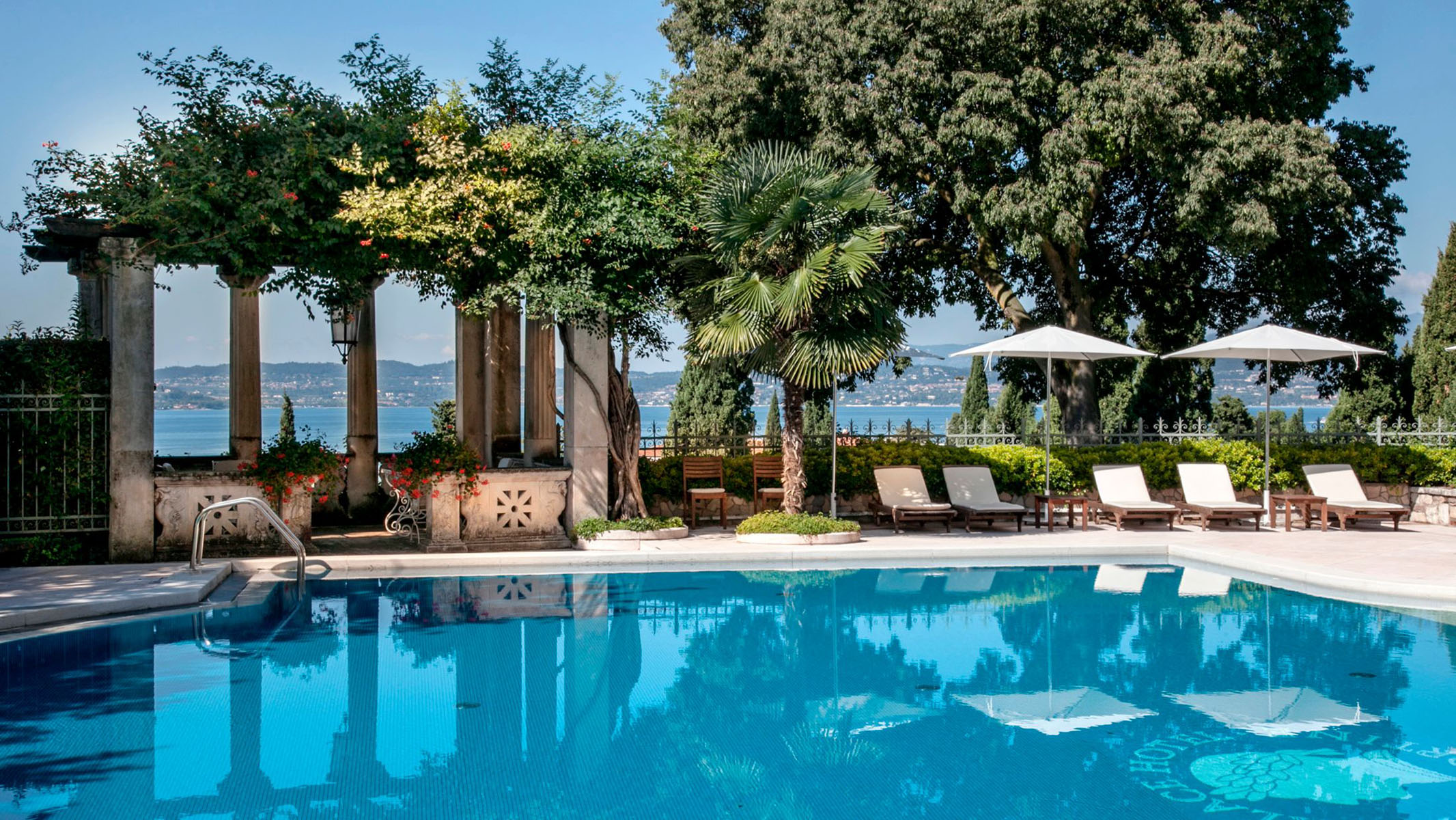
Villa Cortine Palace Hotel, one venue where guests will stay on Chaîne’s Molto Gusto tour in May. (Photo: Courtesy of Eric Weiss/Villa Cortine Palace Hotel)

Travel is an inextricable component of hospitality. Enhancing his Harmony of the Senses events, Eric is now curating travel excursions to iconic destinations known worldwide for exquisite food and wine heritage.

Signore Giuseppe Gianotti (Photo: Courtesy of Eric Weiss)
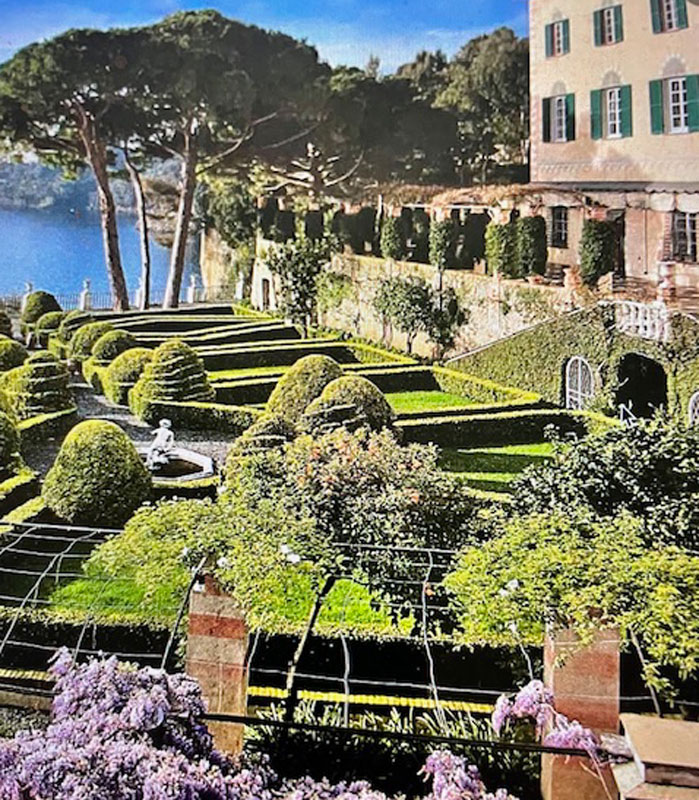
La Cervara Abbey in Santa Margherita Ligure, a location on Chaîne’s Molto Gusto tour. (Photo: Courtesy of Eric Weiss)

Exclusively for Chaîne members, he has curated Molto Gusto, a two-week trip in mid May to Northern Italy. Co-host Signore Giuseppe Gianotti, an international bon vivant from Milan, will join Eric to offer guests an intimate, insider’s experience of the region. Best of all, a portion of travel fees will be donated to the Chaîne Foundation.

Viewing vineyards dotting slopes of the Italian Alps, smelling aromas of Old World Italy before tasting classic dishes, hearing sounds of silence only Mother Nature can provide, and touching the past to the days of the Roman Empire defines Eric’s Harmony of the Senses concept. Give him a call. You’ll get an intelligent and real conversation without any risk of artificially intelligent interference!

Links and Information

Eric Weiss: Contact information – Telephone: (914)-466-2927  email: serviceny@aol.com
Multo Gusto Trip Brochure
Service Arts Inc.

Marnie Old: Rock Solid Commitment to Homework Translates to Career Success

Dec. 8, 2023 – In sixth grade, Marnie Old, certified sommelier, author, and Boisset Collection director of vinlightenment, won a gold medal for her science fair project on plate tectonics. Inspired by her father who is a geography professor, she had keen interest in learning about emerging theories of continent formation on planet Earth. Intensely inquisitive with a persistent streak of independence she has protected through layer upon layer of initiative, creativity and hard work, Marnie ultimately crafted a fulfilling career with terrain and terroir as central tenets. “I grew up with geologic maps on my walls, which were beautiful and fascinating,” Marnie said to Chaîne during a Nov. 14 telephone interview. “I just found wine to be endlessly appealing in the sense that it brought together a lot of multidisciplinary interests I already had, including geography, history, linguistics and chemistry.”

Not only her interests but also her abilities drew her to a wine industry career. Growing up on the Canadian prairies, she attended French immersion schools, speaking English for only one hour per day until tenth grade. After high school, unsure of what to study in college and with dual citizenship, she instead followed her heart to be near her American boyfriend whom she had met in Canada. In 1987, they both settled in Philadelphia where they live today.

Philadelphia’s iconic “LOVE” sculpture is located near City Hall. (Credit: Public domain via Wikipedia)

Philadelphia

Seventeen-year-old Marnie took the City of Brotherly Love’s restaurant scene by storm, first learning the ropes and then methodically building a strong ladder to success. She worked her way up from a diner to a jazz club and then to fine dining venues. “I quickly figured out that I only wanted to serve really good food,” Marnie said. She gravitated to fine dining where she was introduced to fine wine. “Before I was legally able to drink alcohol, I was already learning about wine and learning about service.”

Fluent in French, the language of wine, Marnie dove into its history and science while working as a server and a bartender at the Four Seasons Hotel Philadelphia where she soaked up knowledge like her bar sponge. In 1993, Kevin Zraly, legendary sommelier at New York City’s Windows on the World restaurant, took his wine classes on the road. When she learned the Four Seasons would be hosting the classes, she jumped at the chance to volunteer, becoming his chief wine pourer for the eight-session course. “That was just an eye-opening experience on so many levels – just fabulous,” she said.

Credit: Courtesy of Boisset Collection

Before becoming a sommelier, Kevin had been a kindergarten teacher just as Marnie’s mother had. Marnie admired their ability to break down complex concepts to facilitate learning while having fun, a style of teaching she would adopt as she became a wine educator. Kevin has remained one of Marnie’s mentors throughout her career.

Now with experience in fine dining, Marnie next accepted a position at Chanterelles, a tiny, beloved fine dining restaurant in Philadelphia led my Master Chef Philippe Chin. It didn’t take long for Marnie’s fellow waiters and servers to ask her to come to their tables to explain wine to their guests. Then she had an epiphany. “I was very young and very naive but also ambitious and I saw an opportunity,” she said. Joe O’Neill, Chanterelles’ head server, managed the wine program but disliked those duties during the slow summer months when he would have rather been at the beach. So Marnie went to Chef Chin with a proposal. She would assume wine responsibilities for the summer, taking on the hard work of rebuilding the cellar for the busy fall season and would do so without pay. If successful, she would be recognized as Chanterelles’ sommelier and would be paid from that point forward. Chef Chin and Joe agreed, a win-win-win. Joe had time to spend at the shore; the restaurant’s bottom line improved; and Marnie secured a chance for a coveted promotion. “I did so much homework that summer. I was a total geek. I was definitely going way beyond the needs on that first wine list because I felt insecure about my level of wine knowledge,” she said. Determined to fill that gap, she pored through volumes of Robert Parker’s wine reviews and every wine book she could find.

Sommelier Career

Marnie curated a 120-bottle wine list for Chanterelles that summer with a Plan A, B, and C for each slot on the list since she didn’t know which wines were available or which distributors sold them. She describes what she did next as the product of 23-year-old wisdom. She mailed her curated wine list to every representative who was selling wine to the restaurant. Requesting quotes, only about 25 percent of her choices were available in Pennsylvania and she learned quickly that her vintage requests and pricing estimates were irrelevant in the real world of wine distribution. Some sales representatives found her earnest missive amusing but to their credit, most took her valiant effort seriously.

Marnie’s wine list succeeded that fall. “That’s how I became a sommelier at the age of 23,” Marnie said.

Credit: Courtesy of Boisset Collection

Firmly planted in Philadelphia, her location was a serendipitous advantage. “Pennsylvania was a terrible place to be a sommelier,” she explained. Sommeliers with experience would head for less restrictive states. The resulting turnover rate opened the door for Marnie’s meteoric rise as one of Philadelphia’s top sommeliers.

Marnie Old (Credit: Courtesy of Boisset Collection)

From Chanterelles, she became the sommelier at Striped Bass, then one of Philadelphia’s most fashionable fine dining restaurants. The prestigious job gave her clout and her first paid vacation. With three weeks off, she traveled throughout France visiting wineries in Burgundy, Champagne and Alsace. Running from train to train and appointment to appointment, she decided that would be her last working vacation. From that moment on, she kept wine travel and leisure time in separate barrels.

Credit: Courtesy of Boisset Collection

At this juncture in her career, she made another fortuitous decision. Rather than seeking formal wine certification, she volunteered to teach wine classes for waiters across the city, which had her doing more homework. “That tactic got me very far, very quickly,” she said. Her father laughs because Marnie’s brother did the opposite, spending more than 15 years earning degrees to become an orthopedic surgeon while Marnie created her career by pursuing her own interests as a do-it-yourself project. He is proud of both paths, she added. Years later, Marnie did eventually seek certification through the Court of Master Sommeliers, passing their rigorous Advanced Sommelier three-part exam on her first attempt.

With her reputation rising, in 1997, Marnie and her growing network of Philadelphia wine professionals identified a gaping hole in sommelier education at the national level. At the time, prerequisites for the Court of Master Sommeliers’ most basic certification were unattainable for most aspirants. Seeking to bridge that gap, Marnie joined with sommeliers from New York and Florida to establish the non-profit American Sommelier Association (ASA), serving as a founding board member and their education chair. Her mission was to develop an introductory “foundation” course for those with no prior wine knowledge, one which would not compete with the Court of Master Sommeliers but rather, act as a feeder for it by offering basic training. “My goal was to create Sesame Street for wine,” she said.

Her leadership role in the fledgling ASA gave her the freedom to dream big, and on this project, doing her homework ultimately helped Marnie reshape wine education in America by uprooting the status quo. Wine education courses had always started with how wine is made and then jumped into the major wine regions, requiring students to tackle long lists of appellations and their grapes before they understood basic wine concepts. “It was all done by brute force memorization,” Marnie explained.

Credit: Courtesy of Marnie Old

Knowing this to be an ineffective educational strategy, she took a different approach, one inspired by her parents and mentor. Pondering barriers to comprehension in wine education, Marnie decided to begin her course with big-picture generalizations with an emphasis on the importance of sensory perception, learning how professionals analyze wines and how those differences are described.

Before her students tasted a single glass of wine, she first introduced nonalcoholic drinks containing club soda and varying ingredients to help isolate tastes, smells and tactile components. To teach acidity, she added lemon juice and for red wine tannins, she added black tea. To illustrate how wine could taste fruity without being sweet, she used flavored seltzer. With these baseline tasting experiences, her students could sensibly evaluate every wine that followed, Marnie thought. Her strategy proved to be highly effective.

Making Lemonade from Lemons

In a series of setbacks in 2001, Marnie had to turn her lemons into lemonade. First, she was laid off from her day job in the post 9/11 belt-tightening environment. One month later, with her Wine Foundation Course fully developed and executed for the ASA, her relationship with the nascent group ended abruptly. Over ideological differences, ASA wanted neither her work product nor her presence on their board. “I was devastated when this happened but both departures were the best things that could have happened for my career,” she said. “The work I did for the ASA as a volunteer has formed the basis for all five of the books I’ve written since.”

Marnie leveraged her experience into a springboard for her next chapter. In 2001, she launched her consulting business through which she would later advise high profile restaurants such as New York City’s Morimoto and Philadelphia’s Parc. Almost immediately, she shifted her teaching focus to culinary schools, most notably the French Culinary Institute in Manhattan where she became their director of wine studies in 2006.

Author

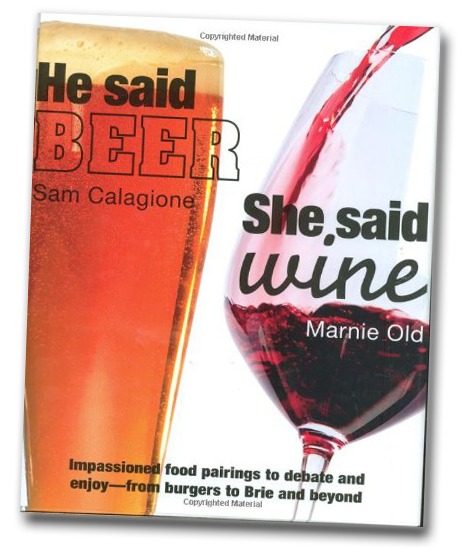
In 2009, Marnie made her writing debut as co-author of He Said Beer, She Said Wine with Sam Calagione, founder of Dogfish Head Craft Brewery, a tongue-in-cheek debate between partisans of each beverage. Sam’s high profile and the book’s timely message helped propel Marnie to national attention.
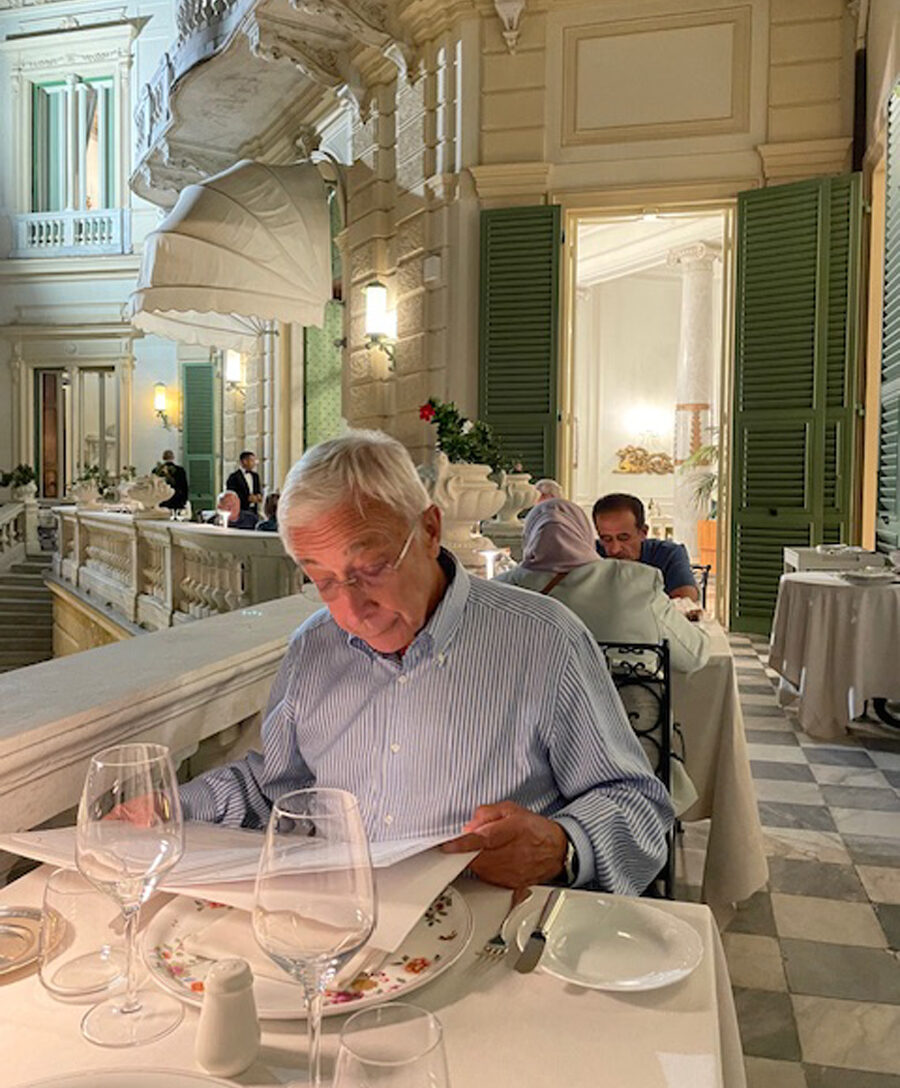
Credit: Courtesy of Marnie Old

DK Publishing admired her work and in 2013, offered Marnie a dream book deal, the chance to write an infographic wine basics book as part of DK’s full-color series on drinks. There was one catch though. DK needed the book finished in three months, a lightning fast deadline in the publishing world. “I could never have signed that contract if I were starting from scratch,” she said. “But I had been teaching using visuals from day one and had refined my system for over a decade, so I was ready.”

Still, the work was onerous as she worked 12 to 14-hour days. She met her deadline with help from her husband who brought her food. “I don’t think I left the house for three months,” she said. The result, Wine – A Tasting Course, has been a great success, now translated into 17 languages and widely used as a beginner’s textbook. “Writing that book was the heaviest lift of my life. It’s undoubtedly the best thing I’ve ever done and will live beyond me. I don’t have kids so I’m allowed to say that,” Marnie said.

Jean-Charles Boisset and Boisset Collection

The book had an immediate impact on Marnie’s career. Two lunches with Jean-Charles Boisset in Philadelphia, a few years apart, set the wheels in motion.

Marnie first met Jean-Charles Boisset, the proprietor of Boisset Collection, one of the world’s largest family-owned wine companies, in 2010. At a press luncheon shortly after launching her first book, she gifted him a signed copy, which prompted a fascinating four-hour conversation on wine and beer over a nine-course lunch. They shared a goal to help people connect with wine by breaking down the intimidating barriers that had dominated America’s wine culture for decades. While addressing the issue from different perspectives, they were both on the same page.

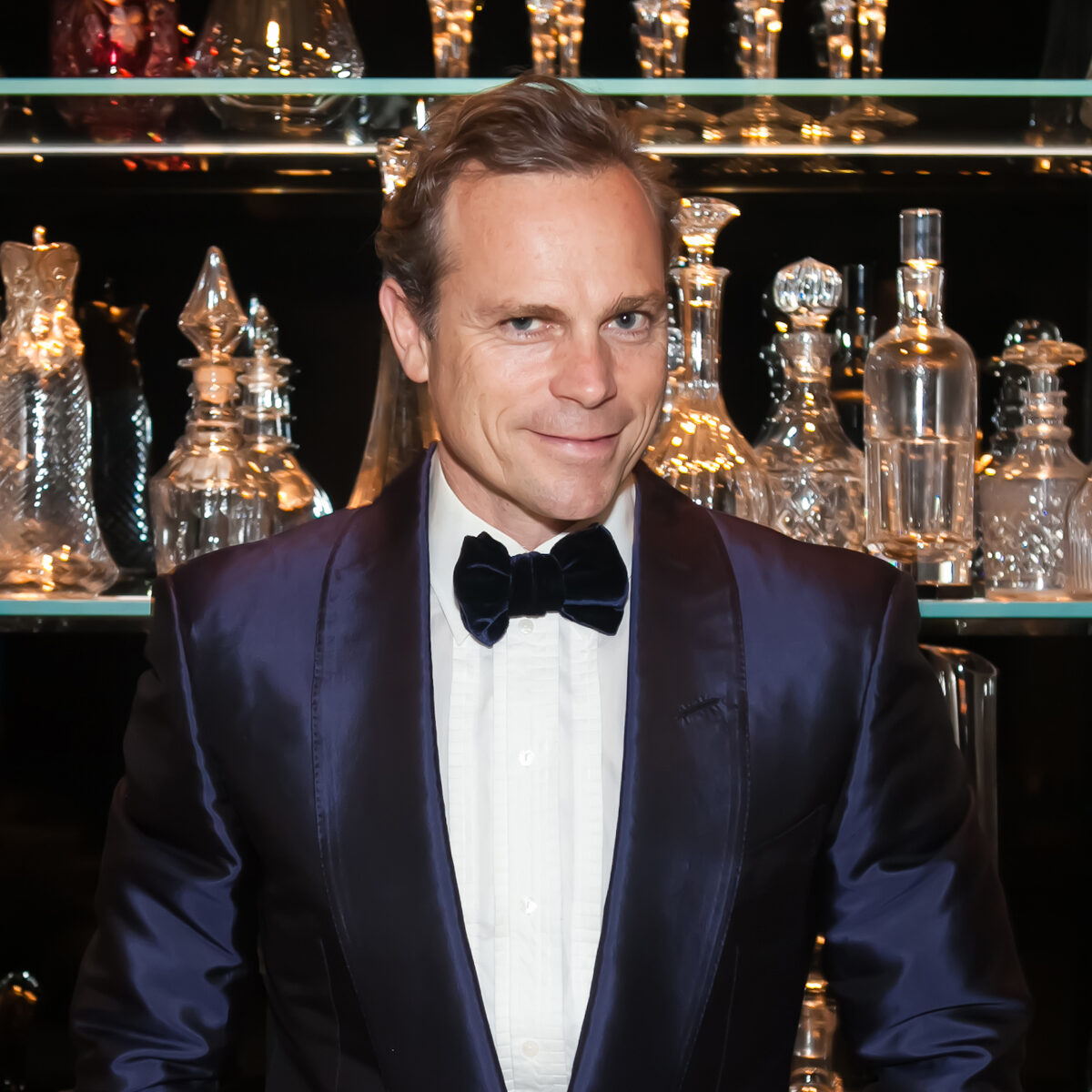
Jean-Charles Boisset (Credit: Courtesy of Boisset Collection)

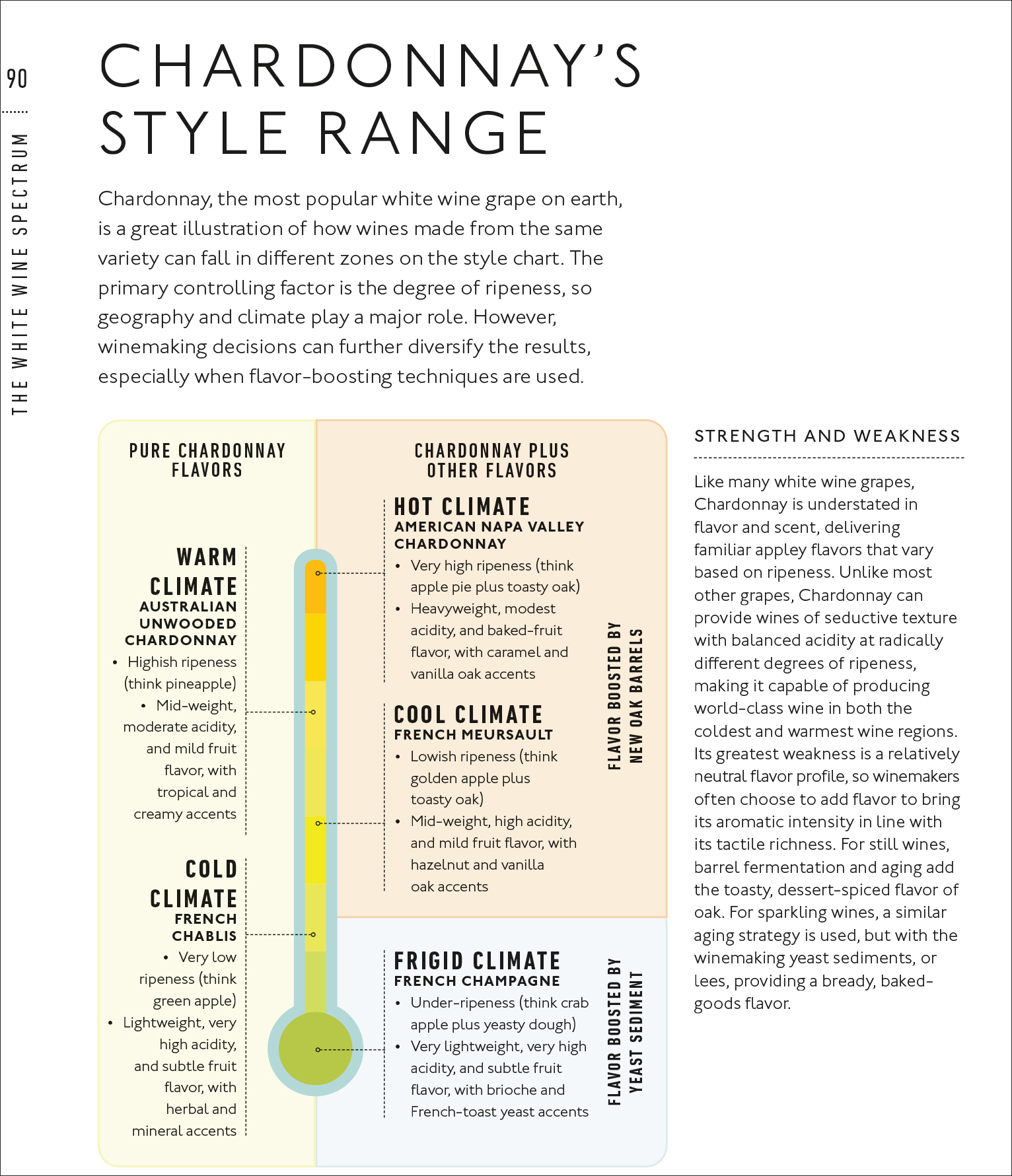
Four years later, Boisset invited Marnie to a Friday Bubbly Brunch with Jean-Charles at Rouge, a fine dining restaurant located on Philadelphia’s historic Rittenhouse Square. She again gifted Jean-Charles a signed book, this time her newly published infographic wine primer. By chance, as he held the book it opened to the page featuring a Chardonnay infographic with a thermometer showing how climate shapes the vast spectrum of wine styles the grape can produce, from brisk French Blanc de Blancs to buttery California Chardonnay.

Jean-Charles had never seen it explained so succinctly. He hired Marnie on the spot to serve as a consultant for Boisset Collection’s marketing efforts, including a new project they had launched for direct-to-consumer sales – the Boisset Ambassador Program.


“We have worked successfully together ever since,” Marnie said. In 2018, she came on board full time as Boisset Collection’s director of vinlightenment. Her responsibilities focus on training and supporting Boisset’s nationwide network of Ambassadors who act as wine influencers by organizing wine tastings and earn commission by facilitating eCommerce wine sales.

Marnie not only brought her years of experience to her new position with Boisset but also her boundless energy, a true passion for wine and a fearless determination to disrupt the status quo to educate people about wine. She instinctively understood Jean-Charles’ vision for the Ambassador Program and saw the future of wine sales in America in his project. “I was skeptical of the social selling model at first, but in meeting his Ambassadors, I soon saw the incredible potential,” she said. “It was a hard choice to give up my independence, but I believed in what Boisset was doing and wanted to be involved in pioneering a novel sales channel.”

Infographic on Chardonnay’s Style Range that Marnie created for her wine primer. (Credit: Courtesy of Marnie Old)

Jean-Charles’ commitment to connect directly with wine drinkers is rooted in his childhood in France.

Jean-Claude and Claudine Boisset, his parents, founded their winery in 1961 in Burgundy’s Cote d’Or, making wine in their basement and opening their home to showcase it. It wasn’t a job but a way of life since wine is an integral facet of French culture, an economic and social catalyst that brings people together to celebrate life, from the mundane to the magnificent.

On a visit to northern California when he was an adolescent, Jean-Charles vowed to one day make wine in California. In the 1990s when his parents needed someone to operate their American office in San Francisco, Jean-Charles jumped at the chance to move to the United States. As he acquired wineries and grew the family business into a transnational luxury company, Boisset Collection’s portfolio expanded to include 25 estate wineries in the United States and France. He implemented sustainable and biodynamic farming practices in Boisset’s vineyards years before widespread industry adoption. And throughout his career, Jean-Charles often reflected on the social nature of French wine culture from his wonderful childhood experiences in Burgundy immersed in it. He aimed to bring this heritage to his American business as well.

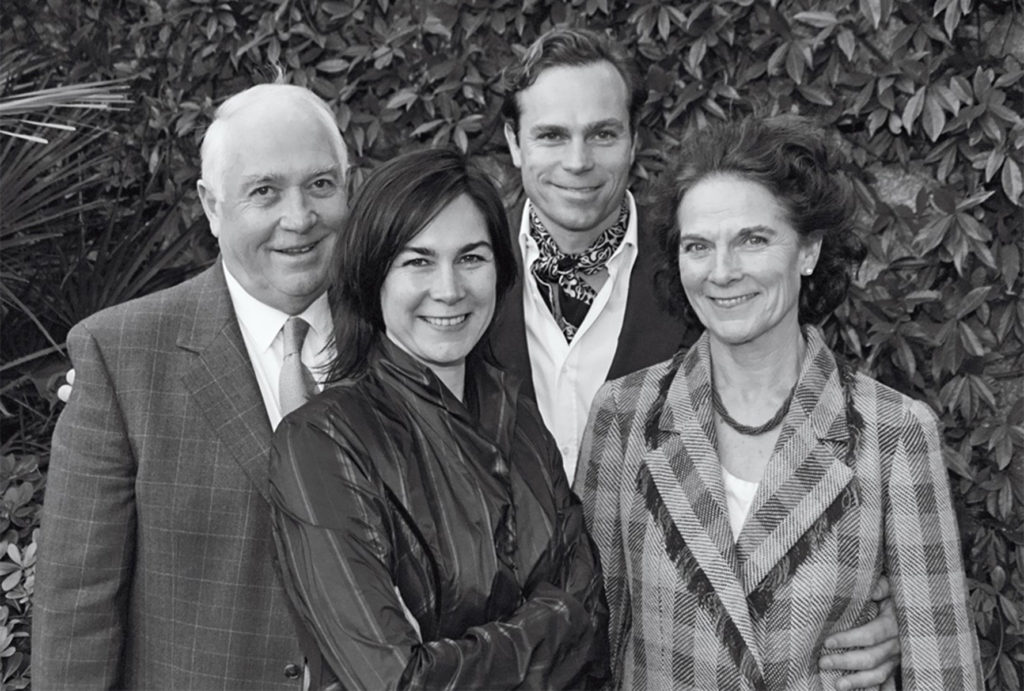
The Boisset family: From left, Jean-Claude, Nathalie, Jean-Charles and Claudine (Photo: Courtesy of Boisset Collection)
Credit: Courtesy of Boisset Collection

In 2018, Jean-Charles and Marnie provided wine lovers with another resource to simplify the complex world of wine by co-authoring Passion for Wine: The French Ideal and the American Dream. Building on Marnie’s use of infographics to easily communicate with readers, the book expands discussion of Spectrum of Style within the Boisset Collection portfolio of wineries.

Boisset Collection Ambassador Program

How could he replicate that experience to connect directly with oenophiles in America given 50 different states and a slew of federal, state-by-state, and local regulations governing wine sales? Boisset’s Ambassador program, launched in 2012, was the answer.

Boisset Collection handles fulfillment and provides each Ambassador with an e-Commerce website for an efficient and effective turnkey operation. Ambassadors are extensively supported with online education developed and conducted by Marnie; virtual wine tastings; special events such as one-day virtual winemaking sessions complete with winemaking kits sent to homes; global travel opportunities and unique Boisset Collection wines only available through Ambassadors.

Jean-Charles and Marnie during a photo shoot for their book, Passion for Wine. (Credit: Courtesy of Boisset Collection)

Now with more than 2,000 Ambassadors, the program has steadily grown through grass-roots marketing and strategic partnerships, including a new partnership with the Chaîne des Rôtisseurs and its Baillis, scheduled to be formally launched in January 2024. Commission from wine sales will generate revenue for the Bailliages to help fund the Chaîne’s longstanding focus on supporting young culinarians and sommeliers through scholarships.
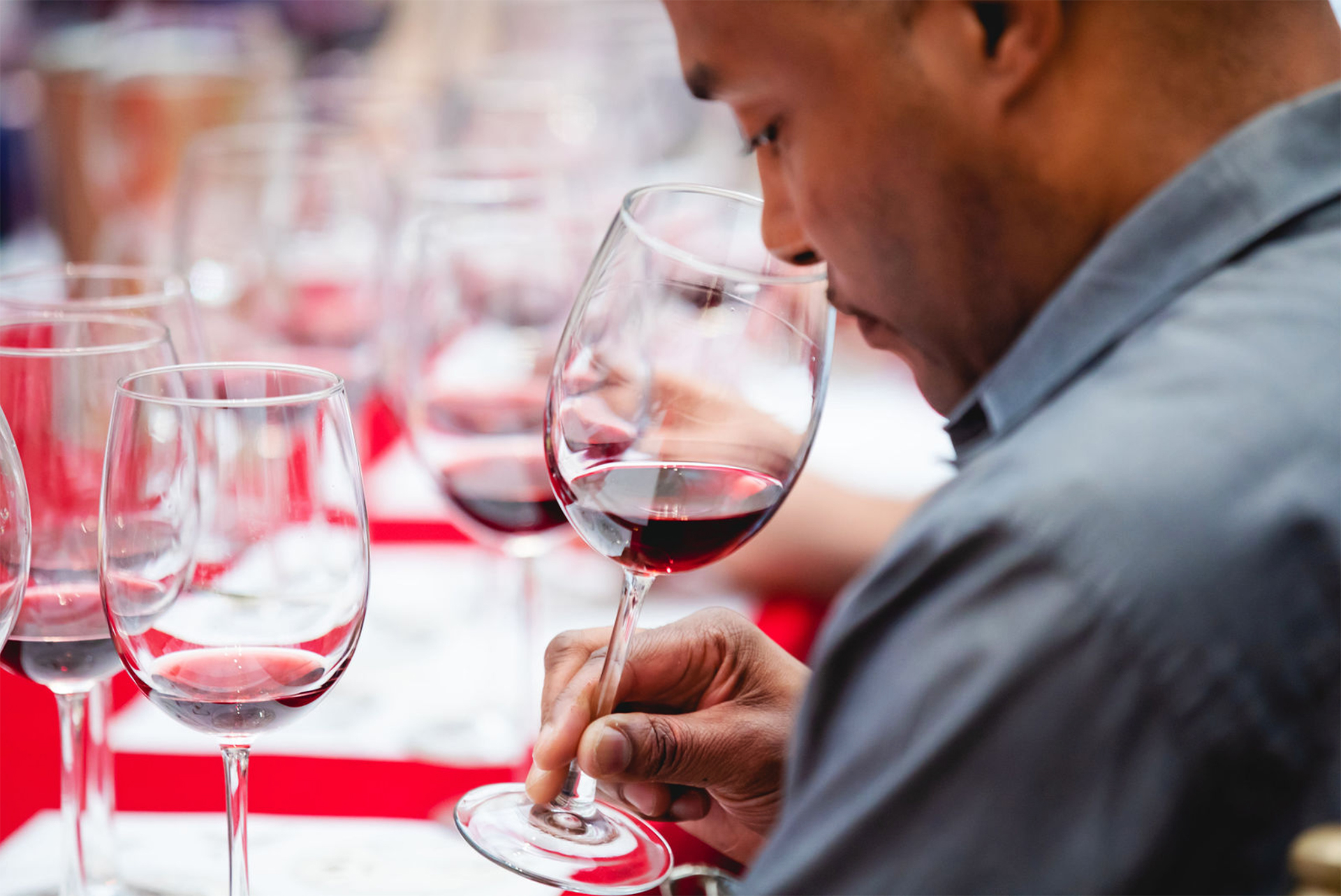
“Everywhere around the country the Chaîne is doing good work and I clearly see how our Ambassador Program can further those goals. I can’t wait to introduce Chaîne members and Baillis to all of the facets of the program, which include uncommon wine services such as custom label wines and learning-themed flights that are ideal for Chaîne dinners and events,” Marnie said.

Credit: Courtesy of Boisset Collection

With a bedrock commitment to learning and communicating in ways that help her authentically connect with people who love wine, Marnie’s sixth grade plate tectonics science fair project was prescient as she caused a seismic shift in wine education worldwide. For that, students of all ages studying wine are eternally grateful she replaced brute force memorization with intuitive visual learning. For those building a career ladder in the wine industry, Marnie has made that ladder easier to build. On the wine world’s Richter scale, Marnie’s impact was definitely a 9, an extreme event!

Links

Cuvee Spotlight (2021): Jean-Charles Boisset

Boisset Collection
Boisset Collection Ambassador Program
Court of Master Sommeliers

Eric Palmer Defined by Service, Education as a Rising Star Sommelier

Oct. 27, 2023 – The performance art of fine dining service at top tier restaurants goes unnoticed by guests, by design, but is always uppermost on the minds of sommeliers and other front of the house staff as they strive to deliver memorable culinary experiences. It’s so important it is one-third of Chaîne des Rôtisseurs Jeunes Sommeliers Competition and since 2020, a major emphasis both nationally and internationally. “Everything should feel like it’s moving like clockwork. Everything should be graceful and fluid. You should never notice something that feels out of place or not in sync,” Eric Palmer, Certified Sommelier and the United States 2023 Jeunes Sommeliers Competition champion, said to Chaîne during an Oct. 21 telephone interview.

Eric is on nothing short of a meteoric rise in the sommelier profession. After graduating from college in 2020, he is a little more than three years into a five year experiment to see if being a sommelier could be a viable career path for him. He already has his answer.

National Jeunes Sommeliers Competition

In mid April this year at Chaine’s National Jeunes Sommeliers Competition, held in Napa, he surprised himself when he took home first place honors. “Having prepared hard, but being off the floor for about a year, I was frankly shocked to have done so well at nationals. I thoroughly enjoyed it. George [Staikos] and his team couldn’t have put on a better event,” Eric said.

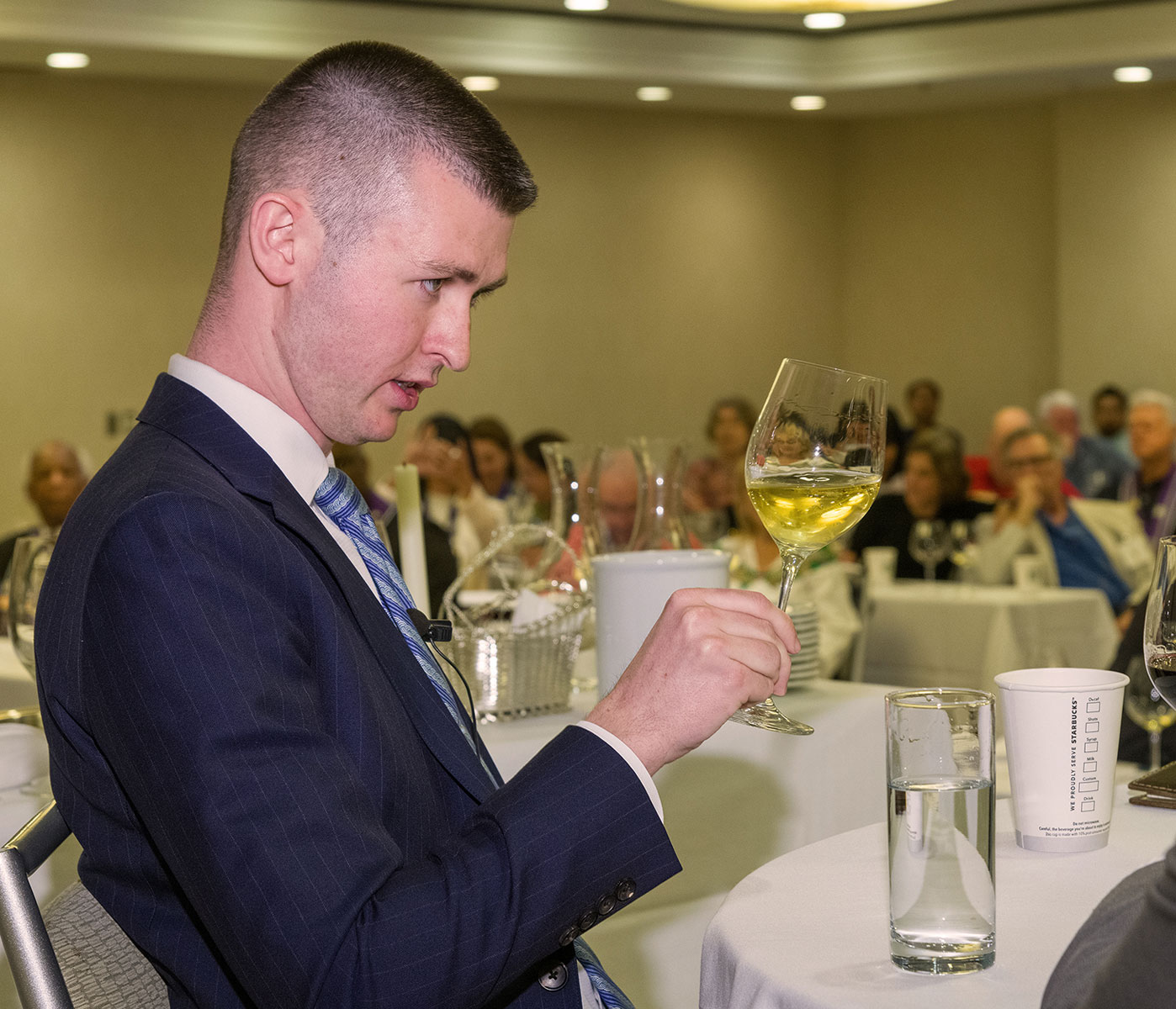
Eric Palmer at the National Jeunes Sommeliers Competition in Napa.

After a few days visiting wineries and being introduced to Napa Valley, six sommeliers competed over two days in three preliminary rounds – Blind Tasting, Theory and Practical Service Skills – to advance to the national finals. For Eric, the Blind Tasting segment is always the most challenging. They were given a full flight of six wines with 25 minutes to identify grape variety; place of origin even down to a specific appellation; vintage; and quality level. To bring a clean palate to this phase of the competition, most sommeliers are careful what they eat before and even fast, which is what Eric chose to do.

Following the tasting, a 50-question written quiz tested the sommeliers on Theory, a format Eric said is easier than taking a verbal quiz. And then it was time for the six competitors to shine through two service exercises, which were judged in real time. “It’s always a mix of stress and delight for me,” Eric said.

Eric and two other sommeliers advanced to the final round, which Eric described as very similar to the preliminary rounds but in a shorter time frame and in front of an audience of 60 to 70 people. And the final round ended with a sparkling wine pouring during which the sommeliers had to pour seven glasses from a bottle of sparkling wine as evenly as possible.

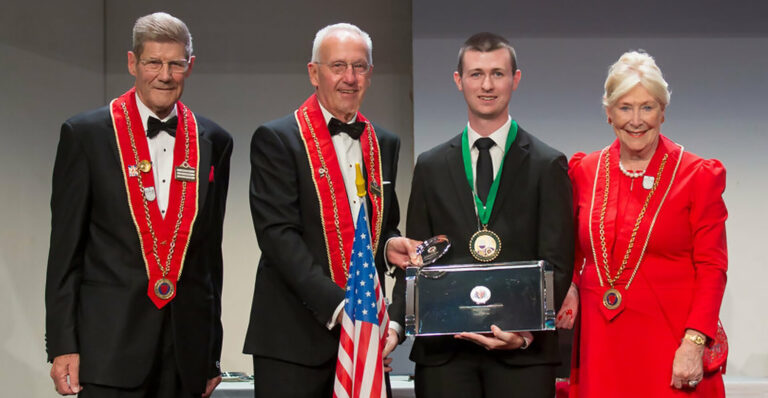
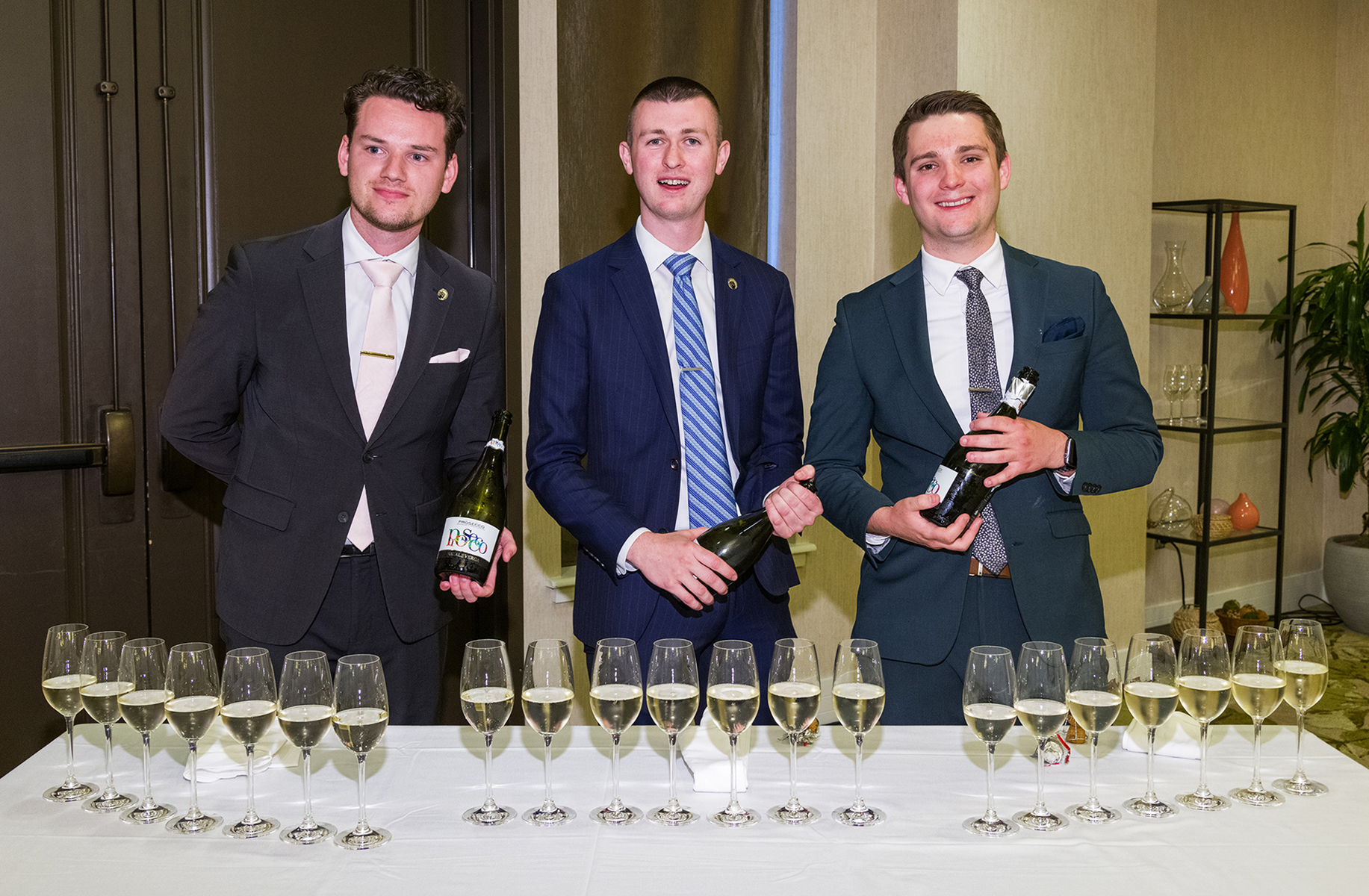
Three finalists competed in the final round pouring seven glasses of sparkling wine as evenly as possible. Eric, in the middle, won the competition. (Photo: Chaîne)

With no expectation to win but to learn more about wine and the competition, as the 2023 champion, Eric is somewhat disappointed he will not be able to compete next year as he was already looking forward to it. But in addition to his victory, Eric returned home to Atlanta with new friends and new career opportunities.

“The competition itself was truly a delight. It was pretty stressful at times but the chance to get to perform and compete in front of such an acclaimed list of judges that we had there is such an invaluable opportunity for us as young wine professionals. I was honored to stand among the other competitors. We’ve all maintained friendships since, and support each other’s studies and pursuits,” Eric said.

International Jeunes Sommeliers Competition

Eric took one week off to celebrate and cherish his new champion status. Then it was back to work as he prepared to represent the United States at the Chaîne des Rotisseurs International Jeunes Sommeliers Competition held in mid September in Ljubljana, the capital of Slovenia, a central European country that borders Austria to the north and is located on the eastern shores of the Adriatic Sea.

Ljubljana Castle, site of the Chaîne des Rotisseurs International Jeunes Sommeliers Competition in Ljubljana, Slovenia, sits on a hill overlooking downtown Ljubljana, the capital of Slovenia. (Photo: Courtesy of Ljubljana Castle)

Eric approached his four-month training period with the mindset of an elite athlete. After his week off to reset and recharge, he took one week to create a study plan and then doggedly followed it. Daily tasks included a study period to prepare for the Theory portion by reviewing the World Atlas of Wine, flipping through flash cards, and accessing online resources to reinforce and expand his knowledge base.

For Blind Tasting preparation, Eric said he was fortunate to live in Atlanta, a city that has a vibrant wine community with active tasting groups. Two to three times per week, Eric attended tastings and with supportive colleagues, they would set aside time just for Eric to blind taste a full flight of six wines. Surprising to some, sommeliers also become experts in all drinks, including spirits, beer and even coffee and water.

About one month before the competition, in addition to his Blind Wine Tastings, he practiced Blind Spirit Tastings. “I tried to make sure I blinded everything at least once, and did many comparatives such as whiskeys or berry liqueur flights. People often think of tasting as a glamorous part of our jobs, but it’s work. Spitting is essential, but your tongue feels pretty abused when you’re doing this first thing in the morning,” Eric said with a chuckle.

With the new emphasis on Practical Service Skills as a key element of the competitions, Eric worked with a trainer experienced in the Alexander technique, a method used by performance artists and actors on how to efficiently and effectively use their bodies to excel at their craft.

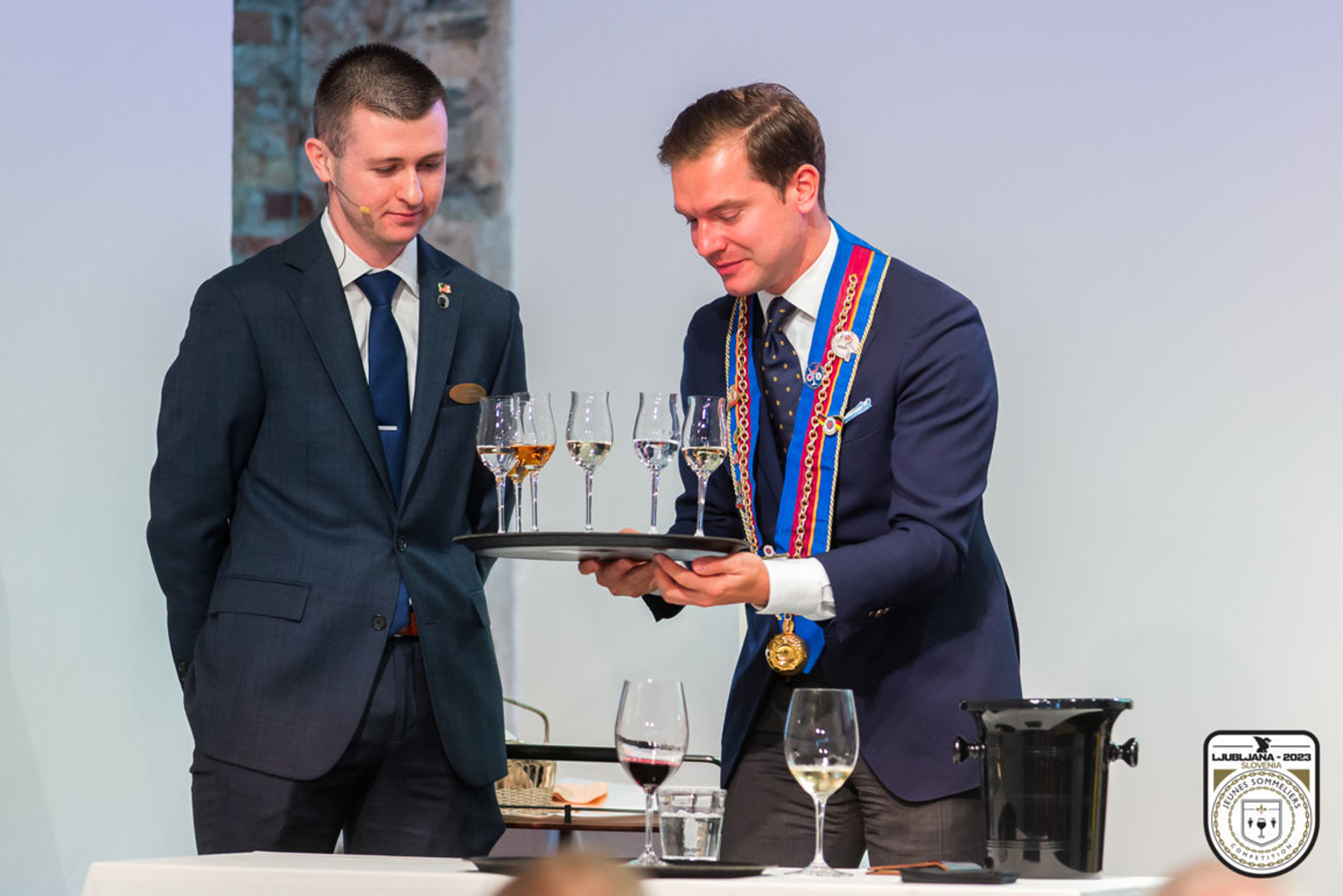
Eric Palmer, left, with Evo Erades, Grand Echanson of Netherlands, at the International Jeunes Sommeliers Competition, held in September in Ljubljana, Slovenia. (Photo: Courtesy of Eric Palmer, Photographer: Adrijan Pregelj)

“In a narrow sense, it could be compared to posture coaching,” Eric explained. With his trainer, he practiced refining the technical points of service from opening and pouring a bottle of wine to moving around the table and wine cart with grace. Sommeliers and wait staff always move in a clockwise direction. By doing so, Eric said, “It’s easy to predict where all of your colleagues on the floor will move next. It’s really about maintaining that fluidity and grace across the dining room.”

Similar in format to the national competition, Eric and 13 other sommeliers in the international competition first learned about Slovenia through seminars and then experienced the rich culinary culture of the country.“We had a lot of delicious food in the days leading up to the competition, The organizers from the Slovenian Bailliage prepared an amazing program,” Eric said.

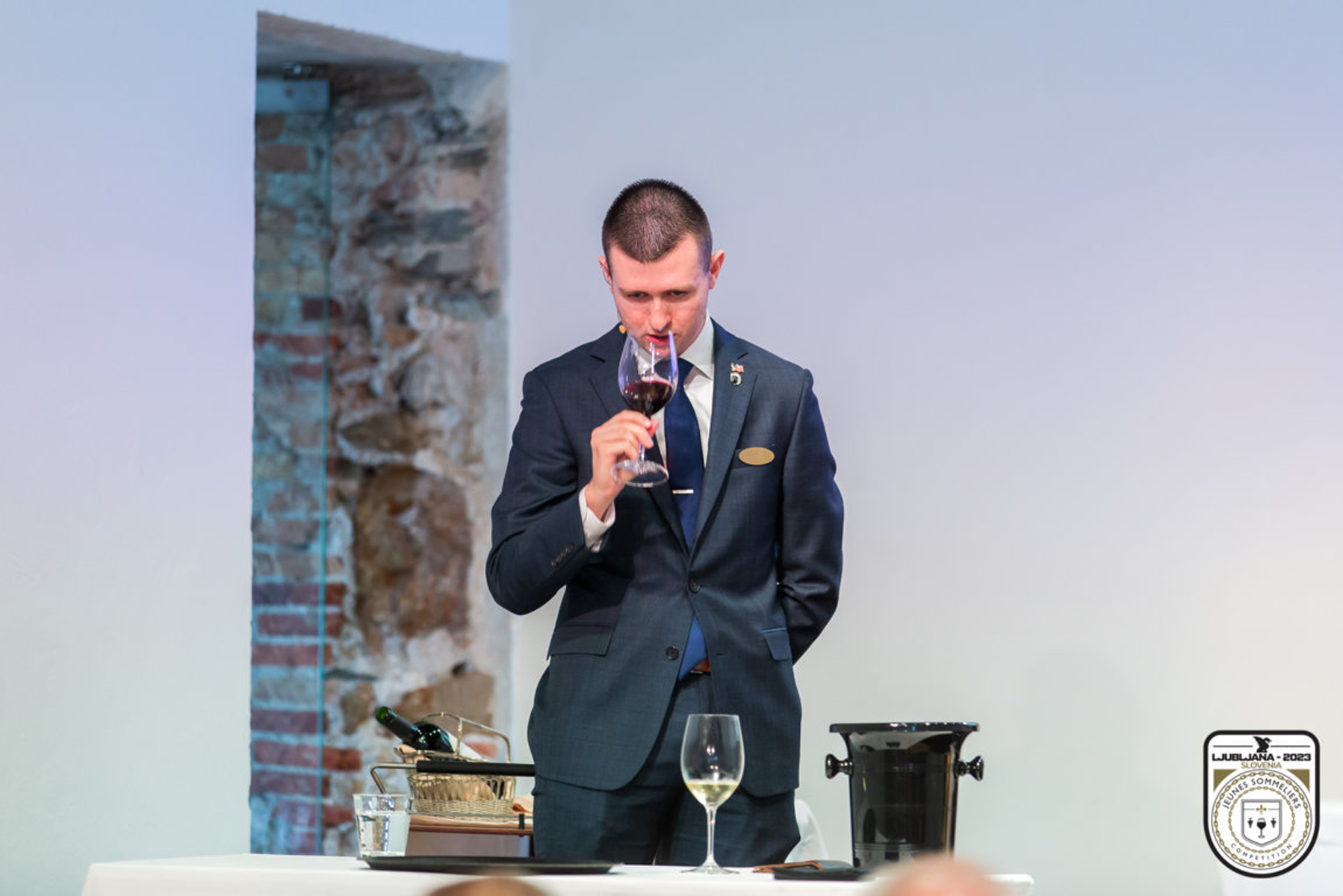
Always keeping the competitors on their toes, Eric said while on stage in front of an audience, they were shown photos of winemakers and wineries and had to identify them. And they were given a wine list to correct in addition to the standard categories of Blind Tastings and Service Skills. Eric finished third, a remarkable feat considering he had just discovered wine as a potential career path three years ago.

Eric at the International Jeunes Sommeliers Competition, held in September in Ljubljana, Slovenia. (Photo: Courtesy of Eric Palmer, Photographer: Adrijan Pregelj)

Following the competition, Eric traveled throughout France briefly visiting Burgundy, Champagne, and Bordeaux. “The country could not have been more beautiful and the people were so hospitable and warm,” Eric said.

In Burgundy, he happened upon an opportunity of a lifetime. Visiting a winery, the negociant asked if Eric wanted to help with pigeage, the punch down. Of course, he replied. “About an hour later I’m in my running shorts, about thigh deep in grape must and juice, stomping to press these grapes down and release some juice on top. That was an incredibly special experience to take a brief part in production and really get our feet wet both literally and metaphorically in wine making,” Eric said. He could never have imagined such a scene.

Eric literally and metaphorically got his feet wet in Burgundy as he helped with Pigeage, punch down. (Photo: Courtesy of Eric Palmer)

Family and College

Just three years before, Eric was in his senior year at Hampshire College in Amherst, Massachusetts planning to pursue a doctoral degree in Philosophy after graduation and working three to four nights per week as a bartender to pay for college.

Eric grew up in King of Prussia, Pennsylvania, a Philadelphia suburb. Through most of his life, his mother worked as a private nanny and his father was a pastry chef. “I grew up in a family who throughout their careers had taken care of people. I had a love and appreciation for service,” Eric said.

At 14, Eric started working and as many teenagers do, found himself at McDonald’s flipping burgers. Most important, he had stepped into the adult world of job experience and responsibility. He took full advantage of it. Throughout high school and college, Eric said he held eight or nine different jobs. He especially loved selling men’s suits at a retail store. “I fell in love selling suits and formal wear. But what I really loved about that was taking care of people and building relationships with them.”

At Hampshire College, a small liberal arts college with about 1,200 students, each student creates their own academic plan and through a consortium of four other colleges, can take classes at each college. Eric built a program focused on Philosophy and Economics, culminating in his thesis on the moral analysis of risk taking and financial speculation.

Hampshire College in Amherst, Massachusetts (Photo: Courtesy Hampshire College Media Relations)

Securing a job at a local restaurant and bar, Eric worked there throughout college but in the middle of his senior year, he had an epiphany as he looked ahead to graduate school. “I realized as I was coming to the end of my college career that the future that I had seen going to grad school was going to be a pretty solitary and lonely one.” He saw himself sitting in an office six to seven hours a day reading and grading papers.

Hampshire College in Amherst, Massachusetts (Photo: Courtesy of Hampshire College Media Relations)

He loved going to work and sharing the stories behind the bottles he was opening. “I realized that I had just as much opportunity to teach people across the bar. There was an educational aspect there that I really enjoyed and could pursue in a very social and fun environment,” he said.

So he decided to test his mettle for a new career path. He signed up for a short internship at a high end resort in Massachusetts. The care given to the restaurant’s wine collection dating to the 1930s and 1940s made an immediate impact on him. “This opened my eyes to the possibility of working with beverages and wine specifically at a level of excellence and care that I had never before been exposed to,” Eric said.

Graduation and move to Atlanta

After graduation, he moved to Atlanta instead of enrolling in graduate school. During college, he had taken the introductory Sommelier course so had begun his formal education in wine but still kept his options open. Giving himself five years to experiment with a wine career, he said, “If it doesn’t work out, I can show grad school at least I was doing something and not just drinking.”

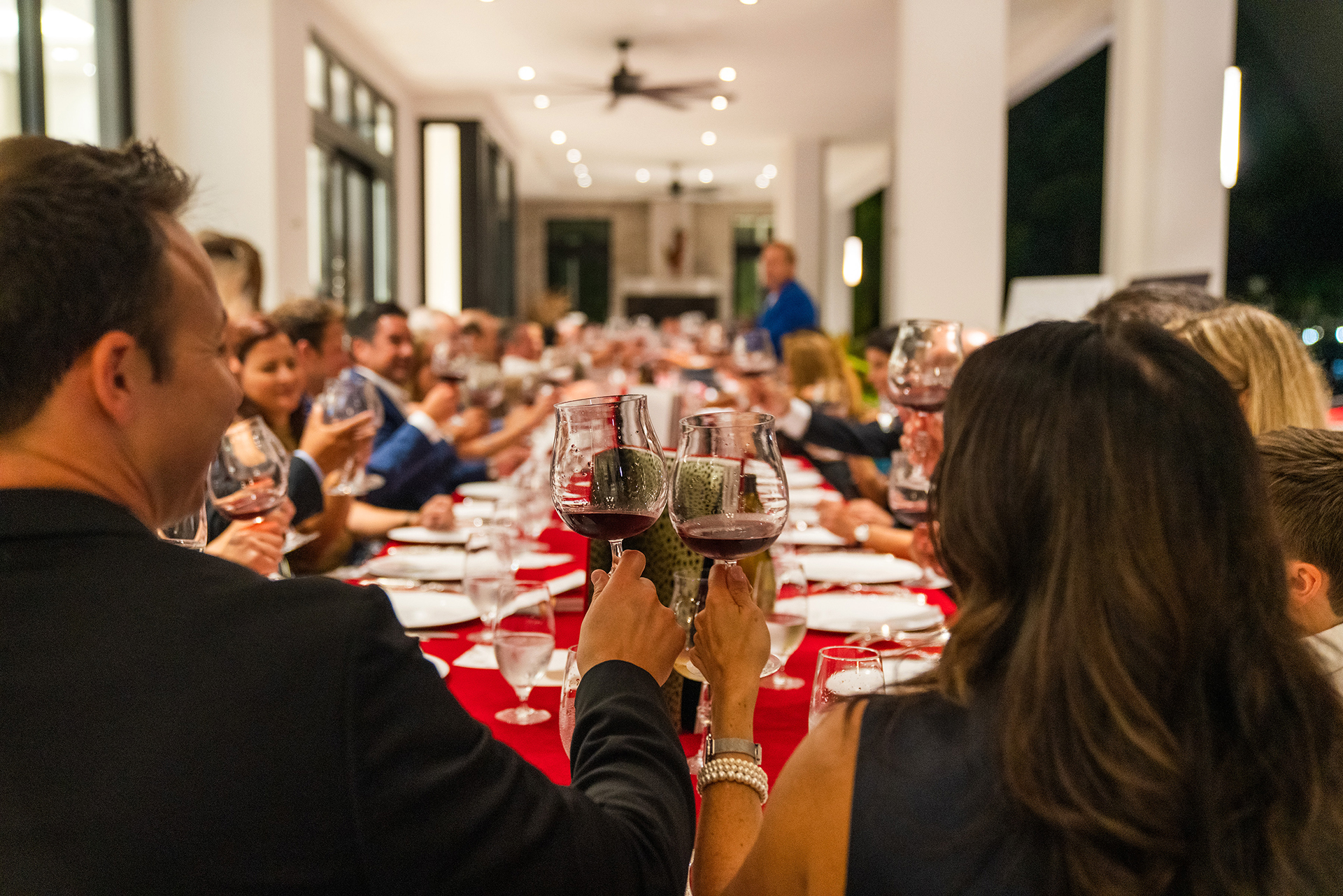
In Atlanta, he helped open The Chastain, a farm-to-table restaurant that at the time, offered about 40 wines by the glass and about 350 bottles. Working under Juan Cortez, the beverage director, Eric flourished as he sought to learn as much as he could from Juan but also to help him. “I have a strong belief in giving before you get.” Identifying a need, he offered to help Juan with inventory, a tedious task of counting bottles of wine for eight hours straight. Eric worked multiple extra shifts to complete it. As he grew at the restaurant he began receiving more responsibilities and stepped into the role of Assistant Sommelier where he had a hand in all aspects of the wine program. The Chastain would go on to win Wine Spectator’s “Best of Award of Excellence” and Atlanta Magazine’s “Best Wine List” in 2021.
As of October 24, 2023, The Chastain has also received a Michelin Green Star and Juan Cortes was awarded the inaugural Michelin Star for Best Sommelier in Atlanta.

Philip wine from Mazzei Winery

Eric credits his time at Hampshire College with his ability to learn from and collaborate with mentors. As a student, it was intimidating reaching out to a well known professor to ask for an independent study but he knew he would learn a lot and did that four times. So it was second nature to him to ask an accomplished sommelier to coffee or lunch to extend his network of contacts and pick his or her brain.

From The Chastain, Eric expanded his resume by working at a local wine shop where he immersed himself in the stories behind the labels. When asked to name one standout, Eric did not hesitate to tell the story of Philip by the Mazzei winery in Tuscany, a winery opened in 1435 that is now in its 25th generation of family operation! Eric remembers serving Philip, 100% Cabernet Sauvignon, at The Chastain asking guests to identify the portrait on the label. Most guests answered George Washington or Thomas Jefferson because of the classic 18th century white wig. But Filippo Mazzei (1730-1816) graces the label.

Filippo, a member of the famous family of vintners, worked as a wine merchant in London for 18 years until he moved to Virginia in 1773. He purchased land near Monticello and became good friends with Thomas Jefferson (1743-1826) and very supportive of the rebel cause for independence. Jefferson and Mazzei discussed political philosophy and influenced each other so much so that Jefferson gave Mazzei a rough draft of the Declaration of Independence in which he had paraphrased some of Mazzei’s writings.

““This wine represents something common in all of my favorite producers, where there is so much reverence not just for the land they are holding on to, and growing grapes on, but to the tradition of winemaking itself,” Eric said.

That compelling tradition is what Eric believes will help convince his peers, the Millennial and Gen Z generations, to embrace wine. How grapes are grown and how wine is produced are important to them. And the settings at which wine is served should be expanded in order to appeal to a larger number of young drinkers. “Make wine a little bit more casual. This is from someone who loves fine dining, white tablecloth service and and all of the elements of formal meals. But wine doesn’t have to be reserved for those occasions alone,” Eric said.

It’s fall and football so a tailgate party is the perfect opportunity to introduce a wine experience to young football fans. “Drink some Champagne out of a Solo cup in the parking lot with some fried chicken and you’ll be in heaven,” he said.

For seasoned wine drinkers, Eric’s advice is, “Never be afraid to pull a cork, I save a fair bit of wine for aging or special occasions, but often the best time to enjoy those special bottles is when there is no occasion at all. A Tuesday night dinner of Costco Rotisserie Chicken and a bottle of 2009 Cain Five a few weeks ago was absolutely magical. And finally – Drink more Riesling!”

Eric is now working as a member of the fine wine team at Republic National Distributing and loving every minute of it as he continues to learn about wine. And he is still studying. Next year he will take the Advanced Sommelier exam to complete another step on the road to the Master Sommelier Certification by the Court of Master Sommeliers. His long term goal is to be a wine educator for an importer or distributor.

Eric’s days of flipping burgers and deciding to take the fork in the road that led to the wine industry instead of academia are not that long in his past. But he can definitely bottle his five-year experiment. As the best young sommelier in America and third best in the world, his career is aging nicely and his life is moving like clockwork! Sure to meet some curve balls along the way, he can draw upon his varied jobs, his education at Hampshire College and his competition experience to get him through and keep the hands of time moving in a clockwise direction. After all, he has done that hundreds of times!

Featured Image: Presenting Eric Palmer with his award at the Chaîne des Rotisseurs International Jeunes Sommeliers Award Ceremony in Ljubljana, Slovenia are (l-r): Philip Evins, Member of Conseil Magistral, Bailli Délégué of Great Britain; Klaus Tritschler, Member of Conseil d’ Administration, Member of Conseil Magistral, Bailli Délégué of Germany; and Marie Jones, International Vice President, Member of Conseil d’ Administration, Member of Conseil Magistral, Chair of Jeunes Sommeliers Competition Committee.

Amber Mihna: From Wisconsin to the Wide World of Wine

Sept. 22, 2023 – In late September 2020, the National Weather Service issued Red Flag Warnings for Napa County because of high wildfire risk. Shari Staglin, founder and owner of Staglin Family Vineyard in Rutherford and new Chaîne partner, and her team decided to start harvesting their more than 50 acres of vines so their grapes could be immediately placed in the vineyard’s 24,000 sq. ft. underground cave system. Shari also offered their storage space to neighboring vintners so they could protect their grapes from smoke damage. That outreach was not unusual; it’s the Napa way. Amber Mihna, Staglin’s global sales director, moved to Napa from her home in Wisconsin 12 years ago and is living her dream. “The Napa community is the best community I’ve ever lived in and I’ve ever seen, to be honest. And I’ve been to almost every wine country in the world. Napa’s camaraderie and community focus are world class. There’s nothing like it. The food, the wine, the beauty of it all is just absolutely amazing,” Amber said to Chaîne during a Sept. 18 telephone interview.

Amber Mihna moved to Napa Valley 12 years ago to work for the Napa Valley Vintners. (Photo: Courtesy of Amber Mihna/Staglin Family Vineyard)

The Napa ethos is not that far removed from her roots growing up in a small farming community in Wisconsin. However, there is one major difference. “Coming from the Midwest, you have this pesky thing called winter. You don’t have that in Napa. You have some rainy days. That’s our winter. The sun is always out. Everybody is always outdoors,” Amber said.

The transition from a small town girl who knew nothing about wine to a wine expert who travels around the world from 250 to 300 days per year and speaks at the annual global conference of the Club Management Association of America (CMAA) is a testament to her persistence, curiosity, hard work, and of course, a deep love of wine.

Her future career literally took root in Wisconsin soil as she helped her grandparents on weekends at their small family farm where they grew corn and hay. Other weekends she would work at her best friend’s family restaurant, starting at the sink washing dishes and then progressing to serving, cooking and working behind the bar. She liked it.

With her experience, the local country club hired her. There she learned about fine wine and fine dining. And she met wine, beer and liquor representatives who gave her a window into the wide world of wine.

Amber Mihna in vineyard.
Amber Mihna in a Staglin vineyard. (Photo: Courtesy of Amber Mihna/Staglin Family Vineyard)

She identified a glaring gap in the spectrum of wine offerings in her small community. Now 21 years old and with all of the confidence of a person who had been around a few more blocks than she had, Amber approached General Beverage, a local family-owned beer, wine and liquor distributor. She said, “I think it’s time that you guys invest in somebody in wine.” And she would be that person!

They hesitated of course as this was 24 years ago. There was not a young woman to be seen in that capacity anywhere. “I was quite persistent. They finally gave me a chance,” Amber said. That springboard was all she needed to launch her stellar career.

One day 12 years ago, the Napa Valley Vintners called her to offer her a job as their domestic marketing manager. About 95 percent of wineries in Napa Valley belong to the association that provides its clients with a plethora of services covering all aspects of the industry. Amber was well acquainted with the region as she had probably visited Napa 50 times through her job with General Beverage before being offered the job. There was not much debate whether to accept the offer. “Napa was kind of my heart. I loved it there. From my first trip there when I was 21, I knew I wanted to live there someday. I just thought it was a dream,” she said.

The association moved her to California. She was one of the first employees not to have lived in the area before being hired. As part of her job responsibilities, she helped run ‘Premiere Napa Valley,’ the world’s largest trade auction. Because she loved to travel, Amber had visited wineries around the world before even moving to California but now she was embedded at the center of the wine universe in the United States.

Shari Staglin was very involved in the Napa Valley Vintners. She and Amber met and collaborated on many events together. When the Staglins were looking for someone to join the team to help run the winery, they asked Amber.

Having lived in Napa now for 12 years, has her dream been fulfilled? “In my head, I thought Napa Valley was paradise and it was going to be the best thing that I have ever done. It was going to be the dream and I have to tell you, it’s exactly that and more,” she said. “It was better than I thought it was going to be.”

Staglin Family Vineyard

Shari and Garen Staglin also hail from the hearty Midwest, Shari from South Dakota and Garen from Nebraska. Both were students on scholarship at UCLA in the 1960s when they met on a blind date. They shared a love of wine, fell in love, married and became parents of two children, Brandon and Shannon.

In 1985 while Garen was busy commuting to Ohio for his job as a business executive, Shari bought the historic vineyard that dates to 1864 when John Steckter and his wife, Mary, propagated 60 acres of grapes.

Staglin vineyard in the Napa Valley (Photo: Courtesy of Amber Mihna/Staglin Family Vineyard)

After a major renovation that preserved its original foundation, the 19th century Steckter home is now the Steckter House where the Staglin Family Vineyard has two offices and hosts their tastings in rooms overlooking the vineyards on the Rutherford Bench.

From day one, Shari and her team have operated the vineyard and winery on core principles from which they have not wavered. As stewards of the land and planet Earth, the vineyard has been organically farmed since 1985 and since 2002, solar power has provided 100 percent of their energy needs. In addition to grapes, they grow olive trees to produce olive oil, and maintain beehives to produce honey and pollinate a two-acre fruit and vegetable farm. Northern California regulations prevent vineyards from operating restaurants on the property so the crops they grow are available to their 15 employees and used for private events.

Staglin Family Vineyard employees (Photo: Courtesy of Amber Mihn/Staglin Family Vineyard)
Staglin Family Vineyard specializes in Chardonnay and Cabernet Sauvignon. (Photo: Courtesy of Amber Mihna/Staglin Family Vineyard)

Many of their employees have been with the vineyard for more than 20 years, including David Abreu, vineyard manager. When he started with Staglin, he was not well known in the industry. Today Amber describes him as a “celebrated farmer” and a driving force behind Staglin’s commitment to uncompromising quality. “He’s definitely the person you want to farm your vineyards organically” she said.

Staglin specializes in Chardonnay and Cabernet Sauvignon through their original Staglin label, established in 1985, and their Salus Estate label they launched in 1999. Today they grow grapes on 55 acres of their 70-acre property with a total production of 6,200 cases per year.

Now President of Staglin Family Vineyard, Shannon is taking the reins from her mother who continues to be her business mentor and is still very active in the business. Their loyal customers and wine buyers are breathing a sigh of relief that Staglin wine will continue far into the future. It’s not the case for many other small wineries. “So many small family-owned wineries have sold in the last couple of years because they don’t have the next generation to take it on,” Amber said. “Customers and wine buyers are upset about it but they don’t understand. Owners are in their 70s and 80s and want to retire. We are dedicated to continue with the next generation with Shannon in place and living on the property.”

One Mind

Uncompromising quality comes at a cost. “I am not ashamed to say our wines are not inexpensive,” Amber said. Prices vary from $60 to $325 or more per bottle. However, all proceeds from their Salus label are donated to their mental health research charity, One Mind, the reason the label was created in 1999. “Salus is the Roman Goddess of health and well-being and that is why we have her on our labels,” Amber explained. In total, one-third of their production is donated. “I can tell you there are no other wineries in the world that give that much to charity.”
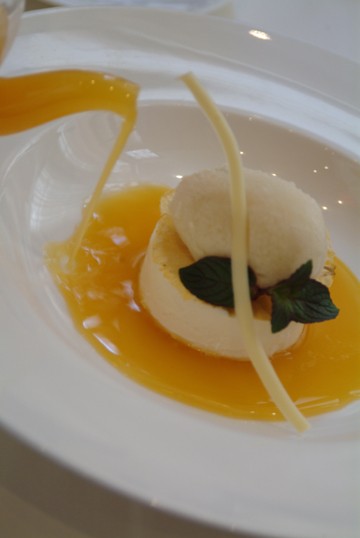
That deep commitment to mental health research emanated from the Staglin family’s personal experience with a mental health crisis.

In 1989, their son Brandon was attending Dartmouth. In his second year, in what he describes as a light switch turning off, he had a psychotic episode and attempted suicide. Thirty years ago there were few options other than institutionalization for patients like Brandon who was diagnosed with schizophrenia. Shari and Garen refused to accept that option and nurtured their son back to health. And they started the charity that year!

The Staglin Family (Photo: Courtesy of Amber Mihn/Staglin Family Vineyard)

In 1995, the Staglin family started the Music Festival for Brain Health and One Mind, a nonprofit organization to close the gap in mental health research funding and patient support. To date, they have raised $580 million and have helped millions of people suffering from brain health related issues such as schizophrenia, bipolar disorder, anxiety/depression, Parkinson’s, Alzheimer’s, PTSD, autism and traumatic brain injuries.

The family turned “tragedy into triumph” as Shari states in a moving and beautiful four-minute video about One Mind. Brandon is successfully living with schizophrenia today and is President of One Mind. Brandon, Shari and Garen are featured in the video:
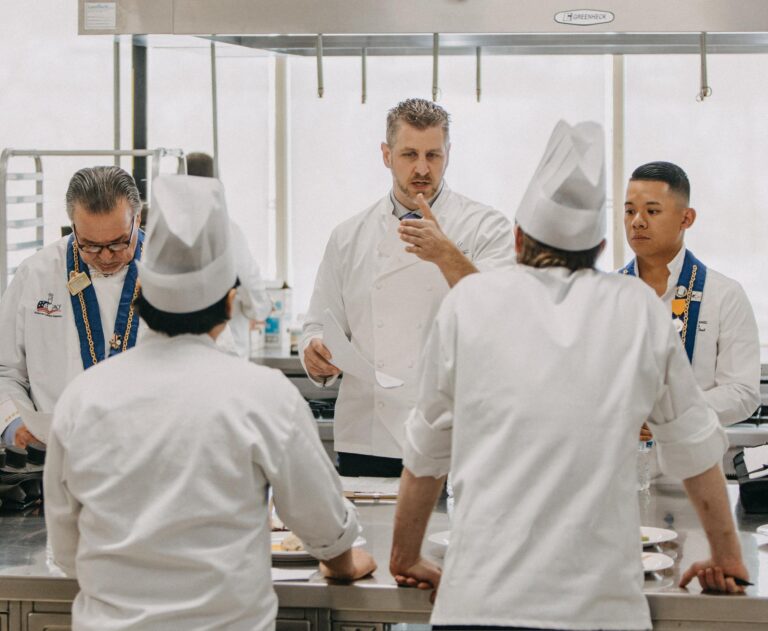
A Family Advancing Brain Health Research – The One Mind Story

LINK TO THE ONE MIND STORY VIDEO (YouTube)

Travel and Future

For those who take months to plan one trip, it’s difficult to imagine that Amber travels up to 300 days per year. She said she does about 180 to 200 wine events as she travels. About one-half are at private clubs. In addition to private clubs, because of their price point, Staglin’s customers are high-end resorts such as Auberge Properties, the St. Regis, and the Four Seasons to name a few.

What location would she recommend to a consumer who wanted to take one wine trip? In addition to Napa Valley, of course, she said:

“I will say one of my favorite places as a consumer would be New Zealand. The wine regions are amazing. The actual place itself – Mother Nature – and what it has to offer, the beauty, the hiking; it’s just spectacular,” she said. But it’s a very long trip, she added. “For a less faraway trip, I would do Italy. I love the food. I love the freshness. I love their wines, the diversity. They have over 3,000 different grape types.”

For 2024, Amber is planning to reduce her travel days to 200 and is very aware of balance in her life even for someone who loves what they do. “I work extremely hard. Finding balance is important. I love to travel. I love my job. I love seeing new places. But I also love home. Home right now is the United Kingdom,” she said. There she and her British partner purchased seven acres of property in the Cotswolds two years ago where they planted four acres of vines to make English sparkling wine. “We’re one of the pioneers in the Cotswolds doing this,” she added. “How Napa Valley is to San Francisco, the Cotswolds is to London, a special and beautiful place to visit, to eat, drink and relax.”

Fossebridge Vineyard: Amber’s vineyard in the United Kingdom is in the Cotswolds. (Photo: Courtesy of Amber Mihna)

She already has distributors interested in carrying wine from her new Fossebridge Vineyard’s first vintage in two to three years but first the wine has to taste good, she said. “We’re doing all the work ourselves.”

Her seven years under Shari’s tutelage have been invaluable. Shari herself broke the mold in the 1980s as a woman-owned winery and then went one step further by calling on customers herself to sell Staglin wine. “She’s just a force. She’s fabulous. She’s intensely hard working, She remembers everyone’s name. She’s a great mentor to not only many women in the business but men as well,” Amber said.

Amber also credits the Wisconsin executive from General Beverage who took a chance on her 24 years ago, a hire that was far outside the norm, especially in the Midwest. They have stayed in touch over the years.

In addition to sparkling wine, Fossebridge Vineyard will also offer still Sauvignon Blanc and Pinot Noir wines. “We’re very excited about that,” she said.

No doubt Amber has planted Midwest grit and Napa ethos with her vines in England.

Links

Staglin Family Vineyard
One Mind
Napa Valley Vintners


Chef Susanna Foo Powered the Dawn of Asian Fusion Cuisine

Sept. 8, 2023 – When two hydrogen atoms fuse to create helium, massive amounts of energy are released in the form of heat and light. It’s the chemical reaction at the core of the Sun. When Chef Susanna Foo, award-winning chef and cookbook author, and longtime member of the Philadelphia and Delaware Valley Bailliages, fused classic French cooking techniques with traditional Chinese cuisine at her eponymously named restaurant in Philadelphia, the reaction transformed the core of her life and Chinese cooking in the United States. In 1988, one year after opening her restaurant, The International Wine & Food Society named Chef Foo one of the 10 best chefs in the United States. “I was totally surprised. All of a sudden, the restaurant got very famous and people had to wait a couple of weeks for a reservation,” Chef Foo said to Chaîne during an Aug. 21, 2023 telephone interview.

Susanna Foo
Chef Susanna Foo (Photo: Courtesy of Chef Foo)

Reflecting on her success, Susanna credits her happy childhood in China and Taiwan for her love of food and is thankful for her excellent sense of taste, which she says is essential for professional chefs to have in order to put an indelible stamp on the culinary world.

Childhood

Born in Inner Mongolia in northern China, her father served in the armed forces and met her mother when he was stationed with a battalion in Wu-lan. When she was three years old, they moved to Shaanxi province, also in northern China where the daily staple was wheat, not rice. In fact, her father never liked rice so the family ate noodles, bread, pasta, dumplings and pancakes. Her mother did not like to cook but had a keen sense of taste and smell. She would often take Susanna with her to the market.

Susanna spent hours in the kitchen with her grandmother who showed her how to make many different varieties of dough. Her grandmother would tell her unless she learned how to make dumplings faster, she would never get a husband!

Her family moved from China to Kao-hsiung, Taiwan, a seaport town about 200 miles south of Taipei., when Susanna was in the third grade. To her, it was paradise. She and her brother would forage in nearby fields after harvest picking up small potatoes and peanuts. And they just had to open their front door to pick pomegranates from the large tree in their front yard.

Nurtured by fresh vegetables, fresh fruit, and main dishes and dough made from scratch, Susanna traces her love of food to her childhood. Her fond food memories are burnished in all of her senses. Inspired by very specific childhood taste experiences, Susanna called on those memories for each dish she created at her restaurant. However, much as the success of her restaurant was a surprise, so too was even her career as a chef. She did not set out to be a chef. Her goal as a young woman was to get married and be a good housewife.

Seafood Salad
Seafood Salad (Photo: Courtesy of Chef Foo)

Marriage and move to the United States

One of the happiest days of her youth was the day in 1961 when she was accepted to National Taiwan University to study Library Science. In her third year, she met E-Hsin Foo whose mother loved to cook and arrange flowers. After graduation and marriage, Susanna and E-Hsin moved to Pittsburgh in 1967 where E-Hsin continued his engineering studies at Carnegie Mellon Institute (now Carnegie Mellon University) and Susanna enrolled in a Master of Science program in Library Science at the University of Pittsburgh.

With political upheaval in Asia in the 1970s, E-Hsin’s parents moved to Philadelphia in 1971 and opened a coffee shop. As larger chain restaurants responded to the exploding popularity of artisan coffee, the Foo family changed their focus from coffee to traditional Chinese cuisine. Other family members planted roots in Philadelphia as well and began helping out at Hu-Nan Chinese, their restaurant. At this time, Susanna and E-Hsin, now parents of two young boys, moved back to Taiwan in 1972 for E-Hsin’s job as a professor and consultant, returning to the United States in 1976.

Goat Cheese Wonton and Beet Salad
Goat Cheese Wonton and Beet Salad (Photo: Courtesy of Chef Foo)

Working in Indiana for a private company, E-Hsin faced a pivotal career decision when his parents asked him to move to Philadelphia to help them. Susanna said her husband thought it would be better working with family than for a private entity so they packed up and moved to Philadelphia for what became the start of Susanna’s career as a chef, although she certainly had no expectations of that when they moved.

New Culinary Career

Baptism by fire is an apt phrase to describe their first years helping to operate Hu-Nan. “It was very difficult for three to four years. I was working 14 to 16 hours per day and had two small children,” Susanna said.

Another day Susanna remembers as if it was yesterday was the day Jacob “Jack” Rosenthal, president of the Culinary Institute of America (CIA) from 1965 to 1975, came to eat at their restaurant. Retired from the CIA and living in Philadelphia for his job with a company researching taste and smell, he liked Chinese food and decided to check out Hu-Nan Cuisine. Recognizing Susanna’s talents immediately, he offered to be the restaurant’s culinary consultant at no charge. His early advice to ensure consistency become a mantra Susanna internalized.

Seafood Coconut Soup
Seafood Coconut Soup (Photo: Courtesy of Chef Foo)

Jack first recommended Susanna enroll in an eight-week CIA course to learn the fundamentals of French cooking. And then going above and beyond a normal consultant, Jack offered to drive her to the CIA in Hyde Park, New York and back to Philadelphia each week. The moment she arrived on campus she said she felt like Alice in Wonderland. “It blew my mind. I’ve never seen so many cookbooks in my life. It’s really a good school. It’s unbelievable. You learn so much,” Susanna said. With a short break after four weeks, Susanna completed the eight-week course, returning to Philadelphia bursting with ideas and new skills for the Hu-Nan kitchen.

Sear Foie Gras, Scallops with Mango
Sear Foie Gras, Scallops with Mango (Photo: Courtesy of Chef Foo)

Working to expand Susanna’s horizon beyond the CIA and Philadelphia, Jack believed to be a great chef, Susanna needed to taste great food. So he took Susanna and E-Hsin to New York City to eat at the finest French and Chinese restaurants the Big Apple had to offer. He took E-Hsin under his wing to help him learn about wine and the two collaborated on the restaurant’s wine list. At each restaurant, Susanna made mental notes, brought her childhood tasting experiences to the forefront, and then went back to Philadelphia to innovate her menu.

Foie Gras Raviolis
Foie Gras Raviolis (Photo: Courtesy of Chef Foo)

Jack also recommended Susanna join The International Food & Wine Society and the nascent Philadelphia Bailliage of the Chaîne des Rotisseurs that was founded in 1976 through the dedication of Russel Baum who became its first Bailli. He welcomed Susanna and E-Hsin, the beginning of Susanna’s lifelong commitment to the Chaîne and an endearing friendship with Russel. “If I didn’t meet Jack Rosenthal and Russel Baum and other people, I never would have become the good chef I am today,” Susanna said. “I was very lucky.” Russel was also the driving force behind the creation of the Delaware Valley Bailliage in 2001.

Halibut with Lemon Grass sauce
Halibut with Lemon Grass sauce (Photo: Courtesy of Chef Foo)

Jack, his wife, Susanna, and E-Hsin traveled to France together in the late 1970s to experience a number of Michelin 3-star restaurants. They started in Paris and then traveled to the Champagne region in northern France. In total, they visited eight restaurants throughout France. Susanna describes the trip as another Alice in Wonderland experience. “It shaped me. I’ve never seen anything as elegant, so beautiful. And the food. The chef was doing his own so that gave me ideas. The food was unbelievable. That changed what I wanted to do in my lifetime,” she said.

Susanna Foo Chinese Cuisine restaurant in Philadelphia

Eventually, Susanna and E-Hsin acquired full operational control of the restaurant and in 1987, moved to a new location in downtown Philadelphia. They renamed their restaurant, Susanna Foo Chinese Cuisine. With her name on the sign outside, she crafted a menu she wanted to cook with an array of dishes fusing Chinese and French cooking. She said she started by creating two basic sauces – Kung Pao and a caramelized sweet sauce – that she used in many dishes.

Susanna’s Kung Pao cauliflower (Photo: Courtesy of Chef Foo)

Each day she would first make three to five gallons of each and then build her menu from this foundation. Once mastered, she developed other sauces and purées. Her Library Science background helped her organize her mind and her kitchen as she continued expanding her menu. Always curious, she often visited the local library to further her knowledge to inform the next steps at the restaurant. She also credits her father with training her to always think and plan ahead.

Roasted cod with Thai curry sauce (Photo: Courtesy of Chef Foo)

Philadelphia residents flocked to Susanna Foo from the moment it opened. Word spread the old fashioned way that a new Chinese restaurant in Philadelphia offered an experience like no other, a fusion of classic French cooking with traditional Chinese cuisine. Accolades and awards quickly followed. After just one year in business, she closed the restaurant for a short time so she and E-Hsin could travel to Thailand and Hong Kong where she visited her parents. The next year they went to Italy. “Every time I travel, I get ideas,” she said.

One of the most popular desserts at Susanna’s restaurant was her banana chocolate tart. (Photo: Courtesy of Chef Foo)

In 1989, Food and Wine magazine named Susanna the Best New Chef of the year.

She began hosting Chaîne dinners for 80 people. Nervous at first, she came to cherish the events that are a creative, collaborative process with Bailliage officers, culminating in an elegant, delicious meal for a large group. Baillis work very hard to provide members with memorable dining experiences, she said.

Cookbook author

With national recognition, in 1995 she published her first cookbook, a gift to cooks and chefs around the world. Susanna Foo Chinese Cuisine: The Fabulous Flavors and Innovative Recipes of North America’s Finest Chinese Cook is not only a cookbook but also an autobiography with an introduction and fascinating anecdotes before each recipe.

Tea smoked duck
Tea smoked duck (Photo: Courtesy of Chef Foo)

For example, Susanna states on page 111: “Sichuan peppercorns are as important in Chinese cookery as black peppercorns are in the Western world. Even though they originated in the Sichuan province, they are widely used all over China.” She then tells readers how to roast Sichuan peppercorns, a necessary step to bring out their pungent aroma, one of the many nuances that is integral to a superior tasting experience. Among the many recipes in the book, Susanna included the first two sauces that propelled her career as a professional chef.

In 2005, she published her second cookbook, Susanna Foo Fresh Inspiration: New Approaches to Chinese Cuisine. She dedicated it to her father with the following inscription: “To My Father, Lieutenant General Yang Z. Su, Who Taught Me Honesty, Drive, and Passion for Food and Life.”

Orange dessert
Orange dessert (Photo: Courtesy of Chef Foo)

Susanna Foo Chinese Cuisine closed in 2007 when E-Hsin became ill. E-Hsin passed away in 2010 and in 2015, her son, Jim, was diagnosed with amyotrophic lateral slerosis (ALS). He passed away in 2019 at the age of 47.

Today Susanna remains active in Chaîne attending dinners at both the Philadelphia and Delaware Valley Bailliages. She rarely goes out to eat except for Chaîne events because of the amazing opportunity to partake in one-of-a-kind meals not available to the public, she explained. “Through the Chaîne, I created a lot of dishes.” After Chaîne events she hosted, she would include some on her menu but not all because of the tremendous amount of time required to prepare many of the unique dishes.

In addition to feasts Chaîne members share, Susanna is thankful for friendships formed over the years. Paul Koulogeorge, Bailli of Philadelphia, and Susanna have been friends for a long time. “I’m not only happy for the good food and wine but also for the good friends,” she said.

She encourages all with a passion for food and wine to join the Chaîne. “It’s wonderful to join the Chaîne. From the first time I joined, I’ve met so many people with the same interest in food and wine. If you love food, you should join the Chaîne. If you love wine, you should join the Chaîne,” she added.

Asked for advice she would give young culinarians aspiring to emulate her career, she said first and foremost, attend a professional culinary school. “Many chefs just learn from other chefs. But I believe you must go to a professional school to learn the basics. That’s just my own opinion. If you have a passion and want to be in the restaurant business and want to be in the kitchen to cook, I think you should go to a professional school,” she said. “Then you can go work for another chef.” In addition to professional training, a keen sense of taste and smell is necessary and the willingness to work long hours is essential for success, she added.

Throughout her many years as a chef, Susanna has been a ray of sunshine for so many people who love food and wine. It’s perfectly logical as she harnessed the energy of fusing her childhood tasting experiences with traditional French techniques to innovate thousands of years of Chinese cooking. What a stellar career!

Cookbooks by Chef Susanna Foo

Susanna Foo Chinese Cuisine: The Fabulous Flavors and Innovative Recipes of North America’s Finest Chinese Cook (1995, 2002)

Susanna Foo Fresh Inspiration: New Approaches to Chinese Cuisine (2005)

Links

On her website, Chef Foo has posted eight short videos showing viewers how to make a few of her recipes such as Citrus Vinaigrette and Favorite Fried Rice.

Susanna Foo videos


Master Chef Gerald Ford Builds Bridge Between Generations

Aug. 19, 2023 – The road to reaching the pinnacle of the culinary profession, passing the arduous exam to become a Certified Master Chef (CMC), is not only a long and winding one but also one dotted with detours, construction zones, rest stops to reenergize, and a myriad of exits to explore before arriving at the destination. Even with a virtual navigator guiding the journey, AI will never be the exclusive route to an elite CMC certificate. Master Chefs get their hands dirty, pour their hearts and souls into their profession, and naturally bond with each other. A computer will never be able to replicate a chef’s dogged determination to succeed and their esprit de corps. “I decided I was going to work however long it took, however hard it took, to become a Master Chef,” Chef Gerald Ford, CMC and Chaîne Professional member, said to Chaîne during an Aug. 14, 2023 telephone interview.

An exquisite seafood dish (Photo: Courtesy of Chef Ford)

Similar to many accomplished chefs, Gerald credits his love of cooking to his family who lived in Dearborn, Michigan. “I was blessed with being born into a German-Polish family. I really came to love food at an early age. That was how our family interacted,” he said.

Describing himself as curious and mischievous, he said he would pester his grandma to let him help her make Perogies and pies. He quickly deduced that since he liked to eat, it would be beneficial for him to learn how to make food that tasted so good.

Photo: Courtesy of Chef Ford


With a nurturing family, one of his uncles who was an engineer with a passion for food took him under his wing. They started going to food markets together and not just to browse. His uncle tasked Gerald with the job of searching through cookbooks for recipes they could prepare together for family dinners. They would spend the night before prepping what could be made ahead of time, such as filling for stuffed wantons. “I liked to get my hands dirty and always liked to be involved in as much as humanly possible,” he said. “I started there.” Just 12 years old, his uncle – and mom and grandma – poured the strong foundation for Gerald’s future career.

Henry Ford College

As he grew from a curious, mischievous youth to a curious, mischievous teenager, his wise mother enrolled him in weekend cooking classes at Henry Ford College in Dearborn. While the class was primarily for older couples to learn how to cook a variety of foods, Gerald immensely enjoyed the experience because of his instructor. Master Chef Ed Janos who demonstrated how to roast a chicken, make mashed potatoes and the elusive perfect gravy. “It was awesome,” Gerald said. “I love my mom but she knows how to dry out a chicken. I love my grandma but she knows how to make really lumpy, sticky gravy. None of those things happened at the class.” And it was not just the perfect food.

Chef Janos had the “it” factor, which to a 14-year-old teenager was beyond cool. “I remember his swagger. He had that chefly swagger where he was talking about the juices on the cutting board being the tears of the customers who didn’t get to eat them,” Gerald vividly recalls. “That’s where I needed to go. I got the bug.”

Photo: Courtesy of Chef Ford

As a freshman at Edsel Ford High School, his mother nudged him to enroll in home economics classes even though he thought the path was just for girls. But his mother again wisely guided her son. Even though he did not understand it at the time, it was the correct choice. And he learned to sew in addition to making cookies that he had been making for years at home!

Recognizing his potential, his teachers and counselors placed him in a program that had students split their time between core curriculum classes at Edsel Ford and culinary classes at Fordson High School, the district’s vocational school. Some course credits at the vocational school transferred to credits at Henry Ford Community College so Gerald was well on his way.

Photo: Courtesy of Chef Ford


Tall for his age, Gerald said he was able to “weasel” his way into doing things he may have otherwise not been able to do. At 16 years old, he began volunteering to work at college events. At one event, the chef from the Ritz Carlton Hotel offered him a job on the spot so his choice for college was an easy one. He enrolled in Henry Ford Community College to earn his associate’s degree and continued working at the Ritz Carlton. Automotive executives from around the world attended events held at the Ritz Carlton so Gerald combined his college courses with real world experience at one of the top hotels in the region. “I was learning at a very accelerated rate and applied that knowledge rapidly,” Gerald said.

Culinary Institute of America (CIA)

Photo: Courtesy of Chef Ford

Taking stock of his career options in the Detroit area and the path other Michigan Master Chefs had followed, he determined his next move had to be to New York to attend the Culinary Institute of America (CIA). “Early on I realized I needed to get out of Dearborn to expand my culinary career to be successful,” he said. So he mischievously told his mother he was going to New York to visit some friends but in reality, he went for a CIA interview and was accepted.

Humble to his core because of his family and his Midwest roots, Gerald approached his CIA years with a yearning to learn and not a pinch of arrogance about how he already knew his way around a commercial kitchen. Admittedly a tad bit cocky as most 20-year-old young men are, being cocky and humble simultaneously was a perfect combination for him to succeed at the CIA. “It felt like home. It’s the most comfortable I’ve ever been,” he reflected.

Master Chef Gerald Ford at the Culinary Olympics (Photo: Courtesy of Chef Ford)

While at the CIA, Gerald embraced additional challenges to the rigors of the curriculum by competing in a Chaîne’s Jeunes Chefs Rôtisseurs competition. He won the Northeast Province title and then competed at the national level, learning the concept of “Mise En Place” in real time. The phrase literally translates to “everything in its place” but Gerald explains that it changes as chefs mature. “Mise En Place just graduates as you grow. Competition, for me, helped me look at all of that in snapshots before it was actually time for it to be my full responsibility.” Mise En Place “everything” included how to pack food that could travel and how to write a menu he could produce anywhere. That type of thinking as a young chef has benefits down that long, winding road to master chef certification. “That’s the cool part. It exponentially grows your skills,” he said.

Always up for the next challenge, Gerald also competed in and won the 2001 Les Amis d’Escoffier competition in New York City. Because of this achievement, Gerald was able to spend seven weeks in France working at the three-Michelin-starred Moulin de Mougins in Mougins. He approached his time in France with humility and an open mind as he did entering the CIA. Asking “Qu’est-ce que c’est” (“What is that?”) took him on fun adventures while there. “I’m a big guy. I look like an American. As long as I had the curiosity and willingness to speak French, I was met with nothing but kindness and pleasantness,” he said. He knew he had to go back to France to learn more at some point in his career.

The U.S. Culinary Olympic Team in Stuttgart, Germany (Photo: Courtesy of Chef Ford)

France

That opportunity came after he returned to the CIA where he earned a Bachelor of Science in Hospitality Management. Now armed with a degree from Henry Ford College, two CIA degrees and years of culinary cooking experience in commercial kitchens, he moved to France where he worked for about two years. When asked what he brought back from France after that experience, he said it was a twofold appreciation of first, the French culture that lives for food and second, the highest quality product with a deep respect for it.

Château Robert (Photo: Courtesy of Chef Ford)

“That was the first time I was faced with a duck that needed to be plucked. And getting to eat it was unbelievable,” he said. He learned to handle it in the most respectful manner, a practice he has seen all over the world except in the United States. “If I had to gripe about anything at this point in my career is the fact that most people don’t understand to respect the food that they cook.”

As the Chef at Château Robert in the village of Montgaillard in southwest France, Gerald made many friends. Duck farms proliferate in that region. He recalls a friend’s mom preparing foie gras from a freshly slaughtered duck. He watched as she made a fresh foie gras pie with perfect pastry, an experience he cannot put into words even to this day except to say it was a “life changing” experience. Other meals he shared with friends and their families were “just out of this world.”

“It was food and community and family like I hadn’t experienced since I was a little kid at home but at a whole other level,” he said.

Master Chef Certification

Gerald and his wife, Carolann were married in 2020. (Photo: Courtesy of Chef Ford)

After his two years in France, he returned to the United States where he had to navigate a few detours both personally and professionally. He likes to think of these times as “failing my way forward” in that he was willing to take chances on new adventures and was fine with outcomes he did not expect.

To find his way, he decided to tour the United States to visit “second cities” where culinary culture was in its infancy. His travels took him to Northern California and Seattle in the west where he contemplated opening a restaurant in Napa Valley. It turned out to be a worthwhile exit to explore but did not come to fruition.

Traversing the country back to the east coast, he accepted a job as Chef de Cuisine at the Westchester Country Club in Westchester, New York. It was a logical move as he kept his goal of one day becoming a Master Chef just like Chef Ed Janos back in Dearborn. “The Universe was pushing me towards Westchester. That’s where Master Chefs had been built and where the U.S. Culinary Olympic team had practiced for eight years,” he thought.

Master Chef Gerald Ford, right, with two other chefs who reached the pinnacle of their profession by passing the Master Chef examination by the American Culinary Federation (ACF). (Photo: Courtesy of Chef Ford, CMC)

Within five years, he was promoted to Assistant Executive Chef but with the Executive Chef firmly in place of an excellent operation, Gerald moved to Florida in 2015 to work under a Master Chef at The Everglades Club to prepare in earnest for the Master Chef exam. He also met Chef Reimund Pitz and tried out for the U.S. Culinary Olympic team, still embracing competition as an excellent way to learn.

By 2017, he was at the exit for the Master Chef exam and didn’t look back. Out of 11 chefs who took the exam with him, four of them, including Gerald, passed. He is currently one of just 84 Master Chefs in the United States.

“It was the single hardest, most complex crucible I ever could have considered in my life and the most enjoyable test I ever could have put myself through. We had an amazing group of chefs there,” he said. It’s not an understatement to say it was a career changing milestone. New avenues with limitless possibilities opened up for Master Chef Ford.

In 2020, he left the day-to-day life of a chef in a commercial kitchen to start his own business. Legit Concepts coaches executive chefs, who seek him out directly, to success by offering them the tools and systems Gerald has developed based on his models of approaching operations, competitions and his quest to conquer the Master Chef exam.

Mies En Place evolves as professional chefs grow, according to Master Chef Ford. (Photo: Courtesy of Chef Ford)

In addition, he finds fulfillment working with high school and college students to nurture the next generation of professional chefs, a philanthropic focus for him now. The industry is definitely in what some may call a seismic transition as new norms replace norms that have been in place for decades. “One of the early skills I had to learn was how to duck sauté pans. It made me quick,” he said but added that it’s no longer an accepted norm. “I consider myself well positioned between generations.”

Photo: Courtesy of Chef Ford

He nurtures young culinarians by emphasizing the importance of skills that previous generations of chefs learned through the School of Hard Knocks but now need to be taught in new ways. Adjusting to consequences of the pandemic is also important to recognize and address. Gerald has identified the need to help students realize the importance of deadlines, a basic skill that was assumed in prior years but is new to young chefs. Young chefs also have higher expectation for their quality of life.

“The profession is in transition and it’s up to us to make it great. I don’t think there is anything wrong with people taking an occasional Saturday night off,” he said.

When all is said and done, the power of a superb culinary experience is the same today as it was 100 years ago.

Master Chef Gerald Ford speaks at a Chef to Chef event. (Photo: Courtesy of Chef Ford)

“It’s amazing to be able to share the world with people who make hospitality their life and I just wish the world would understand the value of great hospitality because I think we need it more than ever. It’s the ability to sit down at a table and break bread and be able to enjoy company for the sake of enjoying company. Few things can bring people together like a great meal – and a well-made beverage,” he said.

With humility and humor, Master Chef Gerald Ford has paved that culinary road for all to explore. Thank goodness for curiosity and mischief!

LINKS

Legit Concepts

Friends Become Family at Cattivella

Aug. 4, 2023 – Executive Chef/Owner Elise Wiggins would walk to the ends of the Earth for her clients and staff at Cattivella, her Denver restaurant. Or at the very least, she would drive 1,300 miles in a rented refrigerated truck to the Louisiana Bayou to purchase 3,000 pounds of crawfish and then drive another 1,300 miles home to offer takeout crawfish bowls to her loyal clients during the pandemic. “Crawfish bowls are fun so y’all can come pick it up and go back to your home to have a mini crawfish cookout,” Chef Elise, member of the Denver Bailliage, told her clients during the depths of the pandemic. “Everyone needs to be happy,” she said to Chaîne during a July 30, 2023 telephone interview.

Elise loads her truck with 3,000 pounds of crawfish in South Louisiana for her clients in Denver during the pandemic, a 46-hour round trip drive! (Photo: Courtesy Chef Wiggins)

Childhood in Louisiana

Catticella is known for its authentic Italian pasta dishes. (Photo: Courtesy of Cattivella)

Elise traces her strong client-centered, culinary philosophy to her childhood and a batch of chocolate chip cookies she made with her mother. Seared into her memory, she can still see herself sitting on the counter watching her mother transform simple ingredients into cookie dough. “I remember her putting my hands in the cookie dough. I can remember to this day. I can feel the coldness. I can feel the chips. I can feel the grease. She baked the cookies and then my dad, my sister and I had a cookie. I’ll never forget the sensation of eating that cookie, the sugar rush and it was hot out of the oven. It was so good. Everyone was oohing and aahing, just so good. Immediately it clicked with me. Ah-ha! You make really good food, you can make a lot of people happy in a short amount of time. It just hit me like a thunderbolt. I want to do this for a living. I want to be a chef,” Elise said.

Both of her parents were children in military families so they were seasoned world travelers. As her mother grew up, she spent her summers in Italy. Once married, she passed along her love of Italy and Italian food to her children in an ingenious way in her Louisiana home. Elise vividly remembers one dinner. “She turned out the lights, lit candles and she put photos of herself in Italy on the table. She talked about how she learned to make this dish – Carbonara – and the history of the dish. I was hooked,” Elise said.

Her road to a successful culinary career had a few curves although Elise never wavered in her desire to become a chef. How many sisters argue about whether to watch Julia Child or Sesame Street? Elise and her sister did! She was committed to a culinary career. But her parents had other thoughts.

Taramisu (Photo: Courtesy of Cattivella)

Thinking children normally set their sights on lofty careers that change with the wind and are rarely realized, Elise’s parents told her she would be going to college, not culinary school. So she enrolled in Northeast Louisiana University, now part of the Louisiana State University (LSU) system. She declared a triple major in Psychology, Philosophy and Anthropology. It was not as hard as it sounds, Elise explained. She was very interested in the study of man so she stuck it out and graduated. The years of study were a test of perseverance. “I was just miserable. I really wanted to go to culinary school,” she said. Keeping her fingers in the culinary pie, she worked at restaurants throughout college so she was attending the School of Hard Knocks while also navigating and conquering the ivory tower. It would lay a firm foundation for her life’s work.

After graduation she moved to Dallas where she worked at The Grotto under Chefs Morris Salerno and Karl Houck, two chefs who were part of the first United States Culinary Team to earn a Gold medal at the International Culinary Olympics. “I had the honor of working with these guys in the kitchen. That’s where it really started,” Elise said. As her mentor chefs, they recommended she go to culinary school. Finally, her dream as a young girl was within reach.

Culinary School

The United States was a blank canvas for Elise who could now chart her own course. “I’ve always had this calling to go to Colorado so I took three months to go to Colorado and camp. It’s just so beautiful. I fell in love with Colorado. Just for giggles, I wanted to see if they just happened to have a culinary school,” she said. At the time in the 1980s, options for culinary schools were limited. Culinary schools were not yet a “thing” because the Food Network did not launch until 1993, a major factor in the explosion of interest in culinary careers.

Chef Wiggins designed her restaurant with an open pasta table, called a pastificio, so that her clients can watch her chefs make pasta. Pictured here is handmade pasta, no machine used. (Photo: Courtesy of Cattivella)

Elise did find a school in Denver, the Colorado Art Institute, and when she found it, the term began in three weeks. So she returned to Louisiana and told her family she was moving to Colorado to attend culinary school. They didn’t believe her. “In the South, you don’t leave your mama,” Elise said with a chuckle. A couple of days before she was to depart, her mother still did not believe she would follow through with it. “You’re really doing this?” her mother asked. “Yeah, I’m really doing this. This is what I’ve wanted my whole life. So I did it. I moved to Denver,” Elise said.

Just as she did in college, she worked in restaurants during her two years in culinary school. She also studied in Italy. “Just as I had a calling for Colorado, I had a calling for Italy,” she said. She started in Florence where she attended school to learn classic Italian cuisine but had a desire to learn dishes unknown to Americans so she could expand palates beyond lasagna and ravioli. During these years, she would travel to Italy twice a year to visit each region to immerse herself in the cuisine and culture. Her scheduled visit in 2020 would have been her 30th annual trip to Italy but was canceled due to the pandemic.

After graduating from culinary school in 1994, she spent the next year traveling and learning throughout Mexico and Central America. The Wyndam Rio Mar Hotel in Puerto Rico recruited her to be the Executive Chef of Palio, their Four-Star Diamond restaurant, the island’s only Italian restaurant. She moved to Puerto Rico. Well on her way to a successful career, in 2002, the Peabody Hotel in Memphis recruited her to launch their new Italian restaurant, Capriccio. Back in the United States, her love of Colorado and stellar reputation would soon draw her west again.

Planting Roots in Denver

In 2004, Panzano in Denver hired Elise as their Executive Chef. Panzano’s management had recruited her years before as she was finishing culinary school and they were building their restaurant. She knew it was going to be a beautiful venue but decided she needed to spread her wings before settling down. Now back in Denver with years of travel and experience to bring to her new position, she planted her roots in the Mile High City that remain to this day.

Wood-fired pizza at Cattivella (Photo: Courtesy of Cattivella)

For the next 12 years, she crushed it at Panzano, building a loyal clientele and a jet black bottom line that increased significantly each year. An experience in management early in her career as a chef informed her management style.

That experience came courtesy of the School of Hard Knocks. In most commercial kitchens years ago, executive chefs would degrade neophyte chefs who had to learn to duck when plates were thrown at them to make a point. Elise endured the humiliation thinking it was just the way things were done in the intense atmosphere to extract top performance. But she didn’t like it. Once she ascended to managing a kitchen staff, she followed in those harsh footsteps. But one night changed her management style forever.

“I had literally three cooks from a five-man team walk off the line because I told them I could cook all of their positions for them and they didn’t do it right. That night was the hardest night ever,” she said. “I learned. I knew better before I did that because I didn’t like it. From that day forward, I’m never going to do this again. I’m going to inspire people and not degrade them. I’m not going to lead that way.”

Instead of criticism, she began teaching and mentoring young chefs and cooks. Her instincts were correct. One of her chefs was with her for 18 years and just left to start his own business. Others have been with her for a decade or longer. “I’m becoming an old dog now,” Elise quipped.

Chef Zuri creates a Cattivella masterpiece (Photo: Courtesy of Cattivella)

Cattivella

With Elise excelling at all aspects of running a restaurant, in 2016 she felt she was ready to take the deep dive into culinary entrepreneurship.

Flaming pan at Cattivella kitchen

A building in her Denver neighborhood became available so she stopped into the bank down the street from Panzano and told the bankers she wanted a loan to open a restaurant. They knew her. They ate her food. She then shared with them balance sheets showing she grew annual revenue at Panzano from $3.1 million when she started to $9.3 million for a 33 percent year-over-year growth. That growth is unheard of in the restaurant industry as many are thrilled to realize a five percent annual growth. It turns out the way to a bank’s vault sometimes goes through bankers’ stomachs! They approved a $1.5 million loan for Elise and are glad they did as even with the pandemic, Elise has less than 10 percent of the loan left on her balance sheet.

Wood-fired oven (Photo: Courtesy of Cattivella)

When she went to sign the lease for her building space, leasing company personnel asked her who her investors were. Elise replied she did not have investors. She and the bank were the only two principals. They didn’t believe her so they asked to meet with her bankers. Yes, it was just the bank and Elise, the bankers assured them. In their 30 years of writing leases, the leasing company had never seen a bank do a deal with an individual chef.

In designing her restaurant, Elise knew she wanted her kitchen staff to really connect with her clients. Italians are very welcoming people as she learned from her many trips to Italy. “I would be pulled in as family. I wanted to create an open environment where people would be treated as family as I had been treated in Italy,” she said. With seating for 200 inside, her clients can see what everyone is doing in the kitchen. She has 26 seats around the Chef’s Counter so people have a bird’s eye view of her chefs as they create their masterpieces. And Elise included an open Pasta Table and Butcher’s Corner where prep work becomes performance art for all to see and enjoy. The open environment is a two-way street. “The other side is chefs get immediately rewarded when they see people love their food,” she added. With almost 100 seats outdoors on the patio, Elise manages a staff of 35 at her busy restaurant that is open for dinner only.

Elise designed Cattivella with an open environment so staff and clients could easily connect. (Photo: Courtesy of Cattivella)

When choosing a name, she wanted something unique although with thousands of Italian restaurants, that was a difficult order. Then she remembered a chef with whom she had studied in Italy who would affectionately call her Cattivella, the Italian word for “naughty,” because she was always playing pranks on him. She contacted him to make sure the word did not have a more negative connotation. With his assurance it was appropriate, the more she thought about it, the more she liked it. She describes herself as mischievous and a bit of a rule breaker, two traits that give entrepreneurs confidence to take risks, large and small. She had a vision to break the norms of Italian restaurants in the United States by not offering classic dishes. And she still recalls as a young girl sneaking chocolates from her mama’s chocolate box. Cattivella it was!

First time clients are still surprised today when they don’t recognize anything on the menu. In a perfect New York accent, during the interview Elise repeated a question she hears often from Big Apple visitors. That is, “Where is your Sunday gravy sauce?” Once they taste her food, the issue is moot. They are in Italy eating and learning about Italian cuisine. “They end up loving it because I tell them the story and the history behind the dishes, where I learned it. People end up absolutely loving it,” she said.

As an example, Elise chose to include Pasticcio on her menu to expand her clients’ palates and pay tribute to Catherine di Medici (1519-1559), born in Florence, who was served the dish on her birthday.

Pasticcio at Cattivella (Photo: Courtesy of Cattivella)

Elise keeps a keen eye on food publications with widespread readership. Just before the pandemic, a major food magazine featured an article on Focaccia di Recco, an item on her menu. Soon many restaurants would likely be offering the dish so she took it off her menu. “I’m that competitive,” she laughed.

Focaccia di Recco at Cattivella (Photo: Courtesy of Cattivella)

Imagine the interesting conversations at Denver Bailliage events as members tap into Elise’s expertise. In reflecting about the Chaîne, Elise said: “We are soul connected in the love and passion for food and wine. Cattivella truly epitomizes everything a Chaîne member wants and desires through their membership, which is learning about and tasting amazing food and fantastic wine.”

With her love of the history behind her food, many years ago her clients asked her to take them to Italy so they could immerse themselves in Italian cuisine and culture guided by an expert who knows every corner of the boot. So Elise’s Tour of Italy excursions became a reality. Each year she visits a different region for a one-of-a-kind experience. When touring northern Italy, Elise takes the group to meet a winemaker in the Piedmont region that is famous for its Nebbiolo grape. Before harvest in October, fog from the ocean bathes the vines, infusing the grape with added minerality and giving the class of Barolo wines their distinctive notes. “These are the things that are so cool that I geek out on and that people learn from me. It’s very cool,” she said.

Crostata (Photo: Courtesy of Cattivella)

After a break due to the pandemic, she will return to Italy in October with two, seven-day, back-to-back tours for 14 people each week. When she posted the tours earlier this year, both weeks sold out in three days. In addition to her tours, Elise offers regular classes, including one in late August on foraging to learn about edible plants.

Elise has a sign at Cattivella that says it all. “Come in as friends, you’re leaving as family.” From years of living and loving her profession, Elise has a very large family but it’s no surprise. Her clients will now walk to the ends of the Earth for the Cattivella experience, naughty in name only and simply bellissimo!

NOTE: On Thursday, October 5, Cattivella is a Dine-Around location at the National Grand Chapitre in Denver and on Friday, October 6, Elise will conduct a White Truffle Cooking Class and Lunch at Cattivella. For more information, view the National Grand Chapitre brochure.

On Oct. 29, 2022, the Denver Baiilliage featured Tuber magnatum, the white truffle. (Photo: K. Gotham Photography)

LINKS
Cattivella

The Wine Bible by Karen MacNeil, a Testament to Learning About Wine – and the World

June 9, 2023 – To fully digest and even quote chapter and verse from Karen MacNeil’s nearly 900-page tome, The Wine Bible, now in its Third Edition with almost one million copies sold internationally, would take years. But that was not the aim of her book. She spent 10 years researching and writing her book in the 1990s to fill a publishing void she identified. “Most wine books at the time were ‘intellectually daunting.’ If you didn’t already know a lot about wine, you’d read one page and were exhausted. There would be 10 concepts and 20 terms you didn’t know,” Karen said to Chaîne during a May 9 telephone interview. Instead, Karen decided she would embed interesting stories to expand readers’ knowledge of wine by learning fascinating nuggets of associated history and culture.

The Wine Bible
The Wine Bible by Karen MacNeil

“I think wine should not be divorced from culture, gastronomy, art, history and religion,” she said.

The late Peter Workman, founder of Workman Publishing, asked Karen to write a food book in 1990 after reading an article (on lobster rolls and summer sandwiches!), which she had written for The New York Times. She agreed, but with one change. She wanted to write a book about wine. It was the chance of a lifetime, but also an overwhelming challenge. The Workman offer included a small advance which sustained her for a few months. What followed were many years of self-funded research, tasting, and traveling to wine regions around the world. But it was also a process of “falling in love with wine” over and over again, she explained.

Born in Boston, Karen spent her teenage years in Nevada after her family moved there. In high school, she didn’t take typing because she was afraid she’d be sidelined into a career as a secretary. Her passion was for a career in wine and food.

“Maybe it’s unusual but I honestly never considered anything else. Even as a young child, I loved food. I loved the way that food revealed culture. And the way that food brought people together in the most communal and beautifully natural way,” she said. Wine was the logical extension of that passion.

Taking Peter up on his offer, without any formal writing or typing classes, she sat down at her electric typewriter in her apartment in New York City to begin a literary journey that has now lasted more than three decades. It was a labor of love. “Wine is not a thing, like a stereo you put up on your shelf. It is a living entity,” she said. “You can participate with Nature every single day by drinking wine. You don’t have to be wealthy. You don’t have to do anything. Wine is simply an incredible gift to mankind.”

“When you’re a writer, you can ask someone almost anything and really get to know someone or something very well. For me, writing became a way of being lucky enough to be a constant student. To write well, you had to research. I love learning. I’ve always also loved words,” she said.

Karen sits in front of her computer in January 2023 as she prepares to teach a wine class at Stanford University. (Photo: Courtesy of Karen MacNeil)
A book signing for the Wine Bible.

Key to her success, Karen embraces big projects that have not been done before. At the time, no American author had tackled a big wine book and certainly not from the holistic perspective Karen had formulated. Similar to an archaeologist, she began digging into the wines and history from well known, and some not so well known, Old World and New World wine regions.

Perched in front of her typewriter for years, her manuscript steadily grew to 4,000 pages as the new Millennium approached. A key innovation she devised early on has been a key to the book’s ongoing popularity. Her comprehensive approach to content inspired her to create text boxes within her narrative text so that her readers could easily and quickly learn fun facts about the wines and wine regions being discussed.

Today it’s a common literary device and essentially the idea under the Windows operating system with different windows for different functions. Karen also adopted a conversational style of wine writing. “For a book in the 1990s, it was unusual,” Karen said. “For 25 years, people have told me that what they love most about the book is the feeling that they are in a room with me and I’m telling them the story of wine.”

And what a story she has told! Karen is the only American to have won every major wine award given in the English language, including the James Beard award for Wine and Spirits Professional of the Year; the Louis Roederer award for Best Consumer Wine Writing; and the International Wine and Spirits award as the Global Wine Communicator of the Year.

Because her book is organized geographically by countries, readers can quickly find their pertinent section with a plethora of information and insights into the wine and culture of the area. That includes the United States where a nascent wine industry and culture, rooted primarily in California in the 1970s and 1980s, blossomed over the next 50 years with wineries now in every state.

“I think organizations like the Chaîne have a wonderful opportunity to encourage young people to develop a lifelong love and connoisseurship of wine. We all know how ‘rich’ life is when great wine is a part of it. The Chaîne and other organizations can “pay this forward,” helping to ensure a thriving culture of wine and food in America,” Karen said.

A quick perusal of Karen’s book is a case in point. Just browsing the pages of the 2001 First Edition for a few minutes, one learns that:


  1. The name Côte d’Or (golden slope) is a contraction of Côte d’Orient or eastern-facing slope. It is a reference to the vineyards being perfectly oriented for the morning sun. (The Wine Bible, p. 199)
  2. According to the famous French chef Paul Bocuse, a favorite dessert of Beaujolais winegrowers is freshly picked wild peaches sliced and topped with black currants drenched in cool Beaujolais. (p. 226)
  3. Three of the most important words in Bordeaux are chateau, cuvier, and chai. A chateau is any building attached to vineyards with winemaking and storage facilities on the property. A cuvier is the building where wine is made, and chai is the cellar where wine is aged and stored. (p. 134)
  4. The World’s most exclusive Pinot Noir Bash is held each year in Oregon’s Willamette Valley – The International Pinot Noir Celebration. (p. 744) Note: This year the event will be held from July 28-30 in McMinnville.


Especially for wine neophytes, all of the above are examples of what is known in the television industry as an IDNOT – or “I didn’t know that.” Karen said she has appeared on television and learned that expression, which influenced her goal to have people learn from her book with IDNOT facts to add context and fun to the more intellectual, “dry” information about wine and wine regions.

Allison Inn & Spa winemaker blind tasting, Jan 2020

For Karen, wine and food are one and the same.

“Most wine regions are very good food regions because generally speaking, people who love flavor love flavor—it doesn’t matter if that flavor is solid (food) or liquid (wine),” she said.

In regard to wine and food pairings, Karen acknowledges certain classic pairings but dismisses the notion that certain foods require a certain wine. “We don’t need food-and-wine police,” she remarked. “By and large, it’s more important to pair wine with mood than with food. I know that’s heresy but the truth is, both food and wine are based on providing pleasure, and pleasure should not be dictated. Pleasure should be very individual.”

That said, one of her most memorable food and wine pairing experiences was one she vividly recalls. “The flavor experience I will never forget happened at The French Laundry more than 20 years ago. Chef Thomas Keller cooked the meal. I had a White Burgundy Premier Cru with his dish of agnolotti and summer corn in a cream sauce. It was just heaven,” she said.

Wine Tasting

A refined palate is at the foundation of such an experience. The good news is Karen believes food and wine aficionados can acquire it. “I don’t think wine is like music. I don’t think there is an equivalent to someone who has perfect pitch. Most of us either teach ourselves or are taught to have a good palate. It takes diligence, time, and repetitive tasting, but almost anyone can develop their palate.”

Karen said the 10,000 rule applies in this case. To be an expert at anything, with few exceptions, one needs to practice 10,000 times whether it’s wine tastings or making widgets. On the faculty of both the CIA and Stanford University, Karen has definitely achieved expert status in wine.

To support wine education, Karen and her company offer a free weekly digital newsletter called WineSpeed that has 40,000 subscribers. It’s packed with tidbits of fascinating information about wine, wine recommendations, fun wine quizzes, exceptional wine events, wine advice and more—in fact, just about everything a wine lover could want except a bottle of wine itself.

Karen’s outlook on life is one of being a lifelong learner – and writer.

“Good writing is not easy to do. And so, a little bit like wine, you never get there. You’re just always in the process of becoming more knowledgeable about wine and a better and better writer as time goes on,” she said.

The Wine Bible is certainly a testament to that wisdom.

LINKS

Karen MacNeil & Company

WineSpeed